how to cut bevel gears
A Comprehensive Guide on How to Cut Bevel Gears
Introduction
If you’ve ever wondered how to cut bevel gears, you’ve come to the right place. This comprehensive guide will walk you through the intricacies of bevel gear production, from the various types of bevel gears to the parameters that influence their design and the manufacturing process that leads to a finished product. We will also introduce our range of high-quality bevel gears and other gear products, as well as our cutting-edge production and testing equipment.
Understanding Bevel Gears
Bevel gears are gears where the axes of the two shafts intersect and the tooth-bearing faces of the gears themselves are conically shaped. They are divided into four major types:
Straight Bevel Gear
Straight bevel gears have teeth that are straight and tapering towards the apex. They are the simplest type of bevel gear and are widely used in low speed applications.
Spiral Bevel Gear
Spiral bevel gears have curved, oblique teeth. These gears are smoother and quieter in operation compared to straight bevel gears.
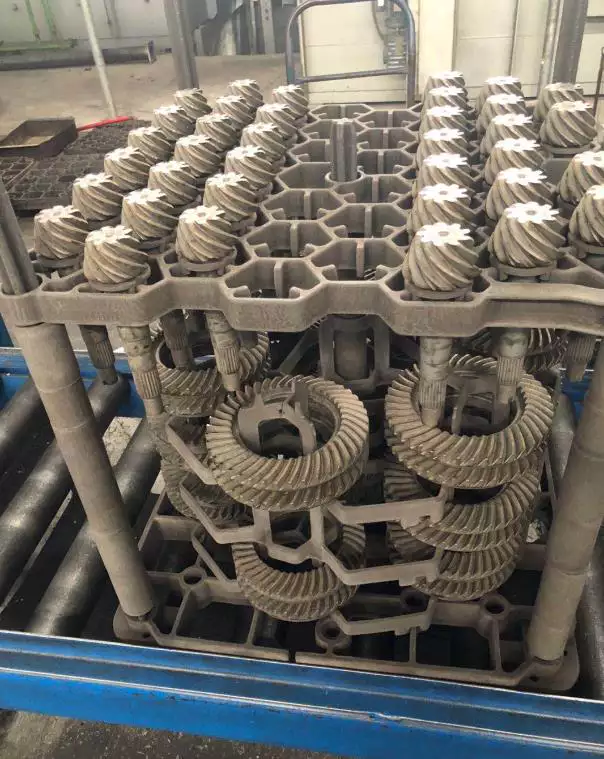
Zerol Bevel Gear
Zerol bevel gears are very similar to straight bevel gears, except the teeth are curved. The gears are designed with zero degree spiral angles, which allows them to operate more smoothly.
Spiral Zerol Bevel Gear
Spiral Zerol bevel gears are a hybrid of spiral and zerol bevel gears. They have the advantage of having a higher load capacity.
Selecting the Right Bevel Gear
When selecting a bevel gear, there are several important parameters to consider:
- Module: The module of a gear is the ratio of the pitch diameter to the number of teeth.
- Number of Teeth: The number of teeth on a gear is directly related to its size.
- Gear Ratio: The gear ratio is the ratio of the number of teeth on the gear to the number of teeth on the pinion.
- Pitch: The pitch is the distance between corresponding points on adjacent teeth.
- Gear Material: The material used to make the gear can significantly affect its performance and lifespan.
- Precision Grade: The precision grade of a gear determines how accurately it can transmit motion and power.
- Load Capacity: The load capacity is the maximum load that the gear can handle without failing.
Bevel Gear Manufacturing Process
The manufacturing of bevel gears involves several distinct stages:
- Design and Engineering: The process begins with the creation of detailed design specifications.
- Material Selection: The appropriate material is selected based on the application of the gear.
- Cutting: The gear is then cut to the desired shape and size.
- Machining and Grinding: The gear undergoes machining and grinding to achieve the final dimensions and surface finish.
- Heat Treatment: The gear is heat treated to improve its hardness and durability.
- Cleaning and Inspection: The gear is cleaned and inspected to ensure it meets all quality standards.
- Assembly and Machining of Components: Any necessary components are assembled and machined.
- Surface Treatment and Coating: The gear is finished with a surface treatment or coating to protect it from wear and corrosion.
- Final Inspection and Quality Control: The finished gear undergoes a final inspection and quality control process to ensure it meets all specifications.
Additional Gear Products
In addition to bevel gears, we also produce a wide range of other gear products, including worm gears, helical gears, spur gears, gear racks, and gearboxes such as worm gearboxes, planetary gearboxes, and helical gearboxes.
About Our Company
With advanced production and testing equipment including CNC Gear grinding machines, gear measuring machines, CNC gear shapers, machine centers, and torque test systems, we are committed to delivering high-quality gear products. Our company is proud to offer professional services, international certifications, custom solutions, state-of-the-art production equipment, and comprehensive after-sales services. Partner with us today for all your gear needs.