China Professional Customized Large Steel Forging Gear Driving Spline Shaft spurs gear
Product Description
Product Description
| GB | ГOCT | EN | DIN | W.N. | JIS | AISI/SAE | |
| 15CrMn | 16MnCr5 | 16MnCr5 | 1.7131 | 5115 | |||
| 20CrMn | 20MnCr5 | 20MnCr5 | 1.7147 | 5120 | |||
| 12CrMo | 12XM | 13CrMo44 | 1.7335 | 4119 | |||
| 15CrMo | 15XM | 15CrMo5 | 1.7262 | SCM415 | |||
| 20CrMo | 20XM | 20CrMo5 | 1.7264 | SCM420 | 4118 | ||
| 25CrMo | 30XM | 25CrMo4 | 1.7218 | ||||
| 30CrMo | SCM430 | 4130 | |||||
| 35CrMo | 35XM | 34CrMo4 | 1.722 | SCM435 | 4135 | ||
| 42CrMo | EN19 | 42CrMo4 | 1.7225 | SCM440 | 4140 | ||
| 50CrMo4 | 1.7228 | ||||||
| 40Cr | 40X | 41Cr4 | |||||
| 38XC | |||||||
| 25Cr2MoV | 25X2M1Φ | 24CrMoV55 | 1.7733 | ||||
| 50CrVA | 50CrV4 | 1.8159 | SUP10 | ||||
| 31CrMoV9 | 1.8519 | ||||||
| GCr15 | 100Cr6 | 100Cr6 | 1.3505 | 52100 | |||
| 20CrNiMo | 20XHM | 20NiCrMo2-2 | 21NiCrMo2 | 1.6523 | SNCM220 | 8620 | |
| 20XH3A | |||||||
| 20X2H4A | |||||||
| 17CrNiMo6 | 1.6587 | ||||||
| 18CrNiMo7-6 | 1.6587 | ||||||
| 34CrNiMo6 | 1.6582 | VCN150 | |||||
| 34NiCrMo16 | 35NiCrMo16 | 1.2766 | |||||
| 30CrNiMo8 | 1.658 | VCN200 | |||||
| 39NiCrMo3 | 1.651 | ||||||
| 34CrAlNi7 | 1.855 | ||||||
| 38CrMoAl | 38X2MОA | 41CrAlMo7 | 1.8509 | ||||
| 40CrNiMo | EN24 | 40NiCrMo8-4 | 1.6562 | SNCM439 | 4340 | ||
| 40CrNi | 40XH | 40NiCr6 | 1.5711 | ||||
| 20CrMnMo | 18XTM | SCM421 | |||||
| 40CrMnMo | 40XTM | SCM440 | |||||
| 30XTCA | |||||||
| 38XTH | |||||||
| 40XH2MA | |||||||
| 40X2H2MA | |||||||
| 38XH3MA | |||||||
| 38XH3MΦA |
HangZhou CHINAMFG Heavy Industry Co. Ltd was established in 2008, the main products include: all kinds of forging rolls, patio drilling rig drilling tools, and various of large hydraulic cylinders.
The company produces various of forging rolls, which are widely used in steel mill rolling mills, copper and aluminum strip rolling mills, cement rotary kilns, roll presses, ore crushers, paper making rolls, rubber and plastic rollers, cylinder plungers, piston rods, hydraulic press tie rods, etc. The outer diameter of the roller can reach 800mm, and the length can reach 6000mm. The length of the piston rod and pull rod can reach 11 meters.
The company has 15 years of experience in the production of cutterheads and drilling tools for patio drilling rigs. The diameter of the cutterhead can reach 6 meters, and the drill pipe is from 8″-13″. Products have been exported to many countries, including South Africa, Brazil, Peru, Mexico, Vietnam, Russia and so on.
The various large hydraulic cylinders and high-precision AGC servo cylinders produced by the company are widely used in forging machinery, engineering and mining machinery, water conservancy engineering, ship machinery, port machinery, hydraulic lifting equipment, etc. Up to now, large cylinders have been widely used in various hydraulic presses, extruders, die-casting machines, injection molding machines, etc. In 2008, servo cylinders for steel mill rolling mills with a bore of 950mm were successfully exported to Poland. In 2009, the hydraulic cylinder with a stroke of 10 CHINAMFG was successfully exported to the Pakistan water conservancy project. In October 2016, large cylinders weighing 90 tons per unit have been successfully exported to Russia. The range of cylinders that the company can produce: cylinder diameter 1000mm, stroke 12 meters, test pressure up to 50MPA.
The company has built a heavy workshop of 8,000 square meters. The workshop is equipped with double-decker driving. The lifting height can reach to 16 meters, and the design lifting capacity is 50 tons. The company has perfect machining equipment, heat treatment equipment and testing equipment, including: 11m horizontal lathe, vertical machining center, digital display boring and milling machine, gantry machining center, cylindrical grinding, various types of CNC lathes, 13m deep hole boring machine, 13m CNC deep hole honing machine, tempering CHINAMFG with a length of 6 meters, a quenching tank with a length of 10 meters, a medium frequency quenching machine with a height of 6 meters, and a straightening machine with a pressure of 500 tons. Testing equipment includes: intelligent pressure test bench, ultrasonic flaw detector, magnetic particle flaw detector, coating thickness gauge, roughness tester, etc. The company is committed to providing customers with a full range of system solutions, to revitalize the national equipment to contribute, in the past 15 years, the company continues to develop the market and research and development of new products, the company’s products have been exported to more than 50 countries and regions.
The company has passed ISO9001, ISO14001, ISO45001 system certification. The company sincerely hopes to carry out technical exchanges with domestic and foreign counterparts, and looks CHINAMFG to cooperating with customers in various industries, HangZhou CHINAMFG Heavy Industry Co. Ltd welcomes your visit!
FAQ
1. who are we?
We are based in ZheJiang , China, start from 2008,sell to Domestic Market(36.00%),Eastern Europe(21.00%),Southeast Asia(16.00%),South America(12.00%),North America(9.00%),Northern Europe(4.00%),South Asia(2.00%). There are total about 51-100 people in our office.
2. how can we guarantee quality?
Always a pre-production sample before mass production; Always final Inspection before shipment;
3.what can you buy from us?
Roll and Rollers.
4. why should you buy from us not from other suppliers?
We have rich experience on casting, forging and heat treatment.
5. what services can we provide?
Accepted Delivery Terms: FOB,CFR,CIF,EXW,FAS,CIP,FCA,CPT,DEQ,DDP,DDU,Express Delivery,DAF,DES; Accepted Payment Currency:USD,EUR,CNY; Accepted Payment Type: T/T,L/C,D/P D/A,Western Union; Language Spoken:English,Chinese,Portuguese,Russian
| Material: | Alloy Steel |
|---|---|
| Load: | Drive Shaft |
| Stiffness & Flexibility: | Stiffness / Rigid Axle |
| Journal Diameter Dimensional Accuracy: | IT6-IT9 |
| Axis Shape: | Straight Shaft |
| Shaft Shape: | Real Axis |
| Customization: |
Available
| Customized Request |
|---|
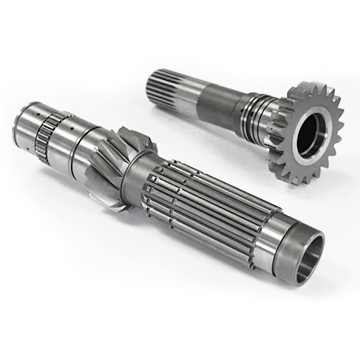
How do gear shafts handle variations in load and stress conditions?
Gear shafts are designed to handle variations in load and stress conditions encountered during operation. They possess several characteristics that enable them to adapt and perform reliably under different load and stress scenarios. Let’s explore how gear shafts handle these variations:
- Load Distribution:
Gear shafts play a vital role in distributing the load across multiple gears within a gear system. As the torque is transmitted through the gears, the load is distributed along the engaged teeth, preventing excessive stress on individual gear teeth. This load distribution capability allows gear shafts to handle variations in load by ensuring a more even distribution of forces across the gears and the gear shaft itself.
- Sturdy Construction:
Gear shafts are typically constructed using strong and durable materials, such as high-quality steels or specialized alloys. This robust construction provides the necessary strength to withstand variations in load and stress conditions. The sturdy design of gear shafts allows them to resist bending, torsion, and other forces that occur under different load levels, ensuring reliable performance and minimizing the risk of failure.
- Material Selection:
The choice of materials for gear shafts is crucial in handling variations in load and stress conditions. Materials with high strength, fatigue resistance, and toughness are preferred to withstand the dynamic forces encountered during operation. Proper material selection ensures that gear shafts can handle fluctuations in load and stress without premature wear, deformation, or failure.
- Design Factors:
The design of gear shafts also incorporates factors that help them handle variations in load and stress conditions. Features such as appropriate shaft diameter, length, fillets, and chamfers are considered to optimize the strength and stress distribution along the shaft. Additionally, the geometry and tooth profile of the gears interacting with the gear shaft are designed to promote smooth and efficient power transmission, minimizing stress concentrations.
- Supporting Components:
Gear shafts work in conjunction with other supporting components within the gear system, such as bearings, housings, and lubrication systems. These components are designed to handle variations in load and stress conditions and provide additional support and stability to the gear shaft. Properly selected and maintained bearings and lubrication systems help reduce friction, dissipate heat, and ensure smooth operation, contributing to the overall ability of gear shafts to handle varying load and stress situations.
- Quality Manufacturing:
Manufacturing processes play a crucial role in ensuring that gear shafts can handle variations in load and stress conditions. Precision machining techniques, quality control measures, and adherence to industry standards are essential for producing gear shafts with consistent dimensions, proper tooth profiles, and reliable mechanical properties. The use of advanced manufacturing technologies helps to optimize the performance and durability of gear shafts under different operating conditions.
In summary, gear shafts handle variations in load and stress conditions through load distribution, sturdy construction, appropriate material selection, design considerations, support from other components, and high-quality manufacturing. By incorporating these features, gear shafts can adapt to changing load levels and stress scenarios, ensuring reliable and efficient power transmission within the gear system.
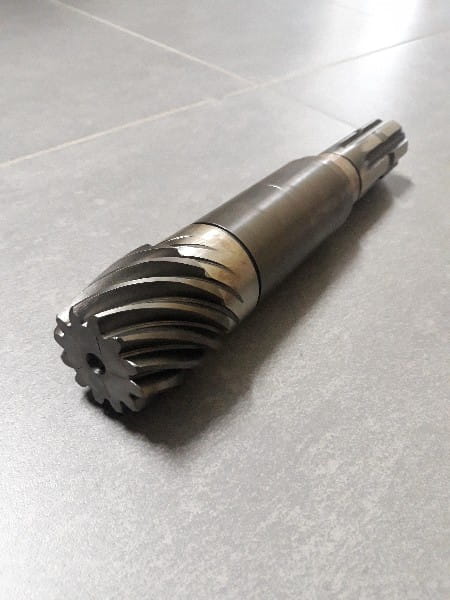
What is the significance of gear shaft alignment in mechanical systems?
Gear shaft alignment holds great significance in mechanical systems where gears are employed. Proper alignment of gear shafts is crucial for ensuring optimal performance and longevity of the system. Let’s explore the significance of gear shaft alignment:
- Efficient Power Transmission:
Accurate alignment of gear shafts facilitates efficient power transmission within the mechanical system. When gear shafts are properly aligned, the gear teeth mesh smoothly and engage without unnecessary friction or resistance. This minimizes power losses due to misalignment, reducing energy wastage and maximizing power transfer efficiency. Efficient power transmission ensures that the mechanical system operates at its intended performance level.
- Reduced Wear and Damage:
Proper gear shaft alignment helps in reducing wear and damage to the gears and other components within the mechanical system. Misalignment can cause excessive stress on the gear teeth, resulting in accelerated wear and premature failure. By aligning the gear shafts correctly, the load is evenly distributed, preventing concentrated stress points. This leads to reduced wear, improved gear life, and decreased chances of unexpected breakdowns or malfunctions.
- Noise and Vibration Reduction:
Misalignment of gear shafts can lead to increased noise and vibration levels within the mechanical system. When gears are not properly aligned, they may generate excessive vibration and noise during operation. This can be detrimental to the overall performance and user experience. Proper gear shaft alignment ensures that the gears mesh accurately, reducing vibration and noise. It contributes to a quieter and smoother operation of the mechanical system.
- Optimal Load Distribution:
Alignment of gear shafts enables optimal load distribution among the gears. When gear shafts are aligned correctly, the load is evenly shared across the gear teeth and their supporting components. This prevents overloading of specific gears, minimizing the risk of premature wear or failure. Proper load distribution enhances the overall reliability and efficiency of the mechanical system, as each gear operates within its intended design parameters.
- Improved Efficiency:
Gear shaft alignment directly impacts the overall efficiency of the mechanical system. Proper alignment reduces energy losses due to friction, misalignment, or inefficient gear engagement. It allows for smooth and efficient power transmission throughout the system, optimizing the utilization of available energy. Improved efficiency translates into reduced operating costs, increased productivity, and enhanced performance of the mechanical system.
- Longer Service Life:
Correct gear shaft alignment contributes to a longer service life for the mechanical system. By minimizing wear, reducing stress concentrations, and preventing excessive vibration, proper alignment helps to preserve the integrity of the gears and other related components. This leads to extended service intervals, reduced maintenance requirements, and increased reliability. A mechanical system with aligned gear shafts is more likely to operate smoothly and consistently over an extended period.
In summary, gear shaft alignment is of significant importance in mechanical systems. It ensures efficient power transmission, reduces wear and damage, minimizes noise and vibration, enables optimal load distribution, improves overall efficiency, and extends the service life of the system. Proper alignment of gear shafts is essential for achieving reliable and high-performance operation in gear-based mechanical systems.
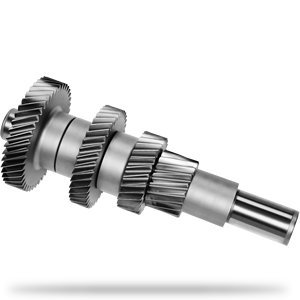
What is the purpose of using a gear shaft in machinery?
A gear shaft serves several essential purposes in machinery. It plays a crucial role in the efficient operation and transmission of power within mechanical systems. Here are the main purposes of using a gear shaft:
- Power Transmission:
A primary purpose of a gear shaft is to transmit power between different components in a machinery. When rotational force or torque is applied to the gear shaft, it transfers this power to connected gears or mechanisms. This power transmission allows for the controlled and synchronized movement of various parts, enabling the machinery to perform its intended function.
- Torque Conversion and Adjustment:
By utilizing different sizes and arrangements of gears on the shaft, the gear shaft enables torque conversion and adjustment. Gears with varying numbers of teeth can be connected to the gear shaft, allowing for torque multiplication or reduction. This capability is crucial for adapting the power output of the machinery to match specific requirements, such as increasing torque for heavy-duty operations or reducing torque for precision tasks.
- Speed Control:
Another purpose of a gear shaft is to control the speed of rotational motion in machinery. By using gears of different sizes or gear ratios on the shaft, the rotational speed can be adjusted. For instance, a smaller gear connected to the gear shaft will rotate faster, while a larger gear will rotate slower. This speed control allows for the optimization of machinery performance, ensuring that the rotational speed matches the desired application requirements.
- Directional Change:
A gear shaft also facilitates the change in rotational direction within machinery. By incorporating appropriately designed gears on the shaft, the rotational motion can be redirected by 90 degrees or any desired angle. This directional change ability is vital in machinery that requires motion to be transmitted in different directions or orientations, allowing for complex operations and versatile applications.
- Load Distribution:
Many machinery applications involve the distribution of load or force between multiple components. A gear shaft helps evenly distribute the load among connected gears and mechanisms. As torque is transmitted through the gear shaft, it ensures that the force is distributed across the teeth of the gears, minimizing stress concentration and promoting smooth operation. This load distribution enhances the overall durability and longevity of the machinery.
- Mechanical Redundancy:
In certain machinery designs, gear shafts can provide mechanical redundancy. By incorporating multiple gear shafts that operate in parallel, the machinery can maintain functionality even if one of the gear shafts fails. This redundancy ensures that the machinery continues to operate with minimal disruption, reducing downtime and improving overall reliability.
In summary, the purpose of using a gear shaft in machinery is to enable power transmission, torque conversion and adjustment, speed control, directional change, load distribution, and mechanical redundancy. Gear shafts are essential components that contribute to the efficient and effective operation of various mechanical systems.


editor by CX 2023-11-27