China wholesaler Planetary Gear with Reducer for Excavator Transmission Gearbox supplier
Product Description
| HEADLINE | Planetary Gear with reducer for Excavator transmission gearbox |
| PART NAME | Planetary gear |
| PART NUMBER | HGBP1111/Refer to Brand Spare Numbers |
| MATERIAL | Cast Iron, SAE1571, SAE1045, Cr12, 40Cr, 20CrMnTi, 16MnCr5, 20CrMnMo , 41CrMo |
| FEATURES | Tolerance:0.01mm, Roughness:Ra0.4, Concentricity:0.01mm, Roundness:0.005mm. 1. All parts are inspected and tested with 100% passed in production. 2. All products appearance are inspected and picked out those defective samples. 3. The goods packages passed the impact and drop tests, they are fixed well in box. |
| PRODUCT APPLICATION | Excavator, Loader, Automotive Parts, most famous brand. |
| MANUFACTURING PROCESS | Forging , Lathing , Milling, Hobbing , Shaping , Lapping ,Grinding, Heat Treatment |
| MOQ | 1pcs (It is able to provide a few samples first time) |
| PACKAGE | PE bag + Carton +Wooden case |
| PAYMENT TERM | T/T, Western Union. |
| DELIEVERY TIME | Within 10 workdays according to your order. |
| TRANSPORTATION | DHL/FEDEX/UPS/TNT/ARAMEX, AIR & SEA |
| Machine Models | |
| KOMATSU | PC20 PC30 PC35 PC40-5 PC40-6 PC40-7/8 PC45 PC50 PC56-7 PC60-1 PC60-3/5/6/7 PC70-8 PC75 PC80 PC90-1 PC100-1/2/3 PC100-5 PC PC120-2 PC120-5/6 |
| HITACHI | HITACHI UH045 UH052 UHO53 UH063 UH07-5 UH09-7 UH04-7 UH083 EX200-1/2/3/5 EX210 EX220-1/3/7 EX220-2/5 EX225 EX240 EX270-1/5 EX280-1 EX300-1/2/3/5/6 EX320 EX330 |
| CATERPILLAR | E40B E70 E70B E110 E120B E140 E180 E200B E240 E300 E200-5 E450 E650 E235B/B/D E245B/D E307 E311B E312C/CL E315C/CL E318B E320/320L E322 E325 E330 E350 E375 E450 |
| KOBELCO | K903 K904B K904 C K907B K907C K907D SK07 SK571 SK04N2 SK07N2 SK09N2 SK60 SK100 SK120-3/6 SK120LC SK200 SK200-5/6 SK210-8 SK230-6E SK250-6/8 7150/150T,7200,7250/250T,7300,CKE600,CKE800,CKE900,CKE1200,CKE1800,CKE2500 |
| HYUNDAI | R55-7 R60-5/7 R80-7/9 R85-7 R110 R130R150LC R200 R210 R215-7/9 R220 R225LC-7/9 R260-5 R265LC-7/9 R280 R290 R290LC-7 R300 R305LC-9 R320 R335LC-7/9 R375LC R385 |
| KATO | HD250 HD250SE HD300GS HD307 HD350 HD400G HD400-5 HD450 HD400G HD400SE HD450SE HD510 HD512 HD550SE HD700G HD700-5/7 HD800-5/7 HD820 HD880-1HD820 HD880 |
| SUMITOMO | LX02/03 LX08 SH45 SH55 SH60 SH75-3 SH100 SH120 SH145U SH200 SH200A3 SH210 SH220 SH240 SH250 SH260 SH280 SH300 SH340 SH350 SH400 SH450 LS200 LS200 SC800 SC1000 |
| DAEWOO/DOOSAN | DH55 DH60-7 DH130 DH150 DH170 DH220-3/5 DH220-9E DH258LC-V DH280-3 DH300-5 DH DH320 DH330 DH360-5 DH220-9E |
| VOLVO | EC55BLC EC60 EX130 EC140B EC210B EC240B EC290B EC330 EC360 EC460B |
| BULLDOZER | D20 D30 D31 D3B D3C D3D D40-1 D4C D4D D4H D5 D50 D5B D5H D5M D6B D6C D6D D6H D6R D65 D7 D7E D7F D7G D7R D80 D85-12 D85-18 |
| MITSUBISHI | MS40 MS70-8 MS110-8 MS120 MS180-3 MS240 MS300-8 |
| IHI | CCH250W,CCH280W,CCH500/50T,DCH700/70T,DCH800(80T),CCH800,CCH1500E |
| Manitowoc | 4100WS1/180-272T,4100S,4600S4/317.5,M250/250,M250/250T,M250/272T,M999/250T,M4600/317.5T,M18000/600T,M21000/1000T |
| Demag | CC1400/250T,CC1800/300T,CC2000/300T,CC200/350T,CC2400/400T,CC2500/450T,CC2800/600T,CC5800/1000T |
| Liebherr | LR11350 LR11200 LR1800 LR1750 LR1650 LR1600-2 LR1600-2-W LR1500 LR1400-1 LR1400-2 LR1350-1 LR1300 LR1280 LR1250 LR1200 LR1160 LR1130 LR1100 HS885HD HS855HD LR11000 |
| SANY | SCC500,SCC600,SCC750,SCC800,SCC1000,SCC1250,SCC1500,SCC1800,SCC2600,SCC4000,SCC6500,SCC7500,SCC10000,SCC16000 |
| ZOOMLION | QUY50,QUY70,QUY80,QUY100,QUY130,QUY180,QUY200,QUY260,QUY350,QUY400,QUY450,QUY500,QUY50,QUY600,QUY650,QUY800,QUY1000,ZTM300,ZTM500 |
| XCMG | XGC28000 XGC88000 XGC16000 XGC15000 QUY1000 XGC800 QUY700 XGC650 QUY650 QUY500W XGC500 QUY450 XGC400 QUY400 QUY350 QUY300 XGC300 QUY280 QUY260 XGC260 QUY250 QUY220 QUY180 XGC180 XGC160 XGC150 QUY150 XGC100-1 XGC11000 XGC400-I XGC12000 XGC320 |
| After-sales Service: | Free Services and Repairs |
|---|---|
| Warranty: | Free Services and Repairs |
| Type: | Crawler |
| Application: | Excavator |
| Certification: | ISO9001: 2000 |
| Condition: | New |
| Customization: |
Available
| Customized Request |
|---|
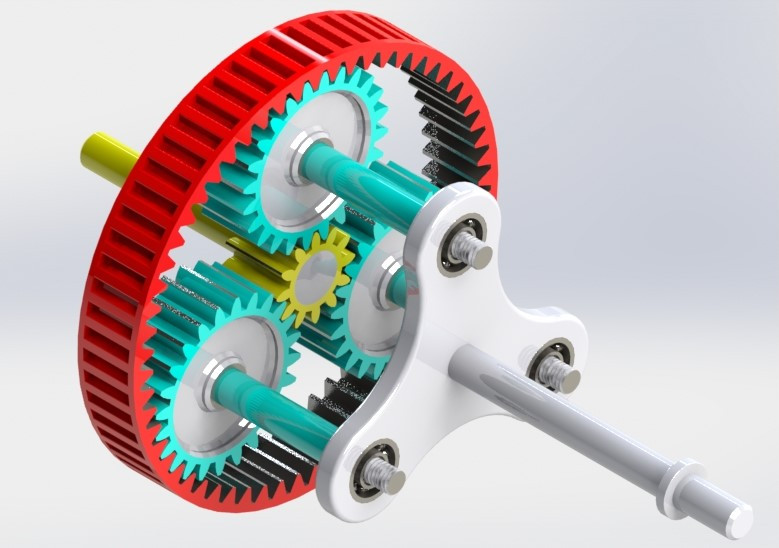
How do planetary gears handle changes in speed and torque distribution?
Planetary gears are capable of effectively handling changes in speed and torque distribution due to their unique design and configuration. Let’s explore how planetary gears handle these changes:
- Speed Changes:
Planetary gears can handle speed changes by utilizing the different gear ratios they offer. By adjusting the sizes and numbers of teeth on the sun gear, planet gears, and ring gear, different gear ratios can be achieved. When the input speed is applied to the sun gear, it gets transmitted to the planet gears, resulting in a specific output speed. By changing the gear ratio, the output speed can be adjusted accordingly. This ability to vary the gear ratio allows planetary gears to adapt to different speed requirements in mechanical systems.
- Torque Distribution:
Planetary gears excel in distributing torque across multiple gear teeth, ensuring efficient torque transmission and load sharing. The planet gears are meshed with both the sun gear and the ring gear, enabling torque to be transmitted through multiple contact points simultaneously. This distributed torque distribution helps in reducing stress on individual gear teeth and enhances the overall torque-carrying capacity of the gear system. The load is shared among the planet gears, preventing excessive wear and minimizing the risk of gear failure.
- Torque Amplification:
Planetary gears can also handle torque amplification, allowing for increased torque output compared to the input torque. By fixing the ring gear and inputting power to the sun gear, the planet gears rotate and contribute to multiplying the torque. The arrangement of multiple gear sets in a compact design enables torque amplification, making planetary gears suitable for applications that require high torque output while maintaining a smaller physical size.
- Load Balancing:
Another aspect of torque distribution in planetary gears is load balancing. The planet gears distribute the load across multiple gear teeth, reducing the concentration of forces on individual teeth. This load balancing capability results in improved gear system durability and longevity. It also helps in minimizing vibration, noise, and wear, ensuring smoother and more reliable operation.
- Flexible Configuration:
Planetary gears offer flexibility in their configuration, allowing for the accommodation of changes in speed and torque distribution. The number of planet gears, the size of the gears, and their arrangement can be adjusted to meet specific application requirements. This flexibility enables planetary gears to handle a wide range of speed and torque variations, making them adaptable to different mechanical setups.
In summary, planetary gears handle changes in speed and torque distribution through their ability to adjust gear ratios, distribute torque across multiple gear teeth, amplify torque, balance loads, and accommodate flexible configurations. These characteristics make planetary gears suitable for applications that require precise control over speed and torque, efficient power transmission, and reliable performance.
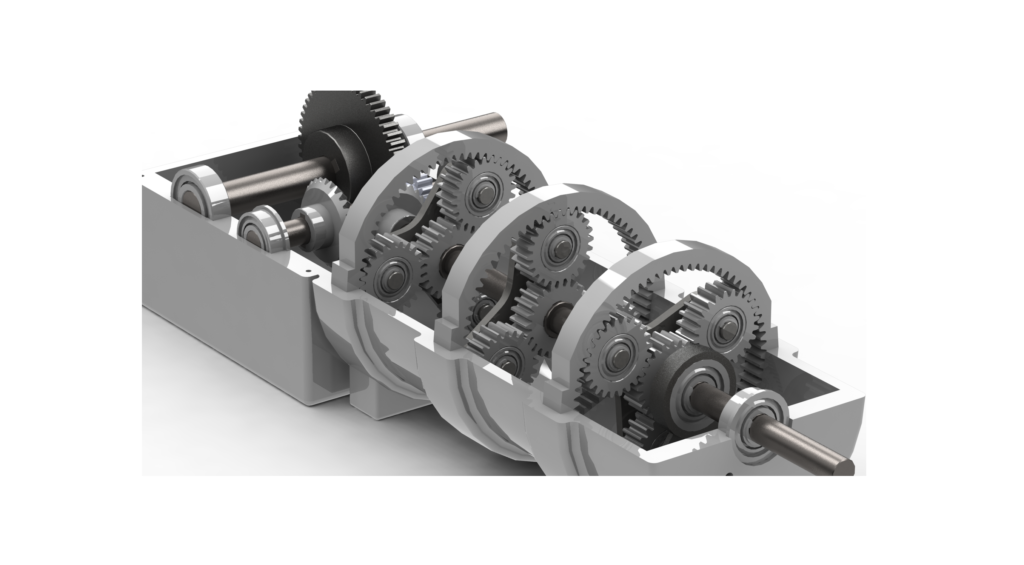
Can you explain the process of gear shifting in planetary gear systems?
Gear shifting in planetary gear systems involves changing the gear ratio by engaging or disengaging specific components of the gear set. Let’s explore the process of gear shifting in more detail:
- Clutching and Braking:
The gear shifting process in planetary gear systems primarily relies on clutching and braking mechanisms. These mechanisms selectively connect or disconnect various gears within the system to achieve the desired gear ratio. Here are the key steps involved:
- Clutch Engagement:
To shift to a higher gear ratio, the clutch associated with the gear component that needs to be engaged is activated. The clutch connects the rotating member, such as the sun gear, planet carrier, or ring gear, to the stationary member, allowing torque transmission. This engagement results in a change in the gear ratio, leading to higher speed or torque output depending on the specific gear set configuration.
- Brake Application:
On the other hand, to shift to a lower gear ratio, a brake associated with the gear component that needs to be disengaged is applied. The brake immobilizes or slows down the rotation of the selected gear element, preventing it from transmitting torque. By selectively braking certain components, the gear ratio is altered, resulting in a lower speed or higher torque output.
- Sequential Shifting:
In some planetary gear systems, gear shifting is performed sequentially. This means that one gear component is engaged or disengaged at a time, gradually transitioning from one gear ratio to another. Sequential shifting allows for smooth and controlled gear changes, minimizing the stress on the transmission components and ensuring seamless power transmission.
- Electronic Control:
In modern applications, gear shifting in planetary gear systems is often electronically controlled. Electronic control systems utilize sensors, actuators, and a control unit to monitor various parameters such as vehicle speed, engine load, and driver input. Based on these inputs, the control unit determines the optimal gear shift points and actuates the clutches and brakes accordingly. Electronic control enhances the efficiency, precision, and automation of the gear shifting process.
In summary, gear shifting in planetary gear systems involves the engagement and disengagement of clutches and brakes to alter the gear ratio. By selectively connecting or disconnecting specific gear components, the speed and torque output can be adjusted. Sequential shifting and electronic control systems further enhance the gear shifting process, providing smooth and efficient operation in various applications, including automotive transmissions and industrial machinery.
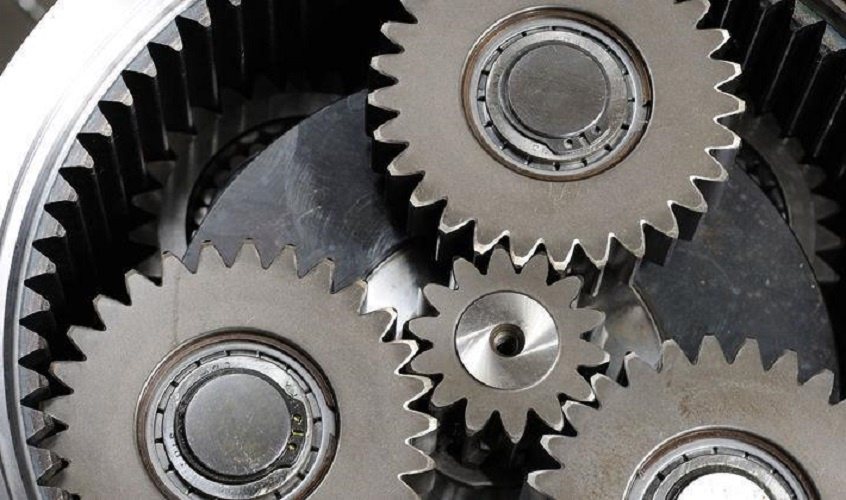
Can you describe the role of sun gears, planet gears, and ring gears in planetary systems?
In a planetary gear system, each component—the sun gear, planet gears, and ring gear—plays a crucial role in the overall operation and functionality. Let’s explore the roles of these gears:
- Sun Gear:
The sun gear is a central component in a planetary gear system. It is typically located at the center and is driven by an input source such as a motor or engine. The sun gear receives the input power and transmits it to the other gears in the system. As the sun gear rotates, it drives the rotation of the planet gears, which, in turn, contribute to the overall gear operation. The size and number of teeth on the sun gear determine the gear ratio and torque characteristics of the system.
- Planet Gears:
The planet gears are gears that surround the sun gear in a planetary gear system. They are typically smaller in size compared to the sun gear and are connected to a carrier or arm. The planet gears mesh with both the sun gear and the ring gear. As the sun gear rotates, it drives the rotation of the planet gears. The planet gears exhibit both rotational and orbital motion. While they rotate on their own axes, they also orbit around the sun gear. This combination of rotational and orbital movement allows the planet gears to transmit torque and contribute to the overall gear reduction or amplification. The arrangement and number of planet gears can vary depending on the specific design and requirements of the system.
- Ring Gear:
The ring gear is the outermost gear in a planetary gear system. It has internal teeth that mesh with the planet gears. The ring gear remains fixed or stationary while the sun gear and planet gears rotate. The interaction between the planet gears and the ring gear enables the gear system to achieve gear reduction or amplification. The size and number of teeth on the ring gear also influence the gear ratio and torque characteristics of the system.
In summary, the sun gear serves as the primary driver, receiving the input power and transmitting it to the other gears. The planet gears rotate and orbit around the sun gear, contributing to torque transmission and gear functionality. The ring gear remains fixed and meshes with the planet gears, allowing for gear reduction or amplification. Together, these gears work in harmony to achieve the desired gear ratios, torque transmission, and overall operation of planetary gear systems.


editor by CX 2023-12-04