China Custom OEM Ball Mill Split External Cement Machinery Parts Spur Large Segment Ring Gear CZPT Ring Gear Large Ring Gear supplier
Product Description
Key attributes
Other attributes
Applicable Industries
Manufacturing Plant, Machinery Repair Shops, Energy & Mining
Weight (KG)
1650
Showroom Location
None
Video outgoing-inspection
Provided
Machinery Test Report
Provided
Marketing Type
Hot Product 2571
Warranty of core components
1 Year
Core Components
Gear
Place of Origin
ZheJiang , China
Condition
New
Warranty
1.5 years
Shape
Ring Gear
Standard or Nonstandard
Nonstandard
Tooth Profile
Spur
Material
Steel
Processing
Casting
Pressure Angle
20°
Brand Name
HangZhou
Product Name
custom large diameter alloy steel spur casting large ring gear
Application
Cement kiln
Gear Machining
Gear milling
Module of Gear:
8-120
OD For Gear Wheel:
MAX.13 000 mm
Height For Gear Wheel
MAX. 1200 mm
Certificate
ISO 9001:2015
Tolerance
+/-0.01mm
Heat treatment
QT
Surface Treatment
Surface Hardening or Carburizing and Quenching
Packaging and delivery
Packaging Details
Package for Cement kiln custom large diameter ring gear transmission alloy steel spur casting large ring gear is wooden box and adapts to CHINAMFG transport
Port
ZheJiang ,HangZhou or Others
Supply Ability
Supply Ability
9000 Ton/Tons per Year
OUR WORKSHOPS
OUR EQUIPMENTS
Technology Process
|
Material |
Carbon steel,Alloy steel |
||
|
Structure |
Forging,casting |
||
|
Type of gear |
spur gear,helical gear,Planetary Gear |
||
|
Heat treatment |
Quenching and tempering |
||
|
Process |
forging, rough machining, QT, finish machining |
||
|
Main equipments |
hobbing,CNC machine |
||
|
Module |
up to 200 |
||
|
Precision of gear |
Grinding ISO Grade 5-7 & Hobbing ISO Grade 8-9 |
||
|
Inspection |
Raw material inspection, UT,physical property test,dimension inspect |
||
|
Application |
Mining machinery, mill, kiln and other equipment |
||
OUR CERTIFICATE
OUR CUSTOMER FEEDBACK
CONTACT
| Application: | Industry |
|---|---|
| Hardness: | Hb190-Hb300 |
| Gear Position: | External Gear |
| Samples: |
US$ 100/Piece
1 Piece(Min.Order) | Order Sample |
|---|
| Customization: |
Available
| Customized Request |
|---|
.shipping-cost-tm .tm-status-off{background: none;padding:0;color: #1470cc}
| Shipping Cost:
Estimated freight per unit. |
about shipping cost and estimated delivery time. |
|---|
| Payment Method: |
|
|---|---|
|
Initial Payment Full Payment |
| Currency: | US$ |
|---|
| Return&refunds: | You can apply for a refund up to 30 days after receipt of the products. |
|---|
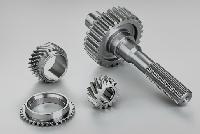
What is the role of a crown gear in power transmission?
A crown gear plays a crucial role in power transmission within a mechanical system. Let’s explore the role of a crown gear in power transmission:
- Power Distribution:
Crown gears are used to transfer power between two intersecting shafts. When a crown gear meshes with other gears in a system, it enables the transmission of rotational energy from the input shaft to the output shaft. This power distribution mechanism allows the system to efficiently transfer and control the flow of mechanical energy.
- Torque Transmission:
One of the primary functions of a crown gear is to transmit torque. Torque refers to the rotational force applied to an object. When the input shaft rotates, the crown gear engages with other gears, and through the interaction of their teeth, torque is transmitted from the input shaft to the output shaft. Crown gears are designed to handle high torque loads, ensuring effective power transmission within the system.
- Speed Reduction or Increase:
In addition to power distribution and torque transmission, crown gears also contribute to speed reduction or increase in a system. By meshing with gears of different sizes or gear ratios, the rotational speed of the output shaft can be adjusted relative to the input shaft. When the crown gear engages with a smaller gear, it results in speed reduction, providing higher torque output. Conversely, when it meshes with a larger gear, it leads to speed increase, sacrificing torque for higher rotational speed.
- Directional Change:
Crown gears can also facilitate a change in rotational direction within a power transmission system. By meshing with other gears, they can redirect the rotational motion from one shaft to another shaft oriented at a different angle. This ability to change the direction of power transmission allows for the efficient transfer of rotational energy in systems with complex configurations.
- Efficiency and Load Distribution:
Crown gears are designed to optimize power transmission efficiency. Their tooth profile and engagement properties minimize energy losses due to friction, ensuring efficient transfer of mechanical energy. Additionally, crown gears distribute the load evenly across their teeth, reducing stress concentrations and promoting longevity and reliability in the system. By efficiently transmitting power and evenly distributing loads, crown gears contribute to the overall performance and durability of the power transmission system.
In summary, the role of a crown gear in power transmission involves power distribution, torque transmission, speed adjustment, directional change, and the promotion of efficiency and load distribution. Crown gears are essential components that enable the controlled transfer of mechanical energy, allowing for effective operation and performance of various mechanical systems.
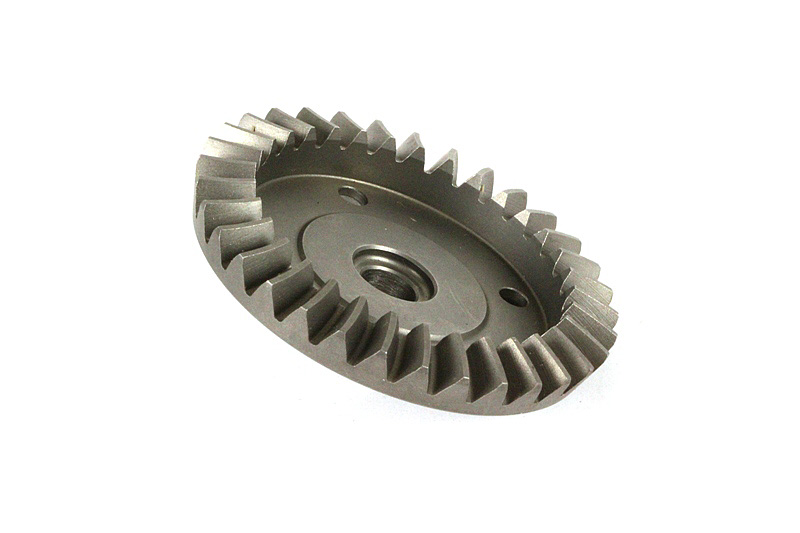
Can crown gears be used in high-torque applications?
Crown gears can indeed be used in high-torque applications, thanks to their unique design and capabilities. Let’s explore the factors that make crown gears suitable for high-torque applications:
- Large Contact Area:
Crown gears have a relatively larger contact area compared to other gear types. This increased contact area allows for better load distribution and can handle higher torque loads. The larger contact area spreads the torque across more teeth, reducing stress concentrations and minimizing the risk of tooth failure under high-torque conditions.
- Perpendicular Tooth Orientation:
The perpendicular tooth orientation of crown gears enhances their ability to withstand high-torque applications. When the gear meshes with another gear, the perpendicular alignment allows for a greater number of teeth in contact, distributing the torque load over a larger area. This perpendicular tooth arrangement helps to minimize tooth deflection and tooth-to-tooth interference, improving the gear’s ability to handle high torque loads.
- Strength and Durability:
Crown gears are typically manufactured using materials with high strength and durability, such as hardened steel or alloy steels. These materials provide the necessary mechanical properties to withstand high torque loads without deformation or failure. By selecting appropriate materials and employing suitable heat treatment processes, crown gears can withstand the demanding conditions of high-torque applications.
- Load Sharing in Gear Systems:
In high-torque applications, it is common to use multiple gears to distribute the torque load and reduce the stress on individual gears. Crown gears play a role in load sharing within the gear system, distributing the torque load between multiple gears. This load sharing capability allows each gear to handle a fraction of the total torque, reducing the torque load on each individual crown gear and enhancing their ability to operate in high-torque conditions.
- Optimized Tooth Profile:
The tooth profile of crown gears can be optimized for high-torque applications. Engineers can design crown gears with appropriate tooth profiles, such as modified involute profiles or special tooth forms, to enhance their load-carrying capacity and minimize tooth stress under high-torque conditions. These optimized tooth profiles help to improve the gear’s performance and reliability in high-torque applications.
In summary, crown gears can be successfully used in high-torque applications due to their large contact area, perpendicular tooth orientation, strength and durability, load-sharing capabilities, and the ability to optimize tooth profiles. These features make crown gears capable of handling the demanding torque loads encountered in various industries, including heavy machinery, automotive applications, industrial equipment, and more.
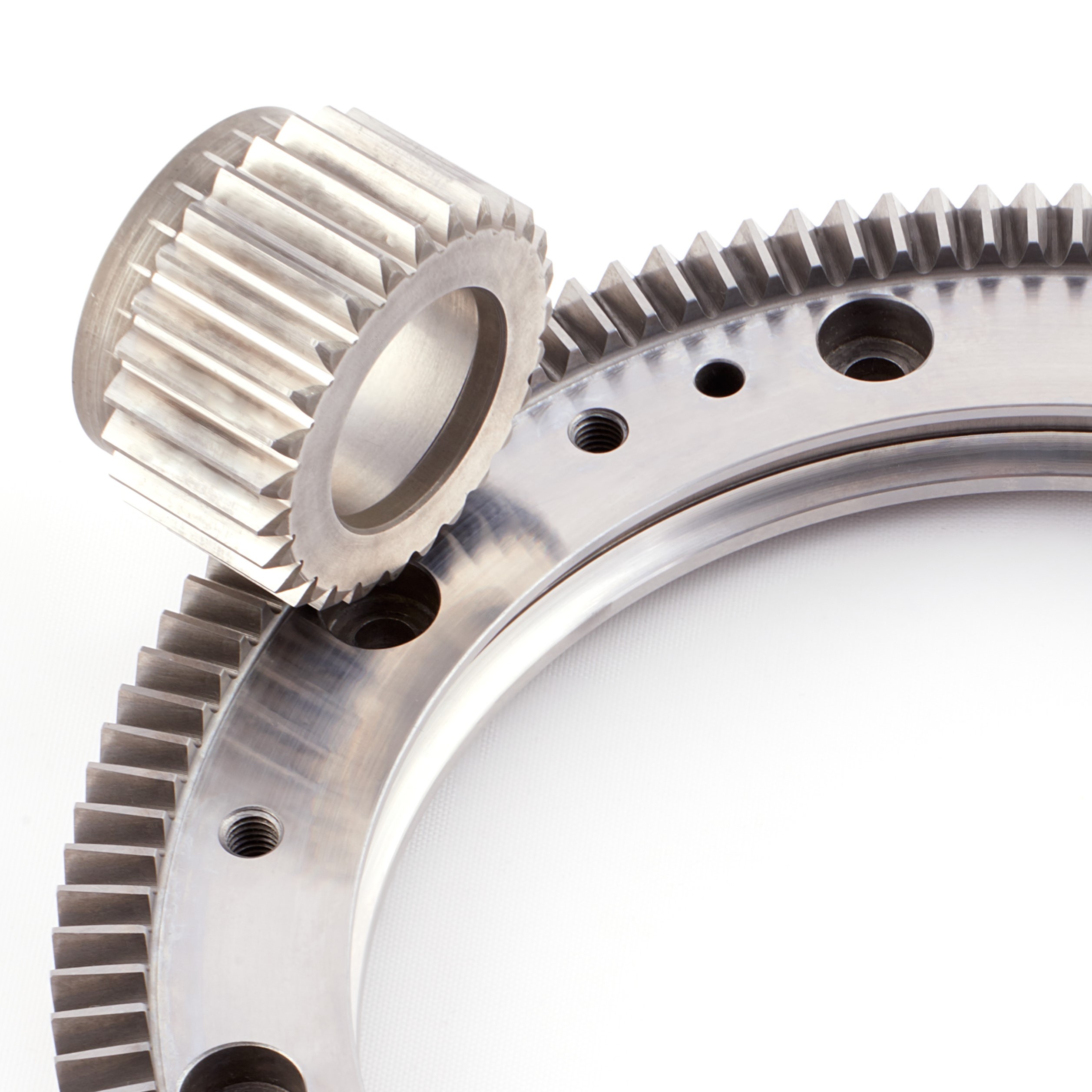
What is a crown gear and how is it used in mechanical systems?
A crown gear, also known as a contrate gear or a contrate wheel, is a type of gear that has teeth positioned perpendicular to the gear’s face. It is primarily used in mechanical systems for specific applications. Let’s explore the characteristics and uses of crown gears:
- Gear Geometry:
A crown gear has teeth that are shaped like segments of a cylinder. Unlike other gears, such as spur gears or bevel gears, the teeth of a crown gear are not parallel to the gear’s axis but lie perpendicular to its face. This unique geometry allows for specific functionality in mechanical systems.
- Meshing with Other Gears:
Crown gears are often used in conjunction with other gears in mechanical systems. They can mesh with gears that have parallel axes or bevel gears with intersecting axes. The crown gear’s perpendicular tooth orientation enables it to mesh smoothly with these different gear types, transferring torque and rotational motion between them.
- Directional Change:
One of the primary uses of crown gears is to change the direction of rotation in a mechanical system. By meshing a crown gear with other gears, the rotational motion can be redirected by 90 degrees. This directional change is useful in various applications where a change in motion direction is required, such as in conveyors, cranes, and other machinery.
- Force Distribution:
Crown gears can also be used to distribute forces and torques in mechanical systems. By meshing a crown gear with other gears, the load can be spread across a larger contact area. This distribution of forces helps to reduce stress and wear on individual gear teeth, promoting smoother operation and improved durability of the gear system.
- Steering Mechanisms:
Crown gears are commonly employed in steering mechanisms, particularly in automotive applications. They are used in rack and pinion systems, where the crown gear meshes with a rack (a linear toothed component) to convert rotational motion into linear motion. This arrangement allows for precise control and smooth movement in steering systems.
- Automation and Robotics:
Crown gears can also be found in automation and robotics, where they are utilized in various motion control mechanisms. They enable changes in motion direction, force distribution, and precise control in robotic arms, gantry systems, and other automated equipment.
In summary, a crown gear is a specialized type of gear with teeth perpendicular to its face. It is used in mechanical systems to change the direction of rotation, distribute forces, and enable precise motion control. Crown gears find applications in a wide range of industries, including automotive, manufacturing, automation, and robotics.


editor by CX 2023-12-04