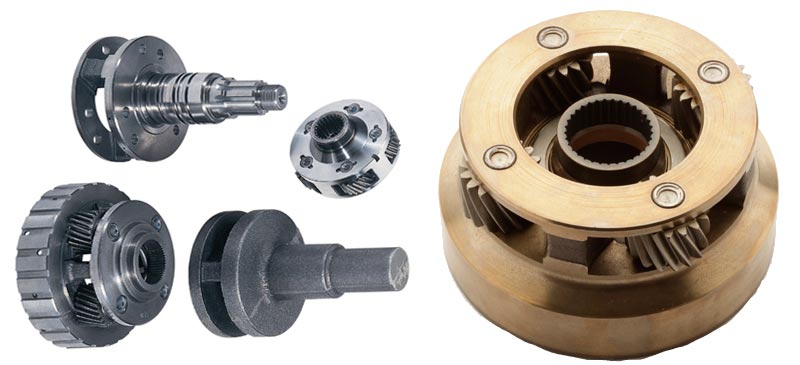
China OEM Powder Metallurgy Factory Supply Sintered Metal Planetary Rotating Frame Spur Gear worm gear winch
Product Description
| Product type | Sintered metal parts / Planetary Sun Drive Spur Gea |
| Material | Stainless steel,Steel(Iron,)Brass,Copper (According to product design requirements) |
| Tolerance | ±0.01mm |
| Surface Treatment | As your requirement |
| Application | Tool industry,Automotive, instrument, electrical equipment, household appliances, furniture, mechanical equipment,daily living equipment, electronic sports equipment, light industry products, sanitation machinery, etc. |
| Shape | Any other material and dimension depends on customers’ demand. |
| QC system | 100% inspection before shipment |
| Returned Goods Managing | With quality problem or deviation from drawings |
| Warranty | Replacement at all our cost for rejected products |
| Payment terms | T/T at sight, Paypal, Western Union,etc. |
| Lead time | 7-15 working days as usual,It will based on the detailed order quantity. |
| Why Choose Us |
1. We have professional powder metallurgy production equipment and team;
2. We can accompany customers to develop products;
3. Just send an idea that you want to try, you don’t even need to know what powder metallurgy;
4. Our sales will reply you within 24 hours to confirm further details and give the estimated quote time;
5. Our team will evaluate your inquiry and provide our offer within next 1~3 working days.
| Order Process |
1. You send us drawing or sample.
2. We carry through project assessment.
3. We give you our design for your confirmation.
4. We make the sample and send it to you after you confirmed our design.
5. You confirm the sample then place an order and pay us deposit.
6. We start producing.
7. When the goods is done, you pay us the balance after you confirmed pictures or tracking numbers.
8. Trade is done, thank you!!
Additional Capabilities CAD Design Services CAM Programming Services Coordinate Measuring Machines (CMM) Reverse Engineering
| Product Show |
| Some Parts We Manufacture |
Self-Lubricated Bushing
Structural Parts
Gears
| About Us |
DERYOUNG Technology company is a professional metal parts manufacturer, which with more than 20 years of experience in the development and production of sintered metals. Each year we produce more than 100 million premium sintered metal parts for our customers. We are mainly produce oil bearing, gear, and metal parts. We support our customers in the design and material selection of sintered parts, providing the best solution for your applied parts through our specialized equipment compression molds, furnaces, handling, sizing, deburring and impregnation processes.
| Design Tips: Powder Metallurgy Gears |
1. Radius > 0.25 mm is required to manufacture the die;
2. Helical teeth should feature a helical angle < 30º in order to limit side pressure on the punches;
3. Introduction of a draft angle > 5º in the upper diameter reduce the tooling cost;
4. The distance between tooth root and central hub diameter must be: > 3 mm (Robust Tooling).
If you want to know more about the product, please send us a message.
| The Powder Metallurgy Manufacturing Process |
| FAQ |
| Q: How can I get the quotation? |
| A: Please send us information for quote: drawing, material, weight, quantity and request,w can accept PDF, ISGS, DWG, STEP file format. If you don’t have drawing, please send the sample to us,we can quote based on your sample too. |
| Q: What’s your MOQ? |
| A: In general 1000pcs,but can accept low quantity in some special conditions. |
| Q: Do you provide samples ? is it free or extra ? |
| A: Yes, we could offer the sample for free charge but do not pay the cost of freight. |
| Q: What about the leading time for mass production? |
| A: Honestly, it depends on the order quantity. Normally, 15 days to 20 days after your deposit if no tooling needed. |
| Q: What if the parts are not good? |
| A: We can guarantee good quality,but if happened,please contact us immediately, take some pictures, we will check on the problem,and solve it asap. |
| Q: What is your terms of payment ? |
| A: Payment=1000USD, 30% T/T in advance ,balance before shippment |
| Application: | Motor, Electric Cars, Motorcycle, Machinery, Marine, Agricultural Machinery, Car |
|---|---|
| Hardness: | Hardened Tooth Surface |
| Gear Position: | Internal Gear |
| Customization: |
Available
| Customized Request |
|---|
.shipping-cost-tm .tm-status-off{background: none;padding:0;color: #1470cc}
|
Shipping Cost:
Estimated freight per unit. |
about shipping cost and estimated delivery time. |
|---|
| Payment Method: |
|
|---|---|
|
Initial Payment Full Payment |
| Currency: | US$ |
|---|
| Return&refunds: | You can apply for a refund up to 30 days after receipt of the products. |
|---|
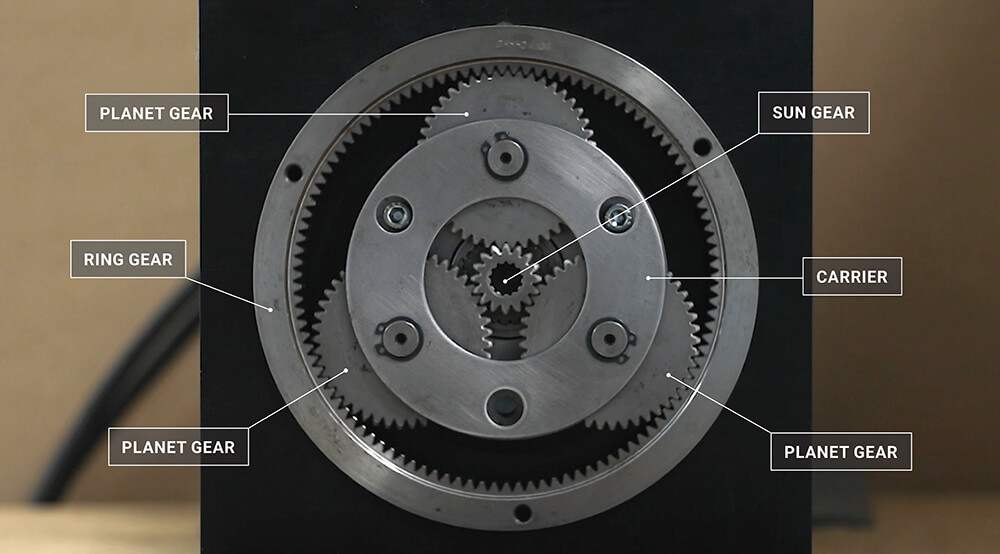
How do you calculate the gear ratio involving sun, planet, and ring gears?
The gear ratio in a planetary gear system can be calculated by considering the number of teeth on the sun gear, planet gears, and ring gear. The gear ratio determines the relationship between the input speed and the output speed of the system. Here’s how you can calculate the gear ratio:
- Step 1: Count the Teeth:
Count the number of teeth on the sun gear (S), the planet gears (P), and the ring gear (R). These numbers represent the respective gear’s tooth count.
- Step 2: Determine the Gear Arrangement:
Identify the gear arrangement. In a simple planetary gear system, the sun gear is at the center, surrounded by planet gears, and enclosed by the ring gear.
- Step 3: Calculate the Gear Ratio:
The gear ratio (GR) can be determined using the formula:
GR = (R + P) / S
Where:
- R represents the number of teeth on the ring gear
- P represents the number of teeth on the planet gears (assuming they have the same number of teeth)
- S represents the number of teeth on the sun gear
The resulting gear ratio represents the speed relationship between the input and output of the planetary gear system. A gear ratio greater than 1 indicates a speed reduction, while a gear ratio less than 1 indicates a speed increase.
It’s important to note that in more complex planetary gear systems, where there are multiple sets of planet gears or additional gears, the calculation of the gear ratio may involve considering multiple gear stages and their respective tooth counts.
In summary, to calculate the gear ratio involving sun, planet, and ring gears, you need to count the teeth on each gear and use the formula (R + P) / S, where R is the number of teeth on the ring gear, P is the number of teeth on the planet gears, and S is the number of teeth on the sun gear. This calculation provides the gear ratio that defines the speed relationship between the input and output of the planetary gear system.
How do planetary gears handle variations in direction and torque transmission?
Planetary gears are versatile mechanisms that can effectively handle variations in direction and torque transmission. Let’s explore how they achieve this:
- Direction Reversal:
Planetary gears are capable of transmitting torque in both forward and reverse directions. By changing the input and output connections, the direction of rotation can be reversed without the need for additional components or complex mechanisms. This makes planetary gears well-suited for applications where frequent changes in direction are required, such as automotive transmissions.
- Torque Amplification and Reduction:
One of the notable characteristics of planetary gears is their ability to amplify or reduce torque depending on the arrangement of gear components. Let’s consider a basic arrangement with a sun gear, planet gears, and a ring gear:
- Torque Amplification:
When the sun gear is the input and the ring gear is the output, the planet gears rotate on their own axes while also revolving around the sun gear. This arrangement allows for torque amplification, meaning the output torque can be higher than the input torque. This is particularly useful in applications where higher torque is required, such as heavy machinery or power transmission systems.
- Torque Reduction:
Conversely, by fixing the ring gear and using the sun gear as the output, the planet gears rotate on their own axes while also revolving around the fixed ring gear. In this configuration, the output torque is lower than the input torque, enabling torque reduction. This can be advantageous in applications where torque needs to be reduced, such as speed reduction systems or precision machinery.
- Combination of Gear Stages:
Planetary gears can be combined into multiple stages, with each stage having its own set of sun gears, planet gears, and ring gears. This arrangement allows for further variations in torque transmission. By connecting the output of one stage to the input of another, the torque can be further amplified or reduced, providing flexibility in power transmission systems.
- Custom Gear Ratios:
By selecting the appropriate sizes and numbers of teeth for the sun gears, planet gears, and ring gears, custom gear ratios can be achieved in planetary gear systems. This allows for precise control over torque transmission and enables the adaptation of the gear arrangement to specific application requirements.
In summary, planetary gears handle variations in direction and torque transmission through their ability to reverse direction without additional components, torque amplification or reduction based on gear arrangement, combination of multiple gear stages, and the ability to achieve custom gear ratios. These features make planetary gears a versatile choice for a wide range of applications requiring efficient and flexible power transmission.
How do planetary gears differ from other types of gear arrangements?
Planetary gears, also known as epicyclic gears, possess unique characteristics and differ from other types of gear arrangements in several ways. Let’s explore the distinguishing features of planetary gears:
- Internal Gear Meshing:
Unlike other gear arrangements where the gears typically mesh externally, planetary gears have internal gear meshing. This means that the gear teeth of the sun gear, planet gears, and ring gear are located on the inside surfaces, allowing for compact and space-efficient designs.
- Multiple Gear Sets:
Planetary gear systems consist of multiple gear sets working in parallel or series. These gear sets include the sun gear, planet gears, and ring gear. By combining and configuring these gear sets, different gear ratios and torque distributions can be achieved, providing versatility and flexibility in various applications.
- Central Sun Gear:
A distinctive feature of planetary gears is the presence of a central sun gear. The sun gear is typically driven by an input source, such as a motor or engine. It is located at the center of the gear arrangement and serves as the primary driver for overall gear operation.
- Orbiting Planet Gears:
In planetary gears, the planet gears rotate on their own axes while simultaneously orbiting around the sun gear. This combination of rotational and orbital movement allows for efficient torque transmission and enables the gear arrangement to achieve different gear ratios based on the relative sizes and positions of the gears.
- Compact Size:
One of the key advantages of planetary gears is their compact size. The internal gear meshing and the arrangement of multiple gear sets within a single gear system contribute to their space-saving design. This makes planetary gears suitable for applications where size and weight restrictions are important considerations.
- Wide Range of Applications:
Planetary gears find applications in various industries and mechanical systems. They are commonly used in automotive transmissions, industrial machinery, robotics, aerospace systems, and more. Their ability to achieve different gear ratios, transmit torque efficiently, and operate in compact spaces makes them versatile solutions in diverse engineering applications.
In summary, planetary gears differ from other types of gear arrangements due to their internal gear meshing, multiple gear sets, central sun gear, orbiting planet gears, compact size, and wide range of applications. These characteristics make planetary gears suitable for achieving various gear ratios, transmitting torque efficiently, and meeting the space requirements of different mechanical systems.


editor by CX 2023-12-06