China factory Custom CNC Machining Stainless Steel Pinion Gear Shaft Metal Plastic Spur Gear Brass Small Spiral Angular Straight Bevel Gear top gear
Product Description
Custom Cnc Machining Stainless Steel Pinion Gear Shaft Metal Plastic Spur Gear Brass Small Spiral Angular Straight Bevel Gear
Product Details
| Process | CNC machining,CNC milling, cnc lathe machining |
| material | steel, stainless steel, carbon steel,brass,C360 brass copper, aluminum 7075,7068 brass,C360 brass copper, aluminum Nylon, PA66, NYLON , ABS, PP,PC,PE,POM,PVC,PU,TPR,TPE,TPU,PA,PET,HDPE,PMMA etc |
| Quality Control | ISO9001 and ISO14001 |
| Dimension bore tolerances | -/+0.01mm |
| Quality standard | AGMA, JIS, DIN |
| Surface treatment | Blackening, plated, anodizing, hard anodizing etc |
| Gear hardness | 30 to 60 H.R.C |
| Size/Color | Gears and parts dimensions are according to drawings from customer, and colors are customized |
| Surface treatment | Polished or matte surface, painting, texture, vacuum aluminizing and can be stamped with logo etc. |
| Dimensions Tolerance | ±0.01mm or more precise |
| Samples confirmation and approval | samples shipped for confirmation and shipping cost paid by customers |
| Package | Inner clear plastic bag/outside carton/wooden pallets/ or any other special package as per customer’s requirements. |
| Delivery Time | Total takes 2~~8weeks usually |
| Shipping |
Usual FEDEX, UPS, DHL, TNT, EMS or base on customer’s requirement. |
Advantages of CHINAMFG CNC Machining Services
- Efficient CNC machining factory for mass production rapid prototyping service
- Average 7 days turnaround time and 99.85% on time delivery
- Multiple options of machining materials to meet specific properties.
- Fast free quotation within 24 hours after inquiry
- High customer satisfaction and loyalty
- Rich design and manufacturing experience
If you are looking for quality CNC machining services near me, our low cost CNC custom machining will review the design, build your quote, assess the cost and get your non-metal or metal fabrication parts into production orderly and efficiently.
Our Advantages
We have experienced team for CNC machining service, advanced technology, excellent equipment, strict management is the foundation of the company’s continuous development and expansion, and the precision CNC machined products win the trust of customers. We believe that through our continuous efforts and pursuit, we will be able to achieve mutual benefit and CHINAMFG with our customers!
Applications
Applications of CHINAMFG CNC Machining Services
CNC machining parts are all around you, they may be important components of your car and also can perform vital functions in your electrical equipment. CHINAMFG is an accomplished CNC supplier that engaged in a broad range of CNC machining applications.
Company Profile
Junying Metal Manufacturing Co., Limited was founded in 2005, with a registered capital of 3 million, and now has more than 100 employees. We are 1 of the China best CNC machining companies, specialize in low cost OEM CNC machining parts manufacturing. The products are mainly used in medical, electronic, aerospace, mechanical, communication, toys, intelligent equipment and other industries.
We have invested a lot quality and production environments. In 2015, We passed the quality system review of SGS Company and got the first “ISO9001:2015” certificate. In 2016, we passed the environment system review of SGS Company. CHINAMFG has carefully implemented each regulation in management details in accordance with ISO, and fully guaranteed the CNC machining product quality and customer satisfaction.
Production Process
How Does CNC Machining Work?
CNC machining process generates a part on a CNC machine from a computer design file. The process will go through:
- Load the CAD (Computer Aided Design) file into CAM (Computer Aided Manufacturing) software
- Determine tool paths based on the part geometry
- CAM software create digital instructions or G-Code tells machine what to do and how to do
- CNC machines take the execute the operations as the programming language
Packaging Details
Each product packed with plastic preservative, EPE, foam plastic bag, Carton outside, wood case or iron case or as per the customer’s special requirement.
Logistics
We prefer DHL or TNT express or other air freight between 1kg-100kg.
we prefer sea freight more than 100kg or more than 1CBM
As per customized specifications.
Payment
We accept payment by T/T, PayPal.
FAQ
Q: What do I need for offering a quote?
A: Please offer us 2D or 3D drawings (with material, dimension, tolerance, surface treatment and another technical requirement, etc.), quantity, application, or samples. Then we will quote the best price within 24h.
Q: What is your MOQ?
A: MOQ depends on our client’s needs, besides, we welcome trial orders before mass production.
Q: What is the production cycle?
A: It varies a lot depending on product dimension, technical requirements, and quantity. We always try to meet customers’ requirements by adjusting our workshop schedule.
Q: What kind of payment terms do you accept?
A.: T/T, PayPal.
Q: Is it possible to know how is my product going on without visiting your company?
A: We will offer a detailed production schedule and send weekly reports with digital pictures and videos which show the machining progress.
Q: If you make poor quality goods, will you refund our fund?
A: We make products according to drawings or samples strictly until they reach your 100% satisfaction. And actually we won’t take a chance to do poor quality products. We are proud of keeping the spirit of good quality.
For more questions, please send an inquiry or e-mail or call us! Thanks!
View More
| Application: | Motor, Electric Cars, Motorcycle, Machinery, Marine, Toy, Agricultural Machinery, Car |
|---|---|
| Hardness: | Soft Tooth Surface |
| Gear Position: | Internal Gear |
| Manufacturing Method: | Cast Gear |
| Toothed Portion Shape: | Spur Gear |
| Material: | Stainless Steel |
| Samples: |
US$ 50/Piece
1 Piece(Min.Order) | |
|---|
| Customization: |
Available
| Customized Request |
|---|
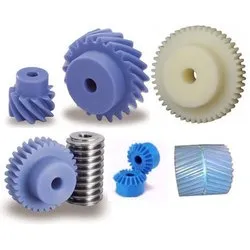
How do plastic gears contribute to reducing noise and vibration?
Plastic gears contribute to reducing noise and vibration in various applications. Here’s a detailed explanation of how they achieve this:
Plastic gears possess inherent properties that help dampen noise and vibration during operation. These properties, combined with specific design considerations, contribute to the reduction of noise and vibration in the following ways:
- Damping Characteristics: Plastic materials have inherent damping characteristics, meaning they have the ability to absorb and dissipate vibrations. When compared to metal gears, which are stiffer and transmit vibrations more efficiently, plastic gears can effectively reduce the transmission of vibrations through their damping properties.
- Reduced Resonance: Plastic gears have the ability to attenuate resonant frequencies, which are frequencies at which vibrations can be amplified. By properly designing the tooth profile, gear geometry, and material selection, plastic gears can shift or dampen these resonant frequencies, preventing excessive vibration and noise generation.
- Tighter Gear Mesh Tolerances: Plastic gears can be manufactured with tighter gear mesh tolerances, which refers to the amount of clearance or backlash between mating gear teeth. Tighter tolerances lead to better gear engagement and reduced impact or vibration during gear meshing, resulting in quieter operation.
- Surface Finishes: The surface finish of plastic gears can be optimized to reduce friction and noise. Smoother gear surfaces reduce the potential for gear tooth noise and improve the overall meshing characteristics between gears. Proper lubrication or the use of self-lubricating plastic materials can further enhance the noise-reducing properties.
- Flexibility in Tooth Design: Plastic gears offer greater flexibility in tooth design compared to metal gears. Engineers can optimize the tooth profile and modify the gear geometry to minimize noise and vibration. For example, incorporating modifications such as profile shifting, tip relief, or helical teeth can help reduce gear noise by promoting smoother and more gradual tooth engagements.
By leveraging these characteristics and design considerations, plastic gears can effectively reduce noise and vibration levels in various applications. This makes them particularly suitable for use in noise-sensitive environments, such as consumer electronics, automotive components, or office equipment.
It’s important to note that while plastic gears can contribute to noise and vibration reduction, the specific noise performance also depends on other factors within the overall system, such as gear arrangement, supporting structures, and the presence of other noise sources. Therefore, a holistic approach to noise reduction should be considered when incorporating plastic gears into a design.
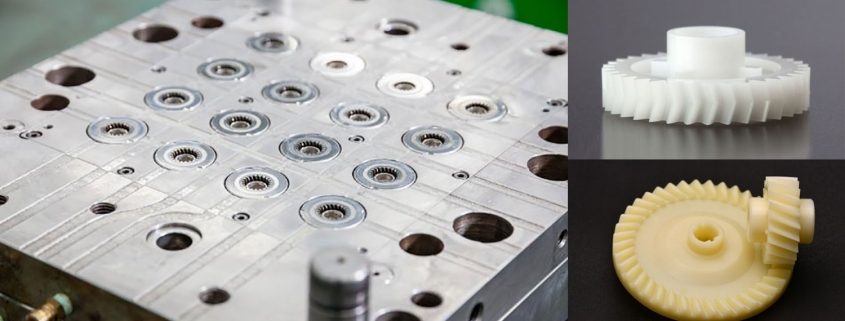
Are there specific design considerations for using plastic gears?
Yes, there are specific design considerations that need to be taken into account when using plastic gears. Here’s a detailed explanation of these considerations:
1. Material Selection: Choosing the right plastic material for the gear application is crucial. Different plastic materials have varying mechanical properties, such as strength, stiffness, and wear resistance. Consider factors such as load-bearing requirements, operating temperatures, environmental conditions, and compatibility with lubricants. It’s important to select a plastic material that can withstand the specific demands of the application.
2. Gear Geometry: The design of plastic gears should consider factors such as tooth profile, module or pitch, pressure angle, and tooth thickness. The gear geometry should be optimized to ensure proper meshing, efficient power transmission, and minimal noise and vibration. The design should also take into account the limitations and capabilities of the plastic material, such as its ability to form precise tooth profiles and maintain dimensional stability.
3. Clearances and Tolerances: Plastic gears may require different clearances and tolerances compared to metal gears. The coefficient of thermal expansion, dimensional stability, and manufacturing processes of plastic materials can affect the gear clearances. It’s important to consider the thermal expansion characteristics of the specific plastic material and provide appropriate clearances to accommodate temperature variations. Tight tolerances may result in binding or increased friction, while excessive clearances can lead to backlash and reduced gear accuracy.
4. Load Distribution: Distributing the load evenly across the gear teeth is essential for preventing premature wear and failure. Consider gear design elements such as tooth profile, tooth width, and the number of teeth to optimize load distribution. Reinforcing the gear teeth with fillets or other strengthening features can help improve load-bearing capacity and reduce stress concentrations.
5. Stiffness and Deflection: Plastic gears generally have lower stiffness compared to metal gears. The design should consider the potential for deflection or deformation under load. It may be necessary to increase the gear size, modify the tooth geometry, or incorporate additional support structures to enhance stiffness and minimize deflection. Analytical tools and simulations can be employed to assess and optimize gear design for stiffness and deflection.
6. Lubrication and Wear: Proper lubrication is important for the performance and durability of plastic gears. Consider the lubrication requirements of the specific plastic material and design features that facilitate effective lubricant distribution. Pay attention to potential wear mechanisms, such as adhesive wear or abrasive wear, and incorporate measures to minimize wear, such as optimized tooth profiles, lubricant selection, and sealing mechanisms.
7. Environmental Factors: Plastic gears may be subjected to various environmental factors such as temperature extremes, humidity, chemicals, and UV exposure. Evaluate the potential impact of these factors on the gear material and design. Select plastic materials that offer resistance to environmental degradation and consider protective measures, such as coatings or encapsulation, to enhance the gear’s resistance to environmental conditions.
8. Manufacturability: Consider the manufacturability of plastic gears during the design phase. Different plastic materials may have specific requirements or limitations for manufacturing processes such as injection molding or machining. Design features that facilitate efficient and cost-effective production, such as draft angles, parting lines, and tooling considerations, should be taken into account.
By considering these specific design considerations, such as material selection, gear geometry, clearances, load distribution, stiffness, lubrication, environmental factors, and manufacturability, it’s possible to optimize the design and performance of plastic gears for various applications.
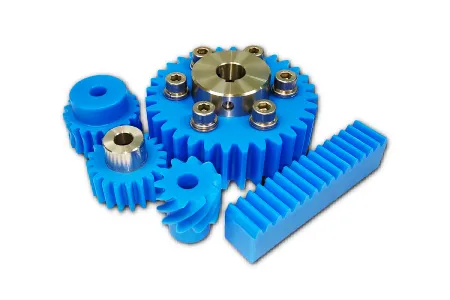
Can plastic gears replace metal gears in certain applications?
Yes, plastic gears can replace metal gears in certain applications. Here’s a detailed explanation:
Plastic gears offer a range of advantages that make them suitable alternatives to metal gears in specific scenarios. Some of the factors that determine whether plastic gears can replace metal gears include the application requirements, operating conditions, load capacity, and desired performance characteristics.
Advantages of Plastic Gears:
- Lightweight: Plastic gears are significantly lighter than metal gears, making them suitable for applications where weight reduction is important. This can lead to energy efficiency, reduced inertia, and lower wear on supporting components.
- Low Noise and Vibration: Plastic gears have inherent damping properties that help reduce noise and vibration levels during operation. This makes them suitable for applications where noise reduction is desired, such as in consumer electronics or office equipment.
- Corrosion Resistance: Certain plastic materials used in gear manufacturing exhibit excellent resistance to corrosion and chemicals. Plastic gears can be a suitable choice for applications in corrosive environments where metal gears may suffer from degradation.
- Self-Lubrication: Some plastic materials used for gear manufacturing have self-lubricating properties. This reduces friction and wear between gear teeth, eliminating the need for external lubrication and simplifying maintenance requirements.
- Cost-Effective: Plastic gears can be more cost-effective compared to metal gears, especially in large-scale production. Plastic materials are often less expensive than metals, and the manufacturing processes for plastic gears can be more efficient.
- Design Flexibility: Plastic gears offer greater design flexibility compared to metal gears. They can be molded into complex shapes, allowing for custom gear profiles and tooth geometries, resulting in optimized performance and efficiency for specific applications.
Limitations of Plastic Gears:
- High Torque and Load Capacity: Plastic gears may not have the same torque and load capacity as metal gears. In applications requiring high torque or heavy loads, metal gears may be more suitable due to their higher strength and durability.
- High Temperatures: Plastic gears have temperature limitations depending on the chosen material. In applications with high operating temperatures, metal gears that can withstand the heat may be necessary.
- Precision and Positioning: Plastic gears may not offer the same level of precision and positioning accuracy as metal gears. Applications that require tight tolerances and precise gear meshing may still require metal gears.
In summary, plastic gears can replace metal gears in certain applications where their advantages align with the specific requirements and operating conditions. It’s crucial to carefully evaluate the application needs, load capacity, temperature range, and other factors to determine if plastic gears are suitable replacements for metal gears.


editor by CX 2023-12-06