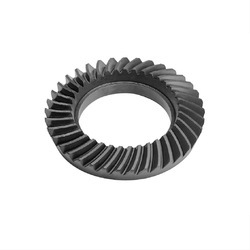
China supplier Precision Manufactured Powder Metallurgy Iron Helical Gear for Automobile with Great quality
Product Description
Product Description
| Type | Sintered Iron Oil-Retaining Bushing Powder Metallurgy |
| Process | CNC machining, Turning, Milling, Stamping, Grinding, Welding, Lathing, Cutting, Die casting, forging, cnc turning ,casting ,sintering ,bending , Painting |
| Material capacity | Aluminum: 5000series(5052…)/6000series(6061…)/7000series(7075…) Steel: Carbon Steel, Middle Steel, Steel Alloy, etc. Stainless Steel: 303/304/316,etc. Copper/Brass/Bronze/Red Copper, etc. |
| Surface treatment | Avaliable for Anodic treatment, electroplate, Zinc plating , black oxide finish |
| Size | Customized Sizes /According to Customer’s drawing or samples |
| Tolerance | PM: 0.01mm; CNC : 0.001mm-0.006mm |
| Testing equipment | Thickness gauge, microscope, Altimeter, Endoscopy,Full-testing |
| CCD Electroplate testing | Salt spray test; Potassium sulfide; Adhesion |
| QC system | 100% Inspection Before Shipment |
| Color | Natural, Requested, Customized |
| Certification | GJB 9001C-20XX |
| Package | Standard Packing/pp bag+carton, or as per customers’ request. |
| Application | Automobile, motorcycle, textile machinery, industrial sewing machine, power tools, hardware tools, electrical appliances, engineering machinery |
Sintered Iron Oil-Retaining Bushing Powder Metallurgy
Application
Our Advantages
FAQ
Q1. What is your terms of packing?
A: Generally, we pack our goods in neutral white boxes and brown cartons. If you have legally registered patent,
we can pack the goods in your branded boxes after getting your authorization letters.
Q2. What is your terms of payment?
A: T/T 30% as deposit, and 70% before delivery. We’ll show you the photos of the products and packages
before you pay the balance.
Q3. What is your terms of delivery?
A: EXW, FOB, CFR, CIF, DDU.
Q4. How about your delivery time?
A: Generally, it will take 30 to 60 days after receiving your advance payment. The specific delivery time depends
on the items and the quantity of your order.
Q5. Can you produce according to the samples?
A: Yes, we can produce by your samples or technical drawings. We can build the molds and fixtures.
Q6. What is your sample policy?
A: We can supply the sample if we have ready parts in stock, but the customers have to pay the sample cost and
the courier cost.
Q7. Do you test all your goods before delivery?
A: Yes, we have 100% test before delivery
Q8: How do you make our business long-term and good relationship?
A:1. We keep good quality and competitive price to ensure our customers benefit ;
2. We respect every customer as our friend and we sincerely do business and make friends with them,
no matter where they come from.
| Application: | Motor, Electric Cars, Motorcycle, Machinery, Agricultural Machinery, Car |
|---|---|
| Hardness: | Hardened Tooth Surface |
| Gear Position: | External Gear |
| Samples: |
US$ 5/Piece
1 Piece(Min.Order) | Order Sample |
|---|
| Customization: |
Available
| Customized Request |
|---|
.shipping-cost-tm .tm-status-off{background: none;padding:0;color: #1470cc}
| Shipping Cost:
Estimated freight per unit. |
about shipping cost and estimated delivery time. |
|---|
| Payment Method: |
|
|---|---|
|
Initial Payment Full Payment |
| Currency: | US$ |
|---|
| Return&refunds: | You can apply for a refund up to 30 days after receipt of the products. |
|---|
Can you explain the process of shifting gears smoothly in a manual car?
Shifting gears smoothly in a manual car is a skill that requires coordination and practice. Here’s a detailed explanation of the process:
1. Clutch Operation:
Before shifting gears, it’s essential to understand the operation of the clutch pedal. The clutch is used to temporarily disconnect the engine’s power from the transmission, allowing smooth gear engagement. To shift gears smoothly:
- Press the clutch pedal fully to disengage the clutch.
- Keep the clutch pedal depressed throughout the shifting process.
2. Throttle Control:
While shifting gears, it’s important to synchronize the engine speed (RPM) with the speed of the transmission. Here’s how to manage the throttle:
- Gradually release the accelerator pedal as you prepare to shift.
- Avoid abruptly lifting off the throttle, as it can cause a sudden drop in engine RPM.
3. Shifting Process:
Once the clutch is fully depressed, and the throttle is appropriately controlled, follow these steps to shift gears smoothly:
- Move the gear lever to the desired gear position while keeping the clutch pedal depressed.
- Avoid applying excessive force or rushing the gear lever movement.
- Wait for a brief moment after moving the gear lever to allow the gears to synchronize.
4. Releasing the Clutch:
After the gear lever is in the new position, smoothly release the clutch pedal while simultaneously modulating the throttle. Here’s how to do it:
- Gradually release the clutch pedal while applying gentle pressure on the accelerator pedal.
- Coordinate the release of the clutch with the increase in engine RPM.
- Avoid releasing the clutch too quickly or abruptly, as it can cause jerky gear engagement or stalling.
5. Practice and Smooth Transitions:
Smooth gear shifting requires practice and familiarity with the specific vehicle’s clutch and gearbox characteristics. Consider the following tips for achieving smooth transitions:
- Practice shifting gears in an open area with minimal traffic until you become comfortable.
- Develop a feel for the clutch engagement point, which is the position where the clutch starts to transmit power.
- Anticipate the need for gear changes by observing the engine RPM and road conditions.
- During upshifting, aim to shift gears when the engine RPM reaches a moderate level, typically between 2,000 and 3,000 RPM.
- During downshifting, match the engine RPM to the lower gear’s appropriate range to ensure smooth engagement.
Remember, mastering smooth gear shifting requires practice, coordination, and a good understanding of your vehicle’s clutch and gearbox. With time and experience, you’ll be able to shift gears seamlessly and enjoy a smoother driving experience.
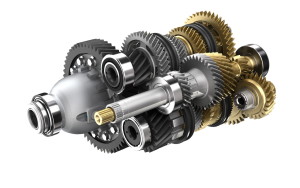
What is the impact of gear selection on fuel efficiency in a car?
Gear selection in a car has a significant impact on fuel efficiency. Here’s a detailed explanation:
1. Optimal Engine Speed:
Choosing the right gear allows the engine to operate at its optimal speed or within its “power band.” Each engine has a range of RPM (revolutions per minute) where it delivers the best balance of power and fuel efficiency. By selecting the appropriate gear, the engine can stay within this range, maximizing fuel efficiency.
2. Engine Load:
Gear selection affects the load on the engine. Higher gears, such as fifth or sixth gear, provide a higher gear ratio, reducing the engine’s rotational speed for a given vehicle speed. This reduces the load on the engine and can improve fuel efficiency, especially during highway driving where maintaining a steady speed is common.
3. Avoiding Over-Revving:
Shifting to a higher gear at the right time helps prevent the engine from over-revving. Over-revving occurs when the engine operates at excessively high RPM, which can waste fuel and potentially cause engine damage. By upshifting in a timely manner, the engine can run at a more efficient RPM range, leading to better fuel economy.
4. Acceleration and Deceleration:
The choice of gear during acceleration and deceleration also affects fuel efficiency. During acceleration, shifting up to higher gears smoothly and at appropriate RPM levels promotes fuel efficiency. Similarly, when decelerating, downshifting to lower gears while utilizing engine braking can save fuel by reducing the need for excessive braking and maintaining better control over vehicle speed.
5. Driving Conditions:
The impact of gear selection on fuel efficiency can vary based on driving conditions. For example, in hilly or mountainous terrains, downshifting to lower gears on uphill climbs can provide the necessary power while avoiding excessive fuel consumption. In stop-and-go city traffic, selecting lower gears can aid in smoother acceleration from a standstill, reducing fuel waste.
6. Manual vs. Automatic Transmissions:
The impact of gear selection on fuel efficiency can differ between manual and automatic transmissions. Manual transmissions offer more control over gear selection, allowing drivers to optimize fuel efficiency by choosing the most suitable gear for a given situation. On the other hand, modern automatic transmissions are designed to optimize fuel efficiency by automatically selecting the appropriate gear based on driving conditions and engine load.
In summary, gear selection plays a crucial role in determining fuel efficiency in a car. Optimal gear selection helps keep the engine operating at its most efficient RPM range, reduces engine load, prevents over-revving, and promotes smoother acceleration and deceleration. By understanding the relationship between gear selection and fuel efficiency, drivers can adopt driving habits that maximize fuel economy and reduce fuel consumption.
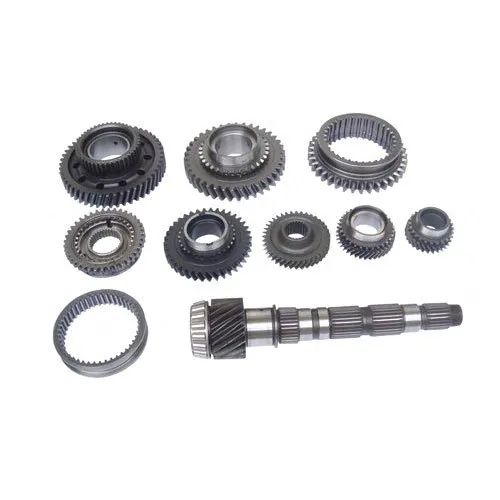
Can you explain the role of gear ratios in an automobile transmission?
Gear ratios play a crucial role in an automobile transmission. Here’s a detailed explanation:
In an automobile transmission, the gear ratio refers to the ratio of the rotational speed of the engine’s input shaft to the rotational speed of the transmission output shaft, which is connected to the wheels. Different gear ratios are achieved by using gears of varying sizes.
1. Speed and Torque Conversion: The primary function of gear ratios is to convert the engine’s high rotational speed and low torque into lower rotational speed and higher torque at the wheels. Lower gear ratios (such as first or second gear) provide high torque multiplication, which is useful for starting the vehicle or climbing steep hills. Higher gear ratios (such as fifth or sixth gear) allow the engine to operate at lower speeds while maintaining higher vehicle speeds, providing better fuel efficiency and reduced engine wear.
2. Acceleration and Power: By selecting the appropriate gear ratio, the transmission enables the driver to control the vehicle’s acceleration and power delivery. Lower gear ratios provide quick acceleration by multiplying the engine’s torque output. During rapid acceleration, the transmission may stay in lower gears to keep the engine operating within its optimal power band. Higher gear ratios are used for cruising at higher speeds, where less torque is needed to maintain the vehicle’s momentum.
3. Engine Performance: Gear ratios are crucial for optimizing engine performance. Engines have a specific range of speeds called the power band, where they deliver the most power efficiently. By selecting the right gear ratio, the transmission keeps the engine operating within its power band, ensuring optimal performance and responsiveness. This improves the overall driving experience and allows the engine to operate at its most efficient point, resulting in better fuel economy.
4. Load and Terrain Adaptation: Different gear ratios allow the vehicle to adapt to varying loads and terrains. When encountering uphill gradients or carrying heavy loads, lower gear ratios are used to provide the necessary torque for overcoming resistance. Conversely, on flat roads or when the vehicle is lightly loaded, higher gear ratios are utilized to maintain speed while reducing engine RPM and improving fuel efficiency.
5. Gear Shifting: The availability of different gear ratios facilitates gear shifting in manual transmissions. As the vehicle accelerates, the driver can shift to higher gears to reach higher speeds while maintaining optimal engine performance. Similarly, when decelerating or coming to a stop, downshifting to lower gears allows for engine braking and better control of the vehicle.
6. Mechanical Advantage: Gear ratios provide a mechanical advantage by multiplying the engine’s torque output. Lower gear ratios offer higher torque multiplication, enabling the vehicle to overcome resistance and handle demanding tasks. This mechanical advantage is particularly useful during towing, off-road driving, or situations requiring increased traction.
Overall, gear ratios in automobile transmissions enable the engine’s power and torque to be transmitted to the wheels efficiently. They allow for speed and torque conversion, adaptation to different driving conditions, optimization of engine performance, and control over the vehicle’s acceleration and power delivery.


editor by CX 2023-12-06