China Best Sales Factory Custom Bearing Outer Gear Ring High Precision Supply Black-Oxide Custom Girth Gear Large Size Steel Ring Spur Gear Price with high quality
Product Description
Key attributes
Other attributes
Applicable Industries
Manufacturing Plant, Machinery Repair Shops, Construction works
Weight (KG)
2000
Showroom Location
None
Video outgoing-inspection
Not Available
Machinery Test Report
Provided
Marketing Type
Ordinary Product
Warranty of core components
1 Year
Core Components
Gear
Place of Origin
ZheJiang , China
Condition
New
Warranty
1.5 years
Shape
Ring Gear
Standard or Nonstandard
Nonstandard
Tooth Profile
spur gear/helical gear/customized
Material
Steel
Processing
casting,Forging,hobbing
Pressure Angle
20/40/50/60 Customized
Brand Name
TS
Material
steel, stainless steel customized
Precision
standard precision grade per request
Technique
casting/forging/ customized
Heat Treatment
avaliable
Tooth Profile
Internal Spur/external spur/etc
Features
Professional Production
Application
Industry Machinery
Applicable Standard
ISO/DIN
Gear precision
ordinary/ 8e/7e/6e
Service
Customized OEM
Packaging and delivery
Packaging Details
TS Packaging Details:
1. Bearing surface is covered with the anti-rust oil first; And then wrapped with the plastic film;
2. And then packed with Kraft paper and professional belts;
3. At last, with wooden box totally at the outer packing to in void the rust or the moist;
4. Packaging can be done according to customer’s requirements.
Port
China any Port
Supply Ability
Supply Ability
1500 Set/Sets per Month
Show less
Lead time
| Quantity (sets) | 1 – 1 | > 1 |
| Lead time (days) | 30 | To be negotiated |
OUR WORKSHOPS
OUR EQUIPMENTS
Technology Process
|
Material |
Carbon steel,Alloy steel |
||
|
Structure |
Forging,casting |
||
|
Type of gear |
spur gear,helical gear,Planetary Gear |
||
|
Heat treatment |
Quenching and tempering |
||
|
Process |
forging, rough machining, QT, finish machining |
||
|
Main equipments |
hobbing,CNC machine |
||
|
Module |
up to 200 |
||
|
Precision of gear |
Grinding ISO Grade 5-7 & Hobbing ISO Grade 8-9 |
||
|
Inspection |
Raw material inspection, UT,physical property test,dimension inspect |
||
|
Application |
Mining machinery, mill, kiln and other equipment |
||
OUR CERTIFICATE
OUR CUSTOMER FEEDBACK
CONTACT
| Application: | Industry |
|---|---|
| Hardness: | Hb190-Hb300 |
| Gear Position: | External Gear |
| Samples: |
US$ 100/Piece
1 Piece(Min.Order) | Order Sample |
|---|
| Customization: |
Available
| Customized Request |
|---|
.shipping-cost-tm .tm-status-off{background: none;padding:0;color: #1470cc}
| Shipping Cost:
Estimated freight per unit. |
about shipping cost and estimated delivery time. |
|---|
| Payment Method: |
|
|---|---|
|
Initial Payment Full Payment |
| Currency: | US$ |
|---|
| Return&refunds: | You can apply for a refund up to 30 days after receipt of the products. |
|---|

How do you address noise and vibration issues in a spur gear system?
Noise and vibration issues in a spur gear system can significantly impact its performance, efficiency, and overall user experience. Here’s a detailed explanation of how to address noise and vibration issues in a spur gear system:
- Gear Design: Optimize the gear design to minimize noise and vibration. Consider factors such as tooth profile, gear module or pitch, and the number of teeth to ensure smooth and quiet gear operation. Proper gear design helps reduce gear meshing impacts and tooth-to-tooth variations, which are common sources of noise and vibration.
- Accurate Gear Alignment: Ensure precise gear alignment to minimize misalignment-induced noise and vibration. Misalignment between the gears can cause uneven loading, increased backlash, and gear meshing irregularities, leading to noise and vibration. Proper alignment techniques, such as using alignment tools or measuring devices, should be employed during gear installation and maintenance.
- Surface Finish and Tooth Quality: Ensure proper surface finish and high-quality tooth profiles on the gears. Rough surfaces or manufacturing defects can contribute to noise and vibration. Gears with accurate tooth profiles and smooth finishes experience better meshing and reduced friction, resulting in lower noise and vibration levels.
- Lubrication: Proper lubrication is crucial for reducing friction, wear, and noise generation in spur gear systems. Use the recommended lubricant type and ensure sufficient lubricant film thickness between gear teeth. Regular lubricant analysis and replacement are important to maintain optimal lubrication performance and minimize noise and vibration issues.
- Load Distribution: Evaluate the load distribution within the gear system to minimize localized loading and potential noise sources. Proper gear design, tooth profile optimization, and gear arrangement can help distribute the load evenly, reducing noise and vibration caused by uneven loading conditions.
- Resonance Analysis and Damping: Conduct resonance analysis to identify and address potential resonant frequencies within the gear system. Resonance can amplify noise and vibration. Techniques such as adding damping materials, using vibration isolators, or adjusting gear configurations can help mitigate resonance-related noise and vibration issues.
- Noise and Vibration Testing: Perform noise and vibration testing during the development and maintenance stages of the gear system. This involves using specialized equipment to measure and analyze noise and vibration levels. Testing helps identify specific sources of noise and vibration, allowing for targeted solutions and improvements.
- Isolation and Absorption: Implement isolation and absorption techniques to minimize noise and vibration transmission to surrounding structures or components. This can include using vibration isolators, resilient mounts, or incorporating vibration-absorbing materials to reduce the propagation of noise and vibration beyond the gear system.
- Regular Maintenance and Inspection: Implement a proactive maintenance program to monitor gear performance and identify potential noise and vibration issues. Regular inspections, including gear tooth wear analysis, lubricant checks, and alignment verification, allow for early detection and rectification of any problems that may contribute to noise and vibration.
By considering these approaches and implementing appropriate measures, it is possible to address noise and vibration issues in a spur gear system, resulting in quieter and smoother gear operation.
It’s important to note that the specific techniques and solutions for addressing noise and vibration may vary depending on the gear system’s application, design, and operating conditions. Consulting with gear manufacturers, industry experts, or vibration specialists can provide further guidance in addressing noise and vibration issues specific to a spur gear system.
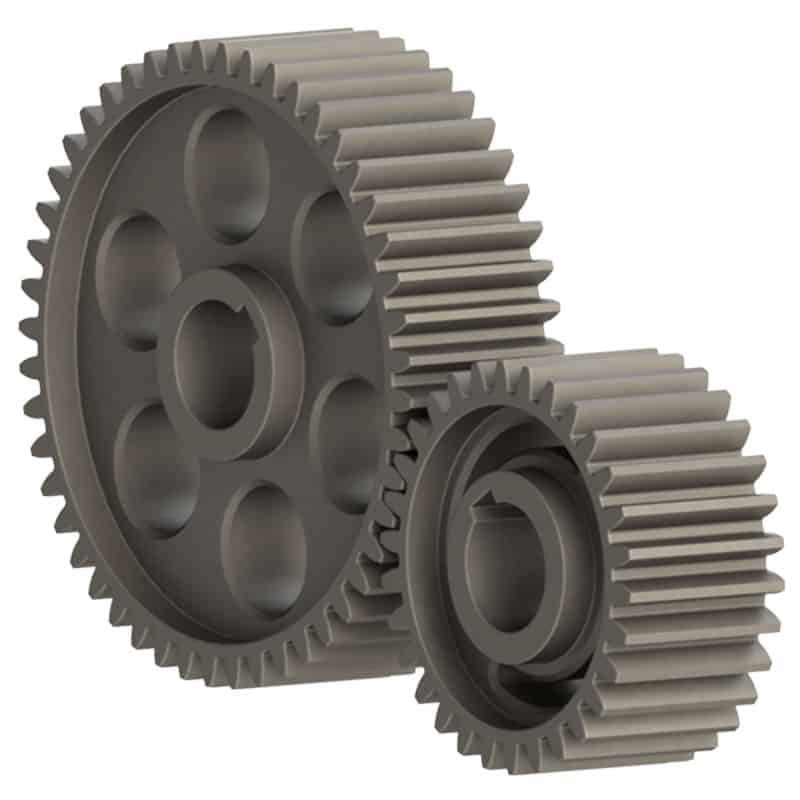
How do you install a spur gear system?
Installing a spur gear system involves several steps to ensure proper alignment, engagement, and operation. Here’s a detailed explanation of how to install a spur gear system:
- Preparation: Before installation, gather all the necessary components, including the spur gears, shafts, bearings, and any additional mounting hardware. Ensure that the gear system components are clean and free from debris or damage.
- Shaft Alignment: Proper shaft alignment is crucial for the smooth operation of a spur gear system. Ensure that the shafts on which the gears will be mounted are aligned accurately and parallel to each other. This can be achieved using alignment tools such as dial indicators or laser alignment systems. Adjust the shaft positions as needed to achieve the desired alignment.
- Positioning the Gears: Place the spur gears on the respective shafts in the desired configuration. Ensure that the gears are positioned securely and centered on the shafts. For shafts with keyways, align the gears with the key and ensure a proper fit. Use any necessary mounting hardware, such as set screws or retaining rings, to secure the gears in place.
- Checking Gear Engagement: Verify that the teeth of the gears mesh properly with each other. The gear teeth should align accurately and smoothly without any excessive gaps or interference. Rotate the gears by hand to ensure smooth and consistent meshing throughout their rotation. If any misalignment or interference is observed, adjust the gear positions or shaft alignment accordingly.
- Bearing Installation: If the spur gear system requires bearings to support the shafts, install the bearings onto the shafts. Ensure that the bearings are the correct size and type for the application. Press or slide the bearings onto the shafts until they are seated securely against any shoulder or bearing housing. Use appropriate methods and tools to prevent damage to the bearings during installation.
- Lubrication: Apply a suitable lubricant to the gear teeth and bearings to ensure smooth operation and reduce friction. Refer to the gear manufacturer’s recommendations for the appropriate lubrication type and amount. Proper lubrication helps minimize wear, noise, and heat generation in the gear system.
- Final Inspection: Once the gears, shafts, and bearings are installed, perform a final inspection of the entire spur gear system. Check for any unusual noises, misalignment, or binding during manual rotation. Verify that the gears are securely mounted, shafts are properly aligned, and all fasteners are tightened to the specified torque values.
It’s important to follow the specific installation instructions provided by the gear manufacturer to ensure proper installation and operation. Additionally, consult any applicable industry standards and guidelines for gear system installation.
By carefully following these installation steps, you can ensure a well-aligned and properly functioning spur gear system in your machinery or equipment.
What are the applications of spur gears?
Spur gears find a wide range of applications in various mechanical systems due to their simplicity, efficiency, and versatility. These gears are commonly used in numerous industries and equipment. Here’s a detailed explanation of the applications of spur gears:
- Automotive Industry: Spur gears are extensively used in automobiles for power transmission applications. They are employed in gearboxes, differentials, and transmission systems to transfer torque and rotational motion between the engine, wheels, and other components.
- Machinery and Manufacturing: Spur gears are widely utilized in machinery and manufacturing equipment. They play a crucial role in conveyor systems, machine tools, printing presses, textile machinery, packaging machinery, and various other industrial applications.
- Power Generation: Spur gears are employed in power generation systems such as wind turbines, hydroelectric turbines, and steam turbines. They help convert the rotational motion of the turbine blades into electricity by transmitting power from the rotor to the generator.
- Robotics and Automation: Spur gears are commonly used in robotics and automation systems. They are utilized in robotic joints, actuators, and drive systems to control motion and transmit torque accurately and efficiently.
- Aerospace and Aviation: Spur gears are found in various aerospace and aviation applications. They are used in aircraft landing gear systems, engine components, flight control systems, and auxiliary power units (APUs) to transmit power and control movement.
- Marine and Shipbuilding: Spur gears have applications in the marine and shipbuilding industry. They are used in propulsion systems, winches, steering mechanisms, and other equipment that require torque transmission and speed control.
- Appliances and Household Equipment: Spur gears are present in numerous household appliances and equipment. They are found in washing machines, dishwashers, mixers, food processors, garage door openers, and many other appliances that require rotational motion and power transmission.
- Power Tools: Spur gears are utilized in power tools such as drills, saws, grinders, and sanders. They help transmit power from the motor to the tool’s cutting or grinding components, enabling efficient operation.
- Medical Equipment: Spur gears are used in various medical devices and equipment. They can be found in imaging systems, surgical robots, medical pumps, and other applications that require precise motion control and torque transmission.
- Clocks and Watches: Spur gears are an essential component in mechanical clocks and watches. They are responsible for accurate timekeeping by transferring rotational motion from the mainspring or oscillator to the hour, minute, and second hands.
These are just a few examples of the broad range of applications where spur gears are utilized. Their simplicity, reliability, and ability to transmit power and motion efficiently make them a popular choice in various industries and equipment.


editor by CX 2023-12-13