China supplier POM Custom Cylindrical Planetary Pinion Spur Plastic Toy Gear manufacturer
Product Description
With a capable machining team and comprehensive knowledge of materials, advanced machineries and facilities, Energetic Industry served clients in broad field.
We can produce precision machining parts according to your idea, not only for material choosing, but also property requirements and shapes.
1. Customized material
| Materials Available | General Plastic: HDPE, PP, PVC, ABS, PMMA(Acrylic) ect. |
| Engineering Plastic: POM, PA6, MC nylon, Nylon 66, PTFE, UHMWPE,PVDF ect. | |
| High Performance Plastic: PPS, PEEK, PI, PEI ect. | |
| Thermosetting Plastic: Durostone, Ricocel sheet, G10, FR4, Bakelite ect. | |
| Spcial Plastic Material: Plastic +GF/CA/Oil/Brone/Graphit/MSO2/ceramic ect. | |
| Spcial Plastic Plastic Alloy: PE+PA, PP+PA, POM + PTFE ect. | |
| Metals: Carbon Steel, SS Steel, Brass, Iron, Bronze, Aluminum, Titanium | |
| Special parts: Metal + Plastic Combined Part |
2. Customized property
ESD, conductive, hardness, wear resistance, fire-resistant, corrosion resistance, impact strength, work temperature, UV resistant ect.
3. Customized shape with drawing
Gear, rollers, wheels, base part, spacers, blade, liner, rack, bearings, pulley, bearing sleeves, linear guide rail, sliding block, guide channel, spiral, washer, positioning strip, joint, sheath, CHINAMFG plate, retaining ring, slot, skating board, frame, cavity parts, CHINAMFG jig and fixture, PCB solder pallet, profiles.
Molds, cavity, Radiator fin, prototype, outermost shell, fittings and connectors, screws , bolt …
Further services of CNC machining:
Processing: Cutting, CNC machining, CNC milling and turning, drilling, grinding, bending, stamping, tapping, injection
Surface finish: Zinc-plated, nickel-plated, chrome-plated, silver-plated, gold-plated, imitation gold-plated
Application Field:
- Electronic and electrician
- Physical and Electronic Science Research
- Mineral and coal
- Aerospace
- Food processing
- Textile printing & dyeing industry
- Analytical instrument industry
- Medical device industry
- Semi conductor, solar, FPD industry
- Automotive industry
- Oil & Gas
- Automobile
- Machinery and other industrial ect.
| Material: | PA6 |
|---|---|
| Color: | Natural, Black, Red, Green, Customized |
| Processing: | CNC Machining |
| Packing: | Thick Carton Boxes |
| Outstanding Property: | Good Wear Resistant |
| Production Time: | 3~25 Days |
| Samples: |
US$ 1/Piece
1 Piece(Min.Order) | |
|---|
| Customization: |
Available
| Customized Request |
|---|
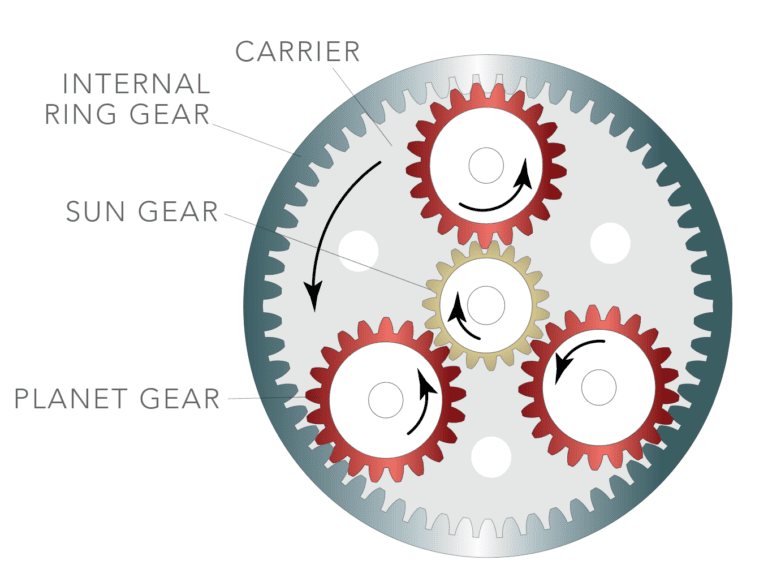
What are the advantages of using planetary gears in various mechanical setups?
Planetary gears offer several advantages that make them a popular choice in various mechanical setups. Let’s explore some of these advantages:
- Compact Size:
One key advantage of planetary gears is their compact size. The arrangement of multiple gears within a single housing allows for a high gear reduction ratio in a relatively small space. This compactness is particularly beneficial in applications where space is limited, such as automotive transmissions, robotics, and aerospace systems.
- High Torque Density:
Planetary gears provide high torque density, meaning they can transmit a significant amount of torque relative to their size and weight. The design of planetary gears allows for multiple gear teeth to engage simultaneously, distributing the load and increasing torque-carrying capacity. This makes them suitable for applications requiring high torque transmission, such as heavy machinery, industrial equipment, and automotive drivetrains.
- Efficient Power Transmission:
Planetary gears are known for their efficient power transmission capabilities. The multiple gear engagements and the distribution of load among the gears result in reduced friction and minimal power loss. This efficient power transmission ensures that a substantial portion of the input power is effectively transmitted to the output, leading to improved overall system efficiency.
- Multiple Gear Ratios:
Another advantage of planetary gears is their ability to achieve multiple gear ratios within a single gear system. By varying the sizes and numbers of teeth on the sun gear, planet gears, and ring gear, different gear ratios can be obtained. This flexibility allows for adapting to various speed and torque requirements without the need for additional gear sets or complex mechanisms.
- Shock Absorption:
Planetary gears have a natural ability to absorb shock loads and distribute them across multiple gear teeth. The multiple gear engagements and the design characteristics of planetary gears help mitigate shocks and impacts, preventing damage to the gear system and the connected components. This makes them suitable for applications that involve sudden changes in load or intermittent operation.
- Precise Motion Control:
Due to their design, planetary gears offer precise motion control. The combination of rotational and orbital movements of the planet gears allows for smooth and accurate motion transmission. This feature is particularly useful in applications requiring precise positioning, such as robotics, automation systems, and medical equipment.
In summary, the advantages of using planetary gears in various mechanical setups include compact size, high torque density, efficient power transmission, multiple gear ratios, shock absorption, and precise motion control. These advantages make planetary gears well-suited for a wide range of applications across industries, offering reliability, efficiency, and versatility.
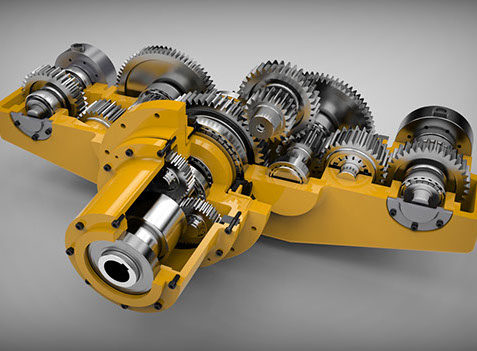
Can planetary gears be used in aerospace and aviation applications?
Planetary gears find extensive use in aerospace and aviation applications due to their unique characteristics and advantages. Let’s explore how planetary gears can be utilized in the aerospace and aviation industry:
- Aircraft Engines:
Planetary gears play a crucial role in aircraft engines, especially in the reduction gearbox. The reduction gearbox connects the high-speed turbine shaft with the low-speed propeller shaft, allowing efficient power transmission while maintaining optimal propeller speed. Planetary gears within the reduction gearbox help achieve the required gear ratios and torque conversion, ensuring smooth and reliable engine operation.
- Landing Gear Systems:
Planetary gears are also utilized in landing gear systems of aircraft. These gears provide the necessary torque and force to retract and extend the landing gear during takeoff and landing. Planetary gears offer compactness, high torque capacity, and the ability to handle heavy loads, making them suitable for this critical application.
- Actuation Systems:
Actuation systems in aerospace and aviation, such as those used for flight control surfaces, also benefit from the use of planetary gears. These gears enable precise and reliable movement of control surfaces, such as ailerons, elevators, and rudders. Planetary gears’ ability to handle high torques, provide accurate positioning, and withstand varying loads makes them well-suited for actuation systems.
- Satellite and Spacecraft Mechanisms:
In satellite and spacecraft applications, planetary gears are utilized in various mechanisms. They can be found in solar array drives, antenna pointing systems, and deployment mechanisms for scientific instruments. Planetary gears offer compactness, high torque transmission, and the ability to handle the extreme conditions of space environments.
- Auxiliary Power Units (APUs):
APUs in aircraft are responsible for providing auxiliary power during ground operations and in-flight emergencies. Planetary gears are often employed in APU systems to transfer power from the engine to the auxiliary systems, such as electrical generators or hydraulic pumps. These gears ensure efficient power transmission and reliable operation of the APU.
In summary, planetary gears have significant applications in aerospace and aviation. They are utilized in aircraft engines, landing gear systems, actuation systems, satellite and spacecraft mechanisms, as well as auxiliary power units. The compact size, high torque capacity, precise positioning, and reliable operation of planetary gears make them well-suited for these critical applications in the aerospace and aviation industry.
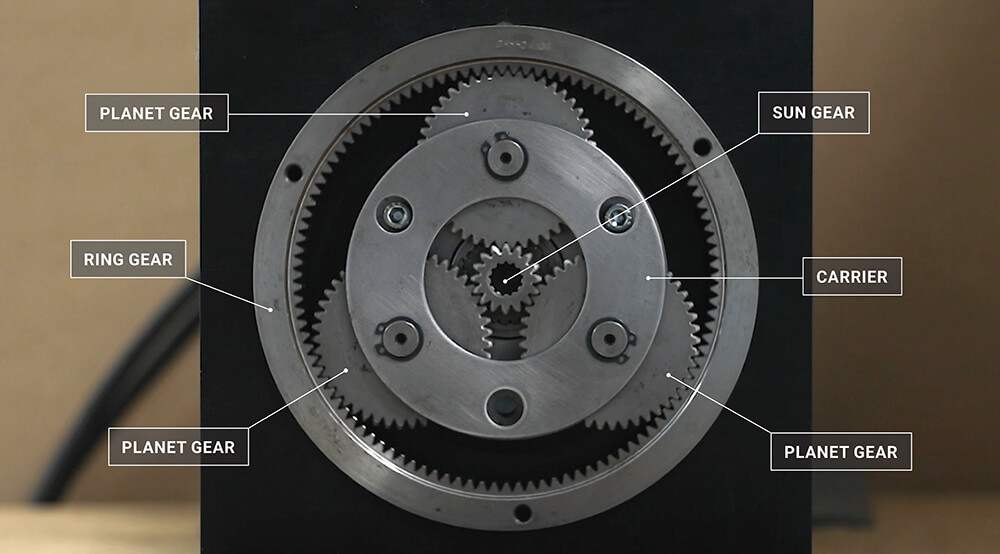
How do planetary gears differ from other types of gear arrangements?
Planetary gears, also known as epicyclic gears, possess unique characteristics and differ from other types of gear arrangements in several ways. Let’s explore the distinguishing features of planetary gears:
- Internal Gear Meshing:
Unlike other gear arrangements where the gears typically mesh externally, planetary gears have internal gear meshing. This means that the gear teeth of the sun gear, planet gears, and ring gear are located on the inside surfaces, allowing for compact and space-efficient designs.
- Multiple Gear Sets:
Planetary gear systems consist of multiple gear sets working in parallel or series. These gear sets include the sun gear, planet gears, and ring gear. By combining and configuring these gear sets, different gear ratios and torque distributions can be achieved, providing versatility and flexibility in various applications.
- Central Sun Gear:
A distinctive feature of planetary gears is the presence of a central sun gear. The sun gear is typically driven by an input source, such as a motor or engine. It is located at the center of the gear arrangement and serves as the primary driver for overall gear operation.
- Orbiting Planet Gears:
In planetary gears, the planet gears rotate on their own axes while simultaneously orbiting around the sun gear. This combination of rotational and orbital movement allows for efficient torque transmission and enables the gear arrangement to achieve different gear ratios based on the relative sizes and positions of the gears.
- Compact Size:
One of the key advantages of planetary gears is their compact size. The internal gear meshing and the arrangement of multiple gear sets within a single gear system contribute to their space-saving design. This makes planetary gears suitable for applications where size and weight restrictions are important considerations.
- Wide Range of Applications:
Planetary gears find applications in various industries and mechanical systems. They are commonly used in automotive transmissions, industrial machinery, robotics, aerospace systems, and more. Their ability to achieve different gear ratios, transmit torque efficiently, and operate in compact spaces makes them versatile solutions in diverse engineering applications.
In summary, planetary gears differ from other types of gear arrangements due to their internal gear meshing, multiple gear sets, central sun gear, orbiting planet gears, compact size, and wide range of applications. These characteristics make planetary gears suitable for achieving various gear ratios, transmitting torque efficiently, and meeting the space requirements of different mechanical systems.


editor by CX 2023-12-15