China Best Sales OEM Service ISO9001: 2005 Precision Planetary Gearbox Gear bevel gearbox
Product Description
Product Description
| Material: | 45#Steel,20CrMnTi,40Cr,20CrNiMo,20MnCr5,GCR15SiMn,42CrMo,2Cr13stainless steel,Nylon,Bakelite,Copper,Aluminium.etc |
| Process: | The main process is Gear Hobbing, Gear Shaping and Gear Grinding, Selecting production process according to the different products. |
| Heat Treatmente: | Carburizing and quenching ,High-frequency quenching,Nitriding, Hardening and tempering, Selecting heat treatment according to the different materials. |
| Testing Equipment | Rockwell hardness tester 500RA,
Double mesh instrument HD-200B & 3102, Gear measurement center instrument CNC3906T other High precision detection equipments |
| Certification | 0.1-90 kg |
| Casting Size: | Max linear size: 1200 mm, Max diameter size: 600 mm |
| Machining tolerace: | GB/T19001-2016/ISO9001:2015 |
| Machining surface roughness: | Ra0.8 ~ 6.3 um |
| Material standard: | GB, ASTM, AISI, DIN, BS, JIS, NF, AS, AAR |
| Usage: | Used in printing machine, cleaning machine, medical equipment, garden machine, construction machine, electric car, valve, forklift, transportation equipment and various gear reducers.etc |
| Quality control: | 100% inspection before packing |
| Manufacture Standard | 5-8 Grade ISO1328-1997. |
Company Profile
SIMIS CASTING, established in year of 2004, is a professional foundry, including integrating development and production together, specialized in producing various kinds of investment casting parts, and CHINAMFG parts. These casting parts are widely used in automobile industry, railway vehicle, construction machine, municipal works, pipeline, petrochemical industry, mine, electric utility industry and so on.
SIMIS has 6 affiliated casting workshop and 2 professional CNC machining workshops. There are 500 staffs and 40 engineers now in our company. Its annual production capacity for all types of casting parts is about 3000 tons. Holding over 100 sets of advanced casting parts, machining and test equipments.
It is also equipped with many advanced CNC machining center, CNC turning center, CNC milling machine and CNC lathes. It can do the heat-treatment, electricity polishing, mirror polishing and CNC machining at the request of clients.
Application Field
Testing Ability
| Dimensional | Non-Destructive Tests(N.D.T.) | Chemical & Mechanical |
| Surface Roughness Test | Dye Penetrant | Chemical analysis |
| Microscopic Measurement | Radiography (RT) | Metallography |
| 3D ScHangZhou | Magnetic Particle (MT) | Tensile Strength |
| CMM | Ultra-Sonic (UT) | Yield Strength |
| Impact Test | Hardness Test | Elongation Rate |
| Shrinkage Rate |
Surface Treatment
FAQ
Q1:Are you manufactory or trade company?
A1:We are an enterprise integrating manufacturer and trade for many years already in ZheJiang province, China. And we are AAA grade credit enterprise, and also we have cooperative plants to provide other services such as plating and coating .
Q2: How could I get a free quotation?
A2:Please send us your drawings by Alibaba or email. The file format is PDF / DWG / STP / STEP / IGS and etc. IF there are no drawings, we can make the drawings according to your samples!
Q3:How to control quality?
A3:First, all raw materials are inspected by the quality control department before they are put into storage. Second, during the casting process, 3 times of spectral analysis were performed at the front, middle and back respectively. Third, after the parts are cleaned, perform a first visual inspection to check whether the product has casting defects before sending it to the next process. Fourth, conduct a comprehensive QC inspection of each part before shipment, including chemical composition, mechanical properties and other specific tests. Transactions can be through Alibaba’s trade assurance.
Q4:Can we have our Logo or company name to be printed on your products or package?
A4:Sure. Your Logo could be printed on your products by Hot Stamping, Printing, Embossing, UV Coating, Silk-screen Printing or Sticker.
| Application: | Motor, Electric Cars, Motorcycle, Machinery, Marine, Toy, Agricultural Machinery, Car |
|---|---|
| Hardness: | Hardened Tooth Surface |
| Gear Position: | External Gear |
| Samples: |
US$ 5/Piece
1 Piece(Min.Order) | Order Sample |
|---|
| Customization: |
Available
| Customized Request |
|---|
.shipping-cost-tm .tm-status-off{background: none;padding:0;color: #1470cc}
|
Shipping Cost:
Estimated freight per unit. |
about shipping cost and estimated delivery time. |
|---|
| Payment Method: |
|
|---|---|
|
Initial Payment Full Payment |
| Currency: | US$ |
|---|
| Return&refunds: | You can apply for a refund up to 30 days after receipt of the products. |
|---|
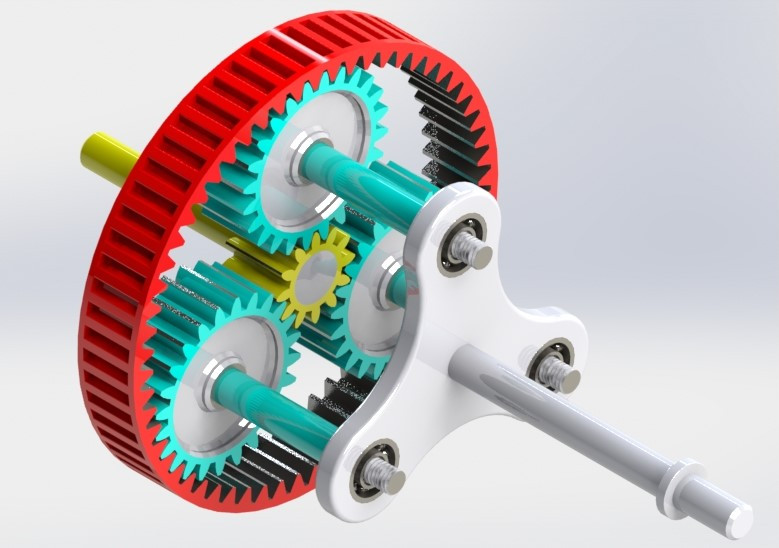
How do planetary gears handle changes in speed and torque distribution?
Planetary gears are capable of effectively handling changes in speed and torque distribution due to their unique design and configuration. Let’s explore how planetary gears handle these changes:
- Speed Changes:
Planetary gears can handle speed changes by utilizing the different gear ratios they offer. By adjusting the sizes and numbers of teeth on the sun gear, planet gears, and ring gear, different gear ratios can be achieved. When the input speed is applied to the sun gear, it gets transmitted to the planet gears, resulting in a specific output speed. By changing the gear ratio, the output speed can be adjusted accordingly. This ability to vary the gear ratio allows planetary gears to adapt to different speed requirements in mechanical systems.
- Torque Distribution:
Planetary gears excel in distributing torque across multiple gear teeth, ensuring efficient torque transmission and load sharing. The planet gears are meshed with both the sun gear and the ring gear, enabling torque to be transmitted through multiple contact points simultaneously. This distributed torque distribution helps in reducing stress on individual gear teeth and enhances the overall torque-carrying capacity of the gear system. The load is shared among the planet gears, preventing excessive wear and minimizing the risk of gear failure.
- Torque Amplification:
Planetary gears can also handle torque amplification, allowing for increased torque output compared to the input torque. By fixing the ring gear and inputting power to the sun gear, the planet gears rotate and contribute to multiplying the torque. The arrangement of multiple gear sets in a compact design enables torque amplification, making planetary gears suitable for applications that require high torque output while maintaining a smaller physical size.
- Load Balancing:
Another aspect of torque distribution in planetary gears is load balancing. The planet gears distribute the load across multiple gear teeth, reducing the concentration of forces on individual teeth. This load balancing capability results in improved gear system durability and longevity. It also helps in minimizing vibration, noise, and wear, ensuring smoother and more reliable operation.
- Flexible Configuration:
Planetary gears offer flexibility in their configuration, allowing for the accommodation of changes in speed and torque distribution. The number of planet gears, the size of the gears, and their arrangement can be adjusted to meet specific application requirements. This flexibility enables planetary gears to handle a wide range of speed and torque variations, making them adaptable to different mechanical setups.
In summary, planetary gears handle changes in speed and torque distribution through their ability to adjust gear ratios, distribute torque across multiple gear teeth, amplify torque, balance loads, and accommodate flexible configurations. These characteristics make planetary gears suitable for applications that require precise control over speed and torque, efficient power transmission, and reliable performance.
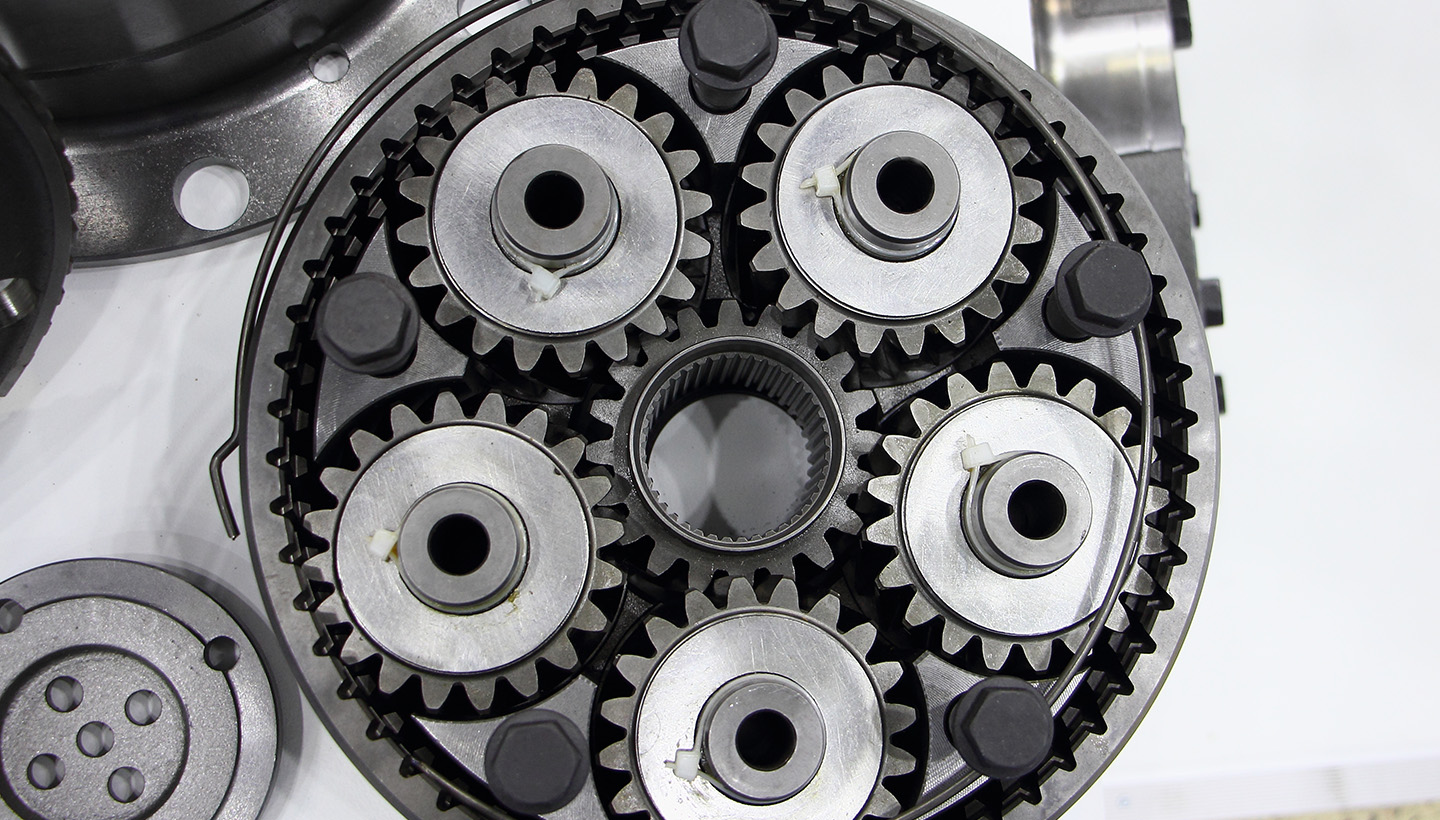
How do planetary gears contribute to speed reduction and torque amplification?
Planetary gears offer the capability of both speed reduction and torque amplification, making them versatile components in various mechanical systems. Let’s explore how planetary gears achieve these functions:
- Speed Reduction:
Planetary gears can reduce rotational speed by utilizing their gear arrangement. The key elements involved in speed reduction are the sun gear, planet gears, and ring gear. Consider the following scenarios:
- Epicyclic Gear Set:
In a basic planetary gear arrangement, when the sun gear is used as the input and the ring gear is fixed, the planet gears rotate on their own axes while also revolving around the sun gear. This configuration causes the output speed to be lower than the input speed. The reduction in speed is determined by the gear ratios between the sun gear, planet gears, and ring gear.
- Multiple Stages:
Planetary gears can be combined into multiple stages, with each stage having its own set of sun gears, planet gears, and ring gears. By connecting the output of one stage to the input of another, the rotational speed can be further reduced. This allows for greater flexibility in achieving the desired speed reduction in complex mechanical systems.
- Torque Amplification:
Planetary gears are also capable of amplifying torque, enabling them to handle higher loads and provide increased output torque. The torque amplification occurs in the following scenarios:
- Epicyclic Gear Set:
When the sun gear is used as the input and the ring gear is the output, the planet gears rotate on their own axes while also revolving around the sun gear. This arrangement allows for torque amplification, meaning the output torque can be higher than the input torque. The specific torque amplification factor depends on the gear ratios and the number of planet gears in the system.
- Combination of Gear Stages:
By combining multiple stages of planetary gears, torque amplification can be further increased. Each stage contributes to the overall torque amplification, allowing the system to handle even higher loads and transmit greater torque.
In summary, planetary gears contribute to speed reduction by utilizing the gear ratios between the sun gear, planet gears, and ring gear. They achieve torque amplification by utilizing the arrangement of the gears in an epicyclic gear set, as well as through the combination of multiple gear stages. These capabilities make planetary gears valuable in various applications where speed reduction and torque amplification are required, such as automotive transmissions, industrial machinery, and power transmission systems.
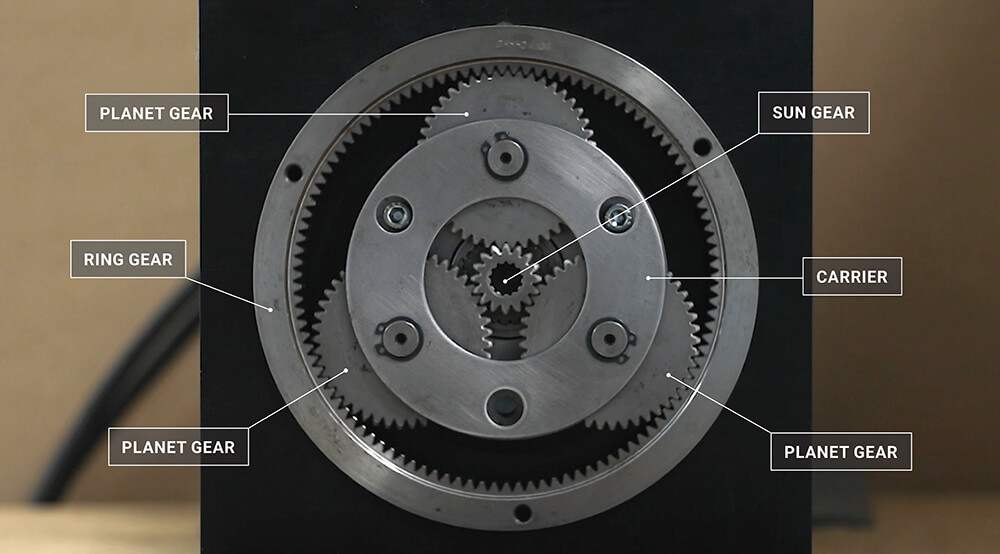
How do planetary gears differ from other types of gear arrangements?
Planetary gears, also known as epicyclic gears, possess unique characteristics and differ from other types of gear arrangements in several ways. Let’s explore the distinguishing features of planetary gears:
- Internal Gear Meshing:
Unlike other gear arrangements where the gears typically mesh externally, planetary gears have internal gear meshing. This means that the gear teeth of the sun gear, planet gears, and ring gear are located on the inside surfaces, allowing for compact and space-efficient designs.
- Multiple Gear Sets:
Planetary gear systems consist of multiple gear sets working in parallel or series. These gear sets include the sun gear, planet gears, and ring gear. By combining and configuring these gear sets, different gear ratios and torque distributions can be achieved, providing versatility and flexibility in various applications.
- Central Sun Gear:
A distinctive feature of planetary gears is the presence of a central sun gear. The sun gear is typically driven by an input source, such as a motor or engine. It is located at the center of the gear arrangement and serves as the primary driver for overall gear operation.
- Orbiting Planet Gears:
In planetary gears, the planet gears rotate on their own axes while simultaneously orbiting around the sun gear. This combination of rotational and orbital movement allows for efficient torque transmission and enables the gear arrangement to achieve different gear ratios based on the relative sizes and positions of the gears.
- Compact Size:
One of the key advantages of planetary gears is their compact size. The internal gear meshing and the arrangement of multiple gear sets within a single gear system contribute to their space-saving design. This makes planetary gears suitable for applications where size and weight restrictions are important considerations.
- Wide Range of Applications:
Planetary gears find applications in various industries and mechanical systems. They are commonly used in automotive transmissions, industrial machinery, robotics, aerospace systems, and more. Their ability to achieve different gear ratios, transmit torque efficiently, and operate in compact spaces makes them versatile solutions in diverse engineering applications.
In summary, planetary gears differ from other types of gear arrangements due to their internal gear meshing, multiple gear sets, central sun gear, orbiting planet gears, compact size, and wide range of applications. These characteristics make planetary gears suitable for achieving various gear ratios, transmitting torque efficiently, and meeting the space requirements of different mechanical systems.


editor by CX 2023-12-15