China Professional High Efficiency Coaxial Inline Servo Motor Right Angle Precise Low Backlash Helical Precision Gear Head, Planetary Gear Unit supplier
Product Description
High Efficiency Coaxial Inline Servo Motor Precise Low Backlash Helical Precision Gear Head, Planetary Gear Unit
Features:
1. Using involute gear transmission, alloy steel with carbonize & quencher heat treatment, precision level
of gear grinding could reach ISO class 5, the profile and axial modification could enhance the bearing
capacity, stability of mesh and low noise.
2. With integral output shaft and bearing support for both sides of planet wheel, realizing higher precision
and higher rigidity.
3. Small backlash, the accurate CHINAMFG can reach within 3 arcmin as clients’ request.
4. Gyration parts of the input side with dynamic balance treatment can make sure the gearbox running
steadily at high speed.
5. It can combine with any servo motor, can be designed for special combination, and easy for mounting.
(It can be specially designed to accept any type of servo motor, mounting is convenient)
6. Simple for maintenance, it doesn’t need to change the oil(grease) during the service life time.
Product photo:
Specification:
| ANG Precision Planetary Gearbox | |||
| Model | 40-220 | Type | Coaxial or Right angle |
| Ratio | 1/3 ~ 1/512 | Torque | 40-3000Nm |
| Efficiency | 98% | Input/Output shaft material | 40Cr |
| Housing material | 42CrMo | Machining precision of gears | 6 Grade |
| Gear material | 20CrMnTi | Lubricating oil | Synthetic Grease |
| Surface hardness of gears | HRC58-62 | Heat treatment | Carbonize & quencher |
| Brand of bearings | C&U, HRB | Vibration | ≤15μm |
| Brand of oil seal | SKF | Oil Temp. rise (MAX) | 40ºC |
| Noise (MAX) | 55-70 dB | Noise (MAX) | 70º |
FAQ
Q: Can you make the gearbox with customization?
A: Yes, we can customize per your request, like power, voltage, speed, shaft size, flange, terminal box, IP grade, etc.
Q: Do you provide samples?
A: Yes. Sample is available for testing.
Q: What is your MOQ?
A: It is 1pcs for the beginning of our business.
Q: What’s your lead time?
A: Standard product need 5-30days, a bit longer for customized products.
Q: Do you provide technology support?
A: Yes. Our company have design and development team, we can provide technology support if you
need.
Q: How to ship to us?
A: It is available by air, or by sea, or by train.
Q: How to pay the money?
A: T/T and L/C is preferred, with different currency, including USD, EUR, RMB, etc.
Q: How can I know the product is suitable for me?
A: >1ST confirm drawing and specification >2nd test sample >3rd start mass production.
Q: Can I come to your company to visit?
A: Yes, you are welcome to visit us at any time.
Q: How shall we contact you?
A: You can send inquiry directly, and we will respond within 24 hours.
/* March 10, 2571 17:59:20 */!function(){function s(e,r){var a,o={};try{e&&e.split(“,”).forEach(function(e,t){e&&(a=e.match(/(.*?):(.*)$/))&&1
| Application: | Machinery |
|---|---|
| Function: | Change Drive Torque |
| Layout: | Coaxial or Right Angle |
| Samples: |
US$ 300/Piece
1 Piece(Min.Order) | Order Sample |
|---|
| Customization: |
Available
| Customized Request |
|---|
.shipping-cost-tm .tm-status-off{background: none;padding:0;color: #1470cc}
| Shipping Cost:
Estimated freight per unit. |
about shipping cost and estimated delivery time. |
|---|
| Payment Method: |
|
|---|---|
|
Initial Payment Full Payment |
| Currency: | US$ |
|---|
| Return&refunds: | You can apply for a refund up to 30 days after receipt of the products. |
|---|
How do planetary gears handle changes in speed and torque distribution?
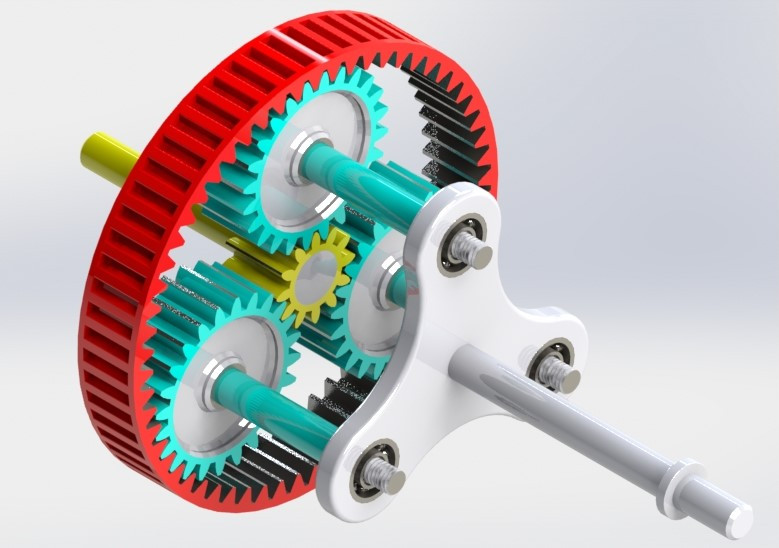
Planetary gears are capable of effectively handling changes in speed and torque distribution due to their unique design and configuration. Let’s explore how planetary gears handle these changes:
- Speed Changes:
Planetary gears can handle speed changes by utilizing the different gear ratios they offer. By adjusting the sizes and numbers of teeth on the sun gear, planet gears, and ring gear, different gear ratios can be achieved. When the input speed is applied to the sun gear, it gets transmitted to the planet gears, resulting in a specific output speed. By changing the gear ratio, the output speed can be adjusted accordingly. This ability to vary the gear ratio allows planetary gears to adapt to different speed requirements in mechanical systems.
- Torque Distribution:
Planetary gears excel in distributing torque across multiple gear teeth, ensuring efficient torque transmission and load sharing. The planet gears are meshed with both the sun gear and the ring gear, enabling torque to be transmitted through multiple contact points simultaneously. This distributed torque distribution helps in reducing stress on individual gear teeth and enhances the overall torque-carrying capacity of the gear system. The load is shared among the planet gears, preventing excessive wear and minimizing the risk of gear failure.
- Torque Amplification:
Planetary gears can also handle torque amplification, allowing for increased torque output compared to the input torque. By fixing the ring gear and inputting power to the sun gear, the planet gears rotate and contribute to multiplying the torque. The arrangement of multiple gear sets in a compact design enables torque amplification, making planetary gears suitable for applications that require high torque output while maintaining a smaller physical size.
- Load Balancing:
Another aspect of torque distribution in planetary gears is load balancing. The planet gears distribute the load across multiple gear teeth, reducing the concentration of forces on individual teeth. This load balancing capability results in improved gear system durability and longevity. It also helps in minimizing vibration, noise, and wear, ensuring smoother and more reliable operation.
- Flexible Configuration:
Planetary gears offer flexibility in their configuration, allowing for the accommodation of changes in speed and torque distribution. The number of planet gears, the size of the gears, and their arrangement can be adjusted to meet specific application requirements. This flexibility enables planetary gears to handle a wide range of speed and torque variations, making them adaptable to different mechanical setups.
In summary, planetary gears handle changes in speed and torque distribution through their ability to adjust gear ratios, distribute torque across multiple gear teeth, amplify torque, balance loads, and accommodate flexible configurations. These characteristics make planetary gears suitable for applications that require precise control over speed and torque, efficient power transmission, and reliable performance.
What are the considerations for lubrication and maintenance of planetary gears?
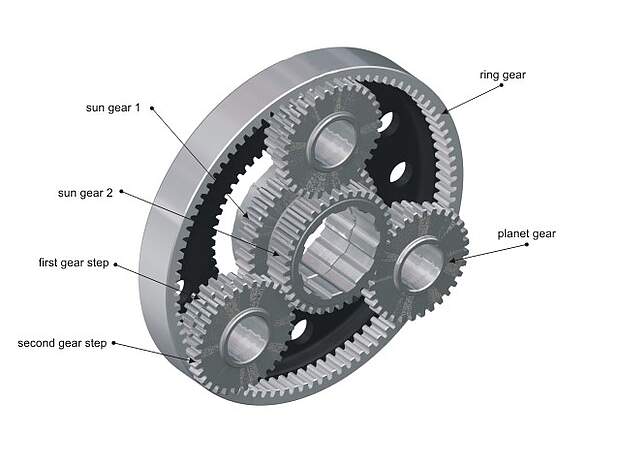
Proper lubrication and maintenance are crucial for the reliable and efficient operation of planetary gears. Let’s explore the key considerations for lubrication and maintenance:
- Lubrication:
Effective lubrication is essential to reduce friction, wear, and heat generation in planetary gears. Consider the following aspects:
- Lubricant Selection:
Choose a lubricant specifically designed for gear systems with the appropriate viscosity and additives to ensure proper film formation and protection against wear. Consult the manufacturer’s recommendations or industry standards for suitable lubricants.
- Lubricant Contamination:
Prevent contamination of the lubricant by keeping the gear system clean and free from debris, dust, and moisture. Use proper sealing techniques and consider filtration systems to maintain the lubricant’s cleanliness and performance.
- Lubrication Frequency:
Follow the recommended lubrication intervals provided by the equipment manufacturer. Factors such as operating conditions, load, and temperature can affect the lubrication frequency. Regularly monitor the lubricant condition and conduct oil analysis to determine if lubricant replacement or additional lubrication is required.
- Maintenance:
Regular maintenance helps ensure the longevity and optimal performance of planetary gears. Consider the following maintenance aspects:
- Inspection:
Periodically inspect the gear system for signs of wear, damage, misalignment, or abnormal noise. Detecting issues at an early stage allows for timely maintenance and prevents further damage.
- Alignment:
Proper alignment of the gear components is crucial to distribute the load evenly and prevent premature wear. Regularly check and adjust the gear alignment as per the manufacturer’s specifications.
- Torque and Load:
Ensure that the gear system operates within the recommended torque and load limits. Excessive loads can lead to increased wear and decreased gear life. Consider the application requirements and ensure the gear system is appropriately sized and rated.
- Temperature:
Monitor the operating temperature of the gear system. Excessive heat can degrade the lubricant’s performance and accelerate wear. Proper cooling mechanisms, such as fans or heat exchangers, may be required in high-temperature environments.
In summary, proper lubrication and maintenance are essential for planetary gears. Choose suitable lubricants, prevent contamination, follow recommended lubrication intervals, inspect for wear, ensure proper alignment, consider torque and load limits, monitor operating temperature, and conduct regular maintenance. By adhering to these considerations, you can prolong the lifespan, enhance performance, and minimize the risk of gear failure in planetary gear systems.
How do planetary gears differ from other types of gear arrangements?
Planetary gears, also known as epicyclic gears, possess unique characteristics and differ from other types of gear arrangements in several ways. Let’s explore the distinguishing features of planetary gears:
- Internal Gear Meshing:
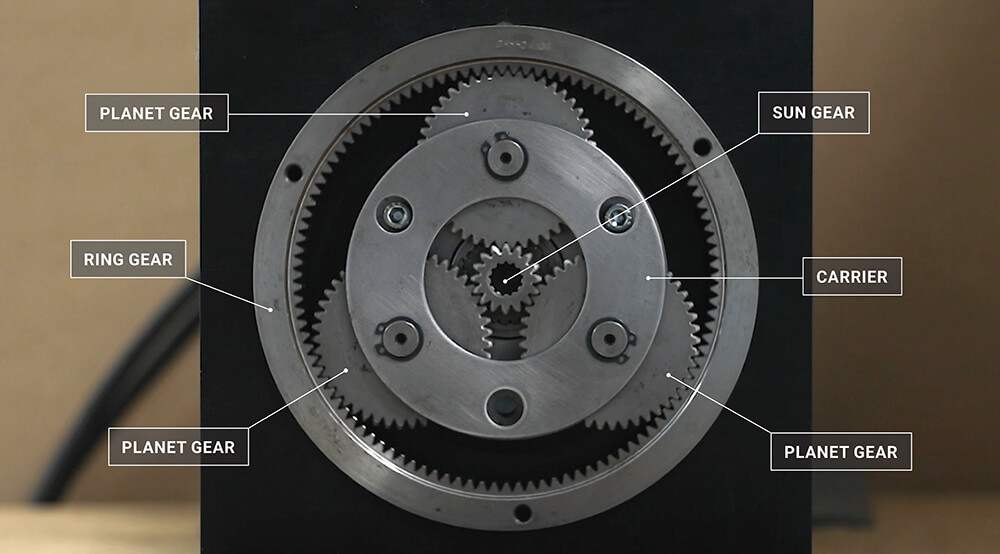
Unlike other gear arrangements where the gears typically mesh externally, planetary gears have internal gear meshing. This means that the gear teeth of the sun gear, planet gears, and ring gear are located on the inside surfaces, allowing for compact and space-efficient designs.
- Multiple Gear Sets:
Planetary gear systems consist of multiple gear sets working in parallel or series. These gear sets include the sun gear, planet gears, and ring gear. By combining and configuring these gear sets, different gear ratios and torque distributions can be achieved, providing versatility and flexibility in various applications.
- Central Sun Gear:
A distinctive feature of planetary gears is the presence of a central sun gear. The sun gear is typically driven by an input source, such as a motor or engine. It is located at the center of the gear arrangement and serves as the primary driver for overall gear operation.
- Orbiting Planet Gears:
In planetary gears, the planet gears rotate on their own axes while simultaneously orbiting around the sun gear. This combination of rotational and orbital movement allows for efficient torque transmission and enables the gear arrangement to achieve different gear ratios based on the relative sizes and positions of the gears.
- Compact Size:
One of the key advantages of planetary gears is their compact size. The internal gear meshing and the arrangement of multiple gear sets within a single gear system contribute to their space-saving design. This makes planetary gears suitable for applications where size and weight restrictions are important considerations.
- Wide Range of Applications:
Planetary gears find applications in various industries and mechanical systems. They are commonly used in automotive transmissions, industrial machinery, robotics, aerospace systems, and more. Their ability to achieve different gear ratios, transmit torque efficiently, and operate in compact spaces makes them versatile solutions in diverse engineering applications.
In summary, planetary gears differ from other types of gear arrangements due to their internal gear meshing, multiple gear sets, central sun gear, orbiting planet gears, compact size, and wide range of applications. These characteristics make planetary gears suitable for achieving various gear ratios, transmitting torque efficiently, and meeting the space requirements of different mechanical systems.


editor by CX 2023-12-25