China Good quality Customer High Precision Manufacturer Pinion/Steel /Straight/Helical //Planetary/Transmission/CNC Machining/Drive Gear worm gearbox
Product Description
1.Chain used
sprocketes are manufactured with a tooth profile and dimensional precision to bring out the maximum performance of the chain you will use.
2. Number of teeth
sprockets are available with small and large numbers of teeth to match your usage conditions.
|
Single pitch sprocket |
Double pitch sprocket |
||||
|
*Chain matched:35(06C) /06BTeeth:from 9-120 *Chain matched:40(08A) /08BTeeth:from 9-120 *Chain matched:50(10A) /10BTeeth:from 9-120 *Chain matched:60(12A) /12BTeeth:from 9-120 *Chain matched:80(16A) /16B Teeth:from 9-120 *Chain matched:100(20A)/20B Teeth:from 9-120 *Chain matched:120(24A) /24B Teeth:from 9-120 *Chain matched:140(28A) /28B Teeth:from 9-120 *Chain matched:160(32A) /32B Teeth:from 9-120 *Chain matched:200(40A) /40B Teeth:from 9-120 |
*P=25.4mm Teeth:from 7-100
*P=31.8mm Teeth:from 7-100
*P=38.1mm Teeth:from 7-100
*P=50.8mm Teeth:from 7-100
*P=63.5mm Teeth:from 7-100 |
3. Consturction
4. Material
Carbon Steel, Stainless Steel,Aluminum, Nylon, POM, Copper, Brass,42CrMo,40Cr,A3 and so on.
5. Bore
Pilot bore, finished bore, taper bore, bearing hole and special bore
6. Treatment
Heat Treatment: Hardening and Tempering, High Frequency Quenching, Carburizing Quenching and so on.
Surface Treatment: Zinc Plating, Chrome plated, Black oxide Treatment, Spray Paint, Mirror Finish, Sand-blasting and so on.
FAQ
1. Are you manufacturer or trade company ?
We are a manufacturing factory founded in 1987 ,with trade team for international service.
2. What terms of payment you usually use ?
T/T . 30% deposit ,and 70% before finish production .Price :FOB ZheJiang .
3. Can you make products according to customer”s design ?
Yes , we can make according to customer”s drawing and samples .OED and ODM are acceptable.
4.How long is your delivery time ?
Genarally it is 5-15 days afte rthe deposit .It will take more days customized.
5. What do I need for offering a quote ?
Please offer us 2D or 3D drawing (with material ,dimension,surface treatment and other technical datas etc.), quantity ,or samples .
Then we will quote the best price .
/* March 10, 2571 17:59:20 */!function(){function s(e,r){var a,o={};try{e&&e.split(“,”).forEach(function(e,t){e&&(a=e.match(/(.*?):(.*)$/))&&1
| Standard Or Nonstandard: | Standard |
|---|---|
| Application: | Machinery, Agricultural Machinery |
| Hardness: | Hardened Tooth Surface |
| Samples: |
US$ 0.1/Piece
1 Piece(Min.Order) | Order Sample free
|
|---|
| Customization: |
Available
| Customized Request |
|---|
.shipping-cost-tm .tm-status-off{background: none;padding:0;color: #1470cc}
|
Shipping Cost:
Estimated freight per unit. |
about shipping cost and estimated delivery time. |
|---|
| Payment Method: |
|
|---|---|
|
Initial Payment Full Payment |
| Currency: | US$ |
|---|
| Return&refunds: | You can apply for a refund up to 30 days after receipt of the products. |
|---|
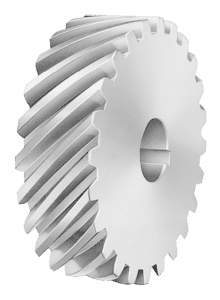
Are helical gears suitable for high-torque applications?
Helical gears are indeed well-suited for high-torque applications. Their design features and characteristics make them capable of handling significant torque loads without compromising performance or durability. Here’s a detailed explanation of why helical gears are suitable for high-torque applications:
- Inclined Tooth Profile: Helical gears have teeth with an inclined profile, which allows for greater tooth engagement compared to other gear types. This increased contact area spreads the load over multiple teeth, distributing the torque more evenly. As a result, helical gears can handle higher torque levels without exceeding the strength limits of the gear teeth.
- Large Contact Ratio: The inclined tooth design of helical gears also contributes to a large contact ratio, which refers to the number of teeth in contact at any given moment. The large contact ratio enables helical gears to transmit torque more smoothly and efficiently. It reduces localized stress on individual teeth, minimizing the risk of tooth failure and enhancing the gear’s ability to handle high-torque loads.
- High Load-Carrying Capacity: Helical gears are known for their high load-carrying capacity. The inclined tooth profile and larger contact area allow helical gears to distribute the torque load over a broader surface, reducing the stress on individual teeth. This design feature enables helical gears to handle higher torque levels without experiencing premature wear or failure.
- Gradual Tooth Engagement: During gear meshing, the inclined teeth of helical gears gradually engage, resulting in a smooth and gradual transfer of torque. This gradual engagement helps to reduce impact and shock loads, which can be detrimental to gear performance. By minimizing sudden torque spikes, helical gears maintain a consistent and reliable torque transmission, making them suitable for high-torque applications.
- Efficient Power Transmission: Helical gears offer efficient power transmission, even in high-torque applications. The inclined tooth design reduces sliding friction between the gear teeth, resulting in lower energy losses and improved overall efficiency. This efficiency is particularly beneficial in high-torque applications where power consumption and heat generation need to be minimized.
- Ability to Handle Variable Torque: Helical gears are capable of handling variable torque loads effectively. The gradual tooth engagement and larger contact area allow helical gears to accommodate fluctuations in torque without compromising performance. This flexibility makes helical gears suitable for applications where torque requirements may vary during operation.
In summary, helical gears are well-suited for high-torque applications due to their inclined tooth profile, large contact ratio, high load-carrying capacity, gradual tooth engagement, efficient power transmission, and ability to handle variable torque. These characteristics make helical gears reliable and durable in demanding industrial scenarios where high torque levels are encountered.
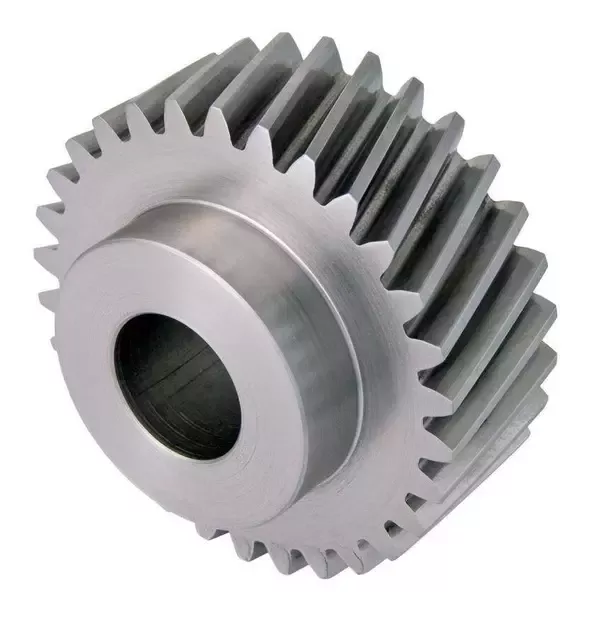
Can helical gears be used in precision manufacturing equipment?
Yes, helical gears can be used in precision manufacturing equipment, and they are often chosen for their specific advantages in such applications. Helical gears offer several features that make them suitable for precision manufacturing equipment. Here is a detailed explanation:
- Smooth and Precise Operation: Helical gears provide smooth and precise operation due to their gradual engagement of teeth. The helical tooth profile allows for gradual contact between mating gears, resulting in reduced noise, vibration, and backlash. The smooth operation is essential in precision manufacturing equipment where precise motion control and accuracy are required.
- High Load Capacity: Helical gears have high load-carrying capacity due to the larger contact area between the teeth compared to other gear types. This feature is beneficial in precision manufacturing equipment that may encounter heavy loads or high torque requirements. The increased load capacity ensures the gears can withstand the forces involved in precision machining or manufacturing processes.
- Efficiency: Helical gears can achieve high efficiency levels, especially when properly designed and manufactured. The helical tooth profile allows for efficient power transmission with minimal energy losses. In precision manufacturing equipment, high efficiency is desirable to maximize the utilization of input power and minimize heat generation.
- Compact Design: Helical gears have a compact design that allows for efficient use of space in precision manufacturing equipment. The helical gear configuration can provide a higher gear ratio in a smaller package compared to other gear types, making it suitable for equipment with limited space or complex layouts.
- Wide Range of Applications: Helical gears are versatile and can be used in various precision manufacturing equipment. They are commonly found in gearboxes, machine tools, milling machines, lathes, robotics, printing presses, and other equipment where precise motion control and high accuracy are required.
When using helical gears in precision manufacturing equipment, it is crucial to consider factors such as gear quality, material selection, lubrication, and proper alignment. High-quality gear manufacturing processes, accurate gear tooth profiles, and precise gear alignment are essential for achieving the desired precision and performance in manufacturing equipment.
Overall, helical gears are a popular choice in precision manufacturing equipment due to their smooth operation, high load capacity, efficiency, and compact design. Their versatility and ability to deliver precise motion control make them well-suited for various applications in precision manufacturing.
Can you explain the concept of helical gear teeth and their orientation?
The concept of helical gear teeth and their orientation is essential to understanding the design and operation of helical gears. Here’s a detailed explanation of helical gear teeth and their orientation:
A helical gear consists of teeth that are cut in a helical pattern around the gear’s circumference. Unlike spur gears, which have teeth that are perpendicular to the gear axis, helical gears have teeth that are angled or inclined with respect to the gear axis. This inclination gives the teeth a helix shape, resulting in the name “helical” gears.
The orientation of helical gear teeth is defined by two main parameters:
- Helix Angle: The helix angle represents the angle formed between the tooth surface and an imaginary line perpendicular to the gear axis. It determines the degree of inclination or spiral of the gear teeth. The helix angle is typically measured in degrees. Positive helix angles indicate a right-hand helix, where the teeth slope in a right-hand direction when viewed from the gear’s end. Negative helix angles represent a left-hand helix, where the teeth slope in a left-hand direction. The helix angle affects the gear’s performance characteristics, including tooth engagement, load distribution, and axial thrust.
- Lead Angle: The lead angle is the angle formed by the helical tooth and a plane perpendicular to the gear axis. It represents the angle of advance of the helix over one revolution of the gear. The lead angle is equal to the helix angle divided by the gear’s number of teeth. It is commonly used to define the helical gear’s size and pitch.
The helical tooth orientation offers several advantages over spur gears:
- Smooth and Quiet Operation: The helical shape of the teeth allows for gradual engagement and disengagement during gear rotation. This results in smoother and quieter operation compared to spur gears, which often produce noise due to the sudden contact between teeth.
- Increased Load-Carrying Capacity: The helical tooth design provides a larger contact area between meshing gears compared to spur gears. This increased contact area allows helical gears to transmit higher loads and handle greater torque without excessive wear or tooth failure.
- Load Distribution: The helical orientation of the teeth enables load distribution along the tooth face. Multiple teeth are engaged simultaneously, distributing the load across a broader surface area. This characteristic helps minimize stress concentrations and increases the gear’s durability.
- Axial Thrust Load: The helical tooth engagement introduces axial forces and thrust loads along the gear axis. These forces must be properly supported and managed in the gear system design to ensure smooth operation and prevent excessive wear or failure.
The design and manufacturing of helical gears require specialized cutting tools and machining processes. The helical teeth are typically generated using gear hobbing or gear shaping methods. The tooth profile is carefully designed to ensure proper meshing and minimize noise, vibration, and wear.
In summary, helical gear teeth have a helical or spiral shape, which distinguishes them from the perpendicular teeth of spur gears. The orientation of helical gear teeth is defined by the helix angle and lead angle. Helical gears offer advantages such as smooth operation, increased load-carrying capacity, load distribution, and axial thrust load. These characteristics make helical gears suitable for applications that require efficient power transmission, precise motion control, and reduced noise and vibration.


editor by CX 2023-12-26