China best Cement Mill Casting Steel Segment Girth Ring Gear worm and wheel gear
Product Description
Cement Mill Casting Steel Segment Girth Ring Gear
Casting & forging ability
CITICHL is the casting & forging center in central-south China, possessing 50t electric arc furnace, 60t LF ladle refining furnace, and 60t VD/VOD refining furnace, etc. We can pour 350t liquid steel 1 time and yields more than 200,000t of high quality liquid steel and can produce the high quality steel of more than 260 steel grades such as carbon steel, structural alloy steel and the structural steel, refractory steel and stainless steel of special requirement. The maximum weight of casting, gray casting, graphite cast iron and non-ferrous casting is 200t, 30t, 20t and 205t separately.
The company is the forging center in central-south China. It is very powerful in forging. The single free forging is 100t(max weight). We can roll rings of different sections of carbon steel, alloy steel, high temperature alloy and non-ferrous alloys such as copper alloy, aluminum alloy and titanium alloy. The maximum diameter is 5.5m and single piece of the forging weighs 10t. We have 8400t, 3150t, 1600t, water press and RAW 200/160-5000/750 large-size ring mill of high precision in Asia made in WAGNER, Germany.
Heat treatment ability
The company is the heat treatment base in national machinery trade in central and south China, possessing Φ3×1.6m carburizing furnace, Φ2.3×17m,Φ2.3×9.5m shaft furnace, 8.5×13m,5×15m,6×14.5m,4.5×18m automatic controlled car type heat treatment CHINAMFG group. We can supply the quenched and tempered part over 45t, the carburizedand quenched gear and pinion below 20t, shaft≤5.7m in length and the induced girth ring diameter≤5m
Our girth gears Features
Module Range: 10 Module to 70 Module.
Diameter : Min 800mm to16000 mm.
Weight : Max 120 MT single piece.
Three different designs: Fabricated steel – forged ring – rolled plate
Standards/Certificates :• CHINAMFG EN ISO • AWS • ASTM • ASME • DIN
Girth gear cutting machines
Φ16m CNC hobbing Machine
Φ12m Gear cutting machine (Switzerland)
Φ10m hobbing machine (Germany)
Φ4m CNC high speed hobbing machine (Germany)
Φ1.6m Horizontal CNC hobbing machine (Germany)
Φ5m CNC profile gear grinding machine (Germany)
Φ2.8m CNC Profile gear grinding machine (Germany)
Φ1.25m CNC Profile gear grinding machine (Germany)
Φ1m CNC Profile gear grinding machine (Germany)
Specifications of Gear :
| No. | Item | Description | |
| 1 | Diameter | ≤15m | |
| 2 | Module | ≤45 | |
| 3 | Material | Cast Alloy Steel, Cast Carbon Steel, Forged Alloy Steel, Forged Carbon Steel | |
| 4 | Structure From | Integrated, Half to Half, Four Pieces and More Pieces | |
| 5 | Heat Treatment | Quenching & Tempering, Normalizing & Tempering, Carburizing & Quenching & Tempering | |
| 6 | Tooth Form | Annular Gear, Outer Gear Ring | |
| 7 | Standard | ISO, EN, DIN, AISI, ASTM, JIS, IS, GB |
Inspection and Test Outline of Girth Gear:
| No. | Item | Inspection Area | Acceptance Criteria | Inspection Stage | Certificates |
| 1 | Chemical Composition |
Sample | Material Requirement | When Smelting After Heat Treatment |
Chemical Composition Report |
| 2 | Mechanical Properties |
Sample(Test Bar on the Gear Body) | Technical Requirement | After Heat Treatment | Mechanical Properties Report |
| 3 | Heat Treatment |
Whole Body | Manufacturing Standard | During Heat Treatment | Heat Treatment Report Curves of Heat Treatment |
| 4 | Hardness Test |
Tooth Surface, 3 Points Per 90° | Technical Requirement | After Heat Treatment | Hardness Teat Report |
| After Semi Finish Machining |
|||||
| 5 | Dimension Inspection |
Whole Body | Drawing | After Semi Finish Machining |
Dimension Inspection Report |
| Finish Machining | |||||
| 6 | Magnetic Power Test (MT) | Tooth Surface | Agreed Standard | After Finish Gear Hobbing |
MT Report |
| 7 | UT | Spokes Parts | Agreed Standard | After Rough Machining | UT Report |
| After Welded | |||||
| After Semi Finish Machining |
|||||
| 8 | PT | Defect Area | No Defect Indicated | After Digging After Welded |
PT Record |
| 9 | Mark Inspection | Whole Body | Manufacturing Standard | Final Inspection | Pictures |
| 10 | Appearance Inspection |
Whole Body | CIC’s Requirement | Before Packing (Final Inspection) |
|
| 11 | Anti-rust Inspection |
Whole Body | Agreed Anti-rust Agent | Before Packing | Pictures |
| 12 | Packing Inspection |
Whole Body | Agreed Packing Form | During Packing | Pictures |
Facilities For Manufacturing Gear ring:
| No. | Item | Description |
| 1 | Smelting & Casting Capability | 40t ,50t, 80t Series AC Electric Arc Furnace 2×150t, 60t LF Ladle Refining Furnace 150t, 60t Series VD/VOD Furnace 20×18m Large Pouring Facility We can pour 900t refining liquid steel one time, and achieve vacuum poured 600t steel ingots. We can produce the high quality steel of more than 260 steel grades as carbon steel,structural alloy steel and the structural steel, refractory steel and stainless steel of special requirement. The maximum weight of casting steel, gray casting, graphite cast iron and non-ferrous casting is 600t, 200t, 150t and 20t separately. |
| 2 | Forging Capability | The only one in the word, the most technologically advanced and the largest specification18500t Oil Press, equipped with 750t.m forging operation machine 8400t Water Press 3150t Water Press 1600t Water Press Φ5m High Precision Ring Mill ( WAGNER,Germany) Φ12m High Precision Ring Mill We can roll rings of different sections of carbon steel, alloy steel, high temperature alloy steel and non-ferrous alloys such as copper alloy, aluminum alloy and titanium alloy. Max. Diameter of rolled ring will be 12m. |
| 3 | Heat Treatment Capability | 9×9×15m,8×8×12m,6×6×15m,15×16×6.5m,16×20×6m ,7×7×17m Series Heat Furnace and Heat Treatment Furnaces φ2.0×30m,φ3.0×5.0m Series Heat Treatment Furnaces φ5.0×2.5m,φ3.2×1.5m,φ3.0×5.0m,φ2.0×5m Series Carburizing Furnaces & Nitriding Furnaces & Quenching Bathes φ2.0×30m Well Type CNC Electrical Furnaces Φ3.0×5.0M Horizontal Gas Temperature-differential Furnace Double-frequency and Double-position Quenching Lathe of Pinion Shaft |
| 4 | Machining Capability | 1. ≥5m CNC Heavy Duty Vertical Lathes 12m CNC Double-column Vertical Lathe 10m CNC Double-column Vertical Lathe 10m CNC Single-column Vertical Lathe 6.3m Heavy Duty Vertical Lathe 5m CNC Heavy Duty Vertical Lathe |
| 2. ≥5m Vertical Gear Hobbing Machines 15m CNC Vertical Gear Hobbing Machine 10m Gear Hobbing Machine 8m Gear Hobbing Machine 5m Gear Hobbing Machine 3m Gear Hobbing Machining |
||
| 3. Imported High-precision Gear Grinding Machines 0.8m~3.5m CNC Molding Gear Grinding Machines |
||
| 4. Large Boring & Milling Machines 220 CNC Floor-mounted Boring & Milling Machine 200 CNC Floor-mounted Boring & Milling Machine 160 CNC Floor-mounted Boring & Milling Machine |
FAQ
Q: How about the quality of your products?
A: Our machines are manufactured strictly according to national and international standards, and we take a test on each equipment before delivery.
Q: How about the price?
A: We are manufactory, and we can give you lower price than those trade companies. Besides, customers from Made in China can get a discount.
Q: Do you provide after-sale service?
A: Yes. The warranty period of our machines is 1 year, and we have a professional after-sale team to promptly and thoroughly solve your problems.
Q: Do you provide equipment operation training?
A: Yes. We can send professional engineers to the working site for equipment installation, adjustment, and operation training. All of our engineers have passports.
/* March 10, 2571 17:59:20 */!function(){function s(e,r){var a,o={};try{e&&e.split(“,”).forEach(function(e,t){e&&(a=e.match(/(.*?):(.*)$/))&&1
| Application: | Machinery, Marine |
|---|---|
| Hardness: | as Requirement |
| Gear Position: | External Gear |
| Manufacturing Method: | Cast Gear |
| Toothed Portion Shape: | Spur Gear |
| Material: | Cast Steel |
| Customization: |
Available
| Customized Request |
|---|
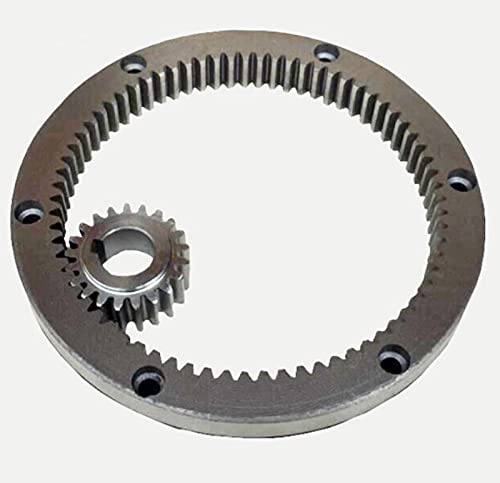
What is the purpose of using ring gears in machinery?
Ring gears serve multiple purposes and offer various advantages when used in machinery. Here’s a detailed explanation of the purpose of using ring gears:
- Power Transmission: One of the primary purposes of ring gears in machinery is to facilitate power transmission. Ring gears, along with other meshing gears, transmit torque and rotational motion from the driving gear to the driven components or systems. They enable the transfer of power from a power source to various parts of the machinery, driving the movement and operation of different mechanisms and processes.
- Gear Ratio Control: Ring gears allow for precise control over the gear ratio in machinery. By adjusting the size of the ring gear and its meshing gears, different gear ratios can be achieved. Gear ratios determine the relationship between the rotational speeds and torques of the driving and driven gears. This ability to control the gear ratio enables machinery to operate at desired speeds, optimize torque output, and adapt to specific application requirements.
- Mechanical Advantage: Ring gears provide a mechanical advantage in machinery. By leveraging the gear ratio control mentioned above, ring gears can amplify or reduce the torque output of the power source. This mechanical advantage allows machinery to generate higher forces or torques than the original power source alone. It enables the machinery to handle heavy loads, perform tasks requiring significant force, and enhance overall operational efficiency.
- Load Distribution: Ring gears contribute to load distribution within machinery. The meshing teeth of the ring gear engage with multiple teeth of other gears, distributing the transmitted loads across these meshing points. This load distribution helps prevent excessive stress concentration on specific gear teeth, ensuring even wear and reducing the risk of gear failure. By distributing the load, ring gears enhance the overall durability and reliability of the machinery.
- Motion Control: Ring gears play a crucial role in motion control within machinery. By transmitting rotational motion, ring gears enable precise movement and synchronization of various components and mechanisms. They ensure that different parts of the machinery operate in a coordinated manner, allowing for smooth and controlled motion. Ring gears contribute to accurate positioning, speed regulation, and overall motion precision in machinery.
- Compact Design: Ring gears offer a compact design solution. Due to their annular shape, they can be integrated into machinery with limited space. The compactness of ring gears is particularly beneficial in applications where space constraints are a concern. Their small footprint allows for efficient use of available space, enabling the design of more compact and lightweight machinery without sacrificing power transmission capabilities.
- Versatile Applications: Ring gears find wide applications across various industries and machinery types. They are used in automotive transmissions, industrial machinery, robotics, aerospace systems, power generation equipment, and more. The versatility of ring gears stems from the ability to configure them in different types, such as external or internal ring gears, helical gears, or bevel gears. This versatility makes ring gears adaptable to a wide range of machinery designs and requirements.
By serving these purposes, ring gears contribute to the efficient and reliable operation of machinery. They enable power transmission, gear ratio control, mechanical advantage, load distribution, motion control, and compact design, making them essential components in various mechanical systems.
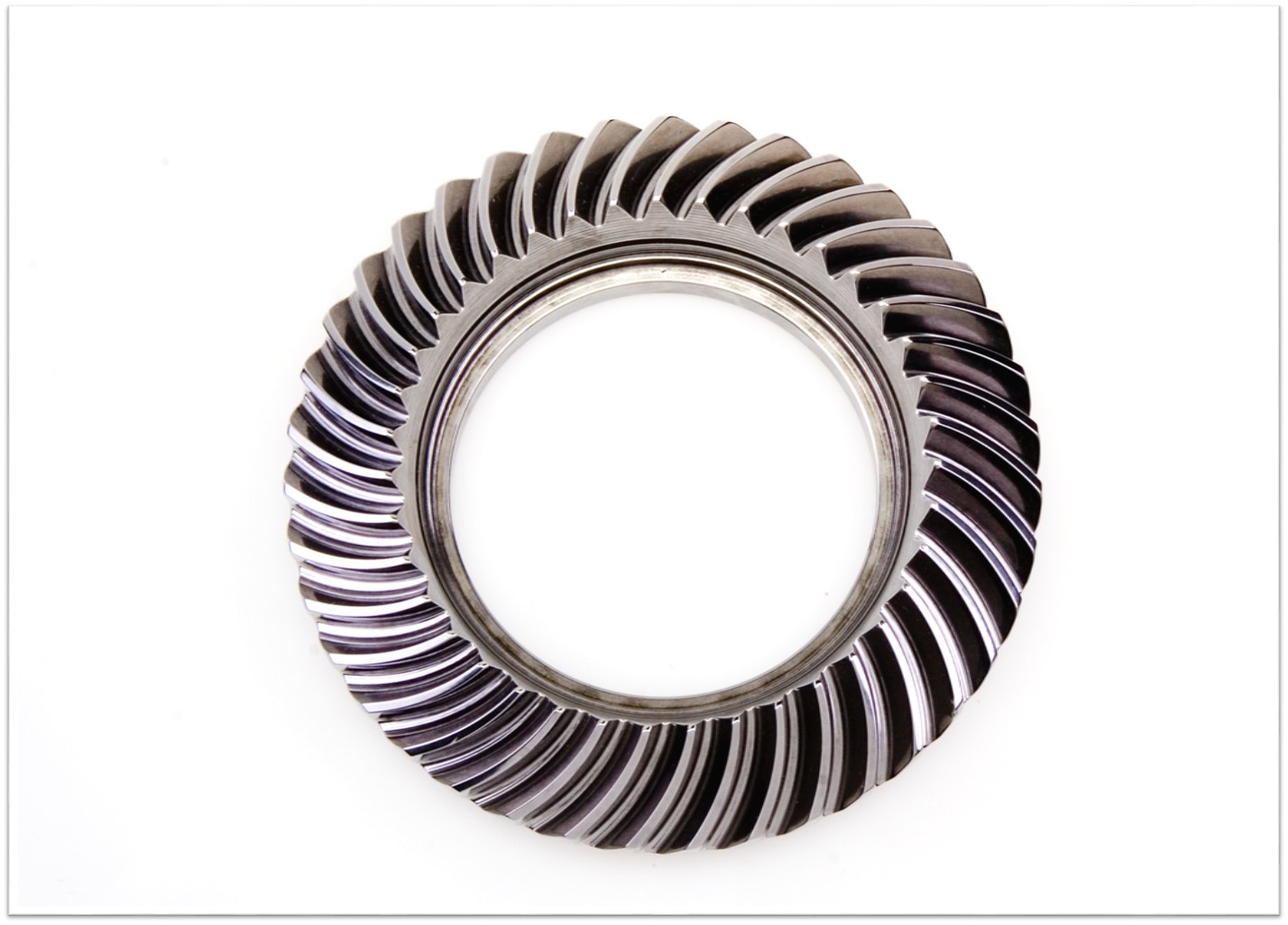
How does a ring gear impact the overall efficiency of a system?
A ring gear plays a significant role in the overall efficiency of a system. Here’s a detailed explanation of how a ring gear impacts system efficiency:
- Power Transmission: Ring gears are responsible for transmitting power from one component to another within a system. They facilitate the transfer of rotational energy and torque between gears, shafts, or other drivetrain elements. The design and quality of the ring gear, along with its meshing with other gears, directly affect the efficiency of power transmission. Well-designed and properly maintained ring gears minimize energy losses due to friction, misalignment, or backlash, resulting in higher overall system efficiency.
- Friction and Wear: The interaction between the ring gear and other gears or components introduces friction, which can lead to energy losses and reduced efficiency. The smoothness of the gear surfaces, the quality of the lubrication, and the design of the gear teeth profile all influence the amount of friction generated. High-quality ring gears with proper lubrication and optimized tooth profiles can minimize friction and wear, thereby improving system efficiency by reducing energy losses.
- Mechanical Losses: In any gear system, there are inherent mechanical losses due to factors such as gear meshing, rolling resistance, and internal friction. These losses can impact the overall efficiency of the system. The design and quality of the ring gear, including factors such as gear tooth geometry, material selection, and surface finish, can help minimize mechanical losses. By reducing these losses, the ring gear contributes to improved system efficiency.
- Load Distribution: Ring gears play a critical role in distributing loads within a system. They help evenly distribute the forces and torque applied to the gear system, preventing localized overloading and reducing the risk of premature component failure. Proper load distribution achieved through well-designed ring gears ensures balanced operation, minimizes stress concentrations, and optimizes the system’s overall efficiency.
- Backlash and Precision: Backlash refers to the play or clearance between the gear teeth when they change direction. Excessive backlash can result in inefficient power transmission, reduced accuracy, and increased wear. Ring gears with tight tolerances and precise manufacturing help minimize backlash, ensuring smooth and efficient operation. By reducing backlash and maintaining precise gear meshing, the ring gear contributes to improved system efficiency and accuracy.
- System Integration and Compatibility: Ring gears must be properly integrated into the overall system design and be compatible with other components. The alignment, mounting, and proper engagement of the ring gear with other gears or components are crucial for efficient operation. Misalignment or compatibility issues can lead to increased friction, wear, and energy losses. A well-integrated ring gear that is compatible with the system’s requirements contributes to improved overall efficiency.
- Maintenance and Lubrication: Regular maintenance and proper lubrication of the ring gear are essential for maintaining efficiency. Adequate lubrication reduces friction, wear, and heat generation, promoting efficient power transmission. Regular inspections, lubricant analysis, and timely lubricant replenishment or replacement help ensure optimal performance and efficiency of the ring gear and the overall system.
Overall, the design, quality, maintenance, and proper integration of the ring gear within a system significantly impact its efficiency. Through minimizing friction, reducing mechanical losses, optimizing load distribution, and ensuring precise operation, a well-designed and properly maintained ring gear contributes to improved overall system efficiency.
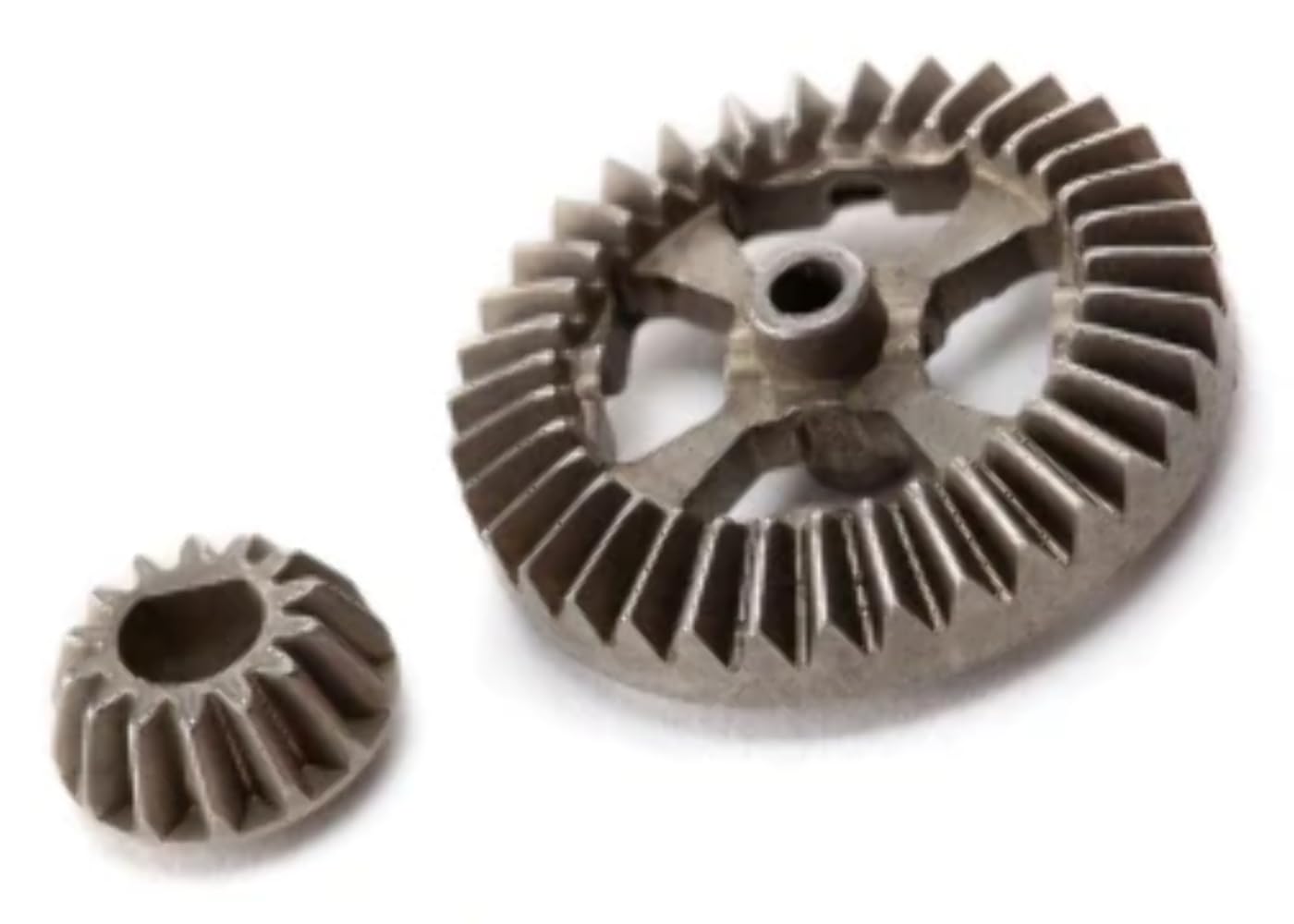
What is a ring gear and how does it work?
A ring gear is a type of gear that features teeth on the outer perimeter of a circular ring-shaped component. It is commonly used in various mechanical systems and applications. Here’s a detailed explanation of what a ring gear is and how it works:
A ring gear, also known as an annular gear or internal gear, is a gear with teeth on the inside circumference of a circular ring. It is designed to mesh with a pinion gear or another gear that has teeth on the outside. The combination of a ring gear and a pinion gear forms a gear set, enabling the transmission of rotational motion and torque between the two gears.
Here’s how a ring gear works:
- Tooth Engagement: When a ring gear and a pinion gear are brought together, the teeth of the pinion gear mesh with the teeth of the ring gear. The teeth of the pinion gear enter the spaces between the teeth of the ring gear, creating a mechanical connection between the two gears.
- Motion Transmission: As the driving gear (such as the pinion gear) rotates, it transfers rotational motion to the ring gear. The teeth of the driving gear push against the teeth of the ring gear, causing the ring gear to rotate in the opposite direction. This rotational motion can be used to drive other components or systems connected to the ring gear.
- Torque Transfer: The meshing of the teeth between the ring gear and the driving gear allows for the transfer of torque. Torque is the rotational force or twisting force applied to a gear. As the driving gear exerts torque on the ring gear through the meshing teeth, the ring gear experiences a torque load. This torque load can be transmitted to other components or systems connected to the ring gear.
- Gear Ratio: The gear ratio between the ring gear and the driving gear determines the speed and torque relationship between the two gears. The gear ratio is defined as the ratio of the number of teeth on the ring gear to the number of teeth on the driving gear. By changing the size or number of teeth on either the ring gear or the driving gear, the gear ratio can be adjusted to achieve the desired speed or torque output.
- Load Distribution: The ring gear distributes the load over a larger area compared to other types of gears. This load distribution characteristic allows the ring gear to handle higher loads and torque. The design of the ring gear and its tooth profile ensures that the load is evenly distributed across the surface of the gear, enhancing its durability and reducing the risk of premature wear or failure.
Ring gears are commonly used in various applications, including automotive transmissions, differential systems, planetary gear systems, industrial machinery, and power transmission equipment. They provide advantages such as compactness, high torque capacity, load distribution, and the ability to achieve high gear ratios.
It’s important to note that the design and characteristics of ring gears may vary depending on the specific application and requirements. Factors such as tooth profile, material selection, lubrication, and manufacturing techniques are carefully considered to ensure optimal performance and durability of the ring gear.


editor by CX 2023-12-28