China Good quality CZPT Large Casting Herringbone CZPT with Big Module Manufacturer spiral bevel gear
Product Description
Product Description
1.Herringbone Gear Processing
Double Helical Gear drawing CHECK, Make casting Mold, Forging Mold Quality Inspection Check, Machine Processing, Check Size\Hardness\Surface Finish and other technical parameters on drawing.
2.CHINAMFG Package
Spray anti-rust oil on Herringbone Gear Shaft, Wrap waterproof cloth around Gear Shaft for reducer, Prepare package by shaft shape&weight to choose steel frame, steel support or wooden box etc.
3. OEM Customized Gear
We supply OEM SERVICE, customized herringbone gear shaft with big module, more than 1tons big weight, more than 3m length, 42CrMo/35CrMo or your specified required material gear shaft.
Supply: Bevel/Helical/Spur/Internal Gear, Bevel/Spiral/Crown Pinion, Gear Segment/Helical Rack, Herringbone/Helical Gear Shaft/Eccentric Shaft/ Hollow Shaft/ Crank shaft/Camshaft, Abnormal Axle and other transmission parts for transmission device & equipment (large industrial reducer & driver),which mainly used on cement, mining, metallurgical industry, Seaport facilities etc.
Detailed Photos
Product Parameters
| Module | m | Range: 5~70 |
| Gear Teeth Number | z | OEM by drawing’s technical parameters |
| Teeth Height | H | OEM by drawing’s technical parameters |
| Teeth Thickness | S | OEM by drawing’s technical parameters |
| Tooth pitch | P | OEM by drawing’s technical parameters |
| Tooth addendum | Ha | OEM by drawing’s technical parameters |
| Tooth dedendum | Hf | OEM by drawing’s technical parameters |
| Working height | h’ | OEM by drawing’s technical parameters |
| Bottom clearance | C | OEM by drawing’s technical parameters |
| Pressure Angle | α | OEM by drawing’s technical parameters |
| Helix Angle, | OEM by drawing’s technical parameters | |
| Surface hardness | HRC | Range: HRC 50~HRC63(Quenching) |
| Hardness: | HB | Range: HB150~HB280; Hardening Tempering/ Hardened Tooth Surface |
| Surface finish | Range: Ra1.6~Ra3.2 | |
| Tooth surface roughness | Ra | Range: ≥0.4 |
| Gear Accuracy Grade | Grade Range: 5-6-7-8-9 (ISO 1328) | |
| Diameter | D | Range: 1m~16m |
| Weight | Kg | Range: Min. 100kg~Max. 80tons Single Piece |
| Gear Position | Internal/External Gear | |
| Toothed Portion Shape | Spur Gear/Bevel/Spiral/Helical/Straight | |
| Shaft shape | Herringbone Gear Shaft / Gear Shaft / Eccentric Shaft / Spur Gear / Girth Gear / Gear Wheel | |
| Material | Forging/ Casting |
Forging/ Casting 45/42CrMo/40Cr or OEM |
| Manufacturing Method | Cut Gear | |
| Gear Teeth Milling | √ | |
| Gear Teeth Grinding | √ | |
| Heat Treatment | Quenching /Carburizing | |
| Sand Blasting | Null | |
| Testing | UT\MT | |
| Trademark | TOTEM/OEM | |
| Application | Gearbox, Reducer, Petroleum,Cement,Mining,Metallurgy etc. Wind driven generator,vertical mill reducer,oil rig helical gear,petroleum slurry pump gear shaft |
|
| Transport Package | Export package (wooden box, steel frame etc.) | |
| Origin | China | |
| HS Code | 8483409000 |
Company Profile
TOTEM Machinery focus on supplying GEAR SHAFT, ECCENTRIC SHAFT, HERRINGBONE GEAR, BEVEL GEAR, INTERNAL GEAR and other parts for transmission devices & equipments(large industrial reducers & drivers). Which were mainly used in the fields of port facilities, cement, mining, metallurgical industry etc. We invested in several machine processing factories,forging factories and casting factories,relies on these strong reliable and high-quality supplier network, to let our customers worry free.
1.Workshop & Processin
2. Testing Facilities
3. Customer Inspection & Shipping
FAQ
What’s CHINAMFG product processing progress?
Drawing CHECK, Make Forging Mold, Forging Mold Quality Inspection Check, Machine Processing, Check Size\Hardness\Surface Finish and other technical parameters on drawing.
How about TOTEM’s export package?
Spray anti-rust oil on Herringbone Gear Shaft, Wrap waterproof cloth around Gear Shaft for reducer, Prepare package by shaft shape&weight to choose steel frame, steel support or wooden box etc.
Could I customize gear\gear shaft on TOTEM?
We supply customized Gear Shaft,Eccentric Shaft,Herringbone Gear,Internal Gear,Bevel Gear with big module, more than 1tons big weight, more than 3m length, forging or casting 42CrMo/35CrMo or your specified required material.
Why can I choose TOTEM?
TOTEM has 24hrs Salesman on-line, guarantee quick and positive feedback.
TOTEM Machinery invests and becomes shareholders of several machine processing factories, forging factories, casting factories, relies on these strong reliable and high-quality supplier’s network, to let customers worry-free purchase.
Experienced and Professional Forwarder Guarantee Log. transportation.
/* March 10, 2571 17:59:20 */!function(){function s(e,r){var a,o={};try{e&&e.split(“,”).forEach(function(e,t){e&&(a=e.match(/(.*?):(.*)$/))&&1
| Application: | Motor, Motorcycle, Machinery, Marine, Cement |
|---|---|
| Hardness: | Hardened Tooth Surface |
| Gear Position: | Internal/External |
| Manufacturing Method: | Cast Gear |
| Toothed Portion Shape: | Bevel Wheel |
| Material: | Cast Steel |
| Customization: |
Available
| Customized Request |
|---|
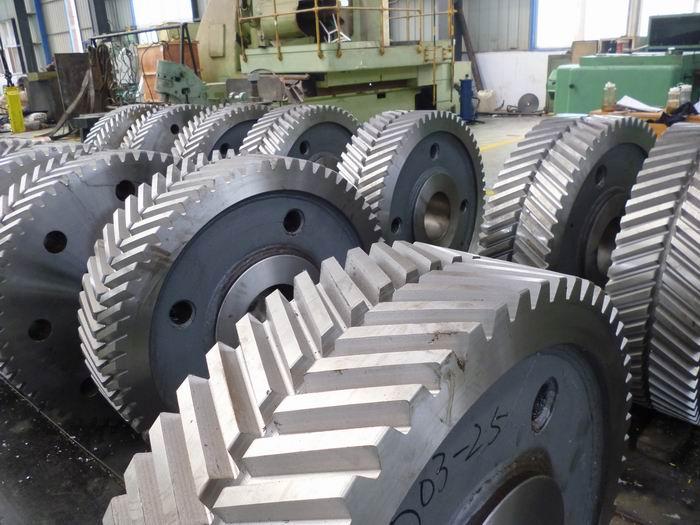
How do you install a herringbone gear system?
Installing a herringbone gear system requires careful attention to ensure proper alignment, engagement, and functionality. Here’s a detailed explanation of the steps involved in installing a herringbone gear system:
- Preparation: Before installation, gather all the necessary components, including the herringbone gears, shafts, bearings, and any associated hardware. Ensure that the gears and shafts are clean and free from any debris or contaminants that could affect their performance. Review the gear system’s specifications, including the gear ratios, torque requirements, and any specific installation guidelines provided by the manufacturer.
- Shaft Alignment: Proper shaft alignment is crucial for the smooth operation of a herringbone gear system. Align the shafts accurately to ensure that they are parallel and concentric with each other. This can be achieved using alignment tools such as dial indicators and laser alignment systems. Proper shaft alignment helps to minimize misalignment-related issues such as gear tooth wear, noise, and premature failure.
- Gear Engagement: Position the herringbone gears on their respective shafts, ensuring that they are correctly oriented and meshing properly. The double helical tooth profile of the herringbone gears requires careful engagement to prevent interference and ensure smooth operation. Pay attention to the gear backlash, which is the slight clearance between the gear teeth when they are not under load. Follow the manufacturer’s recommendations for the appropriate gear backlash and adjust as necessary.
- Bearing Installation: Install the appropriate bearings to support the gear shafts. Ensure that the bearings are aligned and properly seated in their housings. Use the specified lubrication method and apply the appropriate lubricant to the bearings to minimize friction and wear. Adequate lubrication is essential for the smooth operation and longevity of the gear system.
- Check Clearances: Once the gears, shafts, and bearings are installed, check for any interferences or clearances issues. Verify that there is sufficient clearance between the gear teeth, as well as between the gears and any adjacent components or structures. Ensure that there are no obstructions that could impede the rotational movement of the gears or cause damage during operation.
- Tightening and Fastening: Securely tighten all fasteners, such as bolts or set screws, to hold the gears, shafts, and bearings in place. Follow the recommended torque specifications provided by the manufacturer to ensure proper fastening without over-tightening, which could lead to excessive stress or deformation of the components.
- Testing and Adjustment: After installation, perform a thorough inspection and functional testing of the herringbone gear system. Rotate the shafts manually or using a suitable drive mechanism to check for smooth and proper gear engagement. Listen for any unusual noises, vibrations, or irregularities that could indicate misalignment or other issues. If necessary, make fine adjustments to the gear engagement, backlash, or shaft alignment to optimize the performance of the gear system.
It is important to note that the installation process may vary depending on the specific gear system design, size, and application requirements. Always refer to the manufacturer’s guidelines, technical documentation, and any applicable industry standards when installing a herringbone gear system to ensure proper installation and optimal performance.
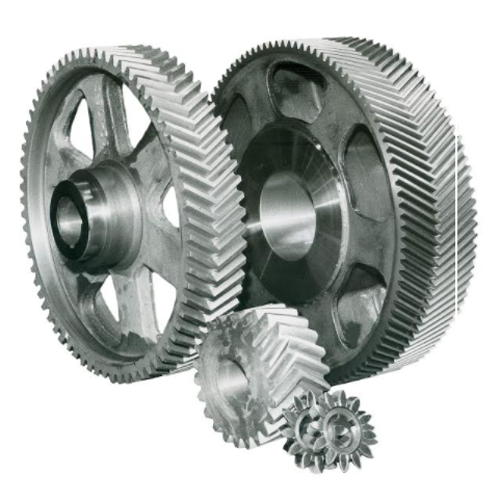
How do you prevent backlash and gear play in a herringbone gear mechanism?
Preventing backlash and gear play is crucial in a herringbone gear mechanism to ensure accurate and efficient power transmission. Here’s a detailed explanation of methods to prevent backlash and gear play in a herringbone gear mechanism:
- Precision Manufacturing: Backlash and gear play can be minimized by ensuring precise manufacturing of the herringbone gears. This involves maintaining tight tolerances during gear machining, tooth profiling, and gear assembly. High-quality manufacturing processes help achieve proper gear tooth engagement and minimize any gaps that can lead to backlash.
- Proper Gear Alignment: Accurate alignment of the herringbone gears is essential to reduce backlash. Misalignment can result in uneven load distribution and improper gear meshing, leading to increased gear play. Proper alignment should be ensured during the initial installation and periodically checked during maintenance to maintain optimal gear performance.
- Optimal Tooth Contact: Maximizing tooth contact between the herringbone gears can help reduce backlash. This can be achieved by adjusting the gear position, gear meshing depth, and gear tooth profile. By optimizing tooth contact, the gears are more tightly engaged, minimizing any free play or backlash between the gear teeth.
- Preload or Gear Meshing Pre-Tensioning: Applying a small amount of preload or pre-tensioning in the herringbone gear mechanism can help minimize backlash. This can be achieved by using spring-loaded components, such as thrust bearings or Belleville washers, to exert a slight force on the gears, ensuring continuous contact and reducing any play between the gear teeth.
- Appropriate Lubrication: Proper lubrication of the herringbone gears is essential to reduce friction, wear, and backlash. Using the right type and amount of lubricant helps maintain smooth gear operation, ensuring optimal gear meshing and minimizing gear play. Regular lubrication maintenance is necessary to prevent excessive wear and maintain proper lubrication film thickness.
- Stiff Gearbox Design: A stiff and rigid gearbox design can help minimize gear play and backlash. By reducing any flexing or deflection within the gearbox components, the herringbone gears can maintain their proper alignment and engagement, reducing the potential for backlash. Robust housing structures, rigid shafts, and appropriate bearing support contribute to a stiff gearbox design.
- Periodic Maintenance and Inspection: Regular maintenance and inspection procedures are crucial for identifying and addressing any potential issues that can lead to backlash or gear play in a herringbone gear mechanism. This includes checking gear alignment, lubrication condition, gear tooth wear, and any signs of damage or misalignment. Any detected problems should be promptly resolved to maintain optimal gear performance.
Implementing these prevention methods can help minimize backlash and gear play, ensuring accurate and efficient power transmission in a herringbone gear mechanism. It is important to consider the specific operating conditions, load requirements, and system design factors when applying these methods to achieve the best performance from herringbone gears.
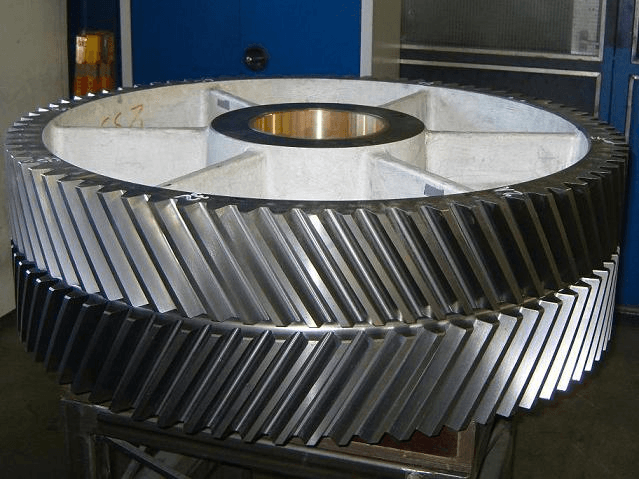
How do herringbone gears differ from other types of gears?
Herringbone gears, also known as double helical gears, possess distinct characteristics that set them apart from other types of gears. Here’s a detailed explanation of how herringbone gears differ from other gears:
1. Tooth Design: Herringbone gears have a unique V-shaped or herringbone-shaped tooth profile. This design is formed by two helical gear sections that are mirror images of each other. In contrast, other gears, such as spur gears, helical gears, bevel gears, or worm gears, have different tooth profiles and configurations.
2. Axial Thrust Elimination: One of the key differentiating factors of herringbone gears is their ability to eliminate or greatly reduce axial thrust forces. In helical gears, the helix angle of the teeth generates an axial force during rotation, requiring the use of thrust bearings to counteract the thrust loads. Herringbone gears, with their double helix design, have opposing helix angles that cancel out the axial forces, eliminating the need for thrust bearings.
3. Noisy Cancellation: Herringbone gears are known for their noise-canceling properties. The opposing helix angles of the two gear sections help reduce vibrations and noise during operation. This is particularly beneficial in applications where noise reduction is critical, such as printing presses or precision machinery.
4. Increased Load Capacity: The V-shaped tooth profile of herringbone gears provides increased tooth contact area compared to other gears with straight or helical teeth. This increased contact area improves load distribution and allows herringbone gears to handle higher torque loads, resulting in an increased load-carrying capacity.
5. Bidirectional Power Transmission: Herringbone gears are designed to transmit power bidirectionally. The symmetrical tooth profiles of herringbone gears enable power transmission in both directions, making them suitable for applications where reversing or bidirectional power transfer is required.
6. Smooth Operation: Due to their double helix design, herringbone gears provide smooth and gradual tooth engagement. This gradual meshing reduces sliding friction, minimizes backlash, and ensures a continuous transfer of power. This characteristic makes herringbone gears desirable in applications where smooth operation and high efficiency are crucial.
7. Complex Manufacturing: Herringbone gears have a more complex manufacturing process compared to some other gear types. The creation of the herringbone tooth profile requires specific machining techniques and precision to ensure proper meshing and alignment of the gear sections.
It’s important to note that the selection of gear type depends on the specific requirements of the application. While herringbone gears offer unique advantages, other gear types may be more suitable in certain scenarios based on factors such as space limitations, cost, torque requirements, and operating conditions.
In summary, herringbone gears stand out with their distinctive tooth design, axial thrust elimination, noise-canceling properties, increased load capacity, bidirectional power transmission, smooth operation, and complex manufacturing process, making them well-suited for various industrial applications.


editor by CX 2023-12-28