China Professional High Precision Customized According to Drawings Stainless Steel Powder Metallurgy Helical Gear with high quality
Product Description
| Product type | Sintered metal parts / Sector gears |
| Material | Stainless steel,Steel(Iron,)Brass,Copper (According to product design requirements) |
| Tolerance | ±0.01mm |
| Surface Treatment | As your requirement |
| Application | Tool industry,Automotive, instrument, electrical equipment, household appliances, furniture, mechanical equipment,daily living equipment, electronic sports equipment, light industry products, sanitation machinery, etc. |
| Shape | Any other material and dimension depends on customers’ demand. |
| QC system | 100% inspection before shipment |
| Returned Goods Managing | With quality problem or deviation from drawings |
| Warranty | Replacement at all our cost for rejected products |
| Payment terms | T/T at sight, Paypal, Western Union,etc. |
| Lead time | 7-15 working days as usual,It will based on the detailed order quantity. |
| Why Choose Us |
1. We have professional powder metallurgy production equipment and team;
2. We can accompany customers to develop products;
3. Just send an idea that you want to try, you don’t even need to know what powder metallurgy;
4. Our sales will reply you within 24 hours to confirm further details and give the estimated quote time;
5. Our team will evaluate your inquiry and provide our offer within next 1~3 working days.
| Order Process |
1. You send us drawing or sample.
2. We carry through project assessment.
3. We give you our design for your confirmation.
4. We make the sample and send it to you after you confirmed our design.
5. You confirm the sample then place an order and pay us deposit.
6. We start producing.
7. When the goods is done, you pay us the balance after you confirmed pictures or tracking numbers.
8. Trade is done, thank you!!
Additional Capabilities CAD Design Services CAM Programming Services Coordinate Measuring Machines (CMM) Reverse Engineering
| Product Show |
| Some Parts We Manufacture |
Self-Lubricated Bushing
Structural Parts
Gears
| About Us |
DERYOUNG Technology company is a professional metal parts manufacturer, which with more than 20 years of experience in the development and production of sintered metals. Each year we produce more than 100 million premium sintered metal parts for our customers. We are mainly produce oil bearing, gear, and metal parts. We support our customers in the design and material selection of sintered parts, providing the best solution for your applied parts through our specialized equipment compression molds, furnaces, handling, sizing, deburring and impregnation processes.
| Design Tips: Powder Metallurgy Gears |
1. Radius > 0.25 mm is required to manufacture the die;
2. Helical teeth should feature a helical angle < 30º in order to limit side pressure on the punches;
3. Introduction of a draft angle > 5º in the upper diameter reduce the tooling cost;
4. The distance between tooth root and central hub diameter must be: > 3 mm (Robust Tooling).
If you want to know more about the product, please send us a message.
| The Powder Metallurgy Manufacturing Process |
| FAQ |
| Q: How can I get the quotation? |
| A: Please send us information for quote: drawing, material, weight, quantity and request,w can accept PDF, ISGS, DWG, STEP file format. If you don’t have drawing, please send the sample to us,we can quote based on your sample too. |
| Q: What’s your MOQ? |
| A: In general 1000pcs,but can accept low quantity in some special conditions. |
| Q: Do you provide samples ? is it free or extra ? |
| A: Yes, we could offer the sample for free charge but do not pay the cost of freight. |
| Q: What about the leading time for mass production? |
| A: Honestly, it depends on the order quantity. Normally, 15 days to 20 days after your deposit if no tooling needed. |
| Q: What if the parts are not good? |
| A: We can guarantee good quality,but if happened,please contact us immediately, take some pictures, we will check on the problem,and solve it asap. |
| Q: What is your terms of payment ? |
| A: Payment=1000USD, 30% T/T in advance ,balance before shippment |
/* March 10, 2571 17:59:20 */!function(){function s(e,r){var a,o={};try{e&&e.split(“,”).forEach(function(e,t){e&&(a=e.match(/(.*?):(.*)$/))&&1
| After-sales Service: | / |
|---|---|
| Warranty: | / |
| Condition: | New |
| Customization: |
Available
| Customized Request |
|---|
.shipping-cost-tm .tm-status-off{background: none;padding:0;color: #1470cc}
|
Shipping Cost:
Estimated freight per unit. |
about shipping cost and estimated delivery time. |
|---|
| Payment Method: |
|
|---|---|
|
Initial Payment Full Payment |
| Currency: | US$ |
|---|
| Return&refunds: | You can apply for a refund up to 30 days after receipt of the products. |
|---|
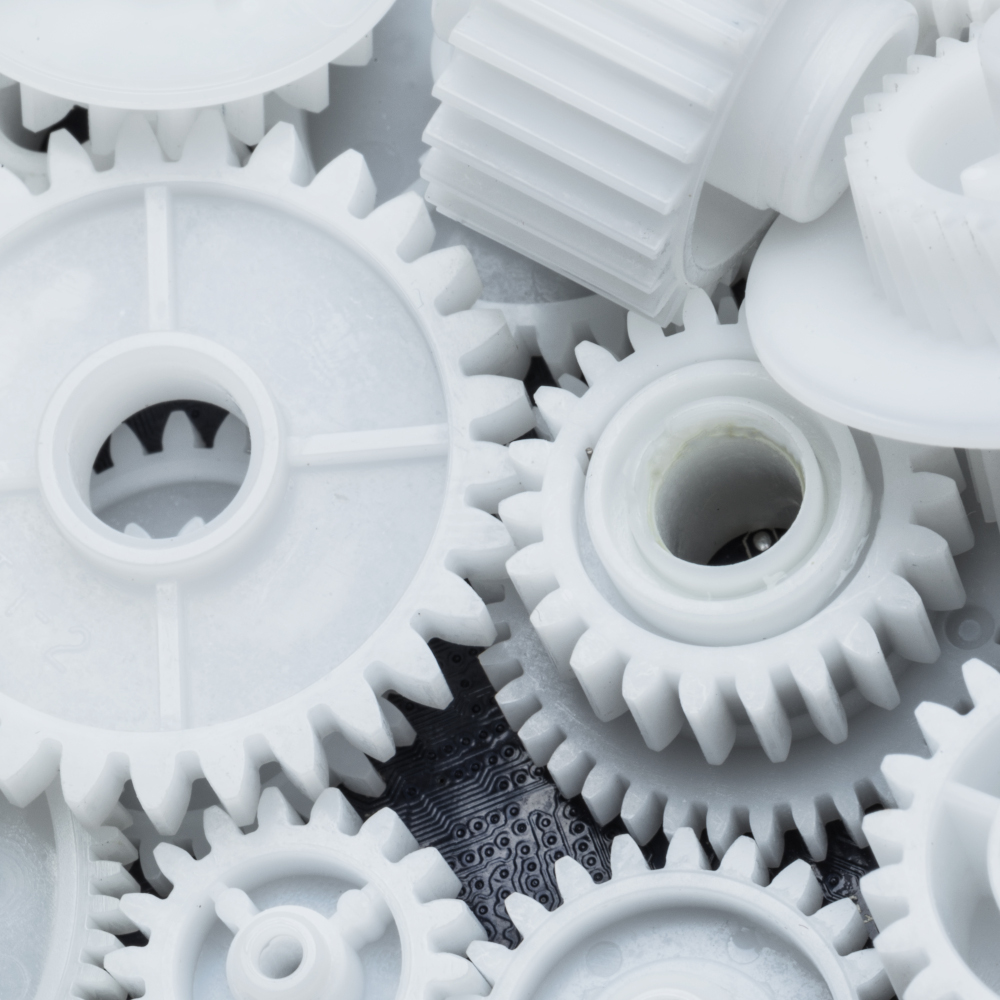
Can plastic gears be used in food and beverage processing machinery?
Plastic gears can be used in food and beverage processing machinery in certain applications. Here’s a detailed explanation of their suitability:
Plastic gears offer several advantages that make them a viable choice for certain food and beverage processing machinery applications:
- Corrosion Resistance: Many plastic materials, such as certain types of polypropylene (PP) or polyethylene (PE), exhibit excellent resistance to corrosion and chemical attack. This makes them suitable for use in food and beverage processing environments where exposure to acidic or alkaline substances, cleaning agents, or food ingredients is common.
- Hygienic Properties: Plastic gears can be designed to have smooth surfaces without any cracks, crevices, or pores, which can harbor bacteria or contaminants. This makes them easier to clean and sterilize, promoting hygienic conditions in food and beverage processing machinery.
- Lightweight: Plastic gears are generally lighter than metal gears, which can be advantageous in applications where weight reduction is desired. The reduced weight can simplify machinery design, reduce energy consumption, and ease handling during maintenance or equipment assembly.
- Noise Reduction: Plastic gears, with their inherent damping characteristics, can help reduce noise levels in food and beverage processing machinery. This is particularly beneficial in settings where noise control is crucial for maintaining a comfortable working environment.
- Non-Toxicity: Food-grade plastic materials, such as certain types of polyethylene terephthalate (PET) or polytetrafluoroethylene (PTFE), are approved for contact with food and beverages. These materials comply with regulatory standards for food safety and do not leach harmful substances into the processed products.
- Design Flexibility: Plastic gears offer greater design flexibility compared to metal gears. They can be molded into complex shapes and incorporate features such as self-lubrication, noise reduction, or specific gear profiles to optimize performance for food and beverage processing applications.
However, it’s important to note that there are certain considerations and limitations when using plastic gears in food and beverage processing machinery:
- Operating Conditions: Plastic gears have temperature limitations and may not be suitable for applications involving high temperatures or extreme temperature fluctuations. It’s essential to select plastic materials that can withstand the specific temperature range of the processing environment.
- Load Requirements: Plastic gears typically have lower load-bearing capacities compared to metal gears. They may not be suitable for heavy-duty applications that require withstanding high torque or significant forces. Careful consideration should be given to the torque and load requirements of the specific machinery application.
- Application-Specific Requirements: Some food and beverage processing machinery applications may have unique requirements, such as high-speed operation, abrasive ingredients, or frequent cleaning cycles. It’s crucial to assess whether plastic gears can meet these specific requirements and evaluate the need for additional reinforcements or modifications.
Overall, plastic gears can be successfully used in food and beverage processing machinery for suitable applications, offering benefits such as corrosion resistance, hygienic properties, lightweight design, noise reduction, and compliance with food safety standards. However, proper material selection, design considerations, and a thorough understanding of the application’s requirements are important to ensure the reliable and safe operation of the machinery.
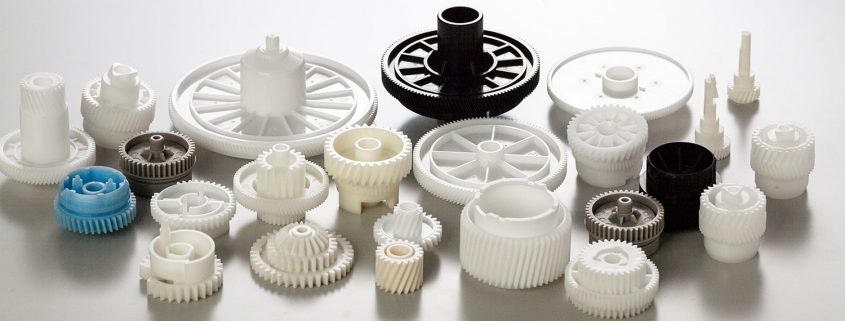
How do plastic gears handle lubrication and wear?
Plastic gears handle lubrication and wear differently compared to metal gears. Here’s a detailed explanation of their behavior:
1. Lubrication in Plastic Gears: Lubrication plays a crucial role in the performance and longevity of plastic gears. While metal gears often require continuous lubrication, plastic gears have different lubrication requirements due to their inherent properties. Here are some key considerations:
- Self-Lubrication: Some plastic materials, such as certain formulations of polyoxymethylene (POM), have inherent self-lubricating properties. These materials have a low coefficient of friction and can operate with minimal lubrication or even dry. Self-lubricating plastic gears can be advantageous in applications where the use of external lubricants is impractical or undesirable.
- Lubricant Compatibility: When external lubrication is necessary, it’s important to choose lubricants that are compatible with the specific plastic material used in the gears. Certain lubricants may degrade or adversely affect the mechanical properties of certain plastics. Consultation with lubricant manufacturers or experts can help identify suitable lubricants that won’t cause degradation or wear issues.
- Reduced Lubricant Requirements: Plastic gears generally have lower friction coefficients compared to metal gears. This reduced friction results in lower heat generation and less wear, which in turn reduces the demand for lubrication. Plastic gears may require less frequent lubricant replenishment or lower lubricant volumes, reducing maintenance requirements.
- Appropriate Lubricant Application: When applying lubricant to plastic gears, care should be taken to avoid excessive amounts that could lead to contamination or leakage. Lubricants should be applied in a controlled manner, ensuring they reach the critical contact points without excessive buildup or excess spreading beyond the gear surfaces.
2. Wear in Plastic Gears: Plastic gears exhibit different wear characteristics compared to metal gears. While metal gears typically experience gradual wear due to surface interactions, plastic gears may undergo different types of wear mechanisms, including:
- Adhesive Wear: Adhesive wear can occur in plastic gears when high loads or speeds cause localized melting or deformation at the gear teeth contact points. This can result in material transfer between gear surfaces and increased wear. Proper material selection, gear design optimization, and lubrication can help minimize adhesive wear in plastic gears.
- Abrasive Wear: Abrasive wear in plastic gears can be caused by the presence of abrasive particles or contaminants in the operating environment. These particles can act as abrasive agents, gradually wearing down the gear surfaces. Implementing effective filtration or sealing mechanisms, along with proper maintenance practices, can help reduce abrasive wear in plastic gears.
- Fatigue Wear: Plastic materials can exhibit fatigue wear under cyclic loading conditions. Repeated stress and deformation cycles can lead to crack initiation and propagation, ultimately resulting in gear failure. Proper gear design, material selection, and avoiding excessive loads or stress concentrations can help mitigate fatigue wear in plastic gears.
3. Gear Material Selection: The choice of plastic material for gears can significantly impact their lubrication and wear characteristics. Different plastic materials have varying coefficients of friction, wear resistance, and compatibility with lubricants. It’s important to select materials that offer suitable lubrication and wear properties for the specific application requirements.
4. Operational Considerations: Proper operating conditions and practices can also contribute to the effective handling of lubrication and wear in plastic gears. Avoiding excessive loads, controlling operating temperatures within the material’s limits, implementing effective maintenance procedures, and monitoring gear performance are essential for ensuring optimal gear operation and minimizing wear.
In summary, plastic gears can handle lubrication and wear differently compared to metal gears. They may exhibit self-lubricating properties, reduced lubricant requirements, and require careful consideration of lubricant compatibility. Plastic gears can experience different types of wear, including adhesive wear, abrasive wear, and fatigue wear. Proper material selection, gear design, lubrication practices, and operational considerations are crucial for ensuring efficient lubrication and minimizing wear in plastic gears.
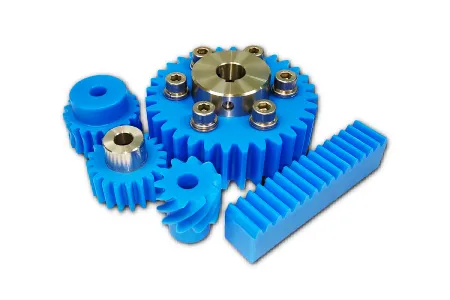
Can plastic gears replace metal gears in certain applications?
Yes, plastic gears can replace metal gears in certain applications. Here’s a detailed explanation:
Plastic gears offer a range of advantages that make them suitable alternatives to metal gears in specific scenarios. Some of the factors that determine whether plastic gears can replace metal gears include the application requirements, operating conditions, load capacity, and desired performance characteristics.
Advantages of Plastic Gears:
- Lightweight: Plastic gears are significantly lighter than metal gears, making them suitable for applications where weight reduction is important. This can lead to energy efficiency, reduced inertia, and lower wear on supporting components.
- Low Noise and Vibration: Plastic gears have inherent damping properties that help reduce noise and vibration levels during operation. This makes them suitable for applications where noise reduction is desired, such as in consumer electronics or office equipment.
- Corrosion Resistance: Certain plastic materials used in gear manufacturing exhibit excellent resistance to corrosion and chemicals. Plastic gears can be a suitable choice for applications in corrosive environments where metal gears may suffer from degradation.
- Self-Lubrication: Some plastic materials used for gear manufacturing have self-lubricating properties. This reduces friction and wear between gear teeth, eliminating the need for external lubrication and simplifying maintenance requirements.
- Cost-Effective: Plastic gears can be more cost-effective compared to metal gears, especially in large-scale production. Plastic materials are often less expensive than metals, and the manufacturing processes for plastic gears can be more efficient.
- Design Flexibility: Plastic gears offer greater design flexibility compared to metal gears. They can be molded into complex shapes, allowing for custom gear profiles and tooth geometries, resulting in optimized performance and efficiency for specific applications.
Limitations of Plastic Gears:
- High Torque and Load Capacity: Plastic gears may not have the same torque and load capacity as metal gears. In applications requiring high torque or heavy loads, metal gears may be more suitable due to their higher strength and durability.
- High Temperatures: Plastic gears have temperature limitations depending on the chosen material. In applications with high operating temperatures, metal gears that can withstand the heat may be necessary.
- Precision and Positioning: Plastic gears may not offer the same level of precision and positioning accuracy as metal gears. Applications that require tight tolerances and precise gear meshing may still require metal gears.
In summary, plastic gears can replace metal gears in certain applications where their advantages align with the specific requirements and operating conditions. It’s crucial to carefully evaluate the application needs, load capacity, temperature range, and other factors to determine if plastic gears are suitable replacements for metal gears.


editor by CX 2024-01-03