China Hot selling Hot Selling High-Precision Machining Transmission Gear with CNC Machining gear patrol
Product Description
Hot Selling High-Precision Machining Transmission Gear with CNC Machining
Product Description
Major Products:
spur gear; worm gear; bevel gear; planetary gear; gear; metal gear; cycle gear; pinion gear; gear
manufacturing; helical gear; custom gear; spiral bevel gear; rack and pinion gear; mechanical
gears; transmission gears; rack gear; spiral gear; work gear; gear reducer; richmond gear;
hypoid gear; gear wheels; pulleys and gears; motive gear; gear teeth; truck gear; gear system;
involute gear.
|
Material |
Steel:Carbon steel/ Mild steel/ Cold roll steel/ Hot roll steel |
|
Surface Treatment |
Zinc plating, Powder, Passivation, Sand blasting, Brushing & ploshing etc. |
|
Processing Equipment |
Large laser cutter Bending machine Plasma cutting machine Punching machine Wire cutter CNC machining center CNC lathe Automatic lathe machine Milling machine Drilling machine |
|
Drawing Format |
pdf/.igs./.stp/x_t. etc. |
|
Drawing Format |
EXW, FOB, CIF |
|
Packing of Sheet Metal Stamping |
PE bag+carton box or other custom packaging |
|
Applications |
Auto Parts/Motocycle parts/Contruction Parts/Furniture Parts/Electronic Parts |
PRODUCT DESCRIPOTION
1. CHINAMFG wheel and pinion gears and spiral bevel gears for automobile rear axle, truck, tractor
front/rear axle and tool.
2. Raw material: 20CrMni \22CrMo \8620 \SCM420
Processing: Forging, normalizing, rough, machining, fine finishi, carburizing, tempering,
annealing, accurate grinding, matching and testing, packing.
3. The tooth surface is finished by lapping machine, the color will be silver gray
4. Hardness about surface: HRC58-62, internal: HRC35-40.
5. We can process gears according to customers drawing and samples.
Inspections:
3D instruments, 2D instruments, Projectors, Height Gauges, Inner diameter dial indicators, Dial gaues,
Thread and Pin gauges, Digital calipers,Micro calipers, Thickness testers, Hardness testers Roughness
testers, etc.( Detection accuracy to 0.001 millimetre )
| Mininum of Quantity | 100 Piece/Pieces |
| Unit Weight | 0.5kg~300kg |
| Price | FOB HangZhou,China,USD1.5~1.9 |
| Packing Details | Paper Box in Wooden Pallet |
| Delivery Time | One month |
| Payment Terms | L/C, T/T |
| Machining | CNC or |
| Supply Capacity | 50 Metric Tons per Month |
| Standard | DIN,ASTM,GOST,B |
Packing:
1: Shrink film+ bulk loading
2: Shrink film +Carton box + Pallet/ wooden case
3: PP + Wooden case
4: As per customers’ requirements or negotiated
Q1: How can I get cnc spare parts sample?
1. Sample fee will be free if we have in stock, you just need to pay the shipping cost is OK.
2. The sample of your own design needs to pay for the mold set up charge. Samples production takes
5-7 working days after set up charge received & size drawing approval.
Q2: How to pay for the order?
There are 4 options to pay the order: Bank Transfer; Western Union; Paypal; Payoneer. Kindly choose
the most suitable way for you to arrange it.
Q3: What is the shipping method?
The samples were sent out by international airway express company like DHL, UPS, FedEx, TNT.
Usually takes around 5-7 working days (door to door service). We arrange goods shipment via sea
or air.
Q4: Can you give me help if my products are very urgent?
Yes, We can work overtime and add a few machines to produce these products if you need it urgently.
Q5: I want to keep our design in secret, can we CHINAMFG NDA?
Sure, we will not display any customers’ design or show to other people, we can CHINAMFG NDA.
You can look through our website to find your interest or email your any questions through
below approach! We will reply to you within 12 hours.
/* March 10, 2571 17:59:20 */!function(){function s(e,r){var a,o={};try{e&&e.split(“,”).forEach(function(e,t){e&&(a=e.match(/(.*?):(.*)$/))&&1
| Application: | Motor, Electric Cars, Motorcycle, Machinery, Marine, Agricultural Machinery, Car |
|---|---|
| Hardness: | Hardened Tooth Surface |
| Gear Position: | Internal Gear |
| Samples: |
US$ 4/Piece
1 Piece(Min.Order) | Order Sample |
|---|
| Customization: |
Available
| Customized Request |
|---|
.shipping-cost-tm .tm-status-off{background: none;padding:0;color: #1470cc}
|
Shipping Cost:
Estimated freight per unit. |
about shipping cost and estimated delivery time. |
|---|
| Payment Method: |
|
|---|---|
|
Initial Payment Full Payment |
| Currency: | US$ |
|---|
| Return&refunds: | You can apply for a refund up to 30 days after receipt of the products. |
|---|
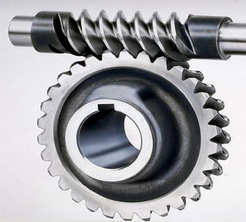
How does a worm gear impact the overall efficiency of a system?
A worm gear has a significant impact on the overall efficiency of a system due to its unique design and mechanical characteristics. Here’s a detailed explanation of how a worm gear affects system efficiency:
A worm gear consists of a worm (a screw-like gear) and a worm wheel (a cylindrical gear with teeth). When the worm rotates, it engages with the teeth of the worm wheel, causing the wheel to rotate. The main factors influencing the efficiency of a worm gear system are:
- Gear Reduction Ratio: Worm gears are known for their high gear reduction ratios, which are the ratio of the number of teeth on the worm wheel to the number of threads on the worm. This high reduction ratio allows for significant speed reduction and torque multiplication. However, the larger the reduction ratio, the more frictional losses occur, resulting in lower efficiency.
- Mechanical Efficiency: The mechanical efficiency of a worm gear system refers to the ratio of the output power to the input power, accounting for losses due to friction and inefficiencies in power transmission. Worm gears typically have lower mechanical efficiency compared to other gear types, primarily due to the sliding action between the worm and the worm wheel teeth. This sliding contact generates higher frictional losses, resulting in reduced efficiency.
- Self-Locking: One advantageous characteristic of worm gears is their self-locking property. Due to the angle of the worm thread, the worm gear system can prevent the reverse rotation of the output shaft without the need for additional braking mechanisms. While self-locking is beneficial for maintaining position and preventing backdriving, it also increases the frictional losses and reduces the efficiency when the gear system needs to be driven in the opposite direction.
- Lubrication: Proper lubrication is crucial for minimizing friction and maintaining efficient operation of a worm gear system. Inadequate or improper lubrication can lead to increased friction and wear, resulting in lower efficiency. Regular lubrication maintenance, including monitoring viscosity, cleanliness, and lubricant condition, is essential for optimizing efficiency and reducing power losses.
- Design and Manufacturing Quality: The design and manufacturing quality of the worm gear components play a significant role in determining the system’s efficiency. Precise machining, accurate tooth profiles, proper gear meshing, and appropriate surface finishes contribute to reducing friction and enhancing efficiency. High-quality materials with suitable hardness and smoothness also impact the overall efficiency of the system.
- Operating Conditions: The operating conditions, such as the load applied, rotational speed, and temperature, can affect the efficiency of a worm gear system. Higher loads, faster speeds, and extreme temperatures can increase frictional losses and reduce overall efficiency. Proper selection of the worm gear system based on the expected operating conditions is critical for optimizing efficiency.
It’s important to note that while worm gears may have lower mechanical efficiency compared to some other gear types, they offer unique advantages such as high gear reduction ratios, compact design, and self-locking capabilities. The suitability of a worm gear system depends on the specific application requirements and the trade-offs between efficiency, torque transmission, and other factors.
When designing or selecting a worm gear system, it is essential to consider the desired balance between efficiency, torque requirements, positional stability, and other performance factors to ensure optimal overall system efficiency.
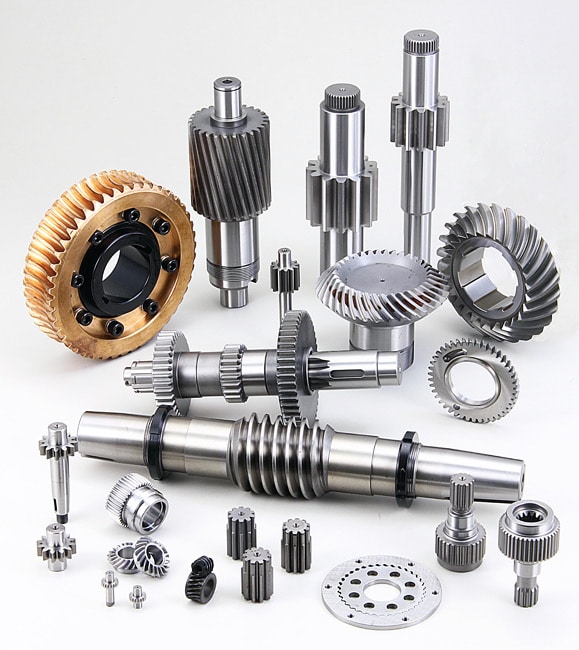
What are the potential challenges in designing and manufacturing worm gears?
Designing and manufacturing worm gears can present several challenges due to their unique characteristics and operating conditions. Here’s a detailed explanation of the potential challenges involved:
- Complex geometry: Worm gears have complex geometry with helical threads on the worm shaft and corresponding teeth on the worm wheel. Designing the precise geometry of the gear teeth, including the helix angle, lead angle, and tooth profile, requires careful analysis and calculation to ensure proper meshing and efficient power transmission.
- Gear materials and heat treatment: Selecting suitable materials for worm gears is critical to ensure strength, wear resistance, and durability. The materials must have good friction and wear properties, as well as the ability to withstand the sliding and rolling contact between the worm and the worm wheel. Additionally, heat treatment processes such as carburizing or induction hardening may be necessary to enhance the gear’s surface hardness and improve its load-carrying capacity.
- Lubrication and cooling: Worm gears operate under high contact pressures and sliding velocities, resulting in significant heat generation and lubrication challenges. Proper lubrication is crucial to reduce friction, wear, and heat buildup. Ensuring effective lubricant distribution to all contact surfaces, managing lubricant temperature, and providing adequate cooling mechanisms are important considerations in worm gear design and manufacturing.
- Backlash control: Controlling backlash, which is the clearance between the worm and the worm wheel, is crucial for precise motion control and positional accuracy. Designing the gear teeth and adjusting the clearances to minimize backlash while maintaining proper tooth engagement is a challenge that requires careful consideration of factors such as gear geometry, tolerances, and manufacturing processes.
- Manufacturing accuracy: Achieving the required manufacturing accuracy in worm gears can be challenging due to their complex geometry and tight tolerances. The accurate machining of gear teeth, maintaining proper tooth profiles, and achieving the desired surface finish require advanced machining techniques, specialized tools, and skilled operators.
- Noise and vibration: Worm gears can generate noise and vibration due to the sliding contact between the gear teeth. Designing the gear geometry, tooth profiles, and surface finishes to minimize noise and vibration is a challenge. Additionally, the selection of appropriate materials, lubrication methods, and gear housing design can help reduce noise and vibration levels.
- Efficiency and power loss: Worm gears inherently have lower efficiency compared to other types of gear systems due to the sliding contact and high gear ratios. Minimizing power loss and improving efficiency through optimized gear design, material selection, lubrication, and manufacturing accuracy is a challenge that requires careful balancing of various factors.
- Wear and fatigue: Worm gears are subjected to high contact stresses and cyclic loading, which can lead to wear, pitting, and fatigue failure. Designing the gear teeth for proper load distribution, selecting appropriate materials, and applying suitable surface treatments or coatings are essential to mitigate wear and fatigue issues.
- Cost considerations: Designing and manufacturing worm gears can be cost-intensive due to the complexity of the gear geometry, material requirements, and precision manufacturing processes. Balancing performance requirements with cost considerations is a challenge that requires careful evaluation of the gear’s intended application, performance expectations, and budget constraints.
Addressing these challenges requires a comprehensive understanding of gear design principles, manufacturing processes, material science, and lubrication technologies. Collaboration between design engineers, manufacturing experts, and material specialists is often necessary to overcome these challenges and ensure the successful design and production of high-quality worm gears.
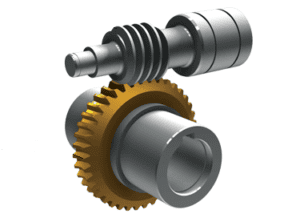
Understanding Worm Gears and Their Operation
A worm gear is a type of mechanical gear that consists of a threaded screw-like component (called the worm) and a toothed wheel (called the worm gear). It is used to transmit motion between non-intersecting and perpendicular shafts. Here’s how it works:
The worm, typically in the form of a cylindrical rod with a helical thread, meshes with the teeth of the worm gear. When the worm is rotated, its threads engage with the teeth of the worm gear, causing the gear to rotate. The direction of rotation of the worm gear is perpendicular to the axis of the worm.
One significant feature of worm gears is their ability to provide high gear reduction ratios. The number of teeth on the worm gear relative to the number of threads on the worm determines the reduction ratio. This makes worm gears suitable for applications where high torque and low-speed rotation are required.
Worm gears are commonly used in various mechanical systems, such as conveyor systems, lifts, automotive steering mechanisms, and more. Their unique design also provides a self-locking feature: when the system is not actively rotating the worm, the gear cannot easily backdrive the worm due to the angle of the threads, providing mechanical advantage and preventing reverse motion.


editor by CX 2024-01-11