China Good quality High Precision Custom-Made Straight Bevel Gear Plastic Nylon Material worm gear winch
Product Description
High Precision Custom-Made Straight Bevel Gear Plastic Nylon Material
| Mechanical Equipment parts Bevel Gears
Bevel gears are useful when the direction of a shaft’s rotation needs to be changed. They are usually mounted on shafts that are 90 degrees apart, but can be designed to work at other angles as well.The teeth on bevel gears can be straight, spiral or hypoid. Straight bevel gear teeth actually have the same problem as straight spur gear teeth — as each tooth engages, it impacts the corresponding tooth all at once |
||
|
High quality gear supplier 1.precise manufacturing processes and strict quality control, our factory can create excellent quality. |
||
|
Tolerance |
0.003mm-0.01mm |
|
|
Surface finish |
Based on customer requirements, we can do Plating(Zinc plated, Nickel plated, Chrome plated,etc), polishing(precision can reach +/-0.005mm), knurling, anodizing, Black Oxide, heat treatment, sandblasting, powder coating, etc. |
|
|
Precision processing |
turning, milling, drilling, grinding, wire-EDM cutting etc |
|
|
Material range |
Metal: Stainless Steel, Brass,Copper, Brozone, Aluminum, Steel, Carbon Steel etc. |
|
|
Plastic : PU, PVC, POM, PMMA, Nylon ,HDPE etc. |
||
|
QC(inspection everywhere)
|
– Technicians self-check in production |
|
|
– Engineer spot check in production. |
||
|
– QC inspect after products finished |
||
|
– International sales who were trained the technical know-how spot check before shipping to ensure the quality. |
||
|
MOQ |
1-100pcs |
|
|
Payment |
30% in advance, 70% before shipment |
|
| Industry application |
Appliance/ Automotive/ Agricultural Electronics/ Industrial/ Marine Mining/ Hydraulics/ Valves Oil and Gas/ Electrical/ Construction |
|
| Model | Gear ratio | Module | No. of teeth | Diraction of spiral | Shape | Bore | Hub dia. | Pitch dia. | Outside Dia. | Mounting distance | Total lemgth | crown to back length |
| AH7 | B | C | D | E | F | G | ||||||
| TBGG2-3571R | 1.5 | m2 | 30 | R | B4 | 12 | 35 | 60 | 61.06 | 40 | 26.60 | 21.20 |
| TBGG2-2030L | 20 | L | B3 | 10 | 30 | 40 | 43.55 | 45 | 24.91 | 16.18 | ||
| TBGG2.5-3571R | m2.5 | 30 | R | B4 | 15 | 45 | 75 | 77.09 | 50 | 33.86 | 26.56 | |
| TBGG2.5-2030L | 20 | L | B3 | 12 | 40 | 50 | 54.43 | 55 | 30.88 | 18.98 | ||
| TBGG3-3571R | m3 | 30 | R | B4 | 16 | 50 | 90 | 92.21 | 50 | 35.34 | 26.66 | |
| TBGG3-2030L | 20 | L | B3 | 16 | 40 | 60 | 65.58 | 70 | 40.17 | 26.86 | ||
| TBGG4-3571R | m4 | 30 | R | B4 | 20 | 70 | 120 | 122.85 | 75 | 47.48 | 37.14 | |
| TBGG4-2030L | 20 | L | B3 | 20 | 60 | 80 | 87.34 | 90 | 48.17 | 32.45 | ||
| TBGG2-4571R | 2 | m2 | 40 | R | B4 | 12 | 40 | 80 | 80.99 | 40 | 32.26 | 25.99 |
| TBGG2-2040L | 20 | L | B3 | 12 | 32 | 40 | 40.10 | 60 | 34.04 | 21.02 | ||
| TBGG2.5-4571R | m2.5 | 40 | R | B4 | 15 | 50 | 100 | 101.27 | 55 | 39.65 | 31.27 | |
| TBGG2.5-2040L | 20 | L | B3 | 12 | 40 | 50 | 55.21 | 75 | 43.61 | 26.30 | ||
| TBGG3-4571R | m3 | 40 | R | B4 | 20 | 60 | 120 | 121.48 | 65 | 45.76 | 36.48 | |
| TBGG3-2040L | 20 | L | B3 | 16 | 50 | 60 | 66.06 | 90 | 50.63 | 31.52 | ||
| TBGG4-4571R | m4 | 40 | R | B4 | 20 | 70 | 160 | 162.07 | 80 | 53.69 | 42.07 | |
| TBGG4-2040L | 20 | L | B3 | 20 | 60 | 80 | 88.55 | 120 | 66.24 | 42.12 | ||
| TBGG2-4515R | 3 | m2 | 45 | R | B4 | 12 | 40 | 90 | 96.67 | 40 | 30.29 | 26.01 |
| TBGG2-1545L | 15 | L | B3 | 10 | 24 | 30 | 34.78 | 60 | 29.66 | 15.80 | ||
| TBGG2.5-4515R | m2.5 | 45 | R | B4 | 15 | 50 | 112.7 | 113.32 | 50 | 28.25 | 32.47 | |
| TBGG2.5-1545L | 15 | L | B3 | 12 | 30 | 37.5 | 43.36 | 75 | 38.27 | 19.73 | ||
| TBGG3-4515R | m3 | 45 | R | B4 | 20 | 60 | 135 | 135.99 | 55 | 40.59 | 33.98 | |
| TBGG3-1545L | 15 | L | B3 | 15 | 38 | 45 | 52.08 | 90 | 44.98 | 23.68 |
HangZhou HUANBALL Professional custom and design precision machined parts. We provide custom complete turnkey precision machining solutions to thousands of customers in diverse markets throughout the world, including medical, automotive, marine, aerospace, defense, precision instrument, home appliance, electronics, machinery, oil & gas, sensors and more.
We offer customized precision machining service and solutions that help customers meet strict operational demands.Serving a CHINAMFG customer base, we do this with:
1*Over 100 full time engineers & workers on staff to optimize efficiency and cost saving
2*Extensive testing to get the sample and mass production right the first time
3*Comprehensive in-house capabilities to meet all customer needs
4*Over 30,000 square CHINAMFG of manufacturing plant
5*Expert design and development for all custom precision machining parts
6*To better control the quality of the customized parts, we’ve invested substantially in equipment, facilities, and training. Our investments enable us to deliver every order according to specification – on time and on budget.
==================================== FAQ ======================================
1) Q: I haven’t done business with you before, how can i trust your company?
A: Our company are made-in-china CHINAMFG supplier and passed Field certification by made-in-china. What’s more,we’ve got authority certificates for ISO9001.
2) Q: How is quality ensured?
A: All our processes strictly adhere to ISO9001:2008 procedures, we have strict quality control from producing to delivery,100% inspection by professional testing centre. Small samples could be provided to you for testing.
3) Q: Can i get 1 or more samples?
A: Yes, sample orders welcomed.
4) Q: Do you give any discounts?
A: Yes, we’ll surely try my best to help you get the best price and best service at the same time.
5) Q: How to Custom-made(OEM/ODM)?
A: Please send you product drawings or samples to us if you have, and we can custom-made as you requirements.We will also provide professional advices of the products to make the design to be maximize the performance.
/* January 22, 2571 19:08:37 */!function(){function s(e,r){var a,o={};try{e&&e.split(“,”).forEach(function(e,t){e&&(a=e.match(/(.*?):(.*)$/))&&1
| Application: | Motor, Electric Cars, Motorcycle, Machinery, Marine, Toy, Agricultural Machinery, Car, Printing Machine,Cooling Tower,Power Plant |
|---|---|
| Hardness: | Hardened Tooth Surface |
| Gear Position: | Bevel Gear |
| Manufacturing Method: | Cut Gear |
| Toothed Portion Shape: | Bevel Gear |
| Material: | Stainless Steel, Brass,Copper, Brozone, Aluminum, |
| Samples: |
US$ 50/Piece
1 Piece(Min.Order) | |
|---|
| Customization: |
Available
| Customized Request |
|---|
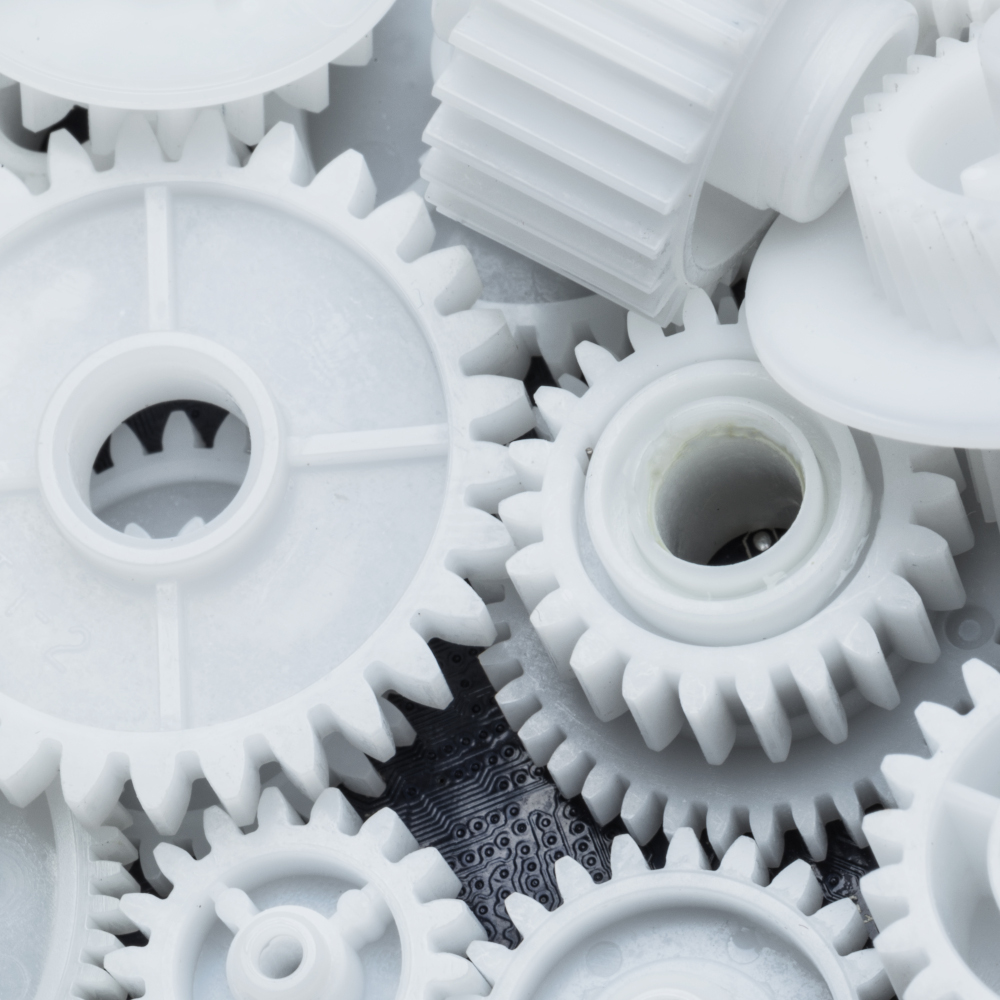
Can plastic gears be used in food and beverage processing machinery?
Plastic gears can be used in food and beverage processing machinery in certain applications. Here’s a detailed explanation of their suitability:
Plastic gears offer several advantages that make them a viable choice for certain food and beverage processing machinery applications:
- Corrosion Resistance: Many plastic materials, such as certain types of polypropylene (PP) or polyethylene (PE), exhibit excellent resistance to corrosion and chemical attack. This makes them suitable for use in food and beverage processing environments where exposure to acidic or alkaline substances, cleaning agents, or food ingredients is common.
- Hygienic Properties: Plastic gears can be designed to have smooth surfaces without any cracks, crevices, or pores, which can harbor bacteria or contaminants. This makes them easier to clean and sterilize, promoting hygienic conditions in food and beverage processing machinery.
- Lightweight: Plastic gears are generally lighter than metal gears, which can be advantageous in applications where weight reduction is desired. The reduced weight can simplify machinery design, reduce energy consumption, and ease handling during maintenance or equipment assembly.
- Noise Reduction: Plastic gears, with their inherent damping characteristics, can help reduce noise levels in food and beverage processing machinery. This is particularly beneficial in settings where noise control is crucial for maintaining a comfortable working environment.
- Non-Toxicity: Food-grade plastic materials, such as certain types of polyethylene terephthalate (PET) or polytetrafluoroethylene (PTFE), are approved for contact with food and beverages. These materials comply with regulatory standards for food safety and do not leach harmful substances into the processed products.
- Design Flexibility: Plastic gears offer greater design flexibility compared to metal gears. They can be molded into complex shapes and incorporate features such as self-lubrication, noise reduction, or specific gear profiles to optimize performance for food and beverage processing applications.
However, it’s important to note that there are certain considerations and limitations when using plastic gears in food and beverage processing machinery:
- Operating Conditions: Plastic gears have temperature limitations and may not be suitable for applications involving high temperatures or extreme temperature fluctuations. It’s essential to select plastic materials that can withstand the specific temperature range of the processing environment.
- Load Requirements: Plastic gears typically have lower load-bearing capacities compared to metal gears. They may not be suitable for heavy-duty applications that require withstanding high torque or significant forces. Careful consideration should be given to the torque and load requirements of the specific machinery application.
- Application-Specific Requirements: Some food and beverage processing machinery applications may have unique requirements, such as high-speed operation, abrasive ingredients, or frequent cleaning cycles. It’s crucial to assess whether plastic gears can meet these specific requirements and evaluate the need for additional reinforcements or modifications.
Overall, plastic gears can be successfully used in food and beverage processing machinery for suitable applications, offering benefits such as corrosion resistance, hygienic properties, lightweight design, noise reduction, and compliance with food safety standards. However, proper material selection, design considerations, and a thorough understanding of the application’s requirements are important to ensure the reliable and safe operation of the machinery.
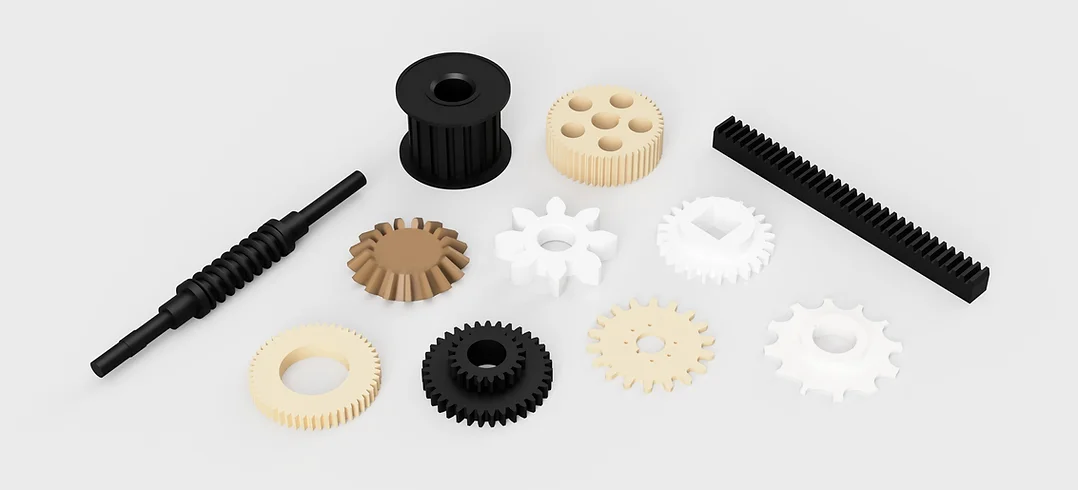
What is the impact of temperature variations on plastic gears?
Temperature variations can have a significant impact on plastic gears. Here’s a detailed explanation of their effects:
1. Thermal Expansion: Plastic gears can experience thermal expansion or contraction with changes in temperature. Different types of plastics have varying coefficients of thermal expansion, meaning they expand or contract at different rates. This can result in dimensional changes, which may affect the gear’s meshing, clearance, and overall performance. It’s important to consider the thermal expansion characteristics of the specific plastic material used in the gear design.
2. Material Softening or Hardening: Plastic materials can exhibit changes in mechanical properties with temperature variations. In general, as temperature increases, plastic materials tend to soften and become more flexible, while at lower temperatures, they can become stiffer and more brittle. These changes can impact the gear’s load-bearing capacity, wear resistance, and overall durability. It’s crucial to select plastic materials that can maintain their mechanical integrity within the expected temperature range of the application.
3. Dimensional Stability: Plastic gears may experience dimensional changes or warping due to temperature fluctuations. Higher temperatures can cause plastic materials to deform, leading to misalignment, increased backlash, or reduced gear accuracy. Conversely, lower temperatures can cause contraction, resulting in tight clearances, increased friction, or gear binding. Proper design considerations, including material selection and gear geometry, can help mitigate the impact of temperature-induced dimensional changes.
4. Lubrication and Wear: Temperature variations can affect the lubrication properties of plastic gears. Higher temperatures can cause lubricants to degrade or become less effective, leading to increased friction, wear, and potential gear failure. Similarly, low temperatures can cause lubricants to thicken or solidify, hindering proper lubrication and increasing wear. Selecting lubricants suitable for the anticipated temperature range and periodic maintenance can help ensure proper lubrication and minimize wear on plastic gears.
5. Cold Flow and Creep: Some plastic materials, especially those with lower glass transition temperatures, may exhibit cold flow or creep at elevated temperatures. Cold flow refers to the gradual deformation or flow of plastic material under constant stress, while creep refers to the time-dependent deformation under a constant load. These phenomena can cause changes in gear geometry, tooth profile, or tooth engagement over time, potentially affecting gear performance and functionality. Understanding the material’s creep and cold flow characteristics is important when selecting plastic gears for applications exposed to temperature variations.
6. Impact on Lubricants and Seals: Temperature variations can also impact the performance of lubricants and seals used in gear systems. Extreme temperatures can cause lubricants to break down, lose viscosity, or leak from the gear assembly. Seals and gaskets may also be affected, leading to compromised gear housing integrity or increased friction. It’s crucial to consider temperature compatibility and select appropriate lubricants and seals that can withstand the anticipated temperature range.
In summary, temperature variations can significantly impact plastic gears by causing thermal expansion, material softening or hardening, dimensional changes, lubrication issues, cold flow or creep, and effects on lubricants and seals. Proper material selection, design considerations, and understanding the anticipated temperature range are essential to ensure the reliable and optimal performance of plastic gears in various applications.
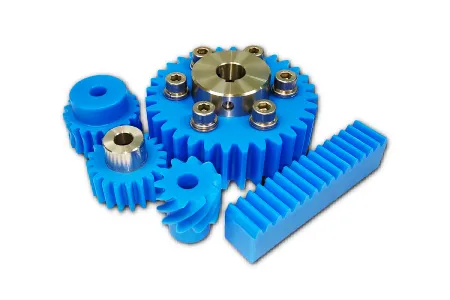
Can plastic gears replace metal gears in certain applications?
Yes, plastic gears can replace metal gears in certain applications. Here’s a detailed explanation:
Plastic gears offer a range of advantages that make them suitable alternatives to metal gears in specific scenarios. Some of the factors that determine whether plastic gears can replace metal gears include the application requirements, operating conditions, load capacity, and desired performance characteristics.
Advantages of Plastic Gears:
- Lightweight: Plastic gears are significantly lighter than metal gears, making them suitable for applications where weight reduction is important. This can lead to energy efficiency, reduced inertia, and lower wear on supporting components.
- Low Noise and Vibration: Plastic gears have inherent damping properties that help reduce noise and vibration levels during operation. This makes them suitable for applications where noise reduction is desired, such as in consumer electronics or office equipment.
- Corrosion Resistance: Certain plastic materials used in gear manufacturing exhibit excellent resistance to corrosion and chemicals. Plastic gears can be a suitable choice for applications in corrosive environments where metal gears may suffer from degradation.
- Self-Lubrication: Some plastic materials used for gear manufacturing have self-lubricating properties. This reduces friction and wear between gear teeth, eliminating the need for external lubrication and simplifying maintenance requirements.
- Cost-Effective: Plastic gears can be more cost-effective compared to metal gears, especially in large-scale production. Plastic materials are often less expensive than metals, and the manufacturing processes for plastic gears can be more efficient.
- Design Flexibility: Plastic gears offer greater design flexibility compared to metal gears. They can be molded into complex shapes, allowing for custom gear profiles and tooth geometries, resulting in optimized performance and efficiency for specific applications.
Limitations of Plastic Gears:
- High Torque and Load Capacity: Plastic gears may not have the same torque and load capacity as metal gears. In applications requiring high torque or heavy loads, metal gears may be more suitable due to their higher strength and durability.
- High Temperatures: Plastic gears have temperature limitations depending on the chosen material. In applications with high operating temperatures, metal gears that can withstand the heat may be necessary.
- Precision and Positioning: Plastic gears may not offer the same level of precision and positioning accuracy as metal gears. Applications that require tight tolerances and precise gear meshing may still require metal gears.
In summary, plastic gears can replace metal gears in certain applications where their advantages align with the specific requirements and operating conditions. It’s crucial to carefully evaluate the application needs, load capacity, temperature range, and other factors to determine if plastic gears are suitable replacements for metal gears.


editor by CX 2024-04-08