China Good quality Mechanical Spare Transmission Spline Gear Shaft supplier
Product Description
Mechanical Spare Transmission Spline Gear Shaft
CICTIC has manufactured many kinds of forged shafts, including forged roller, support roller forged shafts, thrust roller forged shafts, forged pinion shaft with gears both mounted to the shaft and as a part of the shaft, and other more kinds of forged shafts.
Features:
1. Material: stainless steel, carbon steel, alloy steel and as your requests
2. Standard: ANSI, API, ASTM, BSI, DIN, GB, ISO, JIS and more standards.
3. Mechanical Properties: customized requirements are accepted.
4. Hardness: customized requirements are accepted.
5. Surface treatment: rust preventive oil and according to your requirements.
6. Application: mainly used in various machinery equipment in the fields of mining, metallurgical, chemical industry, construction, and so on
7. QA and DOC: chemical composition report, mechanical properties report, UT report, PT report, heat treatment report, dimensions check report, hardness report and more
We can offer third party inspection.
8. Process: raw material purchasing – forging – rough machining(rough hobbing) – heat treatment – semi machining (semi final hobbing) – hardening of tooth surfaces – finish machining(gear grinding) – painting and packing. Various process conditions are available.
9. Certificates: ISO 9001:2008
10. Products ability: Max module:45
11. Heat treatment: quenching and tempering, normalizing and tempering.
12. Tooth surface treatment: carburizing and quenching, surface quenching
13. QC: fabrication schedule, fabrication process chart, inspection and test plan
14. Packing: coated with rust preventive oil, seaworthy packing
Advantages:
1. More than 30 years experience
2. ISO9001:2008 Standard certified
3. Custom-made design
4. All seamless forged
5. Strict quality control
6. Prompt delivery
Parameters:
| Name | Gear Shaft |
| Material | Forging carbon steel, forging alloy steel |
| Diameter | Max. 2m |
| Length | Max. 20m |
| Module | Max. 45 |
Main Manufacturing Machines:
RFQ:
Q: Are you trading company or manufacturer?
A: we are manufacturer.
Q: How long is your delivery time?
A: Generally it is 5-10 days,if the goods are in stock,or it is 20-30days if the good are not in stock it is according to quantity.
Q: Does your company provide samples? It is free or extra?
A: Our samples are charged according to the circumstances and can be supplied free of charge if the cost is low, but the freight will be paid by the buyer.
Q: Could you customized for me?
A: Sure,we can supply OEM service as per your drawing or samples.
/* January 22, 2571 19:08:37 */!function(){function s(e,r){var a,o={};try{e&&e.split(“,”).forEach(function(e,t){e&&(a=e.match(/(.*?):(.*)$/))&&1
| Material: | Tailored Design |
|---|---|
| Load: | Central Spindle |
| Stiffness & Flexibility: | Stiffness / Rigid Axle |
| Journal Diameter Dimensional Accuracy: | as Requirement |
| Axis Shape: | Straight Shaft |
| Shaft Shape: | Stepped Shaft |
| Customization: |
Available
| Customized Request |
|---|
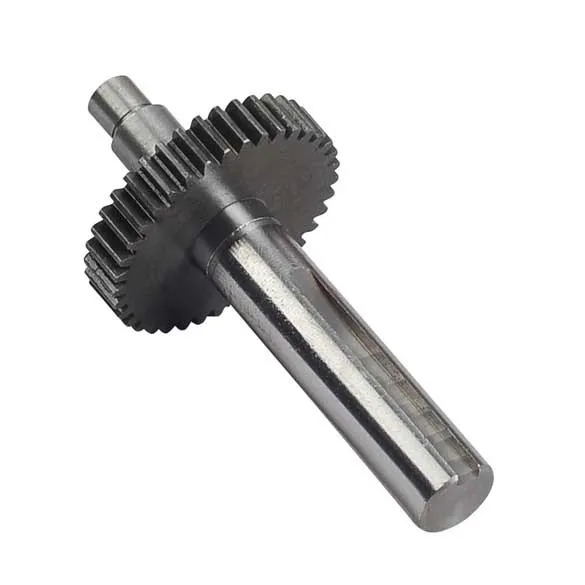
Can gear shafts be used in precision machinery and equipment?
Yes, gear shafts are commonly used in precision machinery and equipment. Precision machinery requires high accuracy, reliability, and smooth operation, and gear shafts play a critical role in achieving these requirements. Let’s explore the reasons why gear shafts are suitable for precision machinery:
- Power Transmission:
Gear shafts are essential components for transmitting power between various components in precision machinery. They enable the transfer of rotational motion and torque from the input source to the desired output, allowing the machinery to perform its intended function precisely and efficiently.
- Precise Positioning and Control:
Gear shafts, along with gears and other related components, enable precise positioning and control in precision machinery. By utilizing carefully designed gear ratios and configurations, gear shafts can accurately control the speed, direction, and timing of movements within the machinery. This precision is crucial in applications such as robotics, CNC machines, and other automated systems.
- Load Distribution:
In precision machinery, gear shafts help distribute loads evenly across various components. By utilizing multiple gears and shafts, the transmitted load can be distributed over a larger surface area, reducing stress concentrations and minimizing the risk of premature wear or failure. This load distribution capability is vital in maintaining the integrity and longevity of precision machinery.
- Backlash Control:
Backlash refers to the slight clearance or play between meshing gears. In precision machinery, it is crucial to minimize or control backlash to ensure accurate and repeatable movements. Gear shafts, when properly designed and manufactured, can contribute to minimizing backlash by maintaining precise gear meshing and reducing any unwanted movement or play between the gears.
- High Torque Transmission:
Precision machinery often requires the transmission of high torque while maintaining accuracy and reliability. Gear shafts are capable of handling high torque loads and transmitting power efficiently. They are designed to withstand the forces and stresses associated with high torque applications, ensuring reliable operation and minimizing power losses.
- Customization and Adaptability:
Gear shafts can be customized and adapted to meet the specific requirements of precision machinery. They can be manufactured with various materials, such as steel or specialized alloys, to achieve the desired strength, durability, and dimensional accuracy. The gear profiles, shaft dimensions, and other parameters can be tailored to suit the particular application, allowing for optimal performance and compatibility within precision machinery.
- Reliability and Longevity:
Gear shafts are known for their reliability and long service life when properly designed, manufactured, and maintained. They are subjected to rigorous quality control measures to ensure dimensional accuracy, surface finish, and appropriate hardness. This focus on quality and precision results in gear shafts that can withstand demanding operating conditions and provide consistent performance over an extended period.
In summary, gear shafts are indeed suitable for use in precision machinery and equipment. Their ability to transmit power, enable precise positioning and control, distribute loads, control backlash, handle high torque transmission, offer customization options, and provide reliability and longevity make them essential components in achieving the accuracy and performance required by precision machinery.
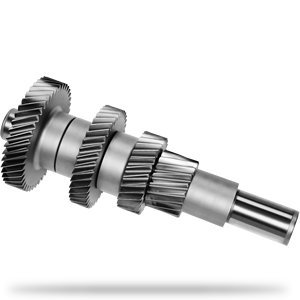
What are the factors to consider when designing gear shafts for specific applications?
Designing gear shafts for specific applications requires careful consideration of various factors to ensure optimal performance and reliability. Let’s explore the key factors that should be taken into account during the design process:
- Load and Torque Requirements:
The load and torque requirements of the specific application are crucial considerations. Understanding the maximum load the gear shaft will experience and the torque it needs to transmit is essential for selecting appropriate materials, determining the required dimensions, and ensuring the gear shaft can handle the anticipated forces effectively.
- Gear Type and Configuration:
The gear type and configuration directly influence the design of the gear shaft. Different gear types, such as spur gears, helical gears, bevel gears, or worm gears, have unique characteristics that impact the design considerations for the gear shaft. Factors such as gear tooth profile, pitch, pressure angle, and gear ratio need to be taken into account during the design process to ensure proper alignment, engagement, and efficient power transmission.
- Material Selection:
Selecting the appropriate material for the gear shaft is crucial for its strength, durability, and performance. Factors such as the required strength, wear resistance, fatigue resistance, and corrosion resistance should be considered when choosing the material. Common materials for gear shafts include various steels, alloys, and sometimes specialized materials like bronze or brass, depending on the specific application requirements.
- Shaft Dimensions and Geometry:
The dimensions and geometry of the gear shaft need to be carefully determined. Factors such as shaft diameter, length, keyways, chamfers, and fillets are important considerations. Proper shaft dimensions and geometry ensure sufficient strength, proper fit within the gear assembly, and compatibility with other components within the system.
- Bearing Support and Lubrication:
The gear shaft design should incorporate provisions for bearing support and lubrication. Bearings placed along the gear shaft help reduce friction, support the shaft under load, and ensure smooth rotation. Adequate lubrication, such as oil or grease, is necessary to minimize wear between the gear shaft and bearings, as well as to reduce heat generation and promote efficient operation.
- Heat Treatment and Surface Finish:
Depending on the application requirements, heat treatment processes like quenching and tempering may be applied to enhance the mechanical properties of the gear shaft. Heat treatment can improve hardness, strength, and toughness, increasing the gear shaft’s ability to withstand high loads and resist wear. Additionally, considering the surface finish of the gear shaft can help reduce friction, improve gear meshing, and minimize the risk of surface damage.
- Manufacturability and Cost:
Designing gear shafts should also take into account manufacturability and cost considerations. The design should be feasible for manufacturing processes such as machining, forging, or casting, depending on the chosen material and complexity of the design. The design should also aim to optimize material usage and minimize manufacturing costs while meeting the required performance criteria.
In summary, when designing gear shafts for specific applications, factors such as load and torque requirements, gear type and configuration, material selection, shaft dimensions and geometry, bearing support and lubrication, heat treatment and surface finish, as well as manufacturability and cost considerations, should all be carefully evaluated. By considering these factors, a well-designed gear shaft can be developed to meet the specific needs of the application, ensuring reliable and efficient power transmission within the gear system.
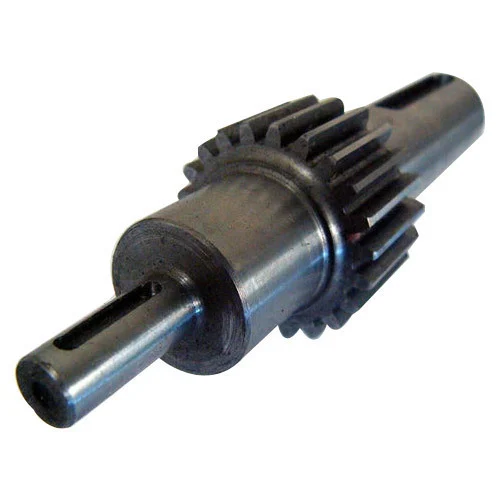
What industries commonly use gear shafts in their applications?
Gear shafts find applications in various industries where the transmission of motion and power is necessary. They are widely utilized in numerous sectors that rely on machinery and mechanical systems. Here are some industries that commonly use gear shafts in their applications:
- Automotive Industry:
The automotive industry extensively uses gear shafts in vehicles. Gear shafts are present in the transmission systems, where they transmit power and torque between the engine and the wheels. They enable gear shifting, torque conversion, and speed control, contributing to the overall performance and drivability of automobiles.
- Industrial Manufacturing:
Industrial manufacturing sectors, such as machinery manufacturing, rely heavily on gear shafts. They are used in various types of machinery, including lathes, milling machines, conveyor systems, and assembly lines. Gear shafts enable power transmission, motion control, and torque conversion in these machines, facilitating the production and processing of goods.
- Aerospace and Defense:
In the aerospace and defense industries, gear shafts are crucial components in aircraft engines, helicopters, and military vehicles. They play a vital role in transmitting power and torque between the engines and propellers or rotors, providing the necessary thrust and control. Gear shafts in these applications must meet stringent performance and reliability requirements.
- Power Generation:
Gear shafts are utilized in power generation industries, including thermal power plants, hydroelectric plants, and wind turbines. They facilitate the transfer of rotational motion and torque from turbines or generators to power transmission systems. Gear shafts in these applications often handle high-power outputs and must be designed to withstand demanding operating conditions.
- Construction and Mining:
The construction and mining industries commonly employ gear shafts in heavy machinery and equipment. Gear shafts are found in excavators, bulldozers, cranes, and drilling rigs, among others. They enable power transmission and torque conversion, allowing these machines to perform tasks such as digging, lifting, and drilling with precision and efficiency.
- Marine and Shipbuilding:
Gear shafts are essential components in marine applications, including ships, boats, and marine propulsion systems. They are utilized in marine engines, propellers, and thrusters, enabling the transmission of power and torque for propulsion and maneuvering. Gear shafts in marine environments must be corrosion-resistant and capable of withstanding the harsh conditions of saltwater and vibrations.
- Renewable Energy:
In the renewable energy sector, gear shafts are used in wind turbines and solar tracking systems. They facilitate the transfer of rotational motion and torque from wind or solar power sources to generators or energy storage systems. Gear shafts play a vital role in converting and optimizing the energy generated from renewable sources.
These are just a few examples of industries that commonly use gear shafts in their applications. Gear shafts are versatile components that are integral to the functioning of machinery and mechanical systems across various sectors.


editor by CX 2024-04-09