China Custom Module2.5 Customized Gear Ring & 180 Teeth to Truck/ Oil Drilling Rig/ Construction Machinery bevel gearbox
Product Description
Product introduction
| Gear model | Customized gear shaft accoding to customers sample or drawing |
| Processing machine | CNC machine |
| Material | 20CrMnTi/ 20CrMnMo/ 42CrMo/ 45#steel/ 40Cr/ 20CrNi2MoA |
| Heat treattment | Carburizing and quenching/ Tempering/ Nitriding/ Carbonitriding/ Induction hardening |
| Hardness | 58-62HRC |
| Qaulity standerd | GB/ DIN/ JIS/ AGMA |
| Accuracy class | 5-8 class |
| Shipping | Sea shipping/ Air shipping/ Express |
Factory introduction
ZheJiang Yingxing Gear Co., LTD is set product development, production and sales of specialized enterprises, the company was founded in 2007, is located in Xihu (West Lake) Dis. Bridge River, 50 kilometers from the provincial capital HangZhou city, convenient transportation.
The company has modern professional production workshop covers an area of 30,000 square meters, 120 employees, including professional and technical staff of 30 people. We buy the advanced processing center equipment from Germany and American. We produce the gear for reducer,agricultural machinery, construction machinery, oil drilling rig,and other aspects of the production. The company has been appraised as ZheJiang quality products, corporate credit quality units. The company has offices in HangZhou.
Our products sell well in China and exported to Europe, the Americas, the Middle East, Southeast Asia and other countries. My company adhered to the “good faith, winning by quality, first-class service will be presented to our customers” for the purpose, we are willing to be honest with you, and work together for a better tomorrow.
Factory pictures and cerfitication
/* January 22, 2571 19:08:37 */!function(){function s(e,r){var a,o={};try{e&&e.split(“,”).forEach(function(e,t){e&&(a=e.match(/(.*?):(.*)$/))&&1
| Application: | Machinery, Marine, Agricultural Machinery, Oil Machinery |
|---|---|
| Hardness: | Hardened Tooth Surface |
| Gear Position: | External Gear |
| Manufacturing Method: | Rolling Gear |
| Toothed Portion Shape: | Spiral Gear |
| Material: | 20crmnti |
| Customization: |
Available
| Customized Request |
|---|
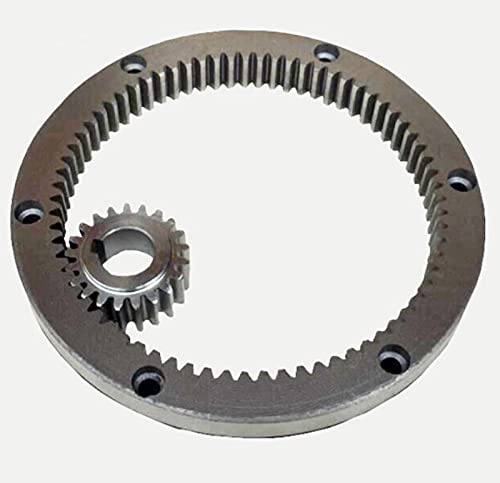
What is the purpose of using ring gears in machinery?
Ring gears serve multiple purposes and offer various advantages when used in machinery. Here’s a detailed explanation of the purpose of using ring gears:
- Power Transmission: One of the primary purposes of ring gears in machinery is to facilitate power transmission. Ring gears, along with other meshing gears, transmit torque and rotational motion from the driving gear to the driven components or systems. They enable the transfer of power from a power source to various parts of the machinery, driving the movement and operation of different mechanisms and processes.
- Gear Ratio Control: Ring gears allow for precise control over the gear ratio in machinery. By adjusting the size of the ring gear and its meshing gears, different gear ratios can be achieved. Gear ratios determine the relationship between the rotational speeds and torques of the driving and driven gears. This ability to control the gear ratio enables machinery to operate at desired speeds, optimize torque output, and adapt to specific application requirements.
- Mechanical Advantage: Ring gears provide a mechanical advantage in machinery. By leveraging the gear ratio control mentioned above, ring gears can amplify or reduce the torque output of the power source. This mechanical advantage allows machinery to generate higher forces or torques than the original power source alone. It enables the machinery to handle heavy loads, perform tasks requiring significant force, and enhance overall operational efficiency.
- Load Distribution: Ring gears contribute to load distribution within machinery. The meshing teeth of the ring gear engage with multiple teeth of other gears, distributing the transmitted loads across these meshing points. This load distribution helps prevent excessive stress concentration on specific gear teeth, ensuring even wear and reducing the risk of gear failure. By distributing the load, ring gears enhance the overall durability and reliability of the machinery.
- Motion Control: Ring gears play a crucial role in motion control within machinery. By transmitting rotational motion, ring gears enable precise movement and synchronization of various components and mechanisms. They ensure that different parts of the machinery operate in a coordinated manner, allowing for smooth and controlled motion. Ring gears contribute to accurate positioning, speed regulation, and overall motion precision in machinery.
- Compact Design: Ring gears offer a compact design solution. Due to their annular shape, they can be integrated into machinery with limited space. The compactness of ring gears is particularly beneficial in applications where space constraints are a concern. Their small footprint allows for efficient use of available space, enabling the design of more compact and lightweight machinery without sacrificing power transmission capabilities.
- Versatile Applications: Ring gears find wide applications across various industries and machinery types. They are used in automotive transmissions, industrial machinery, robotics, aerospace systems, power generation equipment, and more. The versatility of ring gears stems from the ability to configure them in different types, such as external or internal ring gears, helical gears, or bevel gears. This versatility makes ring gears adaptable to a wide range of machinery designs and requirements.
By serving these purposes, ring gears contribute to the efficient and reliable operation of machinery. They enable power transmission, gear ratio control, mechanical advantage, load distribution, motion control, and compact design, making them essential components in various mechanical systems.
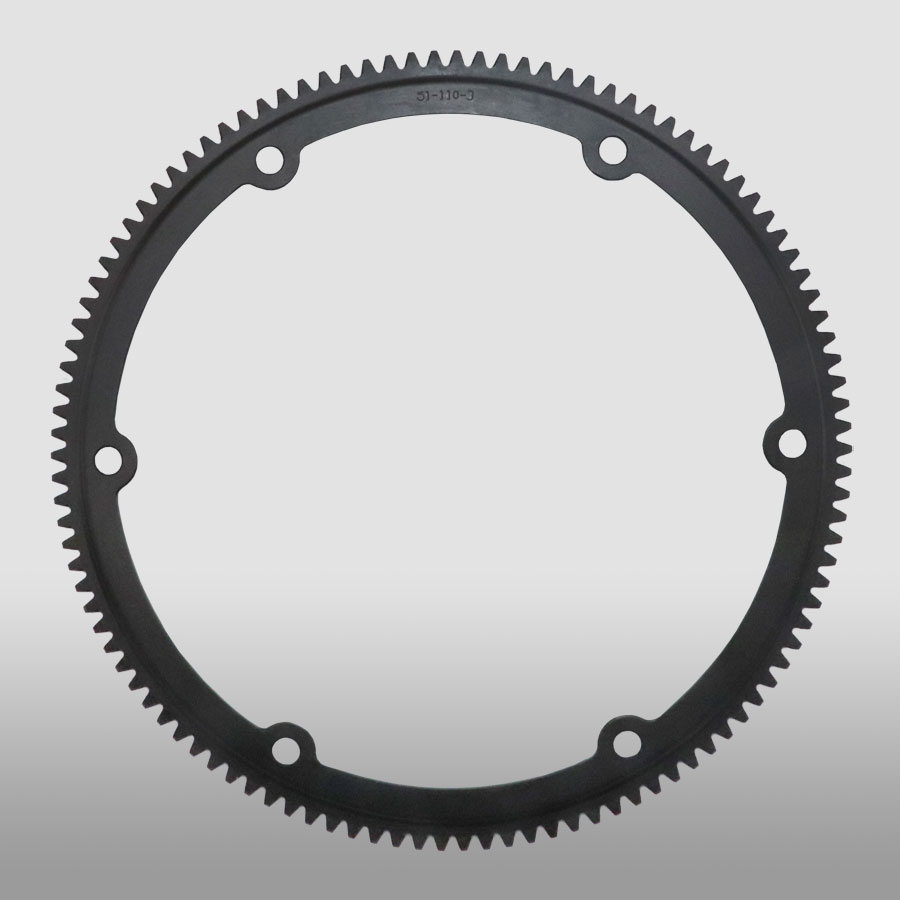
Are ring gears suitable for high-torque applications?
Ring gears are indeed suitable for high-torque applications. Here’s a detailed explanation of why ring gears are suitable for high-torque applications:
Ring gears are designed to handle high torque loads and are commonly used in various applications that require substantial torque transmission. Here are the reasons why ring gears are well-suited for high-torque applications:
- Robust Construction: Ring gears are typically constructed with robust materials, such as hardened steel or other high-strength alloys. This construction provides the necessary strength, durability, and resistance to withstand high torque forces without deformation or failure.
- Large Contact Area: Ring gears have a large contact area between their gear teeth, which allows for efficient power transmission and load distribution. The larger contact area enables the ring gear to transmit higher torque without experiencing excessive stress concentrations or localized overloading.
- Optimized Tooth Geometry: The tooth geometry of ring gears is designed to handle high torque. The shape and profile of the gear teeth are optimized to distribute the torque load evenly, minimizing stress concentrations and enhancing the gear’s ability to transmit higher torque without premature wear or failure.
- Multiple Gear Engagements: Ring gears often engage with multiple gears or pinions, which further enhances their torque capacity. The engagement of multiple gears allows for load sharing, distributing the torque across multiple contact points and reducing the strain on individual gear teeth.
- Customizable Gear Ratios: Ring gears can be designed with various gear ratios to meet specific torque requirements. By adjusting the tooth count or diameter of the ring gear and mating gears, the gear system can be optimized for high torque applications while maintaining the desired speed or rotational characteristics.
- Used in Heavy-Duty Applications: Ring gears are widely used in heavy-duty applications that demand high torque transmission. Examples include automotive differentials, industrial gearboxes, mining equipment, construction machinery, and wind turbines. These applications rely on ring gears to effectively transmit and handle the high torque generated by powerful engines, motors, or turbines.
It’s important to note that while ring gears are suitable for high-torque applications, proper engineering analysis and selection should be carried out to ensure that the specific design, material, and size of the ring gear are appropriate for the intended torque requirements. Factors such as gear tooth strength, gear geometry, material properties, lubrication, and operating conditions should be carefully considered to ensure reliable and efficient performance in high-torque applications.
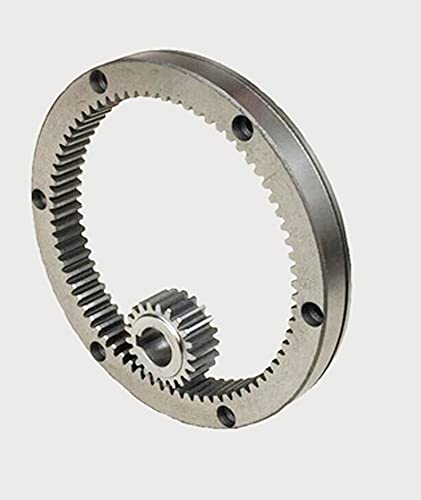
How do ring gears differ from other types of gears?
Ring gears, also known as annular gears or internal gears, possess distinct characteristics that set them apart from other types of gears. Here’s a detailed explanation of how ring gears differ from other gears:
1. Tooth Configuration: The most significant difference between ring gears and other gears is their tooth configuration. In a ring gear, the teeth are located on the inside circumference of a circular ring, whereas in other gears such as spur gears, helical gears, and bevel gears, the teeth are present on the outer surface of the gear. This internal tooth arrangement makes ring gears unique and allows them to mesh with pinion gears or other external gears.
2. Gear Assembly: The assembly of ring gears differs from other gears. In most cases, ring gears are used in combination with pinion gears or other external gears. The pinion gear meshes with the teeth on the inside of the ring gear. This gear set configuration enables the transmission of rotational motion and torque.
3. Load Distribution: Ring gears distribute the load over a larger area compared to other types of gears. The load is spread across the internal teeth of the ring gear, resulting in improved load-carrying capacity and enhanced gear durability. This load distribution characteristic makes ring gears suitable for applications that involve high loads or continuous operation.
4. Gear Ratio: Ring gears offer specific advantages in terms of gear ratios. They are commonly used in applications where high gear ratios are required. The gear ratio is determined by the number of teeth on the ring gear compared to the number of teeth on the mating gear (such as a pinion gear). The internal tooth configuration of the ring gear allows for larger gear diameters, enabling higher gear ratios to be achieved.
5. Space Utilization: Ring gears provide a compact design compared to some other types of gears. The internal tooth arrangement allows for a more space-efficient gear assembly. This compactness is advantageous in applications where space is limited or where a high gear ratio needs to be achieved within a confined area.
6. Applications: Ring gears are commonly used in automotive transmissions, differential systems, planetary gear systems, industrial machinery, robotics, power generation equipment, and heavy machinery. Their unique characteristics make them suitable for applications that require precise motion control, load distribution, and high gear ratios.
It’s important to note that the specific design, tooth profile, material selection, and manufacturing techniques may vary for different types of gears, including ring gears. Each type of gear is designed to meet specific application requirements, operating conditions, and performance needs.


editor by CX 2024-04-12