China Good quality Factory Supplies High Precision Customized Drawings Steel Spur Sinter Pinion Gear cycle gear
Product Description
| Product type | Sintered metal parts / Sector gears |
| Material | Stainless steel,Steel(Iron,)Brass,Copper (According to product design requirements) |
| Tolerance | ±0.01mm |
| Surface Treatment | As your requirement |
| Application | Tool industry,Automotive, instrument, electrical equipment, household appliances, furniture, mechanical equipment,daily living equipment, electronic sports equipment, light industry products, sanitation machinery, etc. |
| Shape | Any other material and dimension depends on customers’ demand. |
| QC system | 100% inspection before shipment |
| Returned Goods Managing | With quality problem or deviation from drawings |
| Warranty | Replacement at all our cost for rejected products |
| Payment terms | T/T at sight, Paypal, Western Union,etc. |
| Lead time | 7-15 working days as usual,It will based on the detailed order quantity. |
| Why Choose Us |
1. We have professional powder metallurgy production equipment and team;
2. We can accompany customers to develop products;
3. Just send an idea that you want to try, you don’t even need to know what powder metallurgy;
4. Our sales will reply you within 24 hours to confirm further details and give the estimated quote time;
5. Our team will evaluate your inquiry and provide our offer within next 1~3 working days.
| Order Process |
1. You send us drawing or sample.
2. We carry through project assessment.
3. We give you our design for your confirmation.
4. We make the sample and send it to you after you confirmed our design.
5. You confirm the sample then place an order and pay us deposit.
6. We start producing.
7. When the goods is done, you pay us the balance after you confirmed pictures or tracking numbers.
8. Trade is done, thank you!!
Additional Capabilities CAD Design Services CAM Programming Services Coordinate Measuring Machines (CMM) Reverse Engineering
| Product Show |
| Some Parts We Manufacture |
Self-Lubricated Bushing
Structural Parts
Gears
| About Us |
| Design Tips: Powder Metallurgy Gears |
1. Radius > 0.25 mm is required to manufacture the die;
2. Helical teeth should feature a helical angle < 30º in order to limit side pressure on the punches;
3. Introduction of a draft angle > 5º in the upper diameter reduce the tooling cost;
4. The distance between tooth root and central hub diameter must be: > 3 mm (Robust Tooling).
If you want to know more about the product, please send us a message.
| The Powder Metallurgy Manufacturing Process |
| FAQ |
| Q: How can I get the quotation? |
| A: Please send us information for quote: drawing, material, weight, quantity and request,w can accept PDF, ISGS, DWG, STEP file format. If you don’t have drawing, please send the sample to us,we can quote based on your sample too. |
| Q: What’s your MOQ? |
| A: In general 1000pcs,but can accept low quantity in some special conditions. |
| Q: Do you provide samples ? is it free or extra ? |
| A: Yes, we could offer the sample for free charge but do not pay the cost of freight. |
| Q: What about the leading time for mass production? |
| A: Honestly, it depends on the order quantity. Normally, 15 days to 20 days after your deposit if no tooling needed. |
| Q: What if the parts are not good? |
| A: We can guarantee good quality,but if happened,please contact us immediately, take some pictures, we will check on the problem,and solve it asap. |
| Q: What is your terms of payment ? |
| A: Payment=1000USD, 30% T/T in advance ,balance before shippment |
/* January 22, 2571 19:08:37 */!function(){function s(e,r){var a,o={};try{e&&e.split(“,”).forEach(function(e,t){e&&(a=e.match(/(.*?):(.*)$/))&&1
| Application: | Motor, Electric Cars, Motorcycle, Machinery, Marine, Agricultural Machinery, Car |
|---|---|
| Hardness: | Hardened Tooth Surface |
| Gear Position: | Internal Gear |
| Customization: |
Available
| Customized Request |
|---|
.shipping-cost-tm .tm-status-off{background: none;padding:0;color: #1470cc}
|
Shipping Cost:
Estimated freight per unit. |
about shipping cost and estimated delivery time. |
|---|
| Payment Method: |
|
|---|---|
|
Initial Payment Full Payment |
| Currency: | US$ |
|---|
| Return&refunds: | You can apply for a refund up to 30 days after receipt of the products. |
|---|
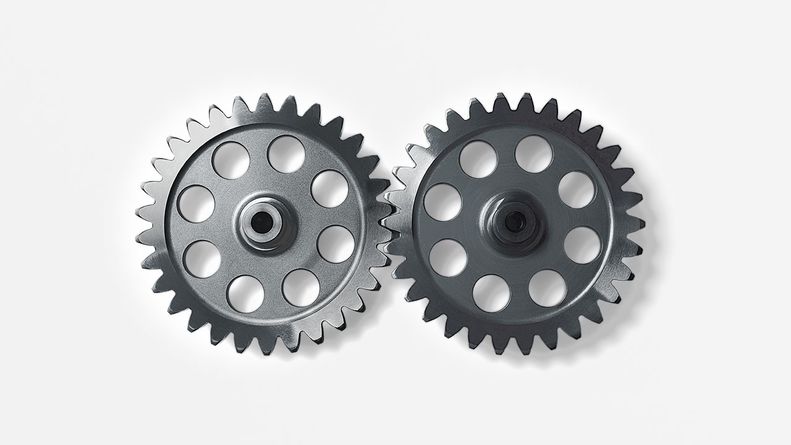
How do you calculate the efficiency of a spur gear?
Calculating the efficiency of a spur gear involves considering the power losses that occur during gear operation. Here’s a detailed explanation:
In a gear system, power is transmitted from the driving gear (input) to the driven gear (output). However, due to various factors such as friction, misalignment, and deformation, some power is lost as heat and other forms of energy. The efficiency of a spur gear represents the ratio of the output power to the input power, taking into account these power losses.
Formula for Calculating Gear Efficiency:
The efficiency (η) of a spur gear can be calculated using the following formula:
η = (Output Power / Input Power) × 100%
Where:
η is the efficiency of the gear system expressed as a percentage.
Output Power is the power delivered by the driven gear (output) in the gear system.
Input Power is the power supplied to the driving gear (input) in the gear system.
Factors Affecting Gear Efficiency:
The efficiency of a spur gear is influenced by several factors, including:
- Tooth Profile: The tooth profile of the gear affects the efficiency. Well-designed gear teeth with accurate involute profiles can minimize friction and power losses during meshing.
- Lubrication: Proper lubrication between the gear teeth reduces friction, wear, and heat generation, improving gear efficiency. Insufficient or inadequate lubrication can result in increased power losses and reduced efficiency.
- Gear Material: The selection of gear material affects efficiency. Materials with low friction coefficients and good wear resistance can help minimize power losses. Higher-quality materials and specialized gear coatings can improve efficiency.
- Gear Alignment and Meshing: Proper alignment and precise meshing of the gear teeth are essential for optimal efficiency. Misalignment or incorrect gear meshing can lead to increased friction, noise, and power losses.
- Bearing Friction: The efficiency of a gear system is influenced by the friction in the bearings supporting the gear shafts. High-quality bearings with low friction characteristics can contribute to improved gear efficiency.
- Load Distribution: Uneven load distribution across the gear teeth can result in localized power losses and reduced efficiency. Proper design and gear system configuration should ensure even load distribution.
Interpreting Gear Efficiency:
The calculated gear efficiency indicates the percentage of input power that is effectively transmitted to the output. For example, if a gear system has an efficiency of 90%, it means that 90% of the input power is converted into useful output power, while the remaining 10% is lost as various forms of power dissipation.
It’s important to note that gear efficiency is not constant and can vary with operating conditions, lubrication quality, gear wear, and other factors. The calculated efficiency serves as an estimate and can be influenced by specific system characteristics and design choices.
By considering the factors affecting gear efficiency and implementing proper design, lubrication, and maintenance practices, gear efficiency can be optimized to enhance overall gear system performance and minimize power losses.
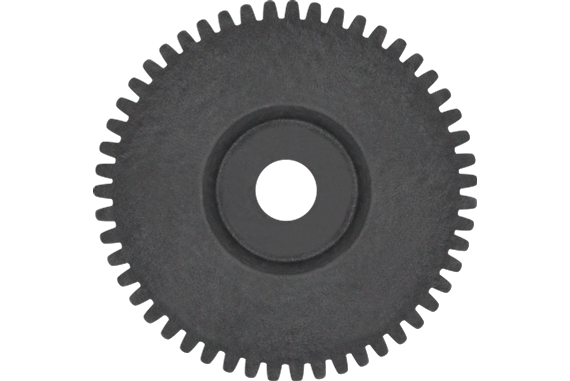
What is the purpose of using spur gears in machinery?
In machinery, spur gears serve several important purposes due to their unique characteristics and capabilities. Here’s a detailed explanation of the purpose of using spur gears in machinery:
- Power Transmission: Spur gears are primarily used for power transmission in machinery. They transfer rotational motion and torque from one shaft to another, allowing machinery to perform various tasks. By meshing the teeth of two or more spur gears together, power can be transmitted efficiently and reliably throughout the machinery.
- Speed Reduction or Increase: Spur gears enable speed reduction or increase in machinery. By combining gears with different numbers of teeth, the rotational speed can be adjusted to match the desired output speed. For example, using a larger gear driving a smaller gear can increase the speed output while reducing the torque, while the opposite arrangement can decrease the speed while increasing the torque.
- Torque Amplification: Spur gears can amplify torque in machinery. By using gears with different numbers of teeth, the torque can be adjusted to match the required output. For example, using a smaller gear driving a larger gear can increase the torque output while reducing the speed, while the opposite arrangement can decrease the torque while increasing the speed.
- Directional Control: Spur gears provide directional control in machinery. By meshing gears with opposite orientations, the rotational direction of the driven shaft can be reversed or changed. This directional control is crucial for machinery that requires bi-directional motion or needs to change the direction of operation.
- Mechanical Advantage: Spur gears offer a mechanical advantage in machinery. By utilizing gear ratios, spur gears can multiply or divide the force exerted on the input shaft. This mechanical advantage allows machinery to generate higher forces or achieve precise movements with reduced effort.
- Precision Positioning: Spur gears facilitate precise positioning in machinery. The accurate tooth engagement of spur gears ensures precise control over rotational motion, making them suitable for applications that require precise positioning or synchronization of components. Machinery such as CNC machines, robotics, and automation systems often rely on spur gears for accurate movement and positioning.
- Compact Design: Spur gears have a compact design, making them suitable for machinery with space constraints. They can be arranged in-line, parallel, or at right angles, allowing for efficient power transmission in tight spaces. Their compactness enables machinery to be designed with smaller footprints and optimized layouts.
- Reliability and Durability: Spur gears are known for their reliability and durability in machinery. The direct tooth engagement and uniform load distribution result in efficient power transmission with reduced wear and stress concentration. When properly lubricated and maintained, spur gears can withstand heavy loads and operate reliably over extended periods.
- Cost-Effectiveness: Spur gears are often cost-effective in machinery applications. Their simple design and ease of manufacturing contribute to lower production costs. Additionally, their high efficiency helps reduce energy consumption, resulting in potential long-term cost savings. The availability of spur gears in various sizes and materials further enhances their cost-effectiveness.
By utilizing spur gears in machinery, engineers and designers can achieve efficient power transmission, speed and torque control, directional versatility, mechanical advantage, precise positioning, compact design, reliability, durability, and cost-effectiveness. These advantages make spur gears a popular choice in a wide range of machinery applications across industries.
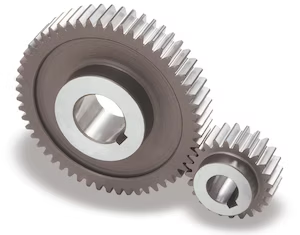
What industries commonly use spur gears?
Spur gears find wide applications across various industries due to their simplicity, efficiency, and versatility. Here’s a detailed explanation of the industries that commonly use spur gears:
- Automotive Industry: The automotive industry extensively utilizes spur gears in various components and systems. They are commonly found in gearboxes, differentials, transmission systems, and engine timing mechanisms. Spur gears play a crucial role in transferring power and rotational motion between the engine, wheels, and other drivetrain components.
- Machinery and Manufacturing: Spur gears are widely employed in machinery and manufacturing equipment across different sectors. They are used in conveyor systems, machine tools, printing presses, textile machinery, packaging machinery, and a variety of industrial applications. Spur gears facilitate power transmission and motion control in these systems.
- Power Generation: Spur gears are essential in power generation systems such as wind turbines, hydroelectric turbines, and steam turbines. They are used to transmit power from the rotor to the generator, converting the rotational motion of the turbine blades into electricity. Spur gears enable efficient power transfer in these renewable energy systems.
- Robotics and Automation: Spur gears have significant applications in robotics and automation systems. They are used in robotic joints, actuators, and drive systems to control motion and transmit torque accurately and efficiently. Spur gears enable precise movement and force transmission in robotic applications.
- Aerospace and Aviation: The aerospace and aviation industries utilize spur gears in various applications. They can be found in aircraft landing gear systems, engine components, flight control systems, auxiliary power units (APUs), and other critical equipment. Spur gears play a vital role in transmitting power and controlling movement in these aerospace systems.
- Marine and Shipbuilding: Spur gears are commonly used in the marine and shipbuilding industry. They find applications in propulsion systems, winches, steering mechanisms, and other equipment that require torque transmission and speed control. Spur gears enable efficient power transfer and maneuverability in marine vessels.
- Appliances and Household Equipment: Spur gears are present in numerous household appliances and equipment. They are used in washing machines, dishwashers, mixers, food processors, garage door openers, and many other appliances that require rotational motion and power transmission. Spur gears facilitate the efficient operation of these household devices.
- Power Tools: Spur gears are widely utilized in power tools such as drills, saws, grinders, and sanders. They enable the transmission of power from the motor to the tool’s cutting or grinding components, ensuring efficient and controlled operation. Spur gears contribute to the functionality and performance of power tools.
- Medical Equipment: Spur gears are used in various medical devices and equipment. They can be found in imaging systems, surgical robots, medical pumps, and other applications that require precise motion control and torque transmission. Spur gears play a critical role in the functioning of medical equipment.
- Clocks and Watches: Spur gears are a fundamental component in mechanical clocks and watches. They are responsible for accurate timekeeping by transferring rotational motion from the mainspring or oscillator to the hour, minute, and second hands. Spur gears have historical significance in timekeeping mechanisms.
These are just a few examples of the industries where spur gears are commonly used. Their simplicity, reliability, and efficiency make them a popular choice in a wide range of applications, enabling power transmission, motion control, and precise operation in diverse industrial sectors.


editor by CX 2024-04-15