gear rack design

Gear Rack Design and Its Relationship with Gear Rack
Introduction to Gear Rack Design
Gear rack design is a critical aspect of mechanical engineering that involves the creation and optimization of linear gear systems used for various industrial applications. A gear rack consists of a linear or flat bar with evenly spaced teeth that mesh with a pinion gear, converting rotational motion into linear motion. This conversion is essential in automation, machinery, and numerous other applications where precise and efficient movement is required.
The Fundamentals of Gear Rack Design
Designing a gear rack involves several key considerations such as material selection, tooth profile, pitch, and accuracy requirements. Engineers must evaluate the operational environment, load conditions, and desired performance characteristics to create an optimal design. High precision and durability are typically sought, especially in high-load scenarios.
Material Selection for Gear Racks
Choosing the right material for a gear rack plays a significant role in its performance and longevity. Common materials include steel, aluminum, and plastic. Each material offers distinct advantages such as strength, weight, corrosion resistance, and cost-effectiveness, making the selection process critical to meeting application-specific requirements.
Tooth Profile and Geometry
The tooth profile and geometry significantly influence the gear rack’s efficiency and noise levels. Standard profiles like the involute and cycloidal are chosen based on the specific application’s needs. Precision in tooth cutting ensures smooth engagement with the pinion gear, reducing wear and tear and enhancing overall operational efficiency.
Manufacturing Techniques
Various manufacturing techniques are employed in the production of gear racks, including milling, hobbing, and grinding. Each method offers different levels of precision and cost implications. Advanced CNC machining ensures high accuracy and repeatability, crucial for applications demanding tight tolerances.
Heat Treatment Processes
Heat treatment processes such as carburizing, quenching, and tempering are used to enhance the gear rack’s hardness and wear resistance. These processes help in achieving the desired mechanical properties, extending the gear rack’s service life, especially in harsh operating environments.
Load Analysis and Stress Testing
Engineers perform load analysis and stress testing to ensure the gear rack can withstand operational stresses without failure. Finite element analysis (FEA) software is often used to simulate real-world conditions, helping to identify potential weak points and optimize the design accordingly.
Precision and Tolerance Requirements
Achieving high precision and tight tolerances is essential in gear rack design, especially for applications requiring exact movements. Precision machining and quality control measures are implemented to ensure the gear rack meets the specified tolerances, reducing backlash and ensuring smooth operation.
Cost Considerations in Gear Rack Design
Balancing performance and cost is a critical aspect of gear rack design. Engineers must consider material costs, manufacturing expenses, and operational efficiency while ensuring the final product meets the application’s performance criteria. Cost-effective solutions often involve trade-offs that do not compromise critical functionality.
Informational Relationship Between Gear Rack Design and Gear Rack
Gear rack design is intricately related to the functionality and performance of the gear rack itself. A well-designed gear rack ensures optimal interaction with the pinion gear, maximizing efficiency and minimizing wear. This relationship underscores the importance of precise design principles tailored to specific applications.

Performance Characteristics of Gear Racks
- Load Capacity: Gear racks can handle significant loads, making them suitable for heavy-duty applications.
- Precision: High-precision gear racks ensure smooth and accurate linear motion.
- Durability: Constructed from robust materials, gear racks offer long-lasting performance.
- Versatility: Gear racks are versatile and can be used in various industrial applications.
- Maintenance: Gear racks require minimal maintenance, reducing overall operational costs.
Types of Gear Racks and Their Characteristics
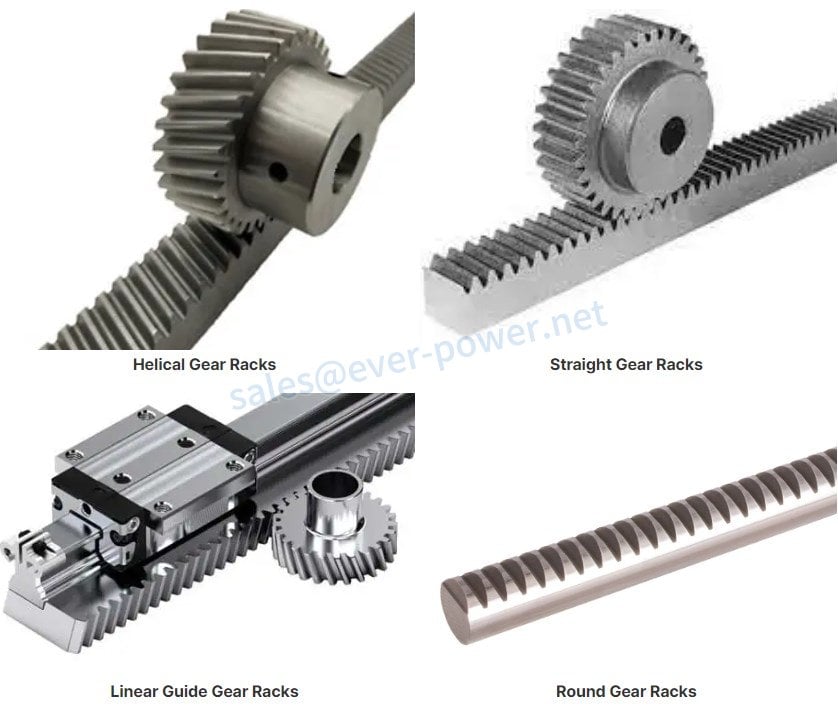
Gear racks come in various types, each with unique characteristics suited for specific applications. These include:
- Spur Gear Racks: Known for simplicity and efficiency, spur gear racks are often used in straightforward, high-load applications.
- Helical Gear Racks: Helical gear racks offer smoother and quieter operation due to the angled teeth, making them ideal for high-speed and high-precision applications.
- Round Gear Racks: These are used in applications requiring rotary motion combined with linear motion.
- Custom Gear Racks: Tailored to specific application needs, custom gear racks provide specialized solutions for unique requirements.

Applications of Gear Racks in Various Industries
- Aerospace Industry: Gear racks are used in aircraft control systems for precise movement of control surfaces.
- Renewable Energy: Wind turbines and solar tracking systems utilize gear racks for efficient energy capture.
- Automotive Industry: Gear racks are integral in steering systems, providing reliable and responsive control.
- Industrial Machinery: Heavy machinery relies on gear racks for robust and accurate linear motion control.
- Medical Equipment: Precision medical devices use gear racks for controlled and accurate movement.
Future Trends and Opportunities in Gear Rack Products
The gear rack market is evolving with advancements in materials science, manufacturing techniques, and digitalization. Future trends and opportunities include:
- Advanced Materials: The development of new materials with enhanced properties will improve gear rack performance and durability.
- Smart Manufacturing: Integration of IoT and AI in manufacturing processes will lead to smarter, more efficient production.
- Customization: Increasing demand for customized solutions will drive innovation in gear rack design and production.
- Sustainability: Eco-friendly materials and processes will gain prominence, reducing environmental impact.
- Global Expansion: Emerging markets offer significant growth opportunities for gear rack manufacturers.

Choosing the Right Gear Rack
Selecting the appropriate gear rack involves several key considerations:
- Define Requirements: Clearly outline the application’s requirements, including load, speed, and precision needs.
- Material Selection: Choose materials based on environmental conditions and performance expectations.
- Design Optimization: Optimize the design for efficiency, reliability, and cost-effectiveness.
- Supplier and After-Sales Service: Partner with reputable suppliers offering robust after-sales support.
- Cost-Benefit Analysis: Evaluate the cost-effectiveness of the gear rack while ensuring it meets performance standards.
- Quality Control: Implement stringent quality control measures to ensure the gear rack meets specifications.
Maintaining Gear Racks
Proper maintenance is crucial for extending the lifespan and performance of gear racks:
- Regular Inspections: Conduct periodic inspections to identify and address wear and tear.
- Cleaning and Corrosion Prevention: Keep gear racks clean and apply anti-corrosion coatings where necessary.
- Lubrication: Regularly lubricate the gear rack to reduce friction and wear.
- Replacement of Worn Parts: Replace worn or damaged components promptly to prevent further damage.
- Temperature Monitoring: Monitor operating temperatures to avoid overheating, which can cause premature failure.
Why Choose Ever Power
At Ever Power, we specialize in the production and sales of high-quality gear racks. Our dedication to excellence and customer satisfaction sets us apart. Here are five reasons to choose our products:
- Superior Quality: We use top-grade materials and advanced manufacturing processes to ensure our gear racks meet the highest standards.
- Customization Options: We offer tailored solutions to meet the unique needs of our customers, ensuring optimal performance in their specific applications.
- Expertise and Experience: Our team of experienced engineers and technicians bring extensive knowledge to every project, delivering exceptional results.
- Comprehensive Support: We provide robust after-sales support, including technical assistance and maintenance services.
- Competitive Pricing: Our products offer excellent value for money, combining high performance with cost-effectiveness.

FAQs
- What is a gear rack used for? Gear racks are used to convert rotational motion into linear motion, commonly found in machinery, automotive steering systems, and automation equipment.
- How do I choose the right material for my gear rack? Material selection depends on factors such as load capacity, environmental conditions, and cost. Common materials include steel, aluminum, and plastic.
- What maintenance is required for gear racks? Regular inspections, cleaning, lubrication, replacement of worn parts, and temperature monitoring are essential maintenance practices.
- Can gear racks be customized? Yes, gear racks can be customized to meet specific application requirements, including material, tooth profile, and dimensions.
- Why should I choose Ever Power for gear racks? Ever Power offers superior quality products, customization options, expert knowledge, comprehensive support, and competitive pricing.
Author: Dream