gear rack backlash

Gear Rack Backlash: Understanding Its Impact and Relationship with Gear Rack
Introduction to Gear Rack Backlash
Gear rack backlash refers to the play or clearance between the meshing teeth of a gear and a gear rack. This phenomenon occurs due to manufacturing tolerances, wear, and the physical properties of the materials used. Backlash can impact the precision and efficiency of mechanical systems, making it a crucial factor to consider in applications requiring high accuracy.
The Fundamentals of Gear Racks
Gear racks are linear devices that work in tandem with gears, or pinions, to convert rotational movement into linear motion. They are commonly used in various applications such as CNC machines, automotive steering systems, and industrial automation. Understanding the relationship between gear racks and backlash is essential for optimizing performance.
Why Backlash Occurs in Gear Racks
Backlash in gear racks is primarily caused by the inherent gaps between engaging teeth. These gaps are necessary to accommodate lubrication, thermal expansion, and manufacturing imperfections. While some degree of backlash is unavoidable, excessive backlash can lead to inaccuracies and mechanical inefficiencies.
The Effects of Backlash on Mechanical Systems
Excessive backlash can result in reduced positional accuracy, increased wear on components, and potential system instability. In precision applications, such as CNC machining, even minor backlash can lead to significant deviations from desired outcomes, affecting product quality and operational efficiency.
Measuring and Mitigating Gear Rack Backlash
To measure backlash, technicians use specialized tools such as dial indicators and laser measuring systems. Once identified, backlash can be reduced through various methods, including adjusting the mounting positions, selecting higher precision components, and implementing preloading techniques.
Informational Connection Between Gear Rack Backlash and Gear Racks
The relationship between gear rack backlash and gear racks is integral to the performance of mechanical systems. By understanding this relationship, engineers can make informed decisions to enhance system accuracy and reliability. Proper selection and maintenance of gear racks are crucial in minimizing backlash and ensuring optimal performance.

Performance Characteristics of Gear Racks
- High Load Capacity
- Precision and Accuracy
- Durability
- Versatility
Gear racks are designed to handle significant loads, making them suitable for heavy-duty applications. This capacity is determined by the material strength and the precision of tooth engagement.
The precision of gear racks ensures accurate conversion of rotational motion to linear motion. This is critical in applications requiring high positional accuracy, such as CNC machines and robotic systems.
Manufactured from robust materials like steel and nylon, gear racks are built to withstand wear and tear, ensuring long-term reliability and performance.
Gear racks can be customized to fit various specifications, making them versatile components in different industries, from automotive to aerospace.
Types and Features of Gear Racks
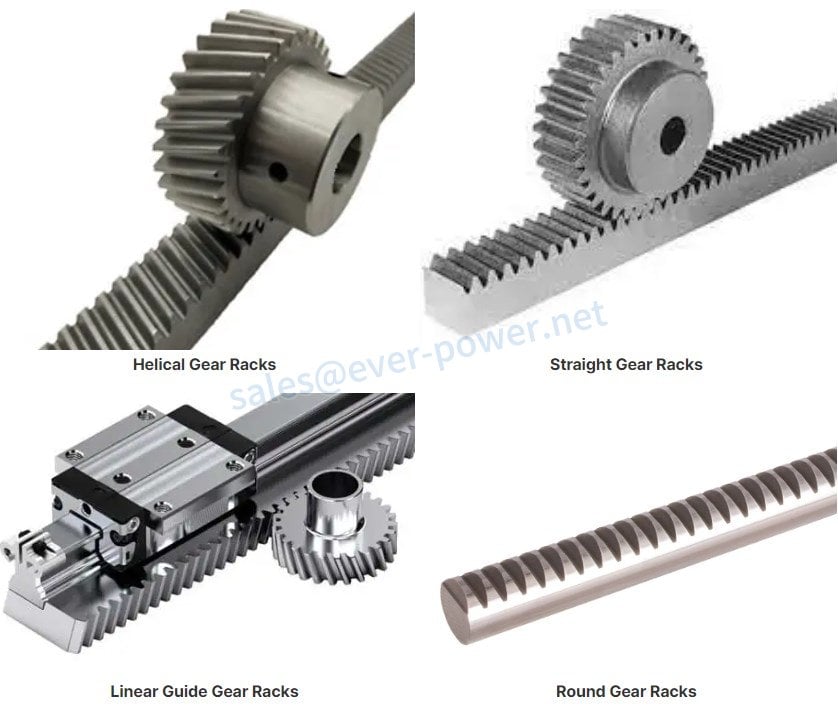
Gear racks come in various types, each with unique characteristics. Common types include straight, helical, and curved gear racks. The choice of material, such as steel, nylon, or aluminum, also impacts the performance and suitability for specific applications.

Application of Gear Racks in Various Industries
- Aerospace
- Renewable Energy
- Automotive Industry
- Industrial Machinery
- Medical Equipment
In the aerospace industry, precision and reliability are paramount. Gear racks are used in flight control systems and landing gear mechanisms, where accuracy and durability are critical.
Gear racks play a vital role in renewable energy systems, such as wind turbines and solar trackers, by ensuring precise positioning and efficient energy capture.
In automotive applications, gear racks are essential components in steering systems, providing smooth and responsive control.
Industrial machinery relies on gear racks for precise movement and positioning, enhancing the efficiency and accuracy of manufacturing processes.
Medical devices, such as surgical robots and diagnostic machines, utilize gear racks for intricate and precise movements, ensuring optimal performance and patient safety.
Future Trends and Opportunities for Gear Racks
The gear rack market is poised for growth, driven by advancements in precision engineering and automation. Emerging trends include the development of lightweight materials, integration with smart technologies, and increased demand in renewable energy sectors.

How to Choose the Right Gear Rack
Choosing the correct gear rack involves several considerations:
- Define Requirements
- Material Selection
- Design Optimization
- Supplier and After-Sales Service
- Cost-Effectiveness
- Quality Control
Understand the specific needs of the application, including load capacity, precision, and environmental conditions.
Select materials based on strength, durability, and compatibility with the operating environment.
Optimize gear rack design for performance and ease of integration into the system.
Choose a reputable supplier that offers robust after-sales support and technical assistance.
Assess the cost-benefit ratio, ensuring that the gear rack meets performance requirements without exceeding budget constraints.
Implement rigorous quality control measures to ensure the gear rack meets specified standards and performs reliably.
Maintenance of Gear Racks
Proper maintenance is essential for the longevity and performance of gear racks. Key maintenance practices include:
- Regular Inspections
- Cleaning and Corrosion Prevention
- Lubrication
- Replacing Worn Components
- Temperature Monitoring
Conduct periodic checks to identify and address any signs of wear or damage.
Keep gear racks clean and apply appropriate coatings to prevent corrosion.
Ensure proper lubrication to reduce friction and wear.
Promptly replace any worn or damaged parts to maintain system integrity.
Monitor operating temperatures to prevent overheating and potential damage.
Why Choose Ever Power?
Ever Power is a leading manufacturer and supplier of high-quality gear racks. Here are five key reasons to choose our products:
- Superior Quality
- Wide Range of Products
- Customization Options
- Expert Support
- Competitive Pricing
Our gear racks are manufactured using premium materials and advanced techniques, ensuring durability and precision.
We offer a diverse selection of gear racks, catering to various industrial needs and specifications.
We provide custom solutions tailored to meet your specific application requirements.
Our team of experts is available to provide technical assistance and support, ensuring optimal product performance.
We offer competitive pricing without compromising on quality, delivering exceptional value to our customers.

FAQs
- What is gear rack backlash?
- How to reduce gear rack backlash?
- What materials are used for gear racks?
- What industries use gear racks?
- How to maintain gear racks?
Gear rack backlash refers to the clearance between meshing teeth of a gear and a gear rack, affecting precision and efficiency.
Backlash can be reduced by adjusting mounting positions, selecting precision components, and implementing preloading techniques.
Common materials for gear racks include steel, nylon, and aluminum, each offering unique benefits.
Gear racks are used in aerospace, automotive, renewable energy, industrial machinery, and medical equipment sectors.
Maintenance includes regular inspections, cleaning, lubrication, replacing worn parts, and temperature monitoring.
Author: Dream