gear rack technical specifications

Gear Rack Technical Specifications and Gear Rack
Introduction to Gear Rack Technical Specifications
Gear racks are essential components in the mechanical engineering domain, providing a linear motion mechanism by converting rotational motion into linear motion. Understanding the technical specifications of gear racks is crucial for selecting the right gear rack for specific applications. This article delves into the details of gear rack technical specifications and their relevance to gear racks.
Material Composition
Gear racks can be manufactured from various materials, each offering different properties. Common materials include steel, stainless steel, and plastic. Steel gear racks are known for their strength and durability, making them suitable for high-load applications. Stainless steel gear racks offer excellent corrosion resistance, ideal for environments with high humidity or exposure to chemicals. Plastic gear racks, such as those made from nylon, provide good electrical insulation and are lightweight.
Module and Pitch
The module of a gear rack is a measure of the gear tooth size and is an essential specification in gear design. It is defined as the ratio of the pitch diameter to the number of teeth. The pitch refers to the distance between corresponding points on adjacent teeth. A precise understanding of the module and pitch ensures the correct meshing with the mating pinion gear.
Length and Width
Gear racks come in various lengths and widths to accommodate different applications. The length of a gear rack determines the range of linear motion it can provide. Standard lengths can be extended by joining multiple gear racks end-to-end. The width of the gear rack, along with its height, affects its load-carrying capacity and stability.
Tooth Profile
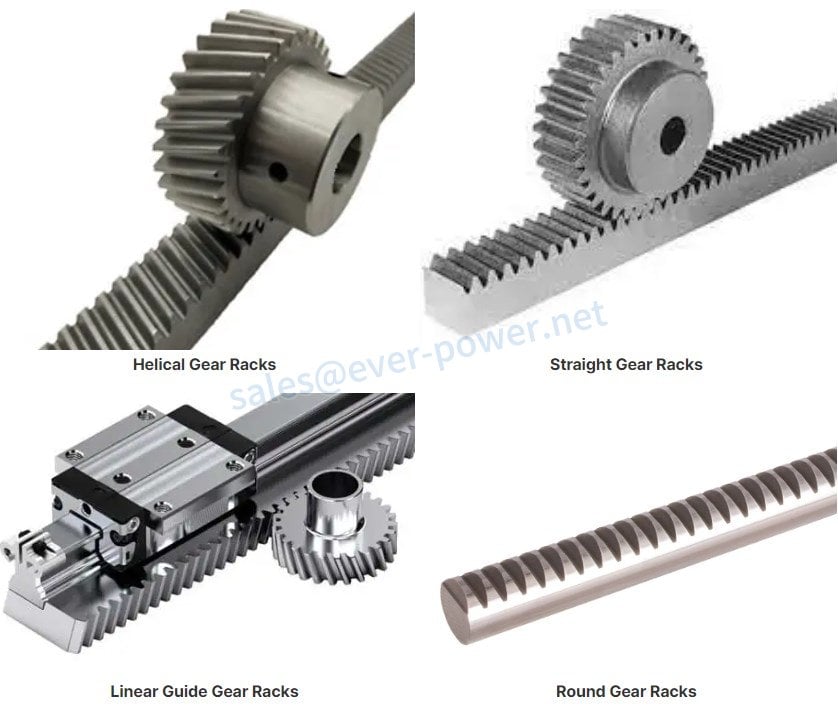
The tooth profile of a gear rack is a crucial factor in determining its performance. The most common tooth profile is the involute profile, which provides smooth and efficient power transmission. Other profiles, such as helical and straight-cut, are used for specific applications. The choice of tooth profile impacts the noise levels, efficiency, and load-carrying capacity.
Surface Treatment
Surface treatments can enhance the performance and longevity of gear racks. Common treatments include hardening, coating, and plating. Hardening processes, such as induction hardening, increase the surface hardness and wear resistance. Coatings, like black oxide or zinc plating, provide corrosion resistance and reduce friction. Surface treatments are selected based on the operating environment and application requirements.
Backlash
Backlash is the clearance or play between mating teeth in a gear mechanism. Minimizing backlash is essential for precision applications. The allowable backlash is specified based on the application requirements. Gear racks can be designed with adjustable mechanisms to reduce backlash and improve positional accuracy.
Load Capacity
The load capacity of a gear rack is a critical specification that determines its ability to withstand forces during operation. It depends on factors such as material strength, tooth design, and surface treatment. Proper calculation of load capacity ensures the gear rack can handle the intended loads without failure or excessive wear.
Precision Grade
Precision grades classify gear racks based on their manufacturing tolerances and accuracy. Higher precision grades offer tighter tolerances, resulting in improved positional accuracy and smoother operation. Precision grades are selected based on the specific application requirements and desired performance.
Gear Rack Technical Specifications and Gear Rack Relationship
The technical specifications of gear racks directly influence their performance and suitability for various applications. Accurate measurements and adherence to specifications ensure seamless integration with mating components. Proper understanding of gear rack specifications allows for informed decisions during the design and selection process, leading to optimal performance and reliability.

Gear Rack Performance Characteristics
- High Load Capacity: Gear racks are designed to handle significant loads, making them suitable for heavy-duty applications.
- Precision Movement: The accurate tooth profile ensures precise linear motion, essential for applications requiring high positional accuracy.
- Durability: The use of high-quality materials and surface treatments enhances the longevity and wear resistance of gear racks.
- Versatility: Gear racks are available in various sizes and materials, accommodating a wide range of applications.
- Ease of Installation: Gear racks can be easily mounted and aligned, facilitating quick and hassle-free installation.
Types of Gear Racks and Their Properties
Gear racks come in various types, each with unique properties and advantages. Understanding these types helps in selecting the appropriate gear rack for specific applications.

Steel Gear Racks
Steel gear racks offer high strength and durability, making them suitable for heavy-load applications. They are resistant to wear and deformation, ensuring a long service life.
Stainless Steel Gear Racks
Stainless steel gear racks provide excellent corrosion resistance, ideal for harsh environments. They are commonly used in food processing and chemical industries where exposure to moisture and chemicals is prevalent.
Plastic Gear Racks
Plastic gear racks, often made from nylon, offer lightweight and good electrical insulation properties. They are suitable for applications where weight reduction and electrical isolation are important considerations.
Applications in Various Industries
- Aerospace Industry: Gear racks are used in aircraft control systems for precise movement of control surfaces and landing gear mechanisms.
- Renewable Energy: In wind turbines, gear racks are employed in the yaw mechanism to rotate the nacelle and align the blades with the wind direction.
- Automotive Industry: Gear racks are integral components in steering systems, providing smooth and responsive steering control.
- Industrial Machinery: Gear racks are used in CNC machines and automated assembly lines for precise positioning and linear motion.
- Medical Machinery: Gear racks are utilized in medical imaging equipment and surgical robots for accurate and controlled movements.
Future Development Trends and Opportunities
The gear rack industry continues to evolve with advancements in materials, manufacturing processes, and design techniques. Key trends and opportunities include:

- Advanced Materials: Development of high-performance materials with enhanced properties such as higher strength, improved wear resistance, and better corrosion resistance.
- Precision Manufacturing: Adoption of advanced manufacturing techniques, such as additive manufacturing and precision machining, to achieve tighter tolerances and improved accuracy.
- Smart Gear Racks: Integration of sensors and IoT technologies for real-time monitoring of gear rack performance and predictive maintenance.
- Sustainability: Focus on environmentally friendly materials and manufacturing processes to reduce the carbon footprint and promote sustainability.
- Customization: Increasing demand for customized gear racks tailored to specific application requirements, offering unique solutions for diverse industries.
How to Choose the Right Gear Rack
Selecting the right gear rack involves considering various factors to ensure optimal performance and longevity. Key considerations include:
- Define Requirements: Clearly define the application requirements, including load capacity, precision, operating environment, and expected lifespan.
- Material Selection: Choose the appropriate material based on the operating conditions and performance requirements, considering factors such as strength, corrosion resistance, and weight.
- Design Optimization: Optimize the gear rack design for efficient power transmission and minimal backlash, considering factors like tooth profile and surface treatment.
- Supplier and After-Sales Service: Select a reputable supplier with a track record of quality products and reliable after-sales support to ensure smooth operation and maintenance.
- Cost-Effectiveness: Evaluate the cost-effectiveness of the gear rack, balancing initial costs with long-term performance and maintenance requirements.
- Quality Control: Ensure the gear rack meets industry standards and undergoes rigorous quality control processes for consistent performance and reliability.
Gear Rack Maintenance
Regular maintenance is essential to ensure the longevity and optimal performance of gear racks. Key maintenance practices include:
- Regular Inspections: Conduct routine inspections to identify signs of wear, damage, or misalignment and address issues promptly.
- Cleaning and Corrosion Prevention: Keep gear racks clean and free from debris, and apply protective coatings to prevent corrosion in harsh environments.
- Lubrication and Servicing: Apply appropriate lubricants to reduce friction and wear, and perform regular servicing to maintain smooth operation.
- Replace Worn Parts: Replace worn or damaged components to avoid further damage and ensure consistent performance.
- Temperature Monitoring: Monitor operating temperatures to prevent overheating and ensure proper lubrication and cooling.
Why Choose Ever Power
At Ever Power, we specialize in the production and sales of high-quality gear racks. Our commitment to excellence and customer satisfaction sets us apart. Here are five reasons why you should choose Ever Power:

- Quality Assurance: Our gear racks undergo stringent quality control processes to ensure consistent performance and reliability.
- Advanced Technology: We utilize state-of-the-art manufacturing techniques and materials to produce gear racks that meet the highest industry standards.
- Customization: We offer tailored solutions to meet specific application requirements, providing gear racks designed to your exact specifications.
- Comprehensive Support: Our dedicated support team provides expert guidance and after-sales service to ensure smooth operation and maintenance of our products.
- Competitive Pricing: We offer high-quality gear racks at competitive prices, delivering excellent value for your investment.
FAQs
- Q: What materials are gear racks made of? A: Gear racks can be made from steel, stainless steel, and plastic, each offering unique properties for different applications.
- Q: How can I reduce backlash in gear racks? A: Backlash can be minimized by selecting gear racks with adjustable mechanisms and ensuring precise alignment during installation.
- Q: What are the common applications of gear racks? A: Gear racks are commonly used in aerospace, renewable energy, automotive, industrial machinery, and medical machinery industries.
- Q: How do I choose the right gear rack? A: Consider factors such as load capacity, material selection, design optimization, supplier reputation, cost-effectiveness, and quality control.
- Q: Why should I choose Ever Power for gear racks? A: Ever Power offers quality assurance, advanced technology, customization, comprehensive support, and competitive pricing.
Author: Dream