gear rack manufacturing standards

Gear Rack Manufacturing Standards and Their Relation to Gear Racks
Introduction to Gear Rack Manufacturing Standards
Gear rack manufacturing standards are essential benchmarks that ensure the quality, precision, and durability of gear racks. These standards encompass various parameters, including material specifications, heat treatment processes, dimensional accuracy, and surface finish. Adhering to these standards is crucial for producing gear racks that meet industry requirements and perform reliably in diverse applications.
Material Specifications
The choice of material is a critical factor in gear rack manufacturing. Common materials used include alloy steels, carbon steels, and stainless steels. Each material is selected based on its strength, hardness, and resistance to wear and corrosion. Strict adherence to material specifications ensures that the gear racks can withstand the mechanical stresses encountered in their specific applications.
Heat Treatment Processes
Heat treatment is a vital process in gear rack manufacturing that enhances the mechanical properties of the material. Processes such as carburizing, quenching, and tempering are employed to achieve the desired hardness and toughness. Proper heat treatment ensures uniformity in the material’s properties and extends the service life of the gear racks.
Dimensional Accuracy
Precision in dimensions is paramount for gear racks to function correctly in gear systems. Manufacturing standards dictate tight tolerances for dimensions to ensure compatibility and smooth operation. Accurate machining techniques and rigorous quality control measures are implemented to achieve the required dimensional accuracy.
Surface Finish
The surface finish of gear racks affects their performance and longevity. A smooth surface reduces friction and wear, contributing to efficient power transmission. Standards specify the acceptable range for surface roughness, and advanced finishing techniques like grinding and polishing are used to meet these requirements.
Gear Rack Manufacturing Standards and Gear Rack Relationship
Manufacturing standards are fundamentally linked to the performance and reliability of gear racks. By ensuring that gear racks are produced according to these standards, manufacturers can guarantee that the final products exhibit consistent quality and optimal functionality. Compliance with these standards also facilitates interoperability between different gear systems, as components are manufactured to uniform specifications.

Performance Characteristics of Gear Racks
- Load Capacity: Gear racks are designed to handle significant loads, making them suitable for heavy-duty applications.
- Precision: High precision in tooth geometry ensures smooth and accurate motion.
- Durability: Robust materials and heat treatment processes enhance the longevity of gear racks.
- Efficiency: Optimal surface finish and design result in efficient power transmission.
- Versatility: Gear racks can be customized to meet specific application requirements.
Types of Gear Racks and Their Characteristics
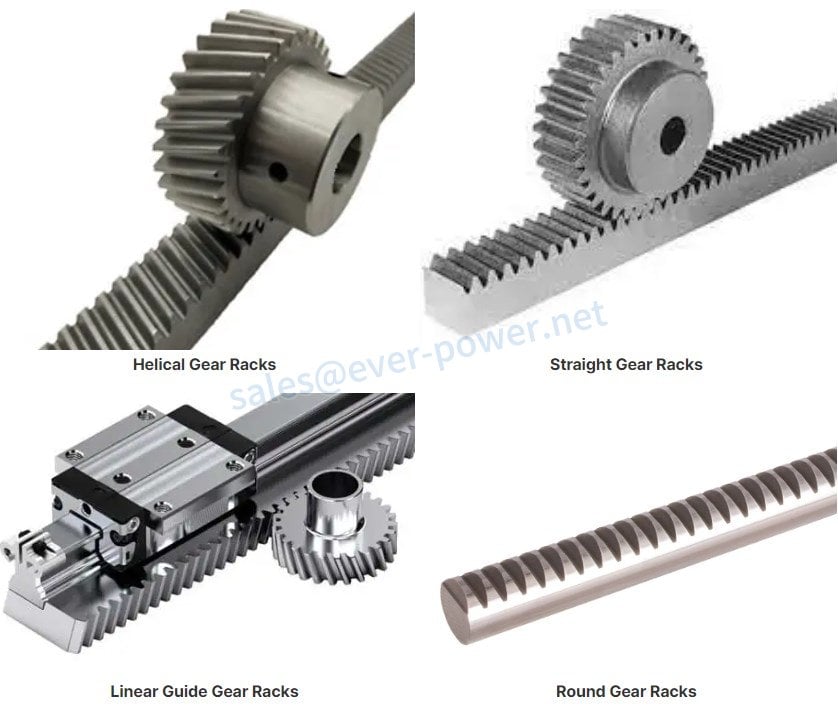
Gear racks are available in various types, each suited to different applications:
- Straight Gear Racks: Commonly used in linear motion systems, offering straightforward design and ease of manufacturing.
- Helical Gear Racks: Feature angled teeth that provide smoother and quieter operation, ideal for high-speed applications.
- Curved Gear Racks: Designed for applications requiring non-linear motion paths, such as in robotics and automation.
Different materials used in gear rack manufacturing include:
- Alloy Steel: Offers high strength and wear resistance, suitable for heavy-duty applications.
- Carbon Steel: Provides a balance of strength and cost-effectiveness, commonly used in general applications.
- Stainless Steel: Excellent corrosion resistance, ideal for harsh environments and food processing industries.

Applications of Gear Racks in Various Industries
- Aerospace Industry: Used in aircraft landing gear systems and actuator mechanisms.
- Renewable Energy: Essential in wind turbine pitch control systems and solar panel tracking mechanisms.
- Automotive Industry: Integral in steering systems and electric vehicle powertrains.
- Industrial Machinery: Employed in CNC machines, conveyor systems, and automation equipment.
- Medical Equipment: Utilized in imaging devices, surgical robots, and patient positioning systems.
Future Development Trends and Opportunities in Gear Rack Products
- Advanced Materials: Development of new materials with superior properties will enhance gear rack performance.
- Precision Manufacturing: Innovations in machining technologies will enable higher precision and reduced tolerances.
- Integration with IoT: Smart gear racks with sensors for real-time monitoring and predictive maintenance.
- Sustainability: Focus on eco-friendly manufacturing processes and materials to reduce environmental impact.
- Customization: Increasing demand for bespoke gear racks tailored to specific applications and industries.

How to Choose the Right Gear Rack
Choosing the correct gear rack involves several considerations:
- Identify Requirements: Define the specific needs of your application, including load capacity, precision, and environmental conditions.
- Material Selection: Choose materials based on mechanical properties and environmental resistance.
- Design Optimization: Ensure the design meets operational requirements and integrates seamlessly with existing systems.
- Supplier Selection: Partner with a reputable supplier who offers quality assurance and technical support.
- Cost-Effectiveness: Balance the initial cost with long-term performance and maintenance requirements.
- Quality Control: Evaluate the manufacturer’s quality control processes to ensure product reliability.
Maintenance of Gear Racks
Proper maintenance is essential for the longevity and performance of gear racks:
- Regular Inspections: Conduct routine checks to identify any signs of wear or damage.
- Cleaning and Corrosion Prevention: Keep gear racks clean and apply protective coatings to prevent rust.
- Lubrication: Regularly lubricate to minimize friction and wear.
- Replace Worn Parts: Timely replacement of worn components to avoid systemic failures.
- Temperature Monitoring: Ensure operating temperatures remain within acceptable limits to prevent overheating.
Why Choose Ever Power
Ever Power is a leading manufacturer and supplier of high-quality gear racks. Here are five reasons why you should partner with us:
- Extensive Experience: With years of expertise in the industry, we offer unmatched knowledge and technical proficiency.
- Quality Assurance: Our rigorous quality control processes ensure that every gear rack meets the highest standards.
- Customization Options: We provide tailored solutions to meet the unique needs of your applications.
- Advanced Technology: Utilizing state-of-the-art manufacturing techniques, we deliver products with superior precision and durability.
- Comprehensive Support: We offer excellent after-sales service and technical support to ensure your project’s success.

Q&A
- Q: What materials are commonly used in gear rack manufacturing? A: Common materials include alloy steels, carbon steels, and stainless steels, each selected for specific properties like strength and corrosion resistance.
- Q: How does heat treatment affect gear racks? A: Heat treatment enhances mechanical properties, such as hardness and toughness, improving the gear rack’s performance and longevity.
- Q: What are the benefits of a smooth surface finish on gear racks? A: A smooth surface finish reduces friction and wear, leading to more efficient power transmission and longer service life.
- Q: Why is dimensional accuracy important in gear racks? A: Dimensional accuracy ensures compatibility and smooth operation within gear systems, preventing malfunctions and inefficiencies.
- Q: What industries commonly use gear racks? A: Gear racks are widely used in aerospace, renewable energy, automotive, industrial machinery, and medical equipment industries.
Author: Dream