gear rack thermal analysis

Gear Rack Thermal Analysis and Gear Rack
Introduction to Gear Rack Thermal Analysis
Gear rack thermal analysis is a critical subject in the field of mechanical engineering, particularly for applications involving high loads and speeds. Thermal analysis helps in understanding the heat generation and dissipation in gear racks, which can significantly affect their performance and longevity. The analysis involves various computational techniques to predict temperature distribution and thermal stresses, ensuring the gear rack operates efficiently under different conditions.
The Importance of Thermal Analysis in Gear Racks
The significance of thermal analysis in gear racks cannot be overstated. By accurately predicting temperature variations, engineers can design gear racks that minimize thermal expansion and reduce the risk of thermal fatigue. This process helps in enhancing the life span of gear racks, ensuring smooth operation and minimizing downtime due to overheating issues.
Thermal Analysis Methods for Gear Racks
There are several methodologies for conducting thermal analysis on gear racks, including Finite Element Analysis (FEA), Computational Fluid Dynamics (CFD), and experimental testing. Each of these methods provides insights into different aspects of thermal performance, helping engineers to make informed design decisions.
Factors Affecting Thermal Performance of Gear Racks
Various factors influence the thermal performance of gear racks. These include the material properties, lubrication quality, operating conditions, and the design of the gear teeth. Understanding these factors is crucial for conducting an accurate thermal analysis and optimizing the gear rack’s performance.
Material Properties and Thermal Conductivity
The material from which a gear rack is made plays a pivotal role in its thermal characteristics. Materials with high thermal conductivity, such as metals, can quickly dissipate heat, reducing the risk of thermal stress. Conversely, materials with low thermal conductivity might require additional cooling mechanisms.
Lubrication and Heat Generation
Lubrication is essential in gear racks to reduce friction and wear. Poor lubrication can lead to increased frictional heat, exacerbating thermal issues. Selecting the right lubricant and maintaining proper lubrication intervals are crucial for managing heat generation in gear racks.
Gear Rack Design and Thermal Management
The design of the gear rack, including tooth profile, pitch, and material selection, impacts its thermal behavior. Advanced design techniques, such as incorporating cooling channels or using heat-resistant coatings, can significantly improve thermal management in gear racks.
Image: Gear Rack

Relationship Between Gear Rack Thermal Analysis and Gear Rack
Thermal analysis is intrinsically linked to the performance and reliability of gear racks. By understanding the thermal behavior of a gear rack, engineers can optimize its design for different applications, ensuring that it operates within safe temperature ranges. This relationship is fundamental for applications where high precision and durability are required.
Performance Features of Gear Rack
- High Load Capacity: Gear racks are designed to handle significant loads without deformation, ensuring smooth operation.
- Precision Engineering: Manufactured with high precision to ensure accurate and consistent motion.
- Durability: Made from high-quality materials that withstand harsh operating conditions and provide long service life.
- Versatile Applications: Suitable for various industrial applications, including automation, robotics, and transportation.
- Easy Maintenance: Designed for easy installation and maintenance, reducing downtime and operational costs.
Types and Characteristics of Gear Racks
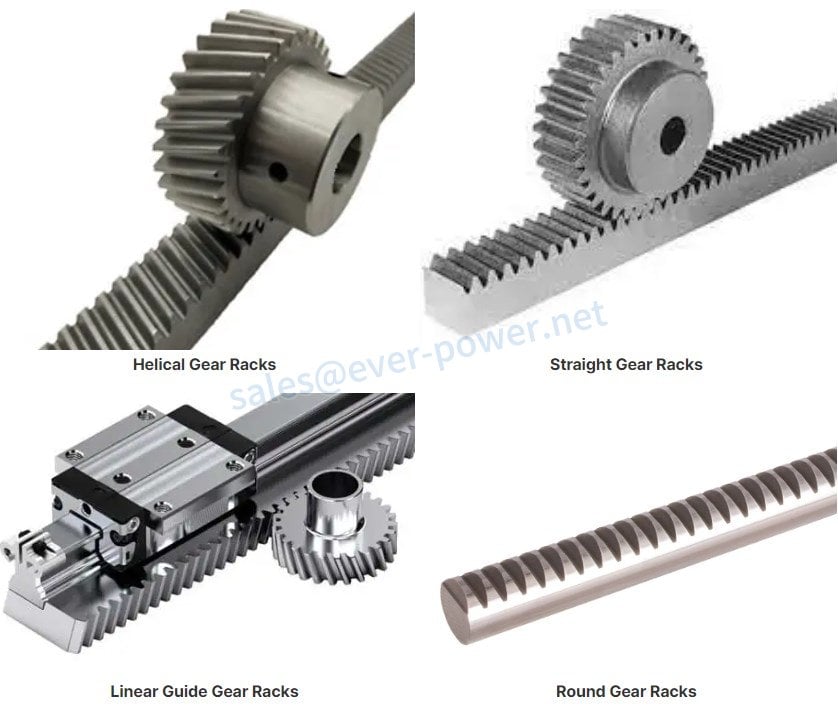
Gear racks come in various types, each designed for specific applications and environments. The common types include straight teeth, helical teeth, and custom-designed gear racks. The choice of gear rack depends on the requirements such as load capacity, precision, and environmental conditions.
Image: Gear Racks Types

Applications of Gear Racks in Various Industries
- Aerospace: Gear racks are used in flight control systems, landing gear mechanisms, and other critical components requiring precision and reliability.
- Renewable Energy: Employed in solar tracking systems and wind turbines to enhance efficiency and performance.
- Automotive: Integral in steering systems, transmission mechanisms, and other automotive components for smooth and reliable performance.
- Industrial Machinery: Utilized in automation, CNC machines, and robotic systems, providing precise motion control and high load-bearing capacity.
- Medical Equipment: Used in diagnostic machines, surgical robots, and other medical devices where precision and reliability are paramount.
Future Trends and Opportunities in Gear Rack Products
- Advanced Materials: Development of new materials that offer improved thermal properties and wear resistance.
- Smart Lubrication Systems: Integration of sensors and automated lubrication systems to maintain optimal performance.
- Customization and Flexibility: Increased demand for custom-designed gear racks to meet specific application needs.
- Environmental Considerations: Focus on developing environmentally friendly materials and processes.
- Innovation in Manufacturing: Adoption of advanced manufacturing techniques such as 3D printing for rapid prototyping and production.
Image: Future Trends

Choosing the Right Gear Rack
Selecting the appropriate gear rack involves several considerations:
- Define Requirements: Understand the specific needs of the application, including load capacity, precision, and environmental conditions.
- Material Selection: Choose materials that offer the desired thermal and mechanical properties.
- Design Optimization: Optimize the gear rack design for the intended application, considering factors such as tooth profile and pitch.
- Supplier and Support: Partner with reputable suppliers who provide quality products and reliable after-sales support.
- Cost-Effectiveness: Balance performance requirements with budget constraints to find the most cost-effective solution.
- Quality Control: Ensure rigorous quality control measures are in place to guarantee product reliability.
Image: Choosing Gear Rack
Maintaining Gear Racks
Proper maintenance is essential for ensuring the longevity and performance of gear racks:
- Regular Inspections: Conduct periodic checks to identify and address wear or damage early.
- Cleaning and Corrosion Prevention: Keep gear racks clean and apply anti-corrosion treatments to prevent degradation.
- Lubrication and Maintenance: Maintain proper lubrication levels to reduce friction and wear.
- Replacing Worn Parts: Timely replacement of worn components to prevent failures and reduce downtime.
- Temperature Monitoring: Monitor operating temperatures to ensure the gear rack operates within safe limits.
Why Choose Ever Power
Ever Power is a trusted name in gear rack manufacturing. Here’s why you should choose us:
- High-Quality Products: Our gear racks are made with precision engineering and high-quality materials, ensuring superior performance.
- Expertise and Experience: We have extensive experience in the industry, allowing us to provide expert advice and solutions.
- Customization Options: We offer custom-designed gear racks to meet your specific application requirements.
- Reliable Support: Our dedicated support team is always ready to assist you with any queries or issues.
- Competitive Pricing: We offer high-quality products at competitive prices, providing excellent value for your investment.
Image: Ever Power Products

Frequently Asked Questions
Q1: What factors influence the thermal performance of a gear rack?
A: Material properties, lubrication quality, operating conditions, and gear design all play crucial roles in thermal performance.
Q2: How can I optimize the design of a gear rack for thermal management?
A: Consider factors like tooth profile, material choice, and incorporating cooling mechanisms in the design.
Q3: What are the common applications of gear racks in the aerospace industry?
A: Gear racks are used in flight control systems, landing gear mechanisms, and other critical aerospace components.
Q4: How does Ever Power ensure the quality of its gear racks?
A: We have rigorous quality control processes in place and use high-precision engineering techniques to ensure product reliability.
Q5: What maintenance practices should be followed for gear racks?
A: Regular inspections, cleaning, corrosion prevention, proper lubrication, and timely replacement of worn parts are essential maintenance practices.
Author: Dream