gear rack hardness

Gear Rack Hardness and Its Relationship with Gear Rack
Introduction to Gear Rack Hardness
Gear rack hardness is a critical factor influencing the performance and longevity of gear racks. Hardness, defined as the resistance of a material to deformation, plays a pivotal role in determining wear resistance, load-bearing capacity, and overall durability. In the context of gear racks, hardness impacts how well the racks can handle rigorous operations without succumbing to excessive wear or damage.
Understanding gear rack hardness involves delving into the material properties and heat treatment processes used during manufacturing. The hardness is typically measured using the Rockwell or Vickers scale, which assesses the indentation resistance of the material. The higher the hardness value, the more resistant the gear rack is to wear and deformation.
Relationship Between Gear Rack Hardness and Gear Rack Performance
Gear rack hardness directly correlates with the performance and reliability of the gear rack. Higher hardness values generally equate to better performance in high-load and high-speed applications. This is because harder materials can withstand greater forces without experiencing significant wear or deformation, ensuring consistent performance over time.
However, it is also essential to strike a balance between hardness and toughness. While high hardness can enhance wear resistance, it may also make the material more brittle, leading to potential fracture under certain conditions. Therefore, manufacturers must carefully select materials and heat treatment processes to optimize both hardness and toughness.
Informational Image on Gear Rack Hardness

Performance Characteristics of Gear Racks
The performance characteristics of gear racks are multifaceted, encompassing aspects such as load capacity, precision, wear resistance, and operational efficiency. Here are some key performance characteristics:
- Load Capacity: Refers to the maximum force that a gear rack can withstand without permanent deformation.
- Precision: The accuracy with which the gear rack translates motion. High precision is crucial in applications requiring exact positioning.
- Wear Resistance: Indicates the ability of the gear rack to resist surface degradation over time, enhancing longevity.
- Operational Efficiency: The effectiveness of the gear rack in minimizing friction and energy loss during operation.
Gear Rack Types and Their Properties
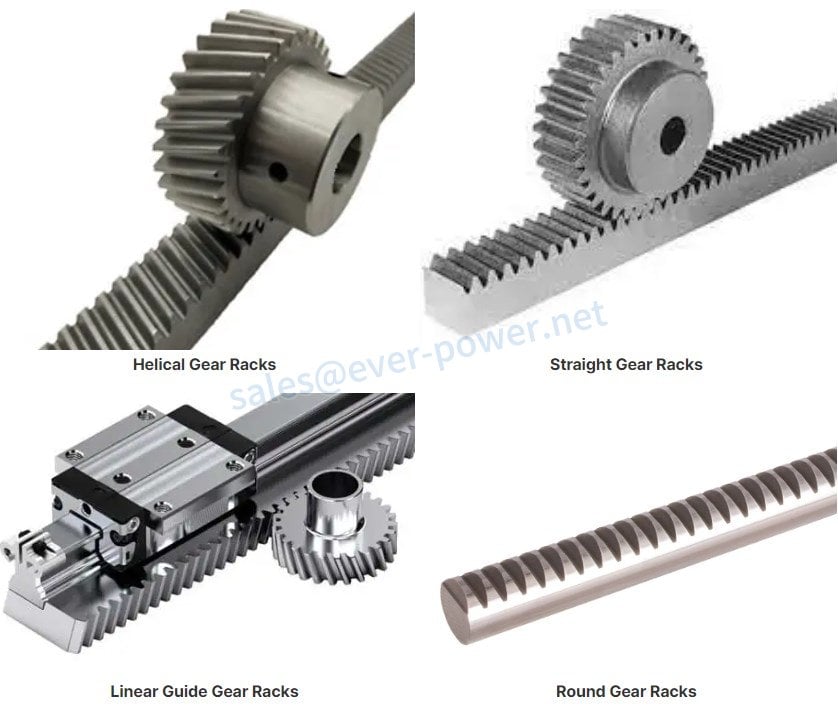
Gear racks come in various types, each with unique properties tailored for specific applications. The primary types include:
- Straight Gear Racks: These have teeth that are cut straight across the rack. They are commonly used due to their simplicity and ease of manufacturing.
- Helical Gear Racks: Feature teeth cut at an angle, providing smoother and quieter operation compared to straight gear racks.
- Curved Gear Racks: Designed for specific applications where a curved path of motion is required.
Image Depicting Various Gear Rack Types

Applications of Gear Racks in Various Industries
Gear racks are indispensable components in numerous industries due to their versatility and efficiency. Here are some prominent applications:
- Aerospace Industry: Used in flight control systems and landing gear mechanisms due to their precision and reliability.
- Renewable Energy: Essential in wind turbine pitch control and solar panel tracking systems for optimal energy capture.
- Automotive Industry: Integral to steering systems and transmission mechanisms, providing precise motion control.
- Industrial Machinery: Widely used in CNC machines and automated manufacturing processes for accurate positioning and movement.
- Medical Equipment: Utilized in surgical robots and imaging devices, where precision and reliability are paramount.
Future Trends and Opportunities in Gear Rack Industry
The gear rack industry is poised for significant growth, driven by advancements in material science and manufacturing technologies. Here are some future trends and opportunities:
- Advanced Materials: Development of new materials with enhanced properties such as higher hardness and better wear resistance.
- Smart Manufacturing: Integration of IoT and AI for predictive maintenance and optimized production processes.
- Customization: Increasing demand for custom-designed gear racks tailored to specific applications and requirements.
- Energy Efficiency: Focus on reducing energy consumption through improved gear rack designs and materials.
- Global Expansion: Growing markets in emerging economies present new opportunities for industry expansion.
Image on Future Trends in Gear Rack Industry

Choosing the Right Gear Rack
Selecting the appropriate gear rack for a specific application involves considering several critical factors:
- Define Requirements: Clearly understand the operational requirements, including load, speed, and precision.
- Material Selection: Choose materials that offer the required hardness, toughness, and wear resistance.
- Design Optimization: Ensure the gear rack design aligns with the application needs for optimal performance.
- Supplier and After-Sales Service: Partner with reputable suppliers who offer comprehensive after-sales support.
- Cost-Effectiveness: Balance quality and cost to achieve the best value for money.
- Quality Control: Implement stringent quality control measures to ensure product reliability and durability.
Image on Choosing the Right Gear Rack
Maintaining Gear Racks
Proper maintenance is essential to ensure the longevity and optimal performance of gear racks. Key maintenance practices include:
- Regular Inspections: Conduct routine inspections to detect and address any wear or damage early.
- Cleaning and Corrosion Prevention: Keep gear racks clean and apply protective coatings to prevent corrosion.
- Lubrication and Care: Use appropriate lubricants to minimize friction and wear.
- Replacement of Worn Parts: Replace any worn or damaged components promptly to avoid further damage.
- Temperature Monitoring: Monitor operating temperatures to prevent overheating and associated damage.
Why Choose Ever Power
At Ever Power, we specialize in the production and sale of high-quality gear racks. Here are five reasons to choose our products:
- Superior Quality: Our gear racks undergo stringent quality control processes to ensure exceptional performance and durability.
- Innovative Designs: We offer innovative designs tailored to meet the specific needs of diverse applications.
- Comprehensive Support: We provide extensive after-sales support, including maintenance guidance and technical assistance.
- Cost-Effective Solutions: Our gear racks offer an excellent balance of quality and cost, delivering superior value.
- Global Reach: With a robust global distribution network, we ensure timely delivery and support to our customers worldwide.
Image on Ever Power Gear Racks

Frequently Asked Questions
- Q1: What is the importance of gear rack hardness?
A: Gear rack hardness is crucial for wear resistance and load-bearing capacity, directly impacting performance and longevity. - Q2: How do I select the right gear rack?
A: Consider factors such as operational requirements, material properties, design, supplier support, cost-effectiveness, and quality control. - Q3: What maintenance practices should be followed for gear racks?
A: Regular inspections, cleaning, lubrication, replacement of worn parts, and temperature monitoring are essential maintenance practices. - Q4: What are the future trends in the gear rack industry?
A: Trends include advanced materials, smart manufacturing, customization, energy efficiency, and global market expansion. - Q5: Why should I choose Ever Power gear racks?
A: Ever Power offers superior quality, innovative designs, comprehensive support, cost-effective solutions, and a global reach.
Author: Dream