gear rack performance metrics

Gear Rack Performance Metrics and Their Relationship with Gear Racks
Introduction to Gear Rack Performance Metrics
Understanding gear rack performance metrics is crucial for ensuring the efficiency and durability of gear racks in various industrial applications. These metrics provide insights into the operational effectiveness, longevity, and overall functionality of gear racks. By analyzing performance metrics, engineers and designers can make informed decisions about gear rack specifications, materials, and maintenance practices.
Efficiency and Load Capacity
Efficiency is a key metric that indicates how well a gear rack converts input force into output motion. High-efficiency gear racks minimize energy loss and enhance system performance. Load capacity, on the other hand, measures the maximum load a gear rack can handle without failure. Ensuring the gear rack meets or exceeds the required load capacity is essential for preventing mechanical failures and maintaining operational safety.
Precision and Tolerance
Precision refers to the accuracy of the gear rack in maintaining the intended motion path. High precision is critical for applications requiring exact positioning and movement. Tolerance, the allowable deviation from the specified dimensions, must be tightly controlled to ensure compatibility with other components. Low tolerance levels contribute to higher precision and better performance.
Wear Resistance and Durability
Wear resistance is a measure of the gear rack’s ability to withstand friction and abrasion over time. Durable gear racks exhibit high wear resistance, resulting in longer service life and reduced maintenance costs. Selecting materials and designs that enhance wear resistance is vital for achieving long-term durability and reliability.
Thermal Stability
Thermal stability indicates the gear rack’s ability to maintain its performance under varying temperature conditions. Gear racks subjected to high temperatures must be designed to resist thermal expansion and contraction, which can affect precision and load capacity. Materials with low thermal expansion coefficients are preferred for applications with significant temperature fluctuations.
Noise and Vibration Levels
Noise and vibration levels are important performance metrics, especially in applications where quiet operation is essential. Excessive noise and vibration can indicate misalignment, wear, or other issues that could compromise performance. Optimizing gear rack design to minimize noise and vibration enhances overall system efficiency and user comfort.
Material Composition
The material composition of a gear rack directly impacts its performance metrics. Different materials offer varying degrees of strength, wear resistance, and thermal stability. Common materials include steel, aluminum, and plastic, each with unique properties suitable for specific applications. Choosing the right material is essential for optimizing performance metrics.
Operational Environment
The operational environment plays a significant role in gear rack performance. Factors such as humidity, dust, and exposure to chemicals can affect the gear rack’s durability and functionality. Designing gear racks to withstand environmental challenges ensures consistent performance and longevity.
Gear Rack Performance Metrics and Informational Relationship
Analyzing performance metrics allows for a comprehensive understanding of how gear racks will perform in specific applications. By evaluating metrics such as efficiency, load capacity, and wear resistance, engineers can make data-driven decisions to optimize gear rack design and material selection. This informational relationship between metrics and gear racks is crucial for achieving desired performance outcomes.

Gear Rack Performance Characteristics
- High Load Capacity: Gear racks are designed to handle substantial loads, making them suitable for heavy-duty applications.
- Precision Motion: Accurate teeth spacing ensures precise linear motion, essential for applications requiring exact positioning.
- Durability: Made from robust materials, gear racks offer long-lasting performance with minimal wear and tear.
- Thermal Stability: Gear racks can maintain their performance across a wide range of temperatures, ensuring reliability in various environments.
- Low Noise Operation: Designed to minimize noise and vibration, gear racks contribute to quieter and smoother operations.
Types of Gear Racks and Their Properties
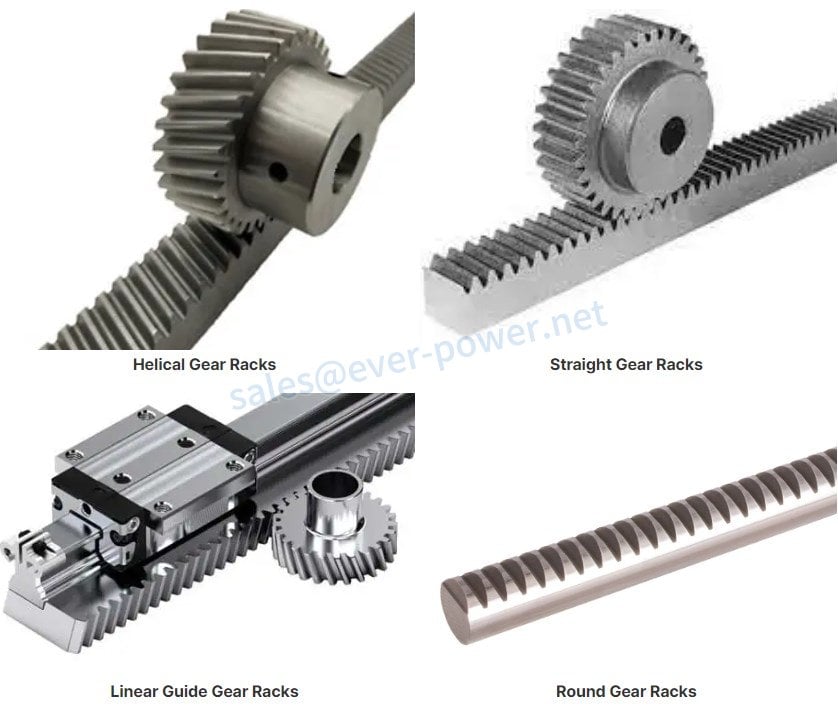
Gear racks come in various types, each tailored to specific applications. Common types include straight, helical, and spiral gear racks. Straight gear racks are suitable for general-purpose applications, while helical gear racks offer smoother and quieter operation due to their angled teeth. Spiral gear racks provide superior load distribution and are ideal for high-load applications.

Material Advantages of Different Gear Racks
- Steel Gear Racks: High strength and durability, ideal for heavy-duty applications.
- Aluminum Gear Racks: Lightweight and corrosion-resistant, suitable for environments requiring low weight and high corrosion resistance.
- Plastic Gear Racks: Low noise and vibration, excellent for applications where quiet operation is essential.
Applications of Gear Racks in Various Industries
- Aerospace Industry: Gear racks are used in aircraft control systems for precise movement and positioning.
- Renewable Energy: Utilized in solar tracking systems to ensure optimal positioning of solar panels.
- Automotive Industry: Essential in steering systems for accurate and reliable vehicle control.
- Industrial Machinery: Employed in various machinery for precise linear motion and heavy-load handling.
- Medical Equipment: Critical in diagnostic and therapeutic devices requiring exact positioning and movement.
Future Trends and Opportunities for Gear Rack Products
- Advanced Materials: Development of new materials to enhance performance and durability.
- Automation Integration: Increased use of gear racks in automated systems for improved efficiency.
- Customization: Growing demand for customized gear racks tailored to specific applications.
- Environmental Considerations: Focus on eco-friendly materials and processes to reduce environmental impact.
- Global Expansion: Expanding market reach to cater to emerging industries and regions.

Choosing the Right Gear Rack
- Define Requirements: Clearly outline the application requirements and performance expectations.
- Material Selection: Choose materials that offer the desired strength, durability, and environmental resilience.
- Design Optimization: Optimize gear rack design for maximum efficiency and compatibility with other components.
- Supplier and After-Sales Service: Select a reliable supplier offering robust after-sales support.
- Cost-Benefit Analysis: Evaluate the cost-effectiveness of the gear rack concerning its performance and lifespan.
- Quality Control: Ensure rigorous quality control measures are in place to maintain high standards.
Maintaining Gear Racks for Optimal Performance
- Regular Inspections: Conduct periodic inspections to detect wear and potential issues early.
- Cleaning and Corrosion Prevention: Keep gear racks clean and apply anti-corrosion treatments as needed.
- Lubrication and Maintenance: Regularly lubricate gear racks to minimize friction and wear.
- Part Replacement: Replace worn-out components promptly to avoid system failures.
- Temperature Monitoring: Monitor operating temperatures to prevent overheating and thermal damage.
Why Choose Ever Power
Ever Power is a leading manufacturer and supplier of high-quality gear racks, committed to delivering exceptional products and services. Here are five key reasons to choose Ever Power:
- Superior Quality: Our gear racks are manufactured using premium materials and advanced technologies, ensuring outstanding performance and durability.
- Customization Options: We offer a wide range of customization options to meet the specific needs of our clients, ensuring optimal fit and function.
- Expert Support: Our team of experienced engineers provides expert guidance and support throughout the product selection and implementation process.
- Competitive Pricing: We offer competitive pricing without compromising on quality, delivering excellent value for your investment.
- Comprehensive After-Sales Service: Ever Power provides comprehensive after-sales service, including maintenance support and prompt technical assistance.

Frequently Asked Questions (FAQs)
Q1: What materials are commonly used for gear racks?
A1: Common materials include steel, aluminum, and plastic, each offering unique advantages such as strength, lightweight, and low noise.
Q2: How do you ensure the precision of gear racks?
A2: Precision is ensured through stringent manufacturing processes, tight tolerance control, and rigorous quality inspections.
Q3: What are the maintenance requirements for gear racks?
A3: Regular inspections, cleaning, lubrication, and timely replacement of worn parts are essential for maintaining optimal performance.
Q4: Can gear racks be customized for specific applications?
A4: Yes, gear racks can be customized in terms of material, design, and dimensions to meet specific application requirements.
Q5: Why should I choose Ever Power for gear racks?
A5: Ever Power offers superior quality, customization options, expert support, competitive pricing, and comprehensive after-sales service, making us a reliable partner for all your gear rack needs.
Author: Dream