gear rack production challenges

Gear Rack Production Challenges and Gear Rack
Introduction to Gear Rack Production Challenges
The production of gear racks involves a series of intricate and challenging processes. These challenges range from material selection to precision machining and quality control. The complexity of gear rack production means that manufacturers must address these issues to ensure the reliability and efficiency of their products.
Material Selection Difficulties
Choosing the right material for gear racks is critical. The material must be durable, resistant to wear, and capable of handling high loads. Common materials used include steel, aluminum, and various alloys. Each material has its own set of challenges, such as hardness, machinability, and cost.
Precision Machining Requirements
Gear racks require precision machining to achieve the exact tooth profile and spacing. Any deviation can lead to performance issues. This process necessitates advanced machinery and skilled operators, which can be a significant investment for manufacturers.
Quality Control Considerations
Maintaining high quality in gear rack production is essential. This involves rigorous inspection processes, including dimensional checks, hardness testing, and surface finish analysis. Implementing comprehensive quality control measures ensures that each gear rack meets industry standards.
Heat Treatment Challenges
Heat treatment is often required to enhance the mechanical properties of gear racks. This process involves carefully controlled heating and cooling cycles to achieve the desired hardness and strength. Any errors in this process can result in defective products.
Cost Management Issues
Managing production costs while maintaining quality is a significant challenge. Manufacturers must balance the cost of materials, labor, and equipment with the need to produce high-quality gear racks. Cost-effective production methods and efficient use of resources are vital.
Gear Rack Production Challenges and Gear Rack
The production challenges directly impact the performance and reliability of gear racks. Overcoming these challenges ensures that gear racks can operate efficiently in various applications. This relationship is pivotal for industries relying on precision mechanical components.

Performance Characteristics of Gear Racks
Gear racks are known for their linear motion capability, precision, and durability. They transmit rotational movement into linear motion, which is crucial in various industrial applications. The performance characteristics of gear racks include:
- High Precision: Gear racks offer accurate linear motion, essential for applications requiring precise positioning.
- Durability: Made from robust materials, gear racks are designed to withstand high loads and harsh operating conditions.
- Versatility: Gear racks can be customized to fit specific requirements, making them suitable for a wide range of applications.
- Efficiency: The design of gear racks ensures efficient transmission of movement, minimizing energy loss.
- Maintenance-friendly: Gear racks are designed for easy maintenance, with replaceable components and straightforward inspection procedures.
Types of Gear Racks and Their Characteristics
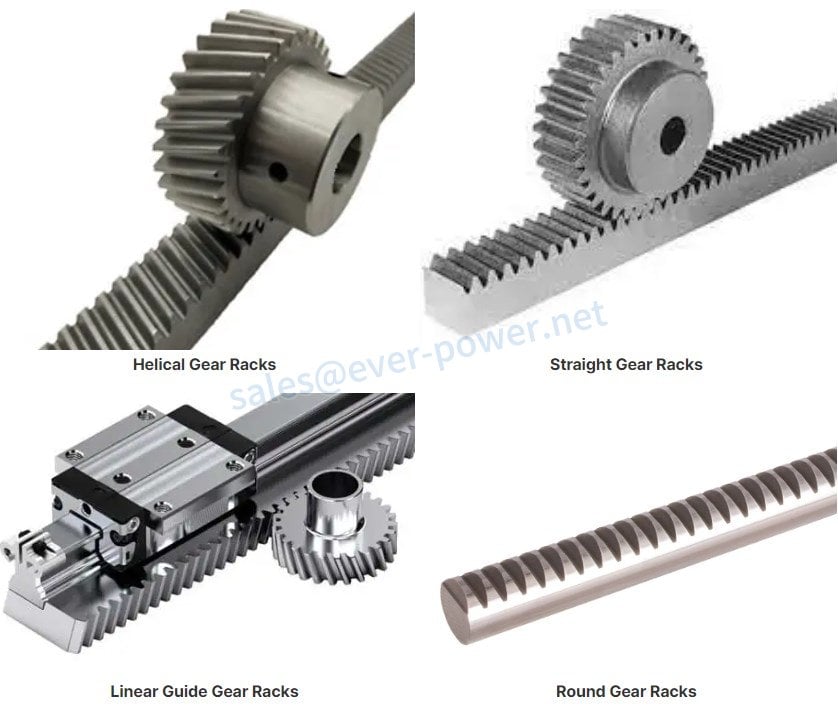
Gear racks come in various types, each with unique characteristics suited for different applications. The main types include:
- Straight Gear Racks: These have straight teeth that run parallel to the length of the rack. They are easy to manufacture and suitable for general applications.
- Helical Gear Racks: Helical gear racks have angled teeth, which provide smoother and quieter operation. They are ideal for high-speed and high-load applications.
- Curved Gear Racks: Designed for specific applications requiring curved paths, such as sliding doors and automation systems.
- Custom Gear Racks: Tailored to meet unique specifications, these gear racks can be designed with specific tooth profiles, materials, and dimensions.

Material Advantages of Gear Racks
Different materials offer various advantages for gear racks:
- Steel: High strength, durability, and resistance to wear, making it suitable for heavy-duty applications.
- Aluminum: Lightweight, corrosion-resistant, and easy to machine, ideal for applications where weight is a concern.
- Plastics and Composites: Provide good wear resistance, low friction, and noise reduction. Suitable for specific industrial applications requiring lightweight and non-conductive properties.
Applications of Gear Racks in Various Industries
- Aerospace Industry: Gear racks are used in aircraft control systems, landing gear mechanisms, and satellite positioning systems, due to their precision and reliability.
- Renewable Energy: Essential in solar tracking systems and wind turbine yaw mechanisms, where accurate positioning is vital.
- Automotive Industry: Employed in steering systems and electric vehicle drive systems for precise motion control.
- Industrial Machinery: Utilized in CNC machines, robotics, and automation systems for precise linear motion.
- Medical Equipment: Gear racks are integral in surgical robots, imaging devices, and patient handling systems, ensuring accuracy and reliability.
Future Trends and Opportunities for Gear Rack Products
- Integration of Smart Technologies: Implementing sensors and IoT for real-time monitoring and predictive maintenance.
- Advanced Materials: Development of new materials to enhance performance and reduce costs.
- Customization and Flexibility: Increasing demand for custom gear racks tailored to specific industry needs.
- Sustainability Initiatives: Focus on eco-friendly production methods and recyclable materials.
- Expansion into Emerging Markets: Growing opportunities in new industrial sectors and regions.

Choosing the Right Gear Rack
Selecting the correct gear rack involves several considerations:
- Identify Requirements: Understand the specific application needs, including load capacity, speed, and environmental conditions.
- Material Selection: Choose materials based on durability, weight, and cost considerations.
- Design Optimization: Ensure the gear rack design meets performance criteria and fits the intended application.
- Supplier and After-sales Service: Partner with reliable suppliers offering comprehensive support and maintenance services.
- Cost-effectiveness: Balance quality and price to achieve the best value for the investment.
- Quality Control: Implement strict quality control measures to ensure consistent product performance.
Maintaining Gear Racks
Proper maintenance of gear racks is crucial for sustained performance:
- Regular Inspections: Conduct periodic checks for wear, alignment, and damage.
- Cleaning and Corrosion Prevention: Keep gear racks clean and apply protective coatings to prevent rust and corrosion.
- Lubrication and Care: Use appropriate lubricants to reduce friction and wear.
- Replacement of Worn Parts: Timely replacement of worn or damaged components to prevent system failures.
- Temperature Monitoring: Ensure operating temperatures remain within safe limits to avoid overheating and material degradation.
Why Choose Ever Power
Ever Power is a leading manufacturer and supplier of high-quality gear racks. Here’s why you should choose us:
- Exceptional Quality: We use top-grade materials and advanced manufacturing techniques to ensure the highest quality gear racks.
- Comprehensive Product Range: Our extensive product range caters to diverse industrial needs, offering customized solutions.
- Innovative Solutions: We continuously invest in research and development to bring innovative products to the market.
- Dedicated Customer Support: Our experienced team provides excellent customer service and technical support throughout the product lifecycle.
- Competitive Pricing: We offer competitive prices without compromising on quality, ensuring the best value for your investment.

Q&A
Q: What materials are commonly used for gear racks?
A: Common materials include steel, aluminum, and various alloys, each offering unique benefits such as durability, lightweight, and resistance to wear.
Q: How can I ensure the quality of gear racks?
A: Implementing rigorous quality control measures, including dimensional checks, hardness testing, and surface finish analysis, helps ensure high-quality gear racks.
Q: What are the main challenges in gear rack production?
A: Challenges include material selection, precision machining, heat treatment, quality control, and cost management.
Q: Why is precision machining important for gear racks?
A: Precision machining ensures the exact tooth profile and spacing, which is crucial for the performance and reliability of gear racks.
Q: How does Ever Power support its customers?
A: We offer exceptional customer support, innovative solutions, and comprehensive after-sales service to ensure customer satisfaction.
Author: Dream