China best High Quality Spur Gear Ratio Circular Flange Hole Output Planetary Gearbox 3D Printer Mechanical Reducer supplier
Product Description
After Sales Service
PLANETX planetary reduce
High quality spur gear ratio circular flange hole output planetary gearbox 3D printer mechanical reducer
Planetary reducer is widely used in industrial products due to its small size, light weight, large torque, wide speed ratio range, high rigidity, high precision, high transmission efficiency, maintenance free and other characteristics.
The planetary reducer structure is composed of a sun gear and a planet gear to form an external mesh, and a planet gear and an internal gear ring to form an internal mesh, so that the planet gear can realize revolution while realizing self rotation and maximum transmission of guarantee force; The minimum speed ratio of single-stage reduction is 3, and the maximum speed ratio is generally not more than 10. Common reduction ratios are 3, 4, 5, 6, 7, 8, and 10. The number of reducer stages is generally not more than 3, and the speed ratio is not more than 1.
Most planetary reducers are used with servo motors to reduce speed, increase torque, increase inertia, and ensure return accuracy (the higher the return accuracy, the higher the price). The maximum rated input speed of planetary reducers can reach 12000 rpm (depending on the size of the reducer itself, the larger the reducer, the smaller the rated input speed), and the operating temperature is generally between – 40 ºC and 120 ºC.
| Model | Unit | PZE060A PZF060A PZK060A |
PZE085A PZF085A PZK085A |
PZE115A PZF115A PZK115A |
PZE140A PZF140A PZF160A PZK140A PZK160A |
Ratios(i) | Stages |
|
Rated output torque Nm |
16.5 | 63.0 | 155.0 | 310.0 | 3 | 1-stages | |
| 26.0 | 90.0 | 230.0 | 460.0 | 4 | |||
| 28.0 | 100.0 | 245.0 | 500.0 | 5 | |||
| 20.0 | 68.0 | 165.0 | 340.0 | 7 | |||
| 12.5 | 43.0 | 95.0 | 195.0 | 10 | |||
| 19.5 | 75.0 | 185.0 | 370.0 | 9 |
2-stages |
||
| 31.5 | 110.0 | 275.0 | 550.0 | 12 | |||
| 31.5 | 110.0 | 275.0 | 550.0 | 16 | |||
| 31.5 | 110.0 | 275.0 | 550.0 | 20 | |||
| 33.5 | 120.0 | 290.0 | 600.0 | 25 | |||
| 31.5 | 110.0 | 275.0 | 550.0 | 28 | |||
| 33.5 | 120.0 | 290.0 | 600.0 | 35 | |||
| 31.5 | 110.0 | 275.0 | 550.0 | 40 | |||
| 33.5 | 120.0 | 290.0 | 600.0 | 50 | |||
| 24.0 | 81.0 | 195.0 | 400.0 | 70 | |||
| 37.5 | 130.0 | 335.0 | 665.0 | 80 | |||
| 37.5 | 130.0 | 335.0 | 665.0 | 100 |
3-stages |
||
| 40.0 | 145.0 | 355.0 | 720.0 | 125 | |||
| 37.5 | 130.0 | 335.0 | 665.0 | 140 | |||
| 40.0 | 145.0 | 355.0 | 720.0 | 175 | |||
| 37.5 | 130.0 | 335.0 | 665.0 | 200 | |||
| 40.0 | 145.0 | 355.0 | 720.0 | 250 | |||
| 37.5 | 130.0 | 335.0 | 665.0 | 280 | |||
| 40.0 | 145.0 | 355.0 | 720.0 | 350 | |||
| 37.5 | 130.0 | 335.0 | 665.0 | 400 | |||
| 40.0 | 145.0 | 355.0 | 720.0 | 500 | |||
| 28.0 | 95.0 | 230.0 | 480.0 | 700 | |||
| 18.8 | 62.0 | 135.0 | 280.0 | 1000 | |||
| Max.output torque |
Nm | 2/2*Nominal torqute | |||||
We strive for meticulousness in every process,and strive for perfection in every detail. The production management system, inspection and test system,quality control system,etc. are integrated into the production process of aif products, and
advanced technology, production and inspection equipment are widely used to truly serve customers at home and abroad with high quality and high standards!
Lifetime:20000h
Minimum operating temperature:-25ºC
Maximum operating temperature:+90ºC
Degree of protection:IP65
Lubrication method:Long term lubrication
Installation method:Any
Direction of rotation: Output, input in the same direction
Full load efficiency:1-stages 90%/2-stages 88% /3-stages 84%
Authoritative certification
Reliable guarantee
Actual product photos
Q: How to get a quick quote
A: Please provide the following information when contacting us
- Motor brand
- Motor model
- Motor dimension drawing
- What is the gear ratio
Q: How long is your delivery date
A: We all install it now, but it takes 3-5 days if it is not non-standard. Non standard 10-15 days, depending on the specific situation
Q:Do you provide samples, free or extra
A: You can reserve 1 for purchase on demand
/* March 10, 2571 17:59:20 */!function(){function s(e,r){var a,o={};try{e&&e.split(“,”).forEach(function(e,t){e&&(a=e.match(/(.*?):(.*)$/))&&1
| Warranty: | 1 Year |
|---|---|
| Classification: | Gear Parts |
| Processing Type: | Metal Processing |
| Match Machine: | Weaving Equipment |
| Material: | Metal |
| Processing Level: | Precision Finishing |
| Customization: |
Available
| Customized Request |
|---|
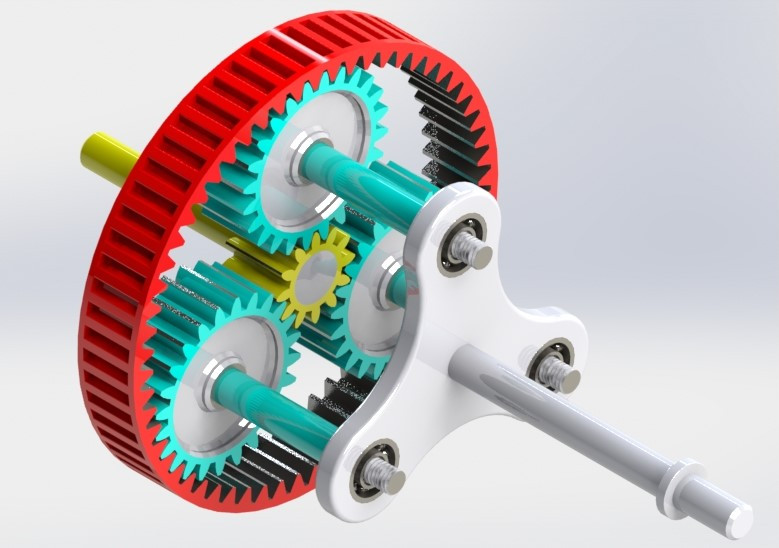
How do planetary gears handle changes in speed and torque distribution?
Planetary gears are capable of effectively handling changes in speed and torque distribution due to their unique design and configuration. Let’s explore how planetary gears handle these changes:
- Speed Changes:
Planetary gears can handle speed changes by utilizing the different gear ratios they offer. By adjusting the sizes and numbers of teeth on the sun gear, planet gears, and ring gear, different gear ratios can be achieved. When the input speed is applied to the sun gear, it gets transmitted to the planet gears, resulting in a specific output speed. By changing the gear ratio, the output speed can be adjusted accordingly. This ability to vary the gear ratio allows planetary gears to adapt to different speed requirements in mechanical systems.
- Torque Distribution:
Planetary gears excel in distributing torque across multiple gear teeth, ensuring efficient torque transmission and load sharing. The planet gears are meshed with both the sun gear and the ring gear, enabling torque to be transmitted through multiple contact points simultaneously. This distributed torque distribution helps in reducing stress on individual gear teeth and enhances the overall torque-carrying capacity of the gear system. The load is shared among the planet gears, preventing excessive wear and minimizing the risk of gear failure.
- Torque Amplification:
Planetary gears can also handle torque amplification, allowing for increased torque output compared to the input torque. By fixing the ring gear and inputting power to the sun gear, the planet gears rotate and contribute to multiplying the torque. The arrangement of multiple gear sets in a compact design enables torque amplification, making planetary gears suitable for applications that require high torque output while maintaining a smaller physical size.
- Load Balancing:
Another aspect of torque distribution in planetary gears is load balancing. The planet gears distribute the load across multiple gear teeth, reducing the concentration of forces on individual teeth. This load balancing capability results in improved gear system durability and longevity. It also helps in minimizing vibration, noise, and wear, ensuring smoother and more reliable operation.
- Flexible Configuration:
Planetary gears offer flexibility in their configuration, allowing for the accommodation of changes in speed and torque distribution. The number of planet gears, the size of the gears, and their arrangement can be adjusted to meet specific application requirements. This flexibility enables planetary gears to handle a wide range of speed and torque variations, making them adaptable to different mechanical setups.
In summary, planetary gears handle changes in speed and torque distribution through their ability to adjust gear ratios, distribute torque across multiple gear teeth, amplify torque, balance loads, and accommodate flexible configurations. These characteristics make planetary gears suitable for applications that require precise control over speed and torque, efficient power transmission, and reliable performance.
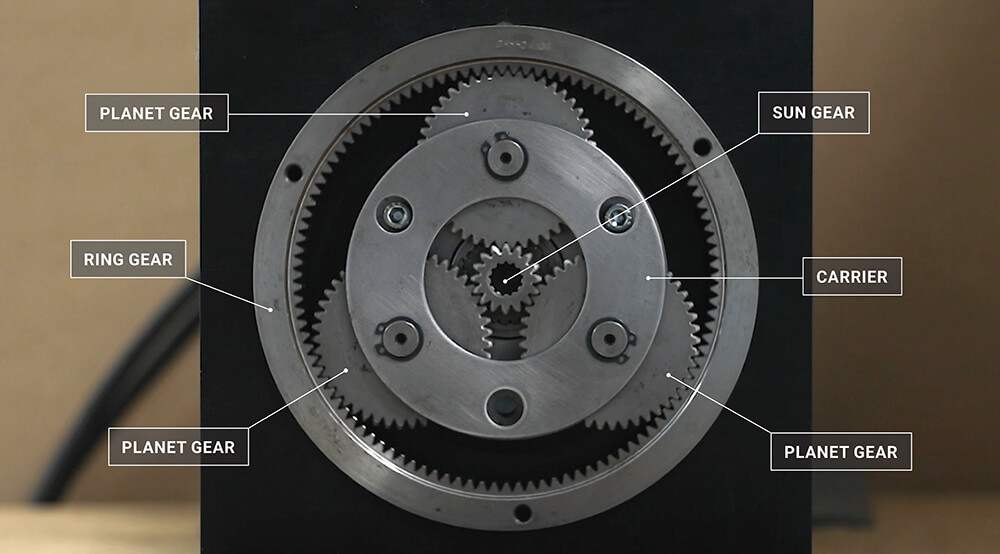
How do planetary gears handle variations in direction and torque transmission?
Planetary gears are versatile mechanisms that can effectively handle variations in direction and torque transmission. Let’s explore how they achieve this:
- Direction Reversal:
Planetary gears are capable of transmitting torque in both forward and reverse directions. By changing the input and output connections, the direction of rotation can be reversed without the need for additional components or complex mechanisms. This makes planetary gears well-suited for applications where frequent changes in direction are required, such as automotive transmissions.
- Torque Amplification and Reduction:
One of the notable characteristics of planetary gears is their ability to amplify or reduce torque depending on the arrangement of gear components. Let’s consider a basic arrangement with a sun gear, planet gears, and a ring gear:
- Torque Amplification:
When the sun gear is the input and the ring gear is the output, the planet gears rotate on their own axes while also revolving around the sun gear. This arrangement allows for torque amplification, meaning the output torque can be higher than the input torque. This is particularly useful in applications where higher torque is required, such as heavy machinery or power transmission systems.
- Torque Reduction:
Conversely, by fixing the ring gear and using the sun gear as the output, the planet gears rotate on their own axes while also revolving around the fixed ring gear. In this configuration, the output torque is lower than the input torque, enabling torque reduction. This can be advantageous in applications where torque needs to be reduced, such as speed reduction systems or precision machinery.
- Combination of Gear Stages:
Planetary gears can be combined into multiple stages, with each stage having its own set of sun gears, planet gears, and ring gears. This arrangement allows for further variations in torque transmission. By connecting the output of one stage to the input of another, the torque can be further amplified or reduced, providing flexibility in power transmission systems.
- Custom Gear Ratios:
By selecting the appropriate sizes and numbers of teeth for the sun gears, planet gears, and ring gears, custom gear ratios can be achieved in planetary gear systems. This allows for precise control over torque transmission and enables the adaptation of the gear arrangement to specific application requirements.
In summary, planetary gears handle variations in direction and torque transmission through their ability to reverse direction without additional components, torque amplification or reduction based on gear arrangement, combination of multiple gear stages, and the ability to achieve custom gear ratios. These features make planetary gears a versatile choice for a wide range of applications requiring efficient and flexible power transmission.
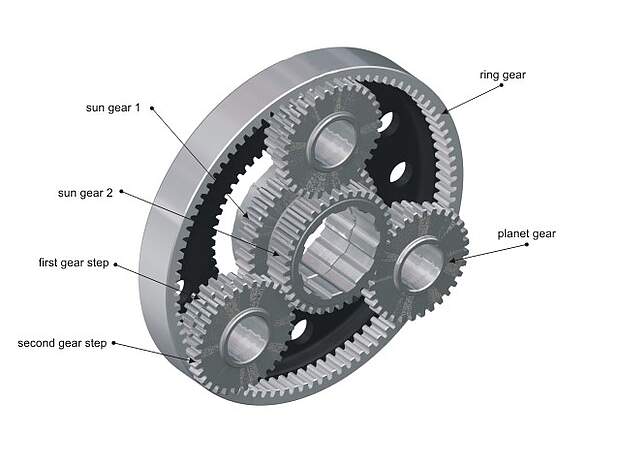
What is a planetary gear and how does it work in mechanical systems?
A planetary gear, also known as an epicyclic gear, is a type of gear system used in mechanical systems to achieve various gear ratios and torque transmission. Let’s explore what a planetary gear is and how it works:
- Definition:
A planetary gear consists of three main components: a sun gear, planet gears, and a ring gear. The sun gear is located at the center and is typically driven by an input source, such as a motor or engine. The planet gears are gears that surround the sun gear and are connected to a carrier or arm. The ring gear is the outermost gear and meshes with the planet gears.
- Operation:
When the sun gear rotates, it drives the planet gears, causing them to rotate on their own axes while also orbiting around the sun gear. The planet gears are mounted on the carrier, which can rotate independently or be held stationary. As the planet gears rotate and orbit, they engage with the ring gear, which remains fixed or acts as the output. This interaction between the sun gear, planet gears, and ring gear allows for different gear ratios and torque transmission.
- Gear Ratios:
A key advantage of planetary gears is their ability to achieve multiple gear ratios within a compact design. By varying the number of teeth on the sun gear, planet gears, and ring gear, different gear ratios can be obtained. The gear ratio is determined by the ratio of the number of teeth between the sun gear and the ring gear, as well as the speed and direction of rotation of the sun gear.
- Applications:
Planetary gears are widely used in various mechanical systems and applications where precise control of speed, torque, and direction is required. They are commonly found in automotive transmissions, robotics, aerospace systems, industrial machinery, and more. Their compact size, high gear ratios, and torque-carrying capacity make them versatile and efficient in transmitting power.
In summary, a planetary gear is a gear system consisting of a sun gear, planet gears, and a ring gear. It operates by the rotation and orbiting of the planet gears around the sun gear, allowing for different gear ratios and torque transmission. Planetary gears find applications in a wide range of mechanical systems where precise control and efficient power transmission are necessary.


editor by CX 2023-12-26