China Best Sales Hot-Selling Anti-Rotation Ball Worm Gear Electric Screw Jack for Lifting with high quality
Product Description
SWL series skillful manufacture screw reducer:
1.Convenient to adjust
2.Wide range of ratio
3.Easy to install
4.high torque
Application Industries:
Our SWL series screw jacks are widely used in the industries such as metallurgy,mining,hoisting and transportation, electrical power,energy source,constrction and building material,light industry and traffice industry
Product Parameters
|
Type |
Model |
Screw thread size |
Max |
Max |
Weight without stroke |
Screw weight |
|
SWL Screw jack |
SWL2.5 |
Tr30*6 |
25 |
25 |
7.3 |
0.45 |
|
SWL5 |
Tr40*7 |
50 |
50 |
16.2 |
0.82 |
|
|
SWL10/15 |
Tr58*12 |
100/150 |
99 |
25 |
1.67 |
|
|
SWL20 |
Tr65*12 |
200 |
166 |
36 |
2.15 |
|
|
SWL25 |
Tr90*16 |
250 |
250 |
70.5 |
4.15 |
|
|
SWL35 |
Tr100*18 |
350 |
350 |
87 |
5.20 |
|
|
SWL50 |
Tr120*20 |
500 |
500 |
420 |
7.45 |
|
|
SWL100 |
Tr160*23 |
1000 |
1000 |
1571 |
13.6 |
|
|
SWL120 |
Tr180*25 |
1200 |
1200 |
1350 |
17.3 |
|
1.Compact structure,Small size.Easy mounting,varied types. Can be applied in 1 unit or multiple units. |
||||
|
2.High reliability.Long service life; With the function of ascending,descending,thrusting,overturning |
||||
|
3.Wide motivity.It can be drived by electrical motor and manual force. |
||||
|
4.It is usually used in low speed situation,widely used in the fields of |
Detailed Photos
PRODUCT SPECIFICATIONS
SWL Series
Swl series worm screw lift is a kind of basic lifting component, which can lift, lower, propel, turn and other functions through the worm drive screw.
Screw jack can be widely used in machinery, metallurgy, construction, chemical, medical, cultural and health, and other industries. Can according to a certain procedure to accurately control the adjustment of the height of ascension or propulsion, can be directly driven by motor or other power, can also be manually. This series of worm screw lift can be self-locking, with the bearing capacity ranging from 2.5 tons to 120 tons, the maximum input speed of 1500 r/min, and the max lifting speed of 2.7 m/min.
Features:
1. Suitable for heavy load, low speed and low frequency;
2. Main components: precision trapezoid screw pair and high precision worm gear pair.
3. Compact design, small volume, light weight, wide drive sources, low noise, easy operation, convenient
maintenance.
4. The trapezoid screw has self-locking function, it can hold up load without braking device when screw stops traveling.
5. The lifting height can be adjusted according to customer requirements.
6. Widely applied in industries such as machinery, metellurgy, construction and hydraulic equipment.
7. Top End: top plate, clevis end, threaded end, plain end, forked head and rod end.
|
1. screw rod |
2. nut bolt |
3. cover |
4.Skeleton oil seal |
5.Bearing |
|
6.Worm gear |
7.Oil filling hole |
8.Case |
9.Skeleton oil seal |
10.Cover |
|
11. nut bolt |
12.Bearing |
13.Skeleton oil seal |
14.Bearing |
15.worm |
|
16.Flat key |
17.Bearing |
18.Skeleton oil seal |
19.Cover |
20.Nut bolt |
Product Description
|
MODEL |
|
SWL2.5 |
SWL5 |
SWL10 |
SWL15 |
SWL20 |
SWL25 |
SWL35 |
|
Maximum lifting force (kN) |
|
25 |
50 |
100 |
150 |
200 |
250 |
350 |
|
Screw thread size |
|
Tr30*6 |
Tr40*7 |
Tr58*12 |
Tr58*12 |
Tr65*12 |
Tr90*16 |
Tr100*20 |
|
Maximum tension (kN) |
|
25 |
50 |
99 |
166 |
250 |
350 |
|
|
Worm gear ratio (mm) |
P |
1/6 |
1/8 |
3/23 |
1/8 |
3/32 |
3/32 |
|
|
|
M |
1/24 |
1/24 |
1/24 |
1/24 |
1/32 |
1/32 |
|
|
Worm non rotating stroke (mm) |
P |
1.0 |
0.875 |
1.565 |
1.56 |
1.5 |
1.875 |
|
|
M |
0.250 |
0.292 |
0.5 |
0.5 |
0.5 |
0.625 |
||
|
Maximum elongation of screw rod under tensile load (mm) |
|
1500 |
2000 |
2500 |
3000 |
3500 |
4000 |
|
|
Maximum lifting height at maximum pressure load (mm) |
The head of the screw rod is not guided |
250 |
385 |
500 |
400 |
490 |
850 |
820 |
|
Lead screw head guide |
400 |
770 |
1000 |
800 |
980 |
1700 |
1640 |
|
|
Worm torque at full load(N.m) |
P |
18 |
39.5 |
119 |
179 |
240 |
366 |
464 |
|
M |
8.86 |
19.8 |
60 |
90 |
122 |
217 |
253 |
|
|
efficiency(%) |
P |
22 |
23 |
20.5 |
|
19.5 |
16 |
18 |
|
M |
11 |
11.5 |
13 |
|
12.8 |
9 |
11 |
|
|
Weight without stroke(kg) |
|
7.3 |
16.2 |
25 |
|
36 |
70.5 |
87 |
|
Weight of screw rod per 100mm(kg) |
|
0.45 |
0.82 |
1.67 |
|
2.15 |
4.15 |
5.20 |
SWL Worm Gear Screw Jack Mounting Dimensions
/* January 22, 2571 19:08:37 */!function(){function s(e,r){var a,o={};try{e&&e.split(“,”).forEach(function(e,t){e&&(a=e.match(/(.*?):(.*)$/))&&1
| Standard or Nonstandard: | Nonstandard |
|---|---|
| Application: | Textile Machinery, Garment Machinery, Conveyer Equipment, Electric Cars, Motorcycle, Food Machinery, Marine, Mining Equipment, Agricultural Machinery, Car, Power Transmission |
| Customized Support: | OEM, ODM, Obm |
| Brand Name: | Beiji or Customized |
| Certificate: | ISO9001:2008 |
| Structures: | Worm Gear and Worm |
| Samples: |
US$ 50/Piece
1 Piece(Min.Order) | |
|---|
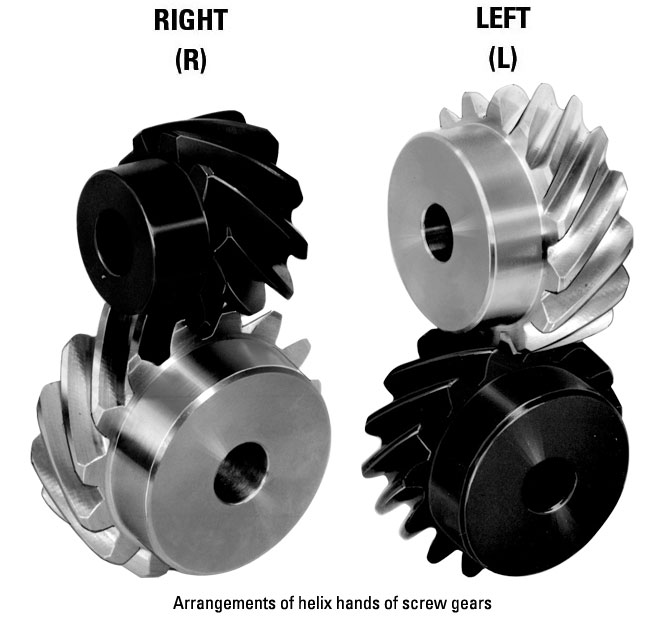
What is the purpose of using screw gears in machinery?
Screw gears, also known as worm gears, serve various purposes in machinery and mechanical systems. They offer unique advantages that make them suitable for specific applications. Here’s a detailed explanation of the purposes and benefits of using screw gears:
- High Gear Reduction: One of the primary purposes of using screw gears is to achieve high gear reduction. Screw gears provide a significant reduction ratio, allowing for the conversion of high-speed, low-torque input to low-speed, high-torque output. This makes them ideal for applications that require precise control over torque and rotational speed, such as lifting heavy loads, positioning systems, and machinery with high torque requirements.
- Precise Positioning: Screw gears enable precise positioning and control of linear or rotary motion. The fine-pitch threads on the worm and the corresponding worm wheel teeth allow for accurate and controlled motion. This feature makes screw gears suitable for applications that require precise positioning, such as robotics, automation, and machinery that performs intricate movements or adjustments.
- Self-Locking: Screw gears have a self-locking property, which means that the gear mechanism remains fixed in position even when no external force is applied. The friction between the screw threads and the worm wheel prevents the system from backdriving or rotating unintentionally. This self-locking feature eliminates the need for additional braking mechanisms or external locks, making screw gears advantageous in applications where holding a position is essential for safety and stability.
- Compact Design: Screw gears have a compact design that makes them suitable for applications with limited space. The worm and worm wheel arrangement allows for efficient power transmission in a compact layout, enabling the integration of screw gears in machinery and systems where space is a constraint. This compact design also simplifies installation and reduces the overall footprint of the equipment.
- Quiet and Smooth Operation: Screw gears operate with reduced noise and vibration compared to other gear types. The helical nature of the threads and the sliding/rolling contact between the worm and worm wheel result in a smooth and gradual meshing motion. This smooth operation contributes to quieter machinery, making screw gears desirable in applications where noise reduction is important, such as in residential environments, audio equipment, and precision instruments.
- High Shock Load Resistance: Screw gears are known for their ability to handle shock loads effectively. The helical shape of the threads and the larger contact area between the worm and the worm wheel distribute the load more evenly, reducing the risk of sudden failures or damage due to shock or impact loads. This shock load resistance makes screw gears suitable for applications that involve sudden changes in load or external forces.
- Reliability and Durability: Screw gears are recognized for their reliability and durability. The simplicity of their design, with fewer moving parts, reduces the likelihood of mechanical failures. Additionally, the self-locking feature minimizes the chances of unwanted movement or slippage. When properly lubricated and maintained, screw gears can have a long service life and require minimal maintenance, contributing to the overall reliability of machinery.
- Wide Range of Applications: Screw gears find application in various industries and machinery types. They are utilized in manufacturing equipment, robotics, medical devices, automotive systems, elevators, material handling machinery, and many other systems that require precise control, high torque, compactness, and reliable power transmission.
The purpose of using screw gears in machinery is to provide efficient power transmission, precise positioning, high torque multiplication, self-locking capabilities, and reliable operation. These features make screw gears a valuable component in numerous applications, enhancing performance, safety, and overall functionality of machinery and mechanical systems.
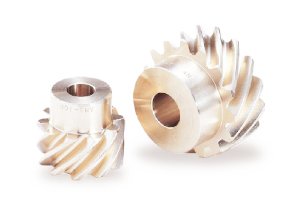
How do you calculate the efficiency of a screw gear?
Calculating the efficiency of a screw gear, also known as a worm gear, involves determining the ratio of input power to output power and considering various factors that affect the overall efficiency of the gear system. Here’s a detailed explanation of how to calculate the efficiency of a screw gear:
- Measure Input Power: The first step is to measure or determine the input power to the screw gear system. This can be done by measuring the torque applied to the input shaft and the rotational speed of the input shaft. The input power can then be calculated using the formula: Input Power (Pin) = Torque (Tin) × Angular Speed (ωin).
- Measure Output Power: Next, measure or determine the output power of the screw gear system. This can be done by measuring the torque exerted by the output shaft and the rotational speed of the output shaft. The output power can be calculated using the formula: Output Power (Pout) = Torque (Tout) × Angular Speed (ωout).
- Calculate Mechanical Efficiency: The mechanical efficiency of the screw gear system is calculated by dividing the output power by the input power and multiplying the result by 100 to express it as a percentage. The formula for mechanical efficiency is: Mechanical Efficiency = (Pout/Pin) × 100%.
- Consider Efficiency Factors: It’s important to note that the mechanical efficiency calculated in the previous step represents the ideal efficiency of the screw gear system, assuming perfect conditions. However, several factors can affect the actual efficiency of the system. These factors include friction losses, lubrication efficiency, manufacturing tolerances, and wear. To obtain a more accurate assessment of the overall efficiency, these factors should be considered and accounted for in the calculations.
- Account for Friction Losses: Friction losses occur in screw gear systems due to the sliding contact between the worm gear and the worm wheel. To account for friction losses, a correction factor can be applied to the calculated mechanical efficiency. This correction factor is typically determined based on empirical data or manufacturer specifications and is subtracted from the mechanical efficiency to obtain the corrected efficiency.
- Consider Lubrication Efficiency: Proper lubrication is essential for reducing friction and improving the efficiency of screw gear systems. In practice, the lubrication efficiency can vary depending on factors such as the type of lubricant used, the lubrication method, and the operating conditions. To account for lubrication efficiency, a lubrication factor can be applied to the corrected efficiency calculated in the previous step. This factor is typically determined based on experience or manufacturer recommendations.
- Include Other Efficiency Factors: Depending on the specific application and the characteristics of the screw gear system, additional efficiency factors may need to be considered. These factors can include manufacturing tolerances, gear wear, misalignment, and other losses that can affect the overall efficiency. It’s important to assess these factors and apply appropriate correction factors or adjustments to the efficiency calculation.
By following these steps and considering the various factors that affect the efficiency of a screw gear system, it is possible to calculate a more accurate estimate of the gear’s efficiency. Keep in mind that the calculated efficiency is an approximation, and actual efficiency can vary based on operating conditions, maintenance practices, and other factors specific to the gear system and application.
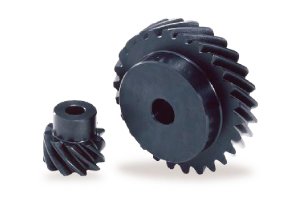
Can you explain the concept of screw gear threads and their functions?
Screw gear threads play a crucial role in the operation and functionality of screw gears, also known as worm gears. The threads are an essential component of the worm, which is the cylindrical gear with a helical thread wrapped around it. Here is a detailed explanation of the concept of screw gear threads and their functions:
- Thread Design: The threads on a screw gear, specifically the helical thread on the worm, are designed in a helical shape, resembling the threads of a screw. The helical thread is wrapped around the cylindrical body of the worm, creating a continuous spiral path along its length. The pitch of the thread refers to the distance between successive thread crests or valleys.
- Meshing with Worm Wheel: The primary function of the screw gear threads is to mesh with the teeth of the worm wheel. The helical thread of the worm engages with the teeth of the worm wheel, creating a sliding contact between them. As the worm rotates, the helical thread drives the rotation of the worm wheel, transmitting rotational motion and power.
- Gear Reduction and Torque Multiplication: The helical design of the screw gear threads allows for a large number of teeth on the worm wheel to be engaged at any given time. This results in a high gear reduction ratio, meaning that for each revolution of the worm, the worm wheel rotates by a smaller fraction. The gear reduction ratio enables torque multiplication, making screw gears suitable for applications requiring high torque output.
- Precision Positioning: Screw gear threads are crucial for achieving precise positioning in applications where accuracy is essential. The fine pitch of the helical thread allows for small incremental movements, enabling precise control over the rotation of the worm wheel. This feature is particularly advantageous in applications such as robotics, where accurate positioning and motion control are necessary.
- Self-Locking Action: The helical thread design of screw gears gives them a self-locking capability. When the worm is not rotating, the friction between the helical thread and the teeth of the worm wheel tends to hold the gear system in place. This self-locking action prevents the worm wheel from backdriving the worm, providing inherent braking or locking functionality. It ensures that the gear mechanism maintains its position without the need for additional braking or locking mechanisms.
- Efficiency and Lubrication: The sliding action between the screw gear threads and the teeth of the worm wheel introduces more friction compared to other types of gears with rolling motion. This sliding motion affects the efficiency of the gear mechanism, resulting in higher energy losses and heat generation. Proper lubrication with appropriate lubricants is essential to minimize wear, reduce friction, and improve the overall efficiency of the screw gears.
Overall, screw gear threads enable the meshing and transmission of rotational motion and power between the worm and the worm wheel. They facilitate gear reduction, torque multiplication, precise positioning, and self-locking action. Understanding the design and functions of screw gear threads is crucial for utilizing screw gears effectively in various applications.


editor by CX 2024-03-26