China Best Sales OEM CNC Machining/Machined/Machinery Chain Wheel Sprocket Toothed Gear wholesaler
Product Description
OEM CNC Machining/Machined/Machinery Chain Wheel Sprocket Toothed Gear
Product Description
Major Products:
spur gear; worm gear; bevel gear; planetary gear; gear; metal gear; cycle gear; pinion gear; gear
manufacturing; helical gear; custom gear; spiral bevel gear; rack and pinion gear; mechanical
gears; transmission gears; rack gear; spiral gear; work gear; gear reducer; richmond gear;
hypoid gear; gear wheels; pulleys and gears; motive gear; gear teeth; truck gear; gear system;
involute gear.
|
Material |
Steel:Carbon steel/ Mild steel/ Cold roll steel/ Hot roll steel |
|
Surface Treatment |
Zinc plating, Powder, Passivation, Sand blasting, Brushing & ploshing etc. |
|
Processing Equipment |
Large laser cutter Bending machine Plasma cutting machine Punching machine Wire cutter CNC machining center CNC lathe Automatic lathe machine Milling machine Drilling machine |
|
Drawing Format |
pdf/.igs./.stp/x_t. etc. |
|
Drawing Format |
EXW, FOB, CIF |
|
Packing of Sheet Metal Stamping |
PE bag+carton box or other custom packaging |
|
Applications |
Auto Parts/Motocycle parts/Contruction Parts/Furniture Parts/Electronic Parts |
PRODUCT DESCRIPOTION
1. CHINAMFG wheel and pinion gears and spiral bevel gears for automobile rear axle, truck, tractor
front/rear axle and tool.
2. Raw material: 20CrMni \22CrMo \8620 \SCM420
Processing: Forging, normalizing, rough, machining, fine finishi, carburizing, tempering,
annealing, accurate grinding, matching and testing, packing.
3. The tooth surface is finished by lapping machine, the color will be silver gray
4. Hardness about surface: HRC58-62, internal: HRC35-40.
5. We can process gears according to customers drawing and samples.
Inspections:
3D instruments, 2D instruments, Projectors, Height Gauges, Inner diameter dial indicators, Dial gaues,
Thread and Pin gauges, Digital calipers,Micro calipers, Thickness testers, Hardness testers Roughness
testers, etc.( Detection accuracy to 0.001 millimetre )
| Mininum of Quantity | 100 Piece/Pieces |
| Unit Weight | 0.5kg~300kg |
| Price | FOB HangZhou,China,USD1.5~1.9 |
| Packing Details | Paper Box in Wooden Pallet |
| Delivery Time | One month |
| Payment Terms | L/C, T/T |
| Machining | CNC or |
| Supply Capacity | 50 Metric Tons per Month |
| Standard | DIN,ASTM,GOST,B |
Packing:
1: Shrink film+ bulk loading
2: Shrink film +Carton box + Pallet/ wooden case
3: PP + Wooden case
4: As per customers’ requirements or negotiated
Q1: How can I get cnc spare parts sample?
1. Sample fee will be free if we have in stock, you just need to pay the shipping cost is OK.
2. The sample of your own design needs to pay for the mold set up charge. Samples production takes
5-7 working days after set up charge received & size drawing approval.
Q2: How to pay for the order?
There are 4 options to pay the order: Bank Transfer; Western Union; Paypal; Payoneer. Kindly choose
the most suitable way for you to arrange it.
Q3: What is the shipping method?
The samples were sent out by international airway express company like DHL, UPS, FedEx, TNT.
Usually takes around 5-7 working days (door to door service). We arrange goods shipment via sea
or air.
Q4: Can you give me help if my products are very urgent?
Yes, We can work overtime and add a few machines to produce these products if you need it urgently.
Q5: I want to keep our design in secret, can we CHINAMFG NDA?
Sure, we will not display any customers’ design or show to other people, we can CHINAMFG NDA.
You can look through our website to find your interest or email your any questions through
below approach! We will reply to you within 12 hours.
| Application: | Motor, Electric Cars, Motorcycle, Machinery, Marine, Agricultural Machinery, Car |
|---|---|
| Hardness: | Hardened Tooth Surface |
| Gear Position: | Internal Gear |
| Samples: |
US$ 4/Piece
1 Piece(Min.Order) | Order Sample machining parts
|
|---|
| Customization: |
Available
| Customized Request |
|---|
.shipping-cost-tm .tm-status-off{background: none;padding:0;color: #1470cc}
|
Shipping Cost:
Estimated freight per unit. |
about shipping cost and estimated delivery time. |
|---|
| Payment Method: |
|
|---|---|
|
Initial Payment Full Payment |
| Currency: | US$ |
|---|
| Return&refunds: | You can apply for a refund up to 30 days after receipt of the products. |
|---|
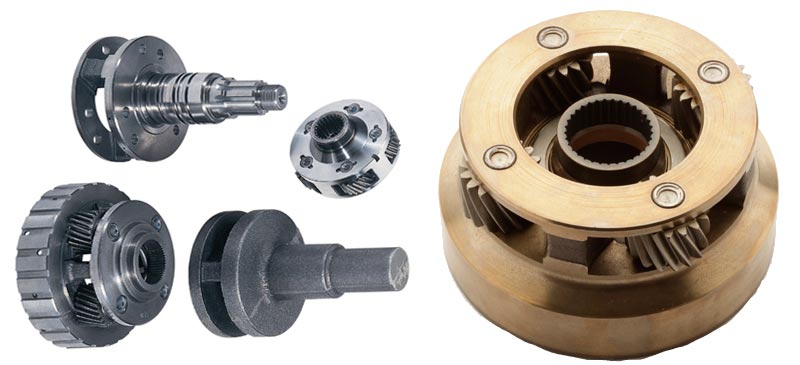
How do you calculate the gear ratio involving sun, planet, and ring gears?
The gear ratio in a planetary gear system can be calculated by considering the number of teeth on the sun gear, planet gears, and ring gear. The gear ratio determines the relationship between the input speed and the output speed of the system. Here’s how you can calculate the gear ratio:
- Step 1: Count the Teeth:
Count the number of teeth on the sun gear (S), the planet gears (P), and the ring gear (R). These numbers represent the respective gear’s tooth count.
- Step 2: Determine the Gear Arrangement:
Identify the gear arrangement. In a simple planetary gear system, the sun gear is at the center, surrounded by planet gears, and enclosed by the ring gear.
- Step 3: Calculate the Gear Ratio:
The gear ratio (GR) can be determined using the formula:
GR = (R + P) / S
Where:
- R represents the number of teeth on the ring gear
- P represents the number of teeth on the planet gears (assuming they have the same number of teeth)
- S represents the number of teeth on the sun gear
The resulting gear ratio represents the speed relationship between the input and output of the planetary gear system. A gear ratio greater than 1 indicates a speed reduction, while a gear ratio less than 1 indicates a speed increase.
It’s important to note that in more complex planetary gear systems, where there are multiple sets of planet gears or additional gears, the calculation of the gear ratio may involve considering multiple gear stages and their respective tooth counts.
In summary, to calculate the gear ratio involving sun, planet, and ring gears, you need to count the teeth on each gear and use the formula (R + P) / S, where R is the number of teeth on the ring gear, P is the number of teeth on the planet gears, and S is the number of teeth on the sun gear. This calculation provides the gear ratio that defines the speed relationship between the input and output of the planetary gear system.
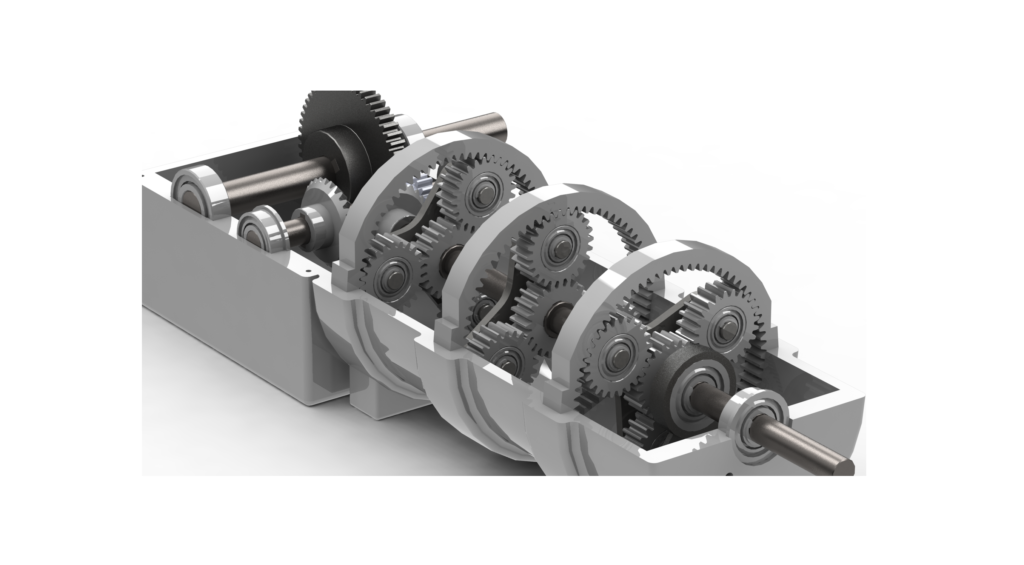
Can you explain the process of gear shifting in planetary gear systems?
Gear shifting in planetary gear systems involves changing the gear ratio by engaging or disengaging specific components of the gear set. Let’s explore the process of gear shifting in more detail:
- Clutching and Braking:
The gear shifting process in planetary gear systems primarily relies on clutching and braking mechanisms. These mechanisms selectively connect or disconnect various gears within the system to achieve the desired gear ratio. Here are the key steps involved:
- Clutch Engagement:
To shift to a higher gear ratio, the clutch associated with the gear component that needs to be engaged is activated. The clutch connects the rotating member, such as the sun gear, planet carrier, or ring gear, to the stationary member, allowing torque transmission. This engagement results in a change in the gear ratio, leading to higher speed or torque output depending on the specific gear set configuration.
- Brake Application:
On the other hand, to shift to a lower gear ratio, a brake associated with the gear component that needs to be disengaged is applied. The brake immobilizes or slows down the rotation of the selected gear element, preventing it from transmitting torque. By selectively braking certain components, the gear ratio is altered, resulting in a lower speed or higher torque output.
- Sequential Shifting:
In some planetary gear systems, gear shifting is performed sequentially. This means that one gear component is engaged or disengaged at a time, gradually transitioning from one gear ratio to another. Sequential shifting allows for smooth and controlled gear changes, minimizing the stress on the transmission components and ensuring seamless power transmission.
- Electronic Control:
In modern applications, gear shifting in planetary gear systems is often electronically controlled. Electronic control systems utilize sensors, actuators, and a control unit to monitor various parameters such as vehicle speed, engine load, and driver input. Based on these inputs, the control unit determines the optimal gear shift points and actuates the clutches and brakes accordingly. Electronic control enhances the efficiency, precision, and automation of the gear shifting process.
In summary, gear shifting in planetary gear systems involves the engagement and disengagement of clutches and brakes to alter the gear ratio. By selectively connecting or disconnecting specific gear components, the speed and torque output can be adjusted. Sequential shifting and electronic control systems further enhance the gear shifting process, providing smooth and efficient operation in various applications, including automotive transmissions and industrial machinery.
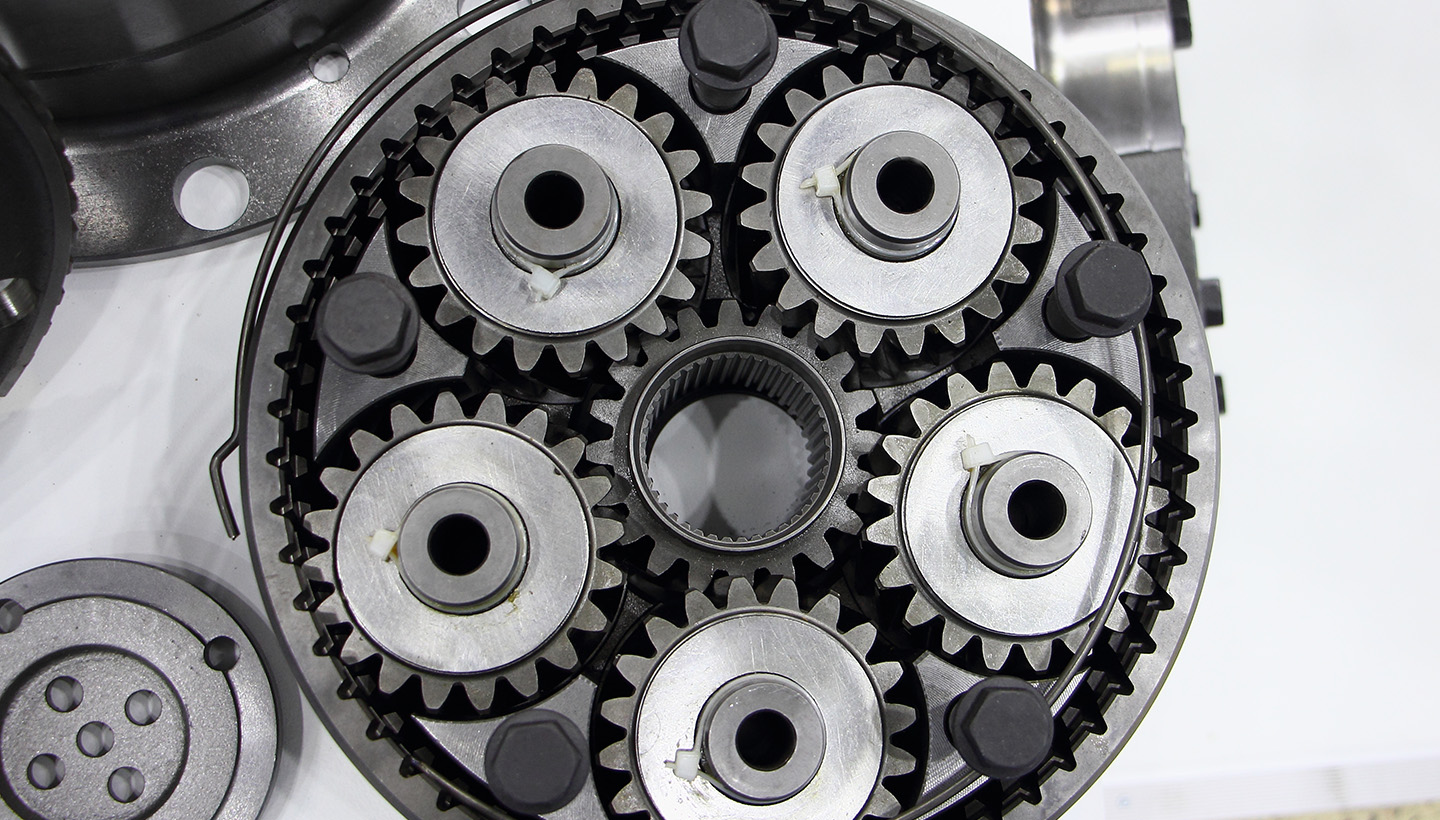
Can you explain the unique design and structure of planetary gears?
Planetary gears possess a unique design and structure that sets them apart from other gear systems. Let’s explore the distinctive features of the design and structure of planetary gears:
- Components:
A planetary gear system consists of three main components: the sun gear, planet gears, and a ring gear. The sun gear is located at the center and is typically driven by an input source such as a motor or engine. The planet gears are gears that surround the sun gear and are connected to a carrier or arm. The ring gear is the outermost gear and meshes with the planet gears.
- Internal Gear Meshing:
One of the distinguishing features of planetary gears is their internal gear meshing. Unlike other gear systems where the gears mesh externally, the teeth of the sun gear, planet gears, and ring gear are located on the inside surfaces. This arrangement allows for a compact and space-efficient design.
- Orbiting Motion:
In planetary gears, the planet gears exhibit both rotational and orbital motion. While they rotate on their own axes, they also orbit around the sun gear. This combination of rotational and orbital movement enables the gear system to achieve different gear ratios and torque transmission.
- Central Sun Gear:
The presence of a central sun gear is another characteristic of planetary gears. The sun gear is positioned at the center of the gear arrangement and serves as the primary driver for the overall gear operation. It receives the input power and transmits it to the planet gears.
- Versatile Gear Ratios:
Planetary gears are capable of achieving a wide range of gear ratios. The gear ratio is determined by the relative sizes of the gears and the number of teeth on each gear. By varying the number of teeth on the sun gear, planet gears, and ring gear, different gear ratios can be obtained, providing versatility in speed reduction or amplification.
- Load Distribution:
The arrangement of multiple planet gears in a planetary gear system helps distribute the load among the gears. This load distribution results in efficient torque transmission and enhanced durability. It also contributes to shock absorption and noise reduction during gear operation.
- Compact Size:
Planetary gears are known for their compact size. The internal gear meshing and the integration of multiple gear sets within a single system contribute to their space-saving design. The compactness of planetary gears is advantageous in applications where size and weight restrictions are critical.
- Wide Range of Applications:
Due to their unique design and structural characteristics, planetary gears find applications in various industries and mechanical systems. They are commonly used in automotive transmissions, robotics, aerospace systems, industrial machinery, and more. The ability to achieve different gear ratios, transmit torque efficiently, and operate in compact spaces makes planetary gears versatile in transmitting power.
In summary, the unique design and structure of planetary gears include components such as the sun gear, planet gears, and ring gear, internal gear meshing, orbiting motion of the planet gears, a central sun gear, versatile gear ratios, load distribution, compact size, and wide-ranging applications. These features contribute to the efficiency, versatility, and space-saving nature of planetary gears, making them suitable for various mechanical systems.


editor by CX 2023-11-27