China Custom CZPT Spiral Bevel Pinion, CZPT Pinion, Bevel Gear Straight Tooth spiral bevel gear
Product Description
1.Product Description
Gear shaft, Herringbone Gear Shaft, Bevel Gear, Eccentric Shaft mainly used on vessel engine, fan internal gear
1.1. Bevel Gear, Pinion Shaft Processing
Gear drawing— Simulation Modelling—Making casting model—Casting— Primary Detection—Rough machining—Hardening Tempering—Semi-finishing machining —Hobbing—Tooth Surface Quenching—Gear grinding—Gear Surface Carburzing—Inspection—Spray Anti-rust Oil—Package—Delivery
Gear Shaft drawing CHECK, Make Forging Mold, Forging Mold Quality Inspection Check, Machine Processing, Check Size\Hardness\Surface Finish and other technical parameters on drawing.
2.2. Bevel Gear Package
Spray anti-rust oil on Herringbone Gear Shaft, Wrap waterproof cloth around Gear Shaft for reducer, Prepare package by shaft shape&weight to choose steel frame, steel support or wooden box etc.
1.3. OEM Customized Pinion Shaft
We supply OEM SERVICE, customized herringbone gear shaft with big module, more than 1tons big weight, more than 3m length, 42CrMo/35CrMo or your specified required material gear shaft.
2.Product Technical info.
| Module | m | Range: 5~70 |
| Gear Teeth Number | z | OEM by drawing’s technical parameters |
| Teeth Height | H | OEM by drawing’s technical parameters |
| Teeth Thickness | S | OEM by drawing’s technical parameters |
| Tooth pitch | P | OEM by drawing’s technical parameters |
| Tooth addendum | Ha | OEM by drawing’s technical parameters |
| Tooth dedendum | Hf | OEM by drawing’s technical parameters |
| Working height | h’ | OEM by drawing’s technical parameters |
| Bottom clearance | C | OEM by drawing’s technical parameters |
| Pressure Angle | α | OEM by drawing’s technical parameters |
| Helix Angle, | OEM by drawing’s technical parameters | |
| Surface hardness | HRC | Range: HRC 50~HRC63(Quenching) |
| Hardness: | HB | Range: HB150~HB280; Hardening Tempering/ Hardened Tooth Surface |
| Surface finish | Range: Ra1.6~Ra3.2 | |
| Tooth surface roughness | Ra | Range: ≥0.4 |
| Gear Accuracy Grade | Grade Range: 5-6-7-8-9 (ISO 1328) | |
| Diameter | D | Range: 1m~16m |
| Weight | Kg | Range: Min. 100kg~Max. 80tons Single Piece |
| Gear Position | Internal/External Gear | |
| Toothed Portion Shape | Spur Gear/Bevel/Spiral/Helical/Straight | |
| Shaft shape | Herringbone Gear Shaft / Gear Shaft / Eccentric Shaft / Spur Gear / Girth Gear / Gear Wheel | |
| Material | Forging/ Casting |
Forging/ Casting 45/42CrMo/40Cr or OEM |
| Manufacturing Method | Cut Gear | |
| Gear Teeth Milling | √ | |
| Gear Teeth Grinding | √ | |
| Heat Treatment | Quenching /Carburizing | |
| Sand Blasting | Null | |
| Testing | UT\MT | |
| Trademark | TOTEM/OEM | |
| Application | Gearbox, Reducer, Petroleum,Cement,Mining,Metallurgy etc. Wind driven generator,vertical mill reducer,oil rig helical gear,petroleum slurry pump gear shaft |
|
| Transport Package | Export package (wooden box, steel frame etc.) | |
| Origin | China | |
| HS Code | 8483409000 |
Material Comparison List
| STEEL CODE GRADES COMPARISON | |||||
| CHINA/GB | ISO | ГΟСТ | ASTM | JIS | DIN |
| 45 | C45E4 | 45 | 1045 | S45C | CK45 |
| 40Cr | 41Cr4 | 40X | 5140 | SCr440 | 41Cr4 |
| 20CrMo | 18CrMo4 | 20ХМ | 4118 | SCM22 | 25CrMo4 |
| 42CrMo | 42CrMo4 | 38XM | 4140 | SCM440 | 42CrMo4 |
| 20CrMnTi | 18XГT | SMK22 | |||
| 20Cr2Ni4 | 20X2H4A | ||||
| 20CrNiMo | 20CrNiMo2 | 20XHM | 8720 | SNCM220 | 21NiCrMo2 |
| 40CrNiMoA | 40XH2MA/ 40XHMA |
4340 | SNCM439 | 40NiCrMo6/ 36NiCrMo4 |
|
| 20CrNi2Mo | 20NiCrMo7 | 20XH2MA | 4320 | SNCM420 | |
3.Totem Service
TOTEM Machinery focus on supplying GEAR SHAFT, ECCENTRIC SHAFT, HERRINGBONE GEAR, BEVEL GEAR, INTERNAL GEAR and other parts for transmission devices & equipments(large industrial reducers & drivers). Which were mainly used in the fields of port facilities, cement, mining, metallurgical industry etc. We invested in several machine processing factories,forging factories and casting factories,relies on these strong reliable and high-quality supplier network, to let our customers worry free.
TOTEM Philosophy: Quality-No.1, Integrity- No.1, Service- No.1
24hrs Salesman on-line, guarantee quick and positive feedback. Experienced and Professional Forwarder Guarantee Log. transportation.
4.About TOTEM
1. Workshop & Processing Strength
2. Testing Facilities
3. Customer Inspection & Shipping
5. Contact Us
ZheJiang CHINAMFG Machinery Co.,Ltd
Facebook: ZheJiang Totem
| Application: | Motor, Motorcycle, Machinery, Marine, Cement |
|---|---|
| Hardness: | Hardened Tooth Surface |
| Gear Position: | Internal/External |
| Manufacturing Method: | Cast Gear |
| Toothed Portion Shape: | Bevel Wheel |
| Material: | Cast Steel |
| Customization: |
Available
| Customized Request |
|---|
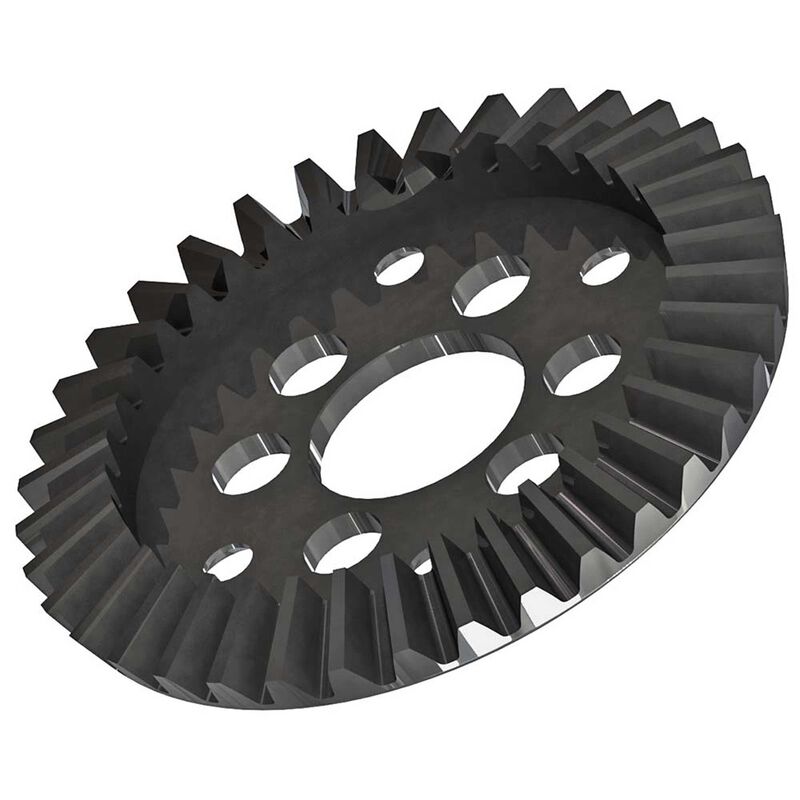
How does a crown gear handle variations in rotational direction?
Crown gears are versatile components that can effectively handle variations in rotational direction. Let’s delve into how crown gears accommodate changes in rotational direction:
- Bidirectional Capability:
Crown gears are designed to operate in either direction of rotation. Unlike other gear types that have a preferred rotational direction, such as spur gears or helical gears, crown gears can handle variations in rotational direction without any issues. This bidirectional capability makes crown gears suitable for applications where the direction of rotation may change or reverse periodically.
- Symmetrical Tooth Profile:
Crown gears have a symmetrical tooth profile, which means the shape and orientation of the teeth remain the same regardless of the rotational direction. This symmetrical tooth profile enables the gear to engage and mesh with other gears consistently, irrespective of the direction of rotation. The symmetrical design ensures that the gear teeth align correctly and maintain proper contact and meshing, regardless of the rotational direction.
- Uniform Load Distribution:
The curved tooth profile of crown gears allows for uniform load distribution across the gear teeth. This characteristic is beneficial when encountering variations in rotational direction. Regardless of the direction of rotation, the load is distributed evenly over the gear teeth, preventing localized stress concentrations and promoting balanced power transmission. The uniform load distribution helps ensure smooth operation and reduces the risk of premature wear or failure.
- Backlash Compensation:
Crown gears can compensate for backlash, which is the slight clearance or play between the teeth of meshing gears. When encountering changes in rotational direction, the crown gear’s tooth orientation and engagement properties help minimize or eliminate backlash. By mitigating backlash, crown gears maintain a tighter meshing with other gears, reducing any potential impact on the system’s performance and accuracy.
In summary, crown gears handle variations in rotational direction by their bidirectional capability, symmetrical tooth profile, uniform load distribution, and backlash compensation. These characteristics make crown gears versatile and reliable components in gear systems where changes in rotational direction are expected or required.
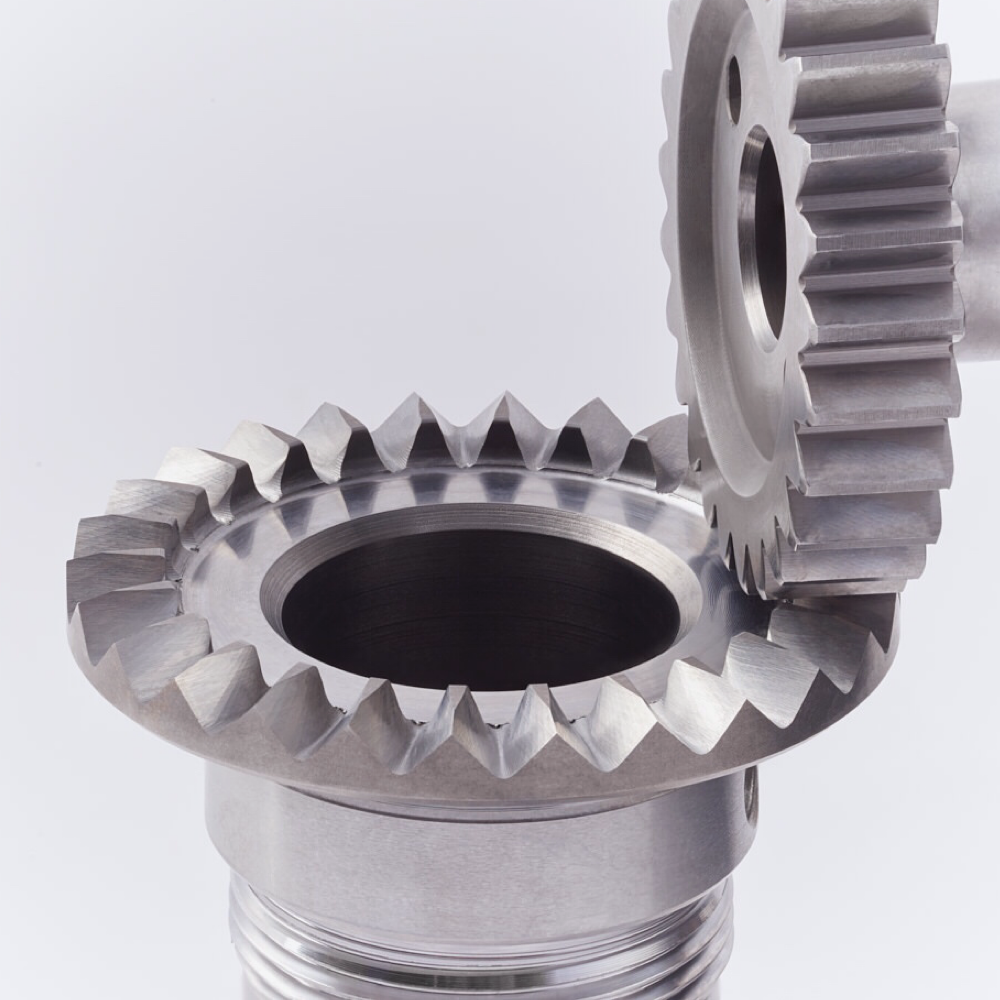
Can you explain the process of gear engagement involving crown gears?
The process of gear engagement involving crown gears follows a specific sequence to ensure proper meshing and efficient power transmission. Let’s explore the steps involved in the gear engagement process with crown gears:
- Approach:
During the gear engagement process, the gear teeth of the mating gears approach each other. As the crown gear and the mating gear come closer, the teeth start to interact and prepare for engagement.
- Tooth Contact:
Once the teeth of the crown gear and the mating gear make contact, they begin to mesh together. The curved tooth profiles of crown gears allow for gradual contact between the teeth, reducing impact forces and ensuring smoother engagement.
- Alignment:
As the tooth contact progresses, the crown gear and the mating gear align themselves to achieve proper meshing. The teeth of the crown gear and the mating gear should align accurately to ensure optimal power transmission and minimize noise and wear. Proper alignment also helps distribute the load evenly across the gear teeth.
- Meshing:
Once the teeth are in contact and properly aligned, the crown gear and the mating gear mesh together. The teeth of the crown gear fit into the spaces between the teeth of the mating gear, creating a mechanical interlock. This meshing allows for the transfer of torque and rotation between the gears.
- Power Transmission:
With the gears meshed, power transmission occurs as the torque from the driving gear (such as a motor) is transferred to the driven gear through the crown gear. The crown gear, with its larger contact area and perpendicular tooth orientation, facilitates efficient torque transfer and power distribution within the gear system.
- Disengagement:
When the engagement process is complete or when the power transmission needs to be stopped, the gears disengage. The disengagement process involves the reverse sequence of the engagement steps. The teeth gradually separate, and the gears move away from each other, ceasing the meshing and interrupting the power transmission.
The gear engagement process involving crown gears is crucial for ensuring smooth and efficient power transmission. Proper alignment, gradual tooth contact, accurate meshing, and reliable disengagement are essential for minimizing wear, reducing noise, and maximizing the overall performance and longevity of the gear system.
How does a crown gear differ from other types of gears?
A crown gear, also known as a contrate gear or a contrate wheel, has distinct characteristics that set it apart from other types of gears. Let’s explore the key differences between a crown gear and other gears:
- Tooth Orientation:
One of the primary differences is the tooth orientation. In a crown gear, the teeth are positioned perpendicular to the gear’s face. This is in contrast to other gears, such as spur gears or bevel gears, where the teeth are parallel or at an angle to the gear’s axis. The perpendicular tooth arrangement of a crown gear allows for specific functionalities in mechanical systems.
- Directional Change:
A significant advantage of crown gears is their ability to change the direction of rotation in a mechanical system. By meshing with other gears, crown gears can redirect rotational motion by 90 degrees. This directional change capability is particularly useful in applications where a change in motion direction is required, such as conveyors, cranes, and other machinery.
- Meshing with Different Gear Types:
Crown gears can mesh with gears that have parallel axes or bevel gears with intersecting axes. This versatility allows crown gears to work in conjunction with other gear types, enabling torque and rotational motion transfer between them. The perpendicular tooth orientation of crown gears facilitates smooth meshing with these different gear configurations.
- Force Distribution:
Another distinguishing feature of crown gears is their ability to distribute forces and torques in mechanical systems. By meshing a crown gear with other gears, the load can be spread across a larger contact area. This distribution of forces helps reduce stress and wear on individual gear teeth, promoting smoother operation and improved durability of the gear system.
- Applications:
Crown gears find applications in various industries due to their unique characteristics. They are commonly used in steering mechanisms, such as rack and pinion systems in automotive applications, where the crown gear meshes with a rack to convert rotational motion into linear motion for precise steering control. Crown gears are also employed in automation and robotics for motion control mechanisms, enabling changes in motion direction and force distribution in robotic arms, gantry systems, and other automated equipment.
In summary, a crown gear differs from other types of gears primarily in its tooth orientation, ability to change motion direction, versatility in meshing with different gear types, and force distribution capabilities. These distinctions make crown gears suitable for specific applications where directional change, force distribution, and precise motion control are required.


editor by CX 2023-12-13