China Custom Stainless Steel Hardened Helical Gears for Automobile Parts supplier
Product Description
1) According to the different strength and performance, we choose the steel with strong compression;
2) Using Germany professional software and our professional engineers to design products with more reasonable size and better performance; 3) We can customize our products according to the needs of our customers,Therefore, the optimal performance of the gear can be exerted under different working conditions;
4) Quality assurance in every step to ensure product quality is controllable.
Product Paramenters
| DRIVEN GEAR |
NUMBER OF TEETH |
8 |
|
MODULE |
7.8205 | |
|
LENTH |
244 | |
|
OUTER DIAMETER |
ø94.44 |
|
|
DIRECTION OF SPIRAL |
L |
|
|
ACCURACY OF SPLINE |
M24*1.5-6g | |
|
NUMBER OF SPLINE |
10 |
|
DRIVEN GEAR |
NUMBER OF TEETH |
39 |
|
OUTER DIAMETER |
ø305 |
|
|
DIAMETER OF INNER HOLE |
ø165 |
|
|
ACCURACY OF SCREW |
12-ø12.5 | |
|
CENTER DISTANCE OF SCREW HOLE |
ø190 |
|
|
DIRECTION OF SPIRAL |
R |
Company Profiles
Our company,HangZhou CHINAMFG Gear co.,Ltd , specialized in Hypoid and spiral bevel gear used in Automotive industry, was foundeded in 1996, with registered capital 136,8 square meter, with building area of 72,000 square meters. More than 500 employees work in our company.
We own more than 560 high-precise machining equipments, 10 Klingelnberg Oerlikon gear production lines, 36 Gleason gear production lines, 5 forging production lines 2 german Aichilin and 5 CHINAMFG CHINAMFG advanced automatic continuous heat treatment production lines. With the introducing the advanced Oerlikon C50 and P65 measuring center, we enhence our technology level and improve our product quality a lot. We offer better quality and good after-sale service with low price, which insure the good reputation. With the concept of “for the people, by technology, creativity, for the society, transfering friendship, honest”, we are trying to provice the world-top level product.
Our aim is: CHINAMFG Gear,world class, Drive the world.
According to the different strength and performance, we choose the steel with strong compression;Using Germany professional software and our professional engineers to design products with more reasonable size and better performance;We can customize our products according to the needs of our customers,Therefore, the optimal performance of the gear can be exerted under different working conditions;Quality assurance in every step to ensure product quality is controllable.
Our company had full quality management system and had been certified by ISO9001:2000, QS-9000:1998, ISO/TS16949 , which insure the entrance of international market.
Certification & honors
Packaging & Shipping
Packaging Detail:standard package(carton ,wooden pallet).
Shipping:Support Sea freight. Accept FOB,EXW,FAS,DES.
Cooperative customers
HangZhou CHINAMFG Gear Co., Ltd. adheres to the concept of “people-oriented, prosper with science and technology; create high-quality products, contribute to the society; turn friendship, and contribute sincerely”, and will strive to create world automotive axle spiral bevel gear products.
1.Do you provide samples?
Yes,we can offer free sample but not pay the cost of freight.
2.What about OEM?
Yes,we can do OEM according to your requirements.
3.How about after-sales service?
We have excellent after-sales service if you have any quanlity problem,you can contact us anytime.
4.What about package?
Stardard package or customized package as requirements.
5.How to ensure the quanlity of the products?
We can provide raw meterial report,metallographic examination and the accuracy testing etc.
6.How long is your delivery time?
Genarally it is 4-7 days.If customized it will be take 20 days according to your quantity. /* January 22, 2571 19:08:37 */!function(){function s(e,r){var a,o={};try{e&&e.split(“,”).forEach(function(e,t){e&&(a=e.match(/(.*?):(.*)$/))&&1
| Application: | Motor, Electric Cars, Motorcycle, Machinery, Marine, Agricultural Machinery, Car |
|---|---|
| Hardness: | Hardened Tooth Surface |
| Gear Position: | External Gear |
| Manufacturing Method: | Cast Gear |
| Toothed Portion Shape: | Herringbone Gear |
| Material: | Cast Steel |
| Samples: |
US$ 35/Set
1 Set(Min.Order) | |
|---|
| Customization: |
Available
| Customized Request |
|---|
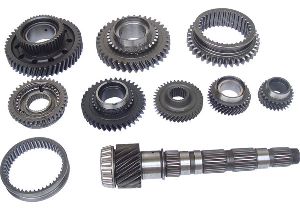
What are the advantages and disadvantages of automatic and manual transmissions?
Automatic and manual transmissions each have their own set of advantages and disadvantages. Here’s a detailed explanation:
Automatic Transmissions:
Advantages:
- Ease of Use: Automatic transmissions are easier to operate since they do not require the driver to manually engage gears. This makes them more convenient, especially in heavy traffic or during long commutes.
- Smooth Shifting: Automatic transmissions provide smooth and seamless gear shifts, as the shifting process is controlled by the vehicle’s computer system. This results in a comfortable driving experience.
- Improved Fuel Efficiency: Modern automatic transmissions often feature advanced technologies such as continuously variable transmissions (CVT) or dual-clutch transmissions (DCT), which can optimize fuel efficiency by selecting the most appropriate gear ratio for the driving conditions.
- Reduced Driver Fatigue: With automatic transmissions, drivers can focus more on the road and other aspects of driving, as they don’t need to manually shift gears. This can reduce driver fatigue, especially during long journeys.
Disadvantages:
- Higher Cost: Automatic transmissions tend to be more expensive to manufacture and repair compared to manual transmissions, which can result in higher vehicle purchase prices and maintenance costs.
- Less Control: Some driving enthusiasts prefer manual transmissions because they offer more control over gear selection, allowing for a more engaging driving experience. Automatic transmissions, on the other hand, limit the driver’s ability to choose specific gear ratios.
- Lower Power Transfer Efficiency: Automatic transmissions can have slightly lower power transfer efficiency compared to manual transmissions, which means that some engine power is lost during the transmission of power from the engine to the wheels.
Manual Transmissions:
Advantages:
- Greater Control: Manual transmissions provide the driver with full control over gear selection, allowing for precise shifts and the ability to match engine RPM to driving conditions. This control can enhance the driving experience, especially for those who enjoy a more engaged and sporty driving style.
- Improved Power Transfer Efficiency: Manual transmissions generally have higher power transfer efficiency compared to automatic transmissions. This means that a greater percentage of engine power reaches the wheels, resulting in better acceleration and responsiveness.
- Lower Maintenance Costs: Manual transmissions are typically less complex and have fewer components compared to automatic transmissions. Consequently, they often require less maintenance and can be more cost-effective to repair.
Disadvantages:
- Requires Skill: Operating a manual transmission requires learning how to engage gears, coordinate clutch and throttle control, and shift smoothly. This can be challenging for drivers who are not accustomed to manual transmissions or prefer a more relaxed driving experience.
- Increased Physical Effort: Maneuvering a clutch pedal in stop-and-go traffic or during long drives can be physically tiring, especially in situations that require frequent gear changes.
- Steeper Learning Curve: Learning to drive a manual transmission vehicle effectively takes time and practice. It requires developing a feel for the clutch engagement point and mastering the coordination between the clutch, gear lever, and accelerator pedal.
Ultimately, the choice between automatic and manual transmissions depends on personal preference, driving conditions, and driving style. Automatic transmissions offer convenience and ease of use, while manual transmissions provide greater control and a more engaging driving experience.
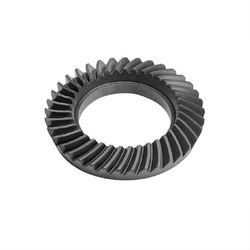
What is the purpose of a differential gear in an automobile?
A differential gear in an automobile serves several important purposes. Here’s a detailed explanation:
1. Differential Action:
The primary purpose of a differential gear is to allow the wheels of an automobile to rotate at different speeds while receiving power from the engine. This is necessary when the vehicle is taking a turn, as the wheels on the outer side of the turn need to cover a greater distance and rotate faster than the wheels on the inner side.
2. Smooth Cornering:
By enabling the wheels to rotate at different speeds during a turn, the differential allows for smooth and controlled cornering. It prevents the tires from scrubbing and dragging along the road surface, which could lead to excessive tire wear and poor handling. Instead, the differential ensures that each wheel can rotate freely at the appropriate speed, maintaining traction and stability.
3. Power Distribution:
The differential also plays a crucial role in distributing power from the engine to the wheels. In a rear-wheel-drive vehicle, the differential is located on the rear axle, and it splits the engine torque between the two rear wheels. In a front-wheel-drive vehicle, the differential is integrated into the transaxle, transferring power to the front wheels.
4. Traction Enhancement:
Another function of the differential is to improve traction. When one wheel encounters a low-traction surface, such as ice or gravel, the differential allows power to be redirected to the wheel with better grip. This helps maintain traction and prevents wheel spin, allowing the vehicle to move forward more effectively in challenging driving conditions.
5. Compensation for Uneven Surfaces:
When driving on uneven surfaces, such as rough terrain or potholes, each wheel may experience different levels of vertical movement. The differential gear compensates for these variations in wheel movement, allowing the wheels to maintain contact with the ground and providing a smoother ride.
6. Reduction of Stress and Wear:
The differential helps reduce stress and wear on drivetrain components. By allowing the wheels to rotate at different speeds, it helps distribute the load evenly across the drivetrain, minimizing strain on components such as axles, driveshafts, and gears.
In summary, the differential gear in an automobile enables smooth cornering, power distribution, traction enhancement, compensation for uneven surfaces, and reduction of stress and wear on drivetrain components. It plays a vital role in ensuring optimal performance, handling, and stability of the vehicle.
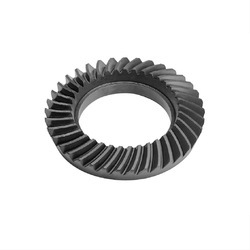
How does an automatic transmission differ from a manual transmission?
An automatic transmission and a manual transmission differ in several ways. Here’s a detailed explanation:
1. Gear Shifting:
In a manual transmission, the driver manually operates the clutch pedal and gearshift lever to engage and disengage gears and select the appropriate gear ratio. This requires coordination between the clutch, accelerator, and gearshift movements.
On the other hand, an automatic transmission shifts gears automatically without driver intervention. It uses a torque converter or a dual-clutch system to smoothly transition between gears based on factors such as vehicle speed, engine load, and throttle input. The driver only needs to select the driving mode (e.g., “Drive,” “Sport,” or “Economy”) and control the accelerator and brake pedals.
2. Clutch Operation:
In a manual transmission, the clutch pedal is used to engage or disengage the engine from the transmission. When changing gears, the driver depresses the clutch pedal, which temporarily disconnects the engine’s power from the transmission. This allows for smooth gear engagement and disengagement.
In an automatic transmission, there is no clutch pedal. Instead, it uses a torque converter or a dual-clutch system to transmit power from the engine to the transmission. These systems automatically manage the power transfer and eliminate the need for manual clutch operation.
3. Driver Involvement:
A manual transmission requires more driver involvement and skill. The driver must actively engage the clutch pedal, shift gears, and match engine RPMs to achieve smooth gear changes. This level of control can be preferred by enthusiasts who enjoy the engagement and control over the vehicle’s performance.
An automatic transmission offers a more relaxed driving experience as it shifts gears automatically. The driver can focus on steering, acceleration, and braking without the need to manually operate the clutch or shift gears. This convenience is especially beneficial in heavy traffic or during long-distance drives.
4. Fuel Efficiency:
In the past, manual transmissions were generally more fuel-efficient than automatic transmissions. This was because the driver had more control over gear selection and could optimize engine RPMs for better fuel economy. However, advancements in automatic transmission technology, such as the introduction of continuously variable transmissions (CVTs) and improved gearshift algorithms, have narrowed the fuel efficiency gap between manual and automatic transmissions.
Modern automatic transmissions often incorporate features like multiple gears, adaptive shift patterns, and torque converter lock-up for improved fuel efficiency. Some automatic transmissions even offer manual shift modes or paddle shifters, allowing the driver to manually select gears when desired.
5. Market Availability:
Manual transmissions are less common in certain regions, such as North America, where automatic transmissions dominate the market. Automatic transmissions are widely available and come as standard or optional equipment in most vehicles. Manual transmissions are more prevalent in certain markets, such as Europe, where they are preferred by a significant portion of drivers.
Overall, the main differences between automatic and manual transmissions lie in the gear-shifting mechanism, clutch operation, driver involvement, fuel efficiency, and market availability. The choice between the two depends on individual preferences, driving conditions, and the desired level of control and convenience.
“`

editor by CX 2024-04-04