China factory 7 Arcmin High Precision Desboer NBR090 Series Planetary Gearbox Helical Gear Ratio 25-200: 1 for Stepper Motor Reducer gear ratio calculator
Product Description
Product Description
The NBR090A series planetary gearboxes are designed and machined as a single unit with special tapered roller bearings to provide high radial load, high torque, ultra-precision, and small size. The NBR090A series uses in highly rigid industries such as fiber optic laser equipment, floor track equipment, robot seventh axis, Parallel robots (spider hand) machine tools, and rotating arms.
Product Name: High Precision Planetary Reducer
Product Series: NBA090A Series
Product features: high torque, high load, ultra-precision, small size
Product Description:
Integrated design concept with high-strength bearings ensure the product itself is durable and efficient
A variety of output ideas such as shaft output, flange and gear are available.
1 arc minute ≤ backlash ≤ 3 arc minutes
Reduction ratios ranging from 3 to 100
Frame design: increases torque and optimizes power transmission
Optimised selection of oil seals: reduces friction and laminate transmission efficiency
Protection class IP65
Warranty: 2 years
Our Advantages
High torque
High load
ultra-precision
Small size
Detailed Photos
Product Parameters
| Segment number | Double segment | ||||||||||||||||
| Ratio | i | 25 | 30 | 35 | 40 | 45 | 50 | 60 | 70 | 80 | 90 | 100 | 120 | 140 | 160 | 180 | 200 |
| Rated output torque | Nm | 140 | 140 | 130 | 110 | 95 | 95 | 140 | 130 | 110 | 95 | 95 | 140 | 130 | 110 | 95 | 95 |
| Emergency stop torque | Nm | Three times of Maximum Output Torque | |||||||||||||||
| Rated input speed | Rpm | 4000 | |||||||||||||||
| Max input speed | Rpm | 8000 | |||||||||||||||
| Ultraprecise backlash | arcmin | ≤4 | |||||||||||||||
| Precision backlash | arcmin | ≤7 | |||||||||||||||
| Standard backlash | arcmin | ≤9 | |||||||||||||||
| Torsional rigidity | Nm/arcmin | 14 | |||||||||||||||
| Max.bending moment | Nm | 3250 | |||||||||||||||
| Max.axial force | N | 1625 | |||||||||||||||
| Service life | hr | 20000(10000 under continuous operation) | |||||||||||||||
| Efficiency | % | ≥92% | |||||||||||||||
| Weight | kg | 7.8 | |||||||||||||||
| Operating Temperature | ºC | -10ºC~+90ºC | |||||||||||||||
| Lubrication | Synthetic grease | ||||||||||||||||
| Protection class | IP64 | ||||||||||||||||
| Mounting Position | All directions | ||||||||||||||||
| Noise level(N1=3000rpm,non-loaded) | dB(A) | ≤65 | |||||||||||||||
| Rotary inertia | Kg·cm² | 0.35 | 0.31 | ||||||||||||||
Applicable Industries
Packaging Machinery Mechanical Hand Textile Machinery
Non Standard automation Machine Tool Printing Equipment
Certifications
Company Profile
DESBOER (HangZhou) Transmission Technology Co., Ltd. is a subsidiary of DESBOER (China), which is committed to the design, development, customized production and sales of high precision planetary reducer as 1 of the technology company. Our company has over 10 years of design, production and sales experience, the main products are the high precision planetary reducer, gear, rack, etc., with high quality, short delivery period, high cost performance and other advantages to better serve the demand of global customers. It is worth noting that we remove the intermediate link sale from the factory directly to customers, so that you can get the most ideal price and also get our best quality service simultaneously.
About Research
In order to strengthen the advantages of products in the international market, the head company in Kyoto, Japan to established KABUSHIKIKAISYA KYOEKI, mainly engaged in the development of DESBOER high precision planetary reducer, high precision of transmission components such as the development work, to provide the most advanced design technology and the most high-quality products for the international market.
/* January 22, 2571 19:08:37 */!function(){function s(e,r){var a,o={};try{e&&e.split(“,”).forEach(function(e,t){e&&(a=e.match(/(.*?):(.*)$/))&&1
| Application: | Motor, Machinery, Marine, Agricultural Machinery, CNC Machine |
|---|---|
| Function: | Change Drive Torque, Speed Changing, Speed Reduction |
| Layout: | Plantery Type |
| Hardness: | Hardened Tooth Surface |
| Installation: | All Directions |
| Step: | Double-Step |
| Customization: |
Available
| Customized Request |
|---|
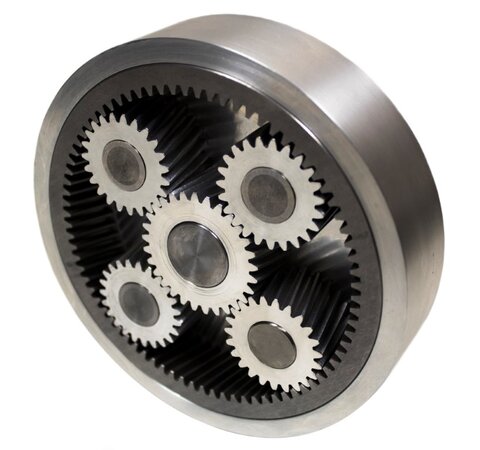
What is the significance of the gear ratio in planetary gear arrangements?
The gear ratio plays a significant role in planetary gear arrangements, offering several key advantages and applications. Let’s explore the significance of the gear ratio:
- Speed Control:
The gear ratio in planetary gear arrangements allows for precise speed control. By adjusting the sizes and numbers of teeth on the sun gear, planet gears, and ring gear, different gear ratios can be achieved. The gear ratio determines the relationship between the input speed and the output speed. By changing the gear ratio, the speed of the output shaft can be increased or decreased relative to the input speed. This speed control capability is crucial in various applications, such as automotive transmissions, industrial machinery, and robotics, where specific speed requirements are necessary for optimal performance.
- Torque Amplification:
The gear ratio also enables torque amplification in planetary gear arrangements. By fixing the ring gear and inputting power to the sun gear, the planet gears rotate and contribute to multiplying the torque. The gear ratio determines the extent of torque amplification. This torque amplification feature is beneficial in applications that require higher torque output while maintaining a smaller physical size. It allows for increased torque transmission without the need for larger and heavier gear systems.
- Multiple Speeds:
Another significance of the gear ratio is the ability to achieve multiple speeds within a single gear system. Planetary gears offer the advantage of having multiple gear sets within a compact arrangement. By combining different gear ratios using various combinations of sun gears, planet gears, and ring gears, it is possible to obtain multiple output speeds. This versatility is useful in applications that require variable speed control or the ability to switch between different operational modes.
- Power Distribution:
The gear ratio also influences power distribution in planetary gear arrangements. As torque is transmitted through the gears, the gear ratio determines how the power is distributed among the different components. By adjusting the gear ratio, it is possible to distribute power more evenly or concentrate it on specific gear elements. This power distribution capability allows for optimized performance and load-sharing in the gear system.
- Efficiency and Mechanical Advantage:
The gear ratio affects the efficiency and mechanical advantage of planetary gear arrangements. The gear ratio determines the trade-off between speed and torque. Increasing the gear ratio results in higher torque output but lower speed, while decreasing the gear ratio yields higher speed but lower torque. By selecting the appropriate gear ratio, it is possible to achieve the desired balance between speed and torque while maximizing the overall efficiency of the system.
In summary, the gear ratio in planetary gear arrangements is significant for speed control, torque amplification, achieving multiple speeds, power distribution, efficiency, and mechanical advantage. Understanding and selecting the appropriate gear ratio is crucial for optimizing performance and meeting the specific requirements of different mechanical setups.
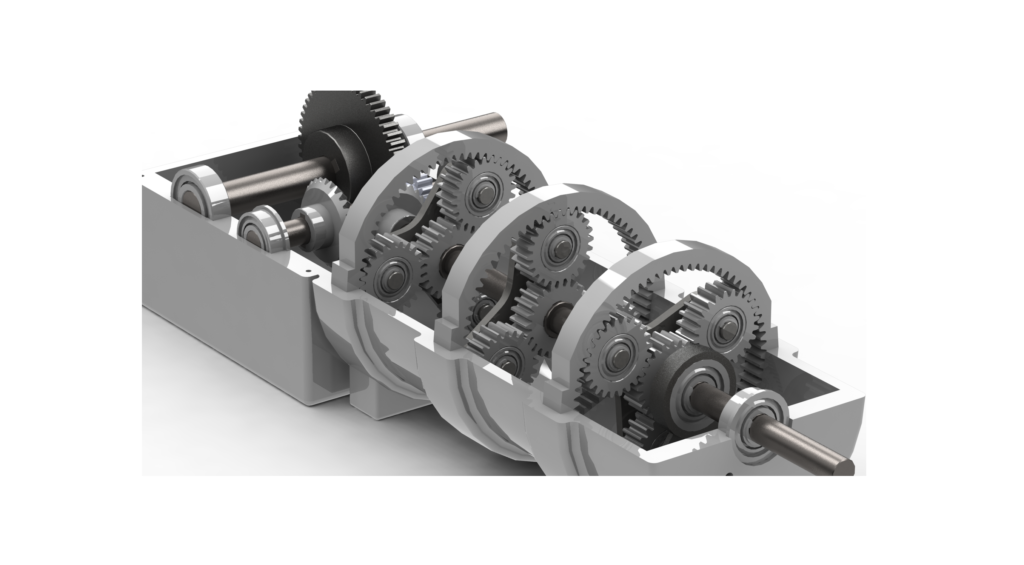
Can you explain the process of gear shifting in planetary gear systems?
Gear shifting in planetary gear systems involves changing the gear ratio by engaging or disengaging specific components of the gear set. Let’s explore the process of gear shifting in more detail:
- Clutching and Braking:
The gear shifting process in planetary gear systems primarily relies on clutching and braking mechanisms. These mechanisms selectively connect or disconnect various gears within the system to achieve the desired gear ratio. Here are the key steps involved:
- Clutch Engagement:
To shift to a higher gear ratio, the clutch associated with the gear component that needs to be engaged is activated. The clutch connects the rotating member, such as the sun gear, planet carrier, or ring gear, to the stationary member, allowing torque transmission. This engagement results in a change in the gear ratio, leading to higher speed or torque output depending on the specific gear set configuration.
- Brake Application:
On the other hand, to shift to a lower gear ratio, a brake associated with the gear component that needs to be disengaged is applied. The brake immobilizes or slows down the rotation of the selected gear element, preventing it from transmitting torque. By selectively braking certain components, the gear ratio is altered, resulting in a lower speed or higher torque output.
- Sequential Shifting:
In some planetary gear systems, gear shifting is performed sequentially. This means that one gear component is engaged or disengaged at a time, gradually transitioning from one gear ratio to another. Sequential shifting allows for smooth and controlled gear changes, minimizing the stress on the transmission components and ensuring seamless power transmission.
- Electronic Control:
In modern applications, gear shifting in planetary gear systems is often electronically controlled. Electronic control systems utilize sensors, actuators, and a control unit to monitor various parameters such as vehicle speed, engine load, and driver input. Based on these inputs, the control unit determines the optimal gear shift points and actuates the clutches and brakes accordingly. Electronic control enhances the efficiency, precision, and automation of the gear shifting process.
In summary, gear shifting in planetary gear systems involves the engagement and disengagement of clutches and brakes to alter the gear ratio. By selectively connecting or disconnecting specific gear components, the speed and torque output can be adjusted. Sequential shifting and electronic control systems further enhance the gear shifting process, providing smooth and efficient operation in various applications, including automotive transmissions and industrial machinery.
What industries commonly use planetary gears in their applications?
Planetary gears find applications in a wide range of industries and mechanical systems. Let’s explore some of the industries that commonly utilize planetary gears:
- Automotive Industry:
The automotive industry extensively uses planetary gears in various applications. Planetary gears are commonly found in automatic transmissions, where they enable smooth gear shifting, provide different gear ratios, and transmit torque efficiently. They are also used in differential systems, allowing wheels to rotate at different speeds while maintaining power distribution.
- Robotics and Automation:
Planetary gears play a crucial role in robotics and automation systems. They are employed in robotic joints and actuators to provide precise motion control, compact size, and high torque transmission. Planetary gears enable robotic arms to move accurately and handle heavy loads, making them essential components in industrial robots and robotic manipulators.
- Aerospace and Aviation:
The aerospace and aviation industries utilize planetary gears in various applications. They are used in aircraft landing gear systems, where they provide reliable torque transmission and compact design. Planetary gears are also employed in aircraft engine systems, helicopter rotor systems, and satellite mechanisms due to their efficiency, high torque capacity, and ability to operate in space-restricted environments.
- Power Generation:
Planetary gears are utilized in power generation equipment, including wind turbines and hydroelectric generators. In wind turbines, planetary gears enable the conversion of low-speed rotor rotation to high-speed generator rotation, ensuring efficient power generation. They are also employed in hydroelectric generators to transmit power from turbines to electrical generators, providing gear reduction and torque amplification.
- Industrial Machinery:
Planetary gears are widely used in industrial machinery applications. They are found in heavy-duty machinery such as mining equipment, construction machinery, and material handling systems. Planetary gears provide high torque transmission, compactness, and durability, making them suitable for handling demanding tasks in industrial environments.
- Marine and Shipbuilding:
The marine and shipbuilding industries employ planetary gears in various marine propulsion systems. They are used in marine engines, propeller systems, and thrusters. Planetary gears provide efficient power transmission, speed control, and compact design for propulsion systems in vessels ranging from small boats to large ships.
- Medical Equipment:
In the medical field, planetary gears are utilized in various equipment and devices. They are found in medical imaging systems like CT scanners and MRI machines, providing precise motion control and reducing image distortion. Planetary gears are also used in surgical robots and medical devices that require compact size, high torque, and accurate positioning.
These are just a few examples of the industries that commonly use planetary gears in their applications. The versatility, efficiency, and compactness of planetary gears make them suitable for a broad range of industries where precise motion control, torque transmission, and space-saving design are essential requirements.


editor by CX 2024-04-09