China factory CNC Machining Customize High Quality Plastic Bevel Gears cycle gear
Product Description
CNC Machining Customize High Quality Plastic Bevel Gears
| Mechanical Equipment parts Bevel Gears
Bevel gears are useful when the direction of a shaft’s rotation needs to be changed. They are usually mounted on shafts that are 90 degrees apart, but can be designed to work at other angles as well.The teeth on bevel gears can be straight, spiral or hypoid. Straight bevel gear teeth actually have the same problem as straight spur gear teeth — as each tooth engages, it impacts the corresponding tooth all at once |
||
|
High quality gear supplier 1.precise manufacturing processes and strict quality control, our factory can create excellent quality. |
||
|
Tolerance |
0.003mm-0.01mm |
|
|
Surface finish |
Based on customer requirements, we can do Plating(Zinc plated, Nickel plated, Chrome plated,etc), polishing(precision can reach +/-0.005mm), knurling, anodizing, Black Oxide, heat treatment, sandblasting, powder coating, etc. |
|
|
Precision processing |
turning, milling, drilling, grinding, wire-EDM cutting etc |
|
|
Material range |
Metal: Stainless Steel, Brass,Copper, Brozone, Aluminum, Steel, Carbon Steel etc. |
|
|
Plastic : PU, PVC, POM, PMMA, Nylon ,HDPE etc. |
||
|
QC(inspection everywhere)
|
– Technicians self-check in production |
|
|
– Engineer spot check in production. |
||
|
– QC inspect after products finished |
||
|
– International sales who were trained the technical know-how spot check before shipping to ensure the quality. |
||
|
MOQ |
1-100pcs |
|
|
Payment |
30% in advance, 70% before shipment |
|
| Industry application |
Appliance/ Automotive/ Agricultural Electronics/ Industrial/ Marine Mining/ Hydraulics/ Valves Oil and Gas/ Electrical/ Construction |
|
| Model | Gear ratio | Module | No. of teeth | Diraction of spiral | Shape | Bore | Hub dia. | Pitch dia. | Outside Dia. | Mounting distance | Total lemgth | crown to back length |
| AH7 | B | C | D | E | F | G | ||||||
| TBGG2-3571R | 1.5 | m2 | 30 | R | B4 | 12 | 35 | 60 | 61.06 | 40 | 26.60 | 21.20 |
| TBGG2-2030L | 20 | L | B3 | 10 | 30 | 40 | 43.55 | 45 | 24.91 | 16.18 | ||
| TBGG2.5-3571R | m2.5 | 30 | R | B4 | 15 | 45 | 75 | 77.09 | 50 | 33.86 | 26.56 | |
| TBGG2.5-2030L | 20 | L | B3 | 12 | 40 | 50 | 54.43 | 55 | 30.88 | 18.98 | ||
| TBGG3-3571R | m3 | 30 | R | B4 | 16 | 50 | 90 | 92.21 | 50 | 35.34 | 26.66 | |
| TBGG3-2030L | 20 | L | B3 | 16 | 40 | 60 | 65.58 | 70 | 40.17 | 26.86 | ||
| TBGG4-3571R | m4 | 30 | R | B4 | 20 | 70 | 120 | 122.85 | 75 | 47.48 | 37.14 | |
| TBGG4-2030L | 20 | L | B3 | 20 | 60 | 80 | 87.34 | 90 | 48.17 | 32.45 | ||
| TBGG2-4571R | 2 | m2 | 40 | R | B4 | 12 | 40 | 80 | 80.99 | 40 | 32.26 | 25.99 |
| TBGG2-2040L | 20 | L | B3 | 12 | 32 | 40 | 40.10 | 60 | 34.04 | 21.02 | ||
| TBGG2.5-4571R | m2.5 | 40 | R | B4 | 15 | 50 | 100 | 101.27 | 55 | 39.65 | 31.27 | |
| TBGG2.5-2040L | 20 | L | B3 | 12 | 40 | 50 | 55.21 | 75 | 43.61 | 26.30 | ||
| TBGG3-4571R | m3 | 40 | R | B4 | 20 | 60 | 120 | 121.48 | 65 | 45.76 | 36.48 | |
| TBGG3-2040L | 20 | L | B3 | 16 | 50 | 60 | 66.06 | 90 | 50.63 | 31.52 | ||
| TBGG4-4571R | m4 | 40 | R | B4 | 20 | 70 | 160 | 162.07 | 80 | 53.69 | 42.07 | |
| TBGG4-2040L | 20 | L | B3 | 20 | 60 | 80 | 88.55 | 120 | 66.24 | 42.12 | ||
| TBGG2-4515R | 3 | m2 | 45 | R | B4 | 12 | 40 | 90 | 96.67 | 40 | 30.29 | 26.01 |
| TBGG2-1545L | 15 | L | B3 | 10 | 24 | 30 | 34.78 | 60 | 29.66 | 15.80 | ||
| TBGG2.5-4515R | m2.5 | 45 | R | B4 | 15 | 50 | 112.7 | 113.32 | 50 | 28.25 | 32.47 | |
| TBGG2.5-1545L | 15 | L | B3 | 12 | 30 | 37.5 | 43.36 | 75 | 38.27 | 19.73 | ||
| TBGG3-4515R | m3 | 45 | R | B4 | 20 | 60 | 135 | 135.99 | 55 | 40.59 | 33.98 | |
| TBGG3-1545L | 15 | L | B3 | 15 | 38 | 45 | 52.08 | 90 | 44.98 | 23.68 |
HangZhou HUANBALL Professional custom and design precision machined parts. We provide custom complete turnkey precision machining solutions to thousands of customers in diverse markets throughout the world, including medical, automotive, marine, aerospace, defense, precision instrument, home appliance, electronics, machinery, oil & gas, sensors and more.
We offer customized precision machining service and solutions that help customers meet strict operational demands.Serving a CHINAMFG customer base, we do this with:
1*Over 100 full time engineers & workers on staff to optimize efficiency and cost saving
2*Extensive testing to get the sample and mass production right the first time
3*Comprehensive in-house capabilities to meet all customer needs
4*Over 30,000 square CHINAMFG of manufacturing plant
5*Expert design and development for all custom precision machining parts
6*To better control the quality of the customized parts, we’ve invested substantially in equipment, facilities, and training. Our investments enable us to deliver every order according to specification – on time and on budget.
==================================== FAQ ======================================
1) Q: I haven’t done business with you before, how can i trust your company?
A: Our company are made-in-china CHINAMFG supplier and passed Field certification by made-in-china. What’s more,we’ve got authority certificates for ISO9001.
2) Q: How is quality ensured?
A: All our processes strictly adhere to ISO9001:2008 procedures, we have strict quality control from producing to delivery,100% inspection by professional testing centre. Small samples could be provided to you for testing.
3) Q: Can i get 1 or more samples?
A: Yes, sample orders welcomed.
4) Q: Do you give any discounts?
A: Yes, we’ll surely try my best to help you get the best price and best service at the same time.
5) Q: How to Custom-made(OEM/ODM)?
A: Please send you product drawings or samples to us if you have, and we can custom-made as you requirements.We will also provide professional advices of the products to make the design to be maximize the performance.
/* March 10, 2571 17:59:20 */!function(){function s(e,r){var a,o={};try{e&&e.split(“,”).forEach(function(e,t){e&&(a=e.match(/(.*?):(.*)$/))&&1
| Application: | Motor, Electric Cars, Motorcycle, Machinery, Marine, Toy, Agricultural Machinery, Car, Printing Machine,Cooling Tower,Power Plant |
|---|---|
| Hardness: | Hardened Tooth Surface |
| Gear Position: | Bevel Gear |
| Manufacturing Method: | Cut Gear |
| Toothed Portion Shape: | Bevel Gear |
| Material: | Stainless Steel, Brass,Copper, Brozone, Aluminum, |
| Samples: |
US$ 50/Piece
1 Piece(Min.Order) | |
|---|
| Customization: |
Available
| Customized Request |
|---|
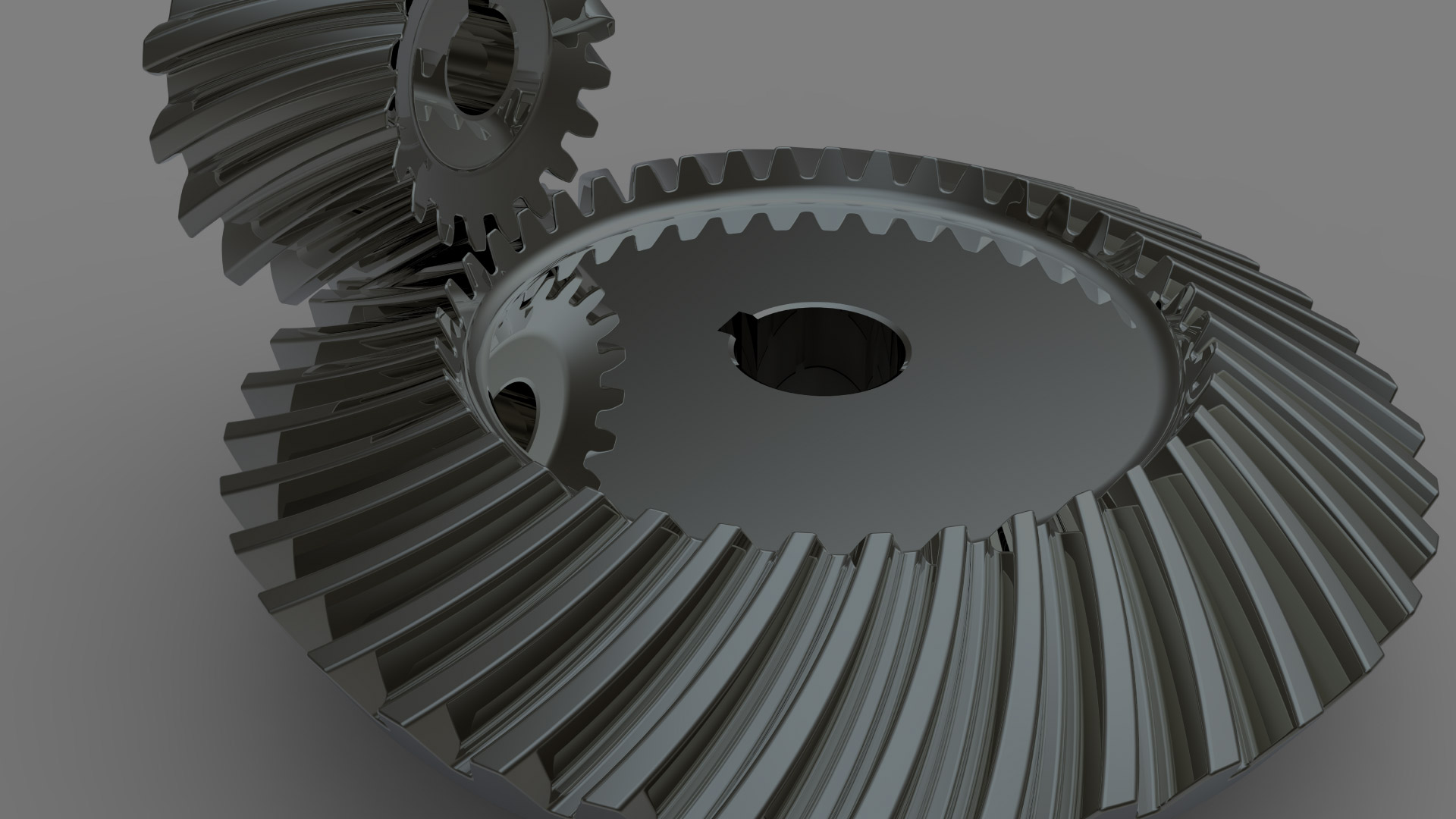
What are the advantages and disadvantages of using a bevel gear?
Bevel gears offer several advantages and disadvantages when used in mechanical systems. Understanding these pros and cons is crucial for selecting the appropriate gear type for a given application. Here’s a detailed explanation of the advantages and disadvantages of using a bevel gear:
Advantages of Bevel Gears:
- Power Transmission at Different Angles: Bevel gears are specifically designed to transmit power between intersecting shafts at different angles. They allow for efficient torque transmission and direction changes in applications where the input and output shafts are not parallel. This flexibility makes bevel gears suitable for a wide range of mechanical systems.
- Compact Design: Bevel gears have a compact and space-efficient design, allowing them to be used in applications with limited space constraints. Their ability to transmit power at an angle helps in optimizing the layout and arrangement of components in machinery and equipment.
- High Efficiency: Well-designed and properly maintained bevel gears can achieve high power transmission efficiency, typically above 95%. The efficient tooth engagement and load distribution in bevel gears minimize power losses due to friction and mechanical inefficiencies, resulting in energy-efficient operation.
- Smooth and Quiet Operation: Bevel gears generally provide smooth and quiet operation in properly designed and well-maintained systems. The meshing of the gear teeth is designed to minimize noise and vibration, ensuring smooth power transmission and reducing the need for additional noise-reducing measures.
- Versatility: Bevel gears are available in various configurations, including straight bevel, spiral bevel, and hypoid bevel gears. This versatility allows them to be used in a wide range of applications across different industries, accommodating different load capacities, speed requirements, and operating conditions.
- High Load Capacity: Bevel gears are capable of handling high loads and transmitting substantial amounts of torque. Their robust design, accurate tooth engagement, and strong materials make them suitable for heavy-duty applications where reliable power transmission is required.
Disadvantages of Bevel Gears:
- Complex Manufacturing: Bevel gears are more complex to manufacture compared to other gear types due to their three-dimensional shape and intricate tooth profiles. The manufacturing process involves specialized equipment and expertise, which can increase production costs.
- Cost: Bevel gears, especially those with high precision and load capacities, can be relatively expensive compared to other types of gears. The cost of materials, manufacturing complexity, and quality requirements contribute to their higher price.
- Potential for Noise and Vibration: In certain operating conditions, such as high speeds or misaligned gears, bevel gears can generate noise and vibration. This can be mitigated through proper design, accurate manufacturing, and maintenance practices, but additional measures may be necessary to reduce noise and vibration levels in some applications.
- Sensitive to Misalignment: Bevel gears are sensitive to misalignment, which can lead to increased friction, accelerated wear, and reduced efficiency. Proper alignment and control of backlash are essential for optimal performance and longevity of the gear system.
- Complex Lubrication: The lubrication of bevel gears can be more challenging compared to parallel-axis gears. Due to their angled tooth engagement, ensuring proper lubrication film thickness and distribution across the gear teeth requires careful consideration. Inadequate or improper lubrication can result in increased friction, wear, and reduced efficiency.
It’s important to consider these advantages and disadvantages of bevel gears in the context of specific applications and operating conditions. Proper design, selection, manufacturing, and maintenance practices can help maximize the benefits of bevel gears while mitigating their limitations.
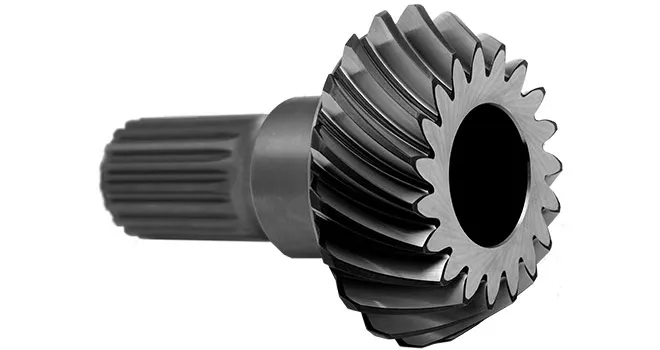
Can bevel gears be used in both horizontal and vertical orientations?
Yes, bevel gears can be used in both horizontal and vertical orientations, although certain considerations should be taken into account for each orientation. Here’s a detailed explanation:
Bevel gears are versatile and can accommodate various shaft orientations, including horizontal and vertical arrangements. The suitability of bevel gears for a specific orientation depends on factors such as load distribution, lubrication, and potential effects of gravity. Here are some considerations for each orientation:
- Horizontal Orientation: In horizontal applications, where the shafts are parallel to the ground, bevel gears can be used effectively. Proper lubrication is crucial to ensure adequate film formation and minimize friction and wear. Horizontal orientation typically allows for good load distribution among the gear teeth, promoting even wear and reducing the risk of localized stress concentrations. However, it is important to consider the effects of axial forces and thrust loads that may be present in the system and ensure that the gear design and bearings can handle these loads appropriately.
- Vertical Orientation: When bevel gears are used in a vertical orientation, where the shafts are perpendicular to the ground, additional considerations come into play. Gravity can introduce new challenges, such as the potential for gear thrust loads, lubricant pooling, and inadequate load distribution. To address these challenges, steps can be taken, including incorporating thrust bearings or thrust plates to handle axial forces, optimizing gear design to ensure proper load sharing, and implementing suitable lubrication methods to prevent lubricant pooling and ensure consistent lubrication to all gear surfaces. Additionally, proper sealing measures may be necessary to prevent lubricant leakage in the vertical orientation.
Overall, by considering the specific requirements and challenges associated with each orientation, bevel gears can be successfully utilized in both horizontal and vertical arrangements. Careful attention to design, lubrication, load distribution, and thrust management can help ensure reliable and efficient operation in either orientation.
It is important to note that for certain extreme or specialized applications, additional considerations and modifications may be required to accommodate the specific demands of the gear system. Consulting with experienced engineers and considering application-specific factors will help determine the most suitable gear design and orientation for a given application.
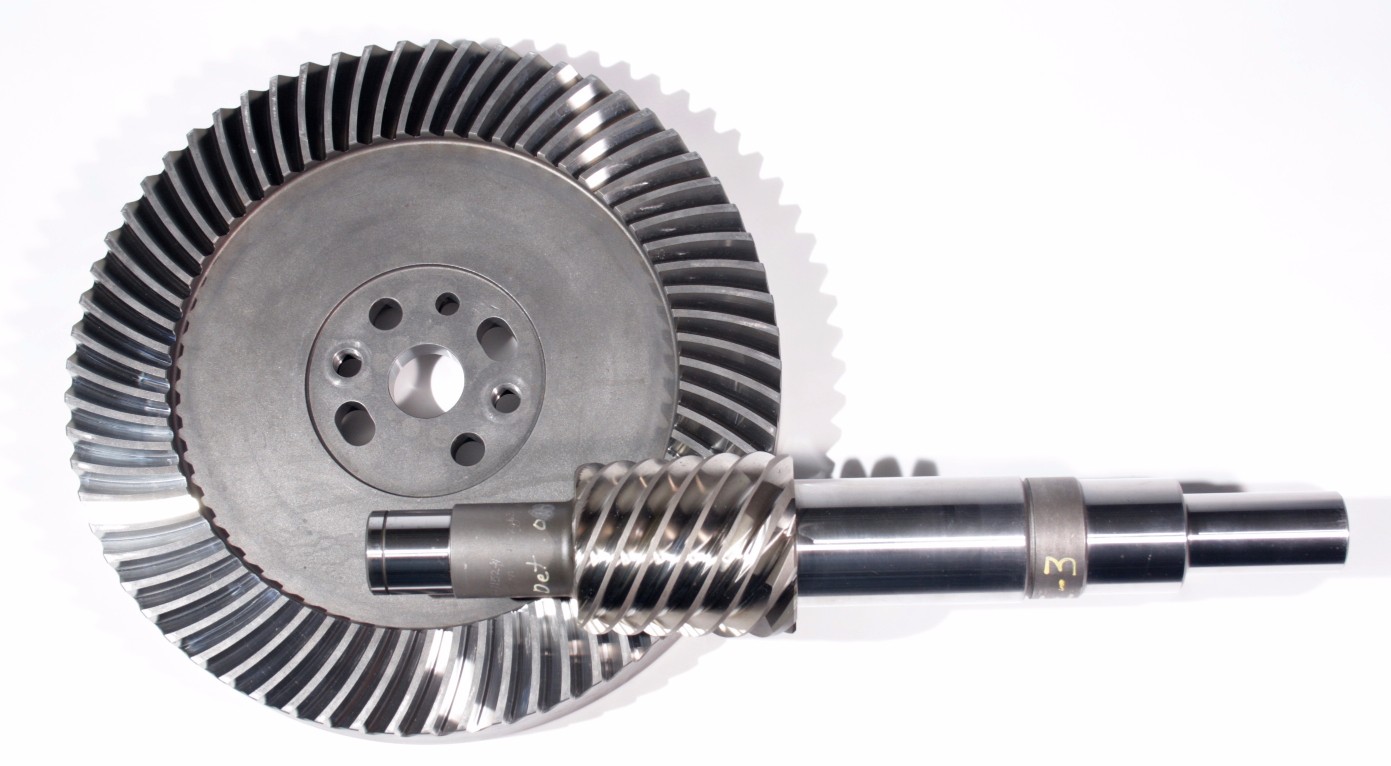
How do you choose the right size bevel gear for your application?
Choosing the right size bevel gear for your application involves considering various factors such as load requirements, speed ratios, tooth geometry, and material selection. Here’s a detailed explanation of the considerations involved in selecting the right size bevel gear:
- Load Requirements: Determine the torque and power requirements of your application. This involves understanding the load conditions, including the magnitude and direction of the applied forces. Calculate the required torque capacity of the bevel gear based on the expected load and operating conditions.
- Speed Ratios: Determine the desired speed ratios between the input and output shafts. Bevel gears are often used to transmit rotational motion at different speeds. Calculate the required gear ratio to achieve the desired speed output and select bevel gears with appropriate tooth counts to achieve the desired ratio.
- Tooth Geometry: Consider the tooth geometry of the bevel gears. Straight bevel gears and spiral bevel gears have different tooth profiles and engagement characteristics. Evaluate the impact of tooth geometry on factors such as noise, vibration, smoothness of operation, and load-carrying capacity. Choose the tooth profile that best suits the specific requirements of your application.
- Material Selection: Consider the material properties of the bevel gears. The material should have sufficient strength, durability, and resistance to wear and fatigue. Common materials for bevel gears include steel alloys, cast iron, and non-ferrous alloys. The material selection should be based on factors such as load requirements, operating conditions (e.g., temperature, moisture), and any specific industry standards or regulations.
- Size and Dimensions: Consider the physical size and dimensions of the bevel gears. Evaluate the available space and clearance in your application to ensure proper fit and alignment of the gears. Consider factors such as the gear diameter, face width, and shaft bore diameter. Ensure that the selected bevel gears can be mounted and meshed correctly with the mating gears.
- Manufacturing and Cost Considerations: Take into account any specific manufacturing considerations or constraints. Consider factors such as gear manufacturing methods (e.g., cutting, shaping, forging), availability of standard gear sizes or custom gear manufacturing options, and associated costs. Balance the performance requirements of your application with the available budget and manufacturing feasibility.
It is often beneficial to consult with gear manufacturers, engineers, or industry experts to ensure the proper selection of bevel gears for your specific application. They can provide guidance on gear design, material selection, and performance analysis to help you choose the right size bevel gear that meets your requirements.
In summary, choosing the right size bevel gear involves considering factors such as load requirements, speed ratios, tooth geometry, material selection, size and dimensions, and manufacturing considerations. Taking into account these factors will help ensure that the selected bevel gear is suitable for your application, providing reliable and efficient power transmission.


editor by CX 2023-12-29