China factory High Precision Cylindrical Herringbone Gear Double Helical Gear with Best Sales
Product Description
Product Description
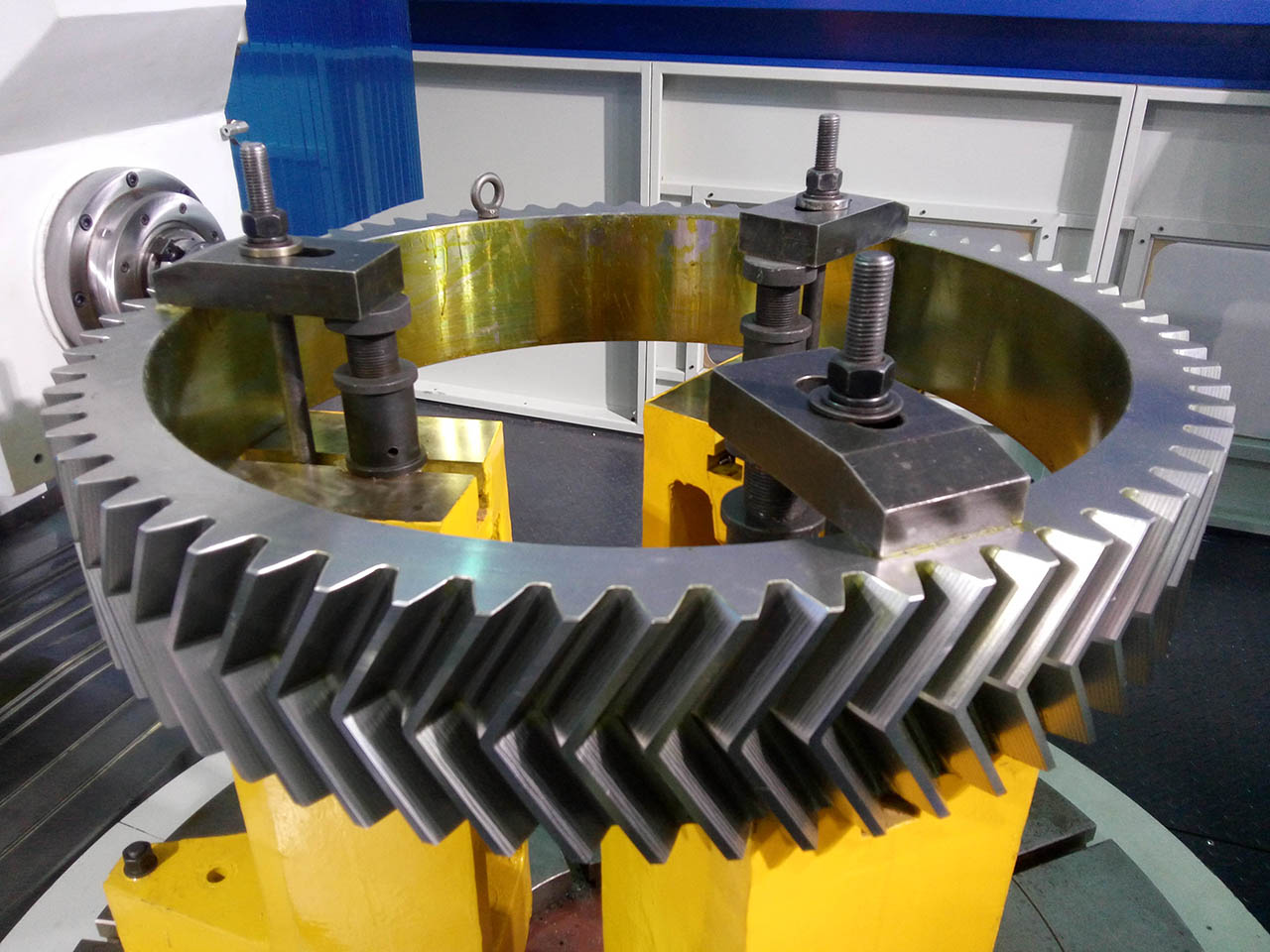
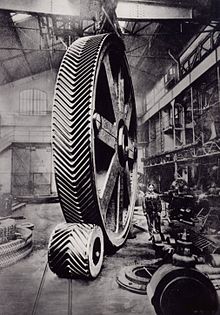
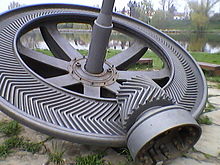
A herringbone gear is a specific type of double helical gear. Each helical groove of this gear looks like the letter V, and many together form a herringbone pattern.
Kingrail Parts can produce all kinds of herringbone gear for mining machinery, mills, kilns and other equipment.
Specifications:
|
Material |
Carbon steel,Alloy steel |
||
|
Structure |
Forging,casting |
||
|
Type of gear |
Herringbone gear |
||
|
Heat treatment |
Quenching and tempering |
||
|
Process |
Forging, rough machining, QT, finish machining |
||
|
Main equipments |
Hobbing,CNC machine |
||
|
Module |
Up to 200 |
||
|
Precision of gear |
Grinding ISO Grade 5-7 & Hobbing ISO Grade 8-9 |
||
|
Inspection |
Raw material inspection, UT,physical property test,dimension inspect |
||
Kingrail Parts can customize herringbone gear according to customer’s specifications and requirements
Manufacturing process:
Rraw matrial — Forging testing– Turning — Drilling — Heat Treatment — Milling– Grinding — Shaping and hobbing Process — Packing — Shipping
After Sales Service
1. OEM and customized service.
2. Full machining, primer coating, surface treatment.
3. Complete material testing process.
4. Quality control
Contact us
If you have any questions, pls feel free to contact us
/* March 10, 2571 17:59:20 */!function(){function s(e,r){var a,o={};try{e&&e.split(“,”).forEach(function(e,t){e&&(a=e.match(/(.*?):(.*)$/))&&1
| Application: | Motor, Electric Cars, Motorcycle, Machinery, Marine, Toy, Agricultural Machinery, Car |
|---|---|
| Hardness: | Hardened Tooth Surface |
| Gear Position: | External Gear |
| Customization: |
Available
| Customized Request |
|---|
.shipping-cost-tm .tm-status-off{background: none;padding:0;color: #1470cc}
|
Shipping Cost:
Estimated freight per unit. |
about shipping cost and estimated delivery time. |
|---|
| Payment Method: |
|
|---|---|
|
Initial Payment Full Payment |
| Currency: | US$ |
|---|
| Return&refunds: | You can apply for a refund up to 30 days after receipt of the products. |
|---|
What is the lifespan of a typical herringbone gear?
The lifespan of a typical herringbone gear can vary depending on various factors such as operating conditions, load requirements, material quality, maintenance practices, and the specific application. While it is challenging to provide an exact lifespan, here’s a detailed explanation of factors that can influence the lifespan of a herringbone gear:
- Material Quality: The choice of material for herringbone gears greatly affects their lifespan. High-quality materials with excellent mechanical properties, such as alloy steels or through-hardened steels, are commonly used for herringbone gears. These materials offer good wear resistance, high strength, and improved durability, contributing to a longer gear lifespan.
- Load and Torque: The magnitude and type of load applied to herringbone gears impact their lifespan. Higher loads and torque levels can accelerate wear and fatigue, shortening the gear lifespan. Properly selecting herringbone gears with an appropriate torque capacity for the specific application is essential to ensure optimal gear performance and longevity.
- Operating Conditions: The operating conditions, such as temperature, speed, lubrication, and environmental factors, play a significant role in determining the gear lifespan. Adequate lubrication with the right type and amount of lubricant helps reduce friction, wear, and heat generation, extending the gear lifespan. Harsh operating conditions, such as high temperatures or corrosive environments, can accelerate wear and decrease the lifespan of herringbone gears.
- Maintenance Practices: Regular maintenance and inspection procedures are crucial for maximizing the lifespan of herringbone gears. Scheduled maintenance activities, including lubricant replacement, gear tooth inspection, and alignment checks, help identify and address any potential issues before they can cause significant damage. Timely maintenance and prompt resolution of detected problems contribute to extending the gear lifespan.
- System Design: The overall system design, including factors such as gear alignment, stiffness, and load distribution, can impact the gear lifespan. Proper gear alignment ensures even load distribution and reduces unnecessary stress on the gear teeth, enhancing their durability. A well-designed gearbox with adequate housing support, shafts, and bearings contributes to a longer gear lifespan by minimizing vibrations, deflection, and misalignment.
Considering the above factors, herringbone gears are known for their durability and ability to handle high loads. With proper material selection, suitable operating conditions, regular maintenance, and a well-designed system, herringbone gears can have a long lifespan. However, it is important to note that the lifespan of a herringbone gear is highly dependent on the specific application and operating conditions, and it may vary from one situation to another.
What lubrication is required for herringbone gears?
Proper lubrication is essential for the smooth and efficient operation of herringbone gears. The lubricant used in herringbone gear systems plays a crucial role in reducing friction, minimizing wear, dissipating heat, and protecting the gear surfaces. Here’s a detailed explanation of the lubrication requirements for herringbone gears:
- Lubricant Selection: When selecting a lubricant for herringbone gears, it is important to consider factors such as load, speed, operating temperature, and environmental conditions. The lubricant should have suitable viscosity and additives to provide adequate film thickness and maintain lubrication under the anticipated operating conditions. Commonly used lubricants for herringbone gears include mineral oils, synthetic oils, and specialty lubricants formulated for gear applications.
- Viscosity: The viscosity of the lubricant is crucial for ensuring proper lubrication and film formation between the gear teeth. The lubricant should have sufficient viscosity to create an effective lubricating film that separates the gear surfaces and reduces friction. It should be able to maintain this film under the operating conditions, ensuring smooth gear engagement and minimizing wear. The appropriate viscosity grade is typically specified by the gear system manufacturer based on the gear design, load, and speed.
- Lubricant Application: The lubricant should be applied to the gear system in the appropriate manner to ensure uniform coverage and distribution. In most cases, herringbone gears are lubricated by immersion or splash lubrication, where the gears partially or fully submerge in the lubricant or have the lubricant splashed onto their surfaces. The lubricant should be directed towards the gear meshing area to ensure proper lubrication of the gear teeth and contact surfaces.
- Lubricant Maintenance: Regular lubricant maintenance is essential to ensure the continued performance and longevity of herringbone gears. This includes monitoring the lubricant condition, checking for contamination, and replenishing or replacing the lubricant as necessary. Over time, the lubricant may degrade, become contaminated with particles or moisture, or lose its effectiveness. Regular inspections and lubricant analysis can help identify any issues and determine the appropriate maintenance intervals for lubricant replacement or replenishment.
- Sealing and Contamination Prevention: Proper sealing of the gear housing or enclosure is important to prevent the ingress of contaminants, such as dust, dirt, or moisture, into the gear system. Contaminants can degrade the lubricant and lead to increased wear and damage to the gear surfaces. Seals, gaskets, or other appropriate sealing mechanisms should be employed to minimize the risk of contamination and maintain the integrity of the lubricant.
It is important to consult the gear system manufacturer’s recommendations and specifications regarding lubrication requirements. The manufacturer may provide specific guidelines regarding lubricant type, viscosity, application methods, and maintenance procedures based on the gear design and intended operating conditions. Adhering to these guidelines will help ensure optimal lubrication and maximize the performance and service life of herringbone gears.
What are the applications of herringbone gears?
Herringbone gears, also known as double helical gears, find applications in various industries due to their unique design and advantages. Here’s a detailed explanation of the applications of herringbone gears:
- Power Transmission Systems: Herringbone gears are commonly used in power transmission systems that require efficient torque transfer and smooth operation. They are employed in gearboxes, drivetrains, and speed reducers where high torque and bidirectional power transmission are critical.
- Heavy Machinery: Herringbone gears are found in heavy machinery such as construction equipment, mining machinery, and industrial machinery. These gears can handle large loads and provide reliable torque transmission, making them suitable for applications that involve heavy-duty operations.
- Oil and Gas Industry: The oil and gas industry extensively uses herringbone gears in equipment like pumps, compressors, and turbines. These gears are capable of handling high torque requirements and provide reliable performance in demanding environments.
- Marine Propulsion Systems: Herringbone gears are utilized in marine propulsion systems, including ship propulsion drives and propeller shaft arrangements. Their ability to transmit high torque efficiently and smoothly makes them ideal for marine applications.
- High-Speed Gearboxes: Herringbone gears are employed in high-speed gearboxes where torque is transmitted at high rotational speeds. They are used in applications such as wind turbine gearboxes, aerospace systems, and high-performance automotive transmissions.
- Metalworking Machinery: Herringbone gears are utilized in metalworking machinery, such as milling machines, lathes, and gear cutting machines. These gears provide precise and reliable power transmission, enabling the machinery to perform various machining operations with accuracy.
- Railway Systems: Herringbone gears find applications in railway systems, particularly in locomotives and rolling stock. They facilitate efficient power transfer and contribute to smooth and reliable train operation.
- Printing Presses: Herringbone gears are used in printing presses to transmit power between different components of the press. Their ability to minimize vibrations and noise is advantageous in printing applications that require precision and high-quality printing results.
- Steel Mills: Herringbone gears are employed in steel mills for various applications, including rolling mills, heavy-duty cranes, and gear couplings. These gears withstand the demanding conditions of steel manufacturing, such as high loads, vibrations, and harsh environments.
These are just a few examples of the applications of herringbone gears. Their unique tooth design, load-carrying capacity, bidirectional power transmission capability, and smooth operation make them suitable for a wide range of industries and applications that require efficient and reliable torque transmission.


editor by CX 2023-12-25