China factory Machinery Part and Custom Processing CNC Machining Transmission Gear Shaft supplier
Product Description
| Hobbing | Milling | Tooth Grinding | |
| Max O.D. | 1250mm | 2000mm | 2000mm |
| Min I.D. | 20mm | 50mm | 20mm |
| Max Face Width | 500mm | 500mm | 1480mm |
| Max DP | DP 1 | DP 1 | DP 0.5 |
| Max Module | 26mm | 26mm | 45mm |
| DIN Level | DIN Class 6 | DIN Class 6 | DIN Class 4 |
| Tooth Finish | Ra 3.2 | Ra 3.2 | Ra 0.6 |
| Max Helix Angle | ±45° | ±45° | ±45° |
1. Produce according to with ISO, GB, DIN, standard.
2. OEM or according to customer’s drawing.
3. Produce process are forging, hobbing, (rough, final)turning, milling, bore, chamfering, heat treatment, grinding, etc
4. Quality control in every process.
5. Lead time: 70-80 days for batch order.
6. Package with plywood case.
ZheZheJiang nlead Precision Co., Ltd. which focuses on CNC machining, including milling, turning, auto-lathe turning,holing,
grinding, heat treatment from raw materials of bars, tube, extruded profiles, blanks of cold forging & hot forging, aluminum
die casting.
We provide one-stop service, from professional design analysis, to free quote, fast prototype, IATF16949 & ISO14001 standard
manufacturing, to safe shipping and great after-sales services.During 16 years,
we have win lots of trust in the global market, most of them come from North America and Europe. Now you may have
steady customers,and hope you can keep us in the archives to get more market news.
Sunlead produce all kinds of machining parts according to customer’s drawing, we can produces stainless steel Turned parts,
carbon steel Turned parts, aluminum turned parts,brass & copper turned parts. Please feel free to send inquiry to us,
and our professional sales manager will get back to you ASAP!
Our certificate
Our partners
Sample service
We provide free sample for confirmation and customer bears the freight charges
OEM service
Having our own factory and professional technicians,we welcome OEM orders as well.We can design and produce the specific product you need according to your detail information
After-sale Service
Our enthusiastic and friendly customer service representatives are ready to assist with any questions or problems
/* January 22, 2571 19:08:37 */!function(){function s(e,r){var a,o={};try{e&&e.split(“,”).forEach(function(e,t){e&&(a=e.match(/(.*?):(.*)$/))&&1
| Certification: | CE, ISO |
|---|---|
| Color: | Customized |
| Customized: | Non-Customized |
| Customization: |
Available
| Customized Request |
|---|
.shipping-cost-tm .tm-status-off{background: none;padding:0;color: #1470cc}
|
Shipping Cost:
Estimated freight per unit. |
about shipping cost and estimated delivery time. |
|---|
| Payment Method: |
|
|---|---|
|
Initial Payment Full Payment |
| Currency: | US$ |
|---|
| Return&refunds: | You can apply for a refund up to 30 days after receipt of the products. |
|---|
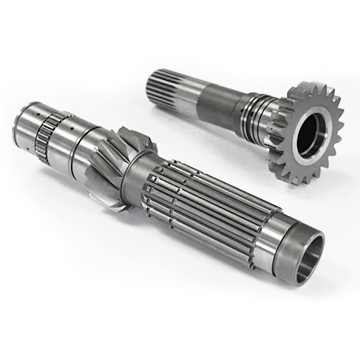
How do gear shafts handle variations in load and stress conditions?
Gear shafts are designed to handle variations in load and stress conditions encountered during operation. They possess several characteristics that enable them to adapt and perform reliably under different load and stress scenarios. Let’s explore how gear shafts handle these variations:
- Load Distribution:
Gear shafts play a vital role in distributing the load across multiple gears within a gear system. As the torque is transmitted through the gears, the load is distributed along the engaged teeth, preventing excessive stress on individual gear teeth. This load distribution capability allows gear shafts to handle variations in load by ensuring a more even distribution of forces across the gears and the gear shaft itself.
- Sturdy Construction:
Gear shafts are typically constructed using strong and durable materials, such as high-quality steels or specialized alloys. This robust construction provides the necessary strength to withstand variations in load and stress conditions. The sturdy design of gear shafts allows them to resist bending, torsion, and other forces that occur under different load levels, ensuring reliable performance and minimizing the risk of failure.
- Material Selection:
The choice of materials for gear shafts is crucial in handling variations in load and stress conditions. Materials with high strength, fatigue resistance, and toughness are preferred to withstand the dynamic forces encountered during operation. Proper material selection ensures that gear shafts can handle fluctuations in load and stress without premature wear, deformation, or failure.
- Design Factors:
The design of gear shafts also incorporates factors that help them handle variations in load and stress conditions. Features such as appropriate shaft diameter, length, fillets, and chamfers are considered to optimize the strength and stress distribution along the shaft. Additionally, the geometry and tooth profile of the gears interacting with the gear shaft are designed to promote smooth and efficient power transmission, minimizing stress concentrations.
- Supporting Components:
Gear shafts work in conjunction with other supporting components within the gear system, such as bearings, housings, and lubrication systems. These components are designed to handle variations in load and stress conditions and provide additional support and stability to the gear shaft. Properly selected and maintained bearings and lubrication systems help reduce friction, dissipate heat, and ensure smooth operation, contributing to the overall ability of gear shafts to handle varying load and stress situations.
- Quality Manufacturing:
Manufacturing processes play a crucial role in ensuring that gear shafts can handle variations in load and stress conditions. Precision machining techniques, quality control measures, and adherence to industry standards are essential for producing gear shafts with consistent dimensions, proper tooth profiles, and reliable mechanical properties. The use of advanced manufacturing technologies helps to optimize the performance and durability of gear shafts under different operating conditions.
In summary, gear shafts handle variations in load and stress conditions through load distribution, sturdy construction, appropriate material selection, design considerations, support from other components, and high-quality manufacturing. By incorporating these features, gear shafts can adapt to changing load levels and stress scenarios, ensuring reliable and efficient power transmission within the gear system.
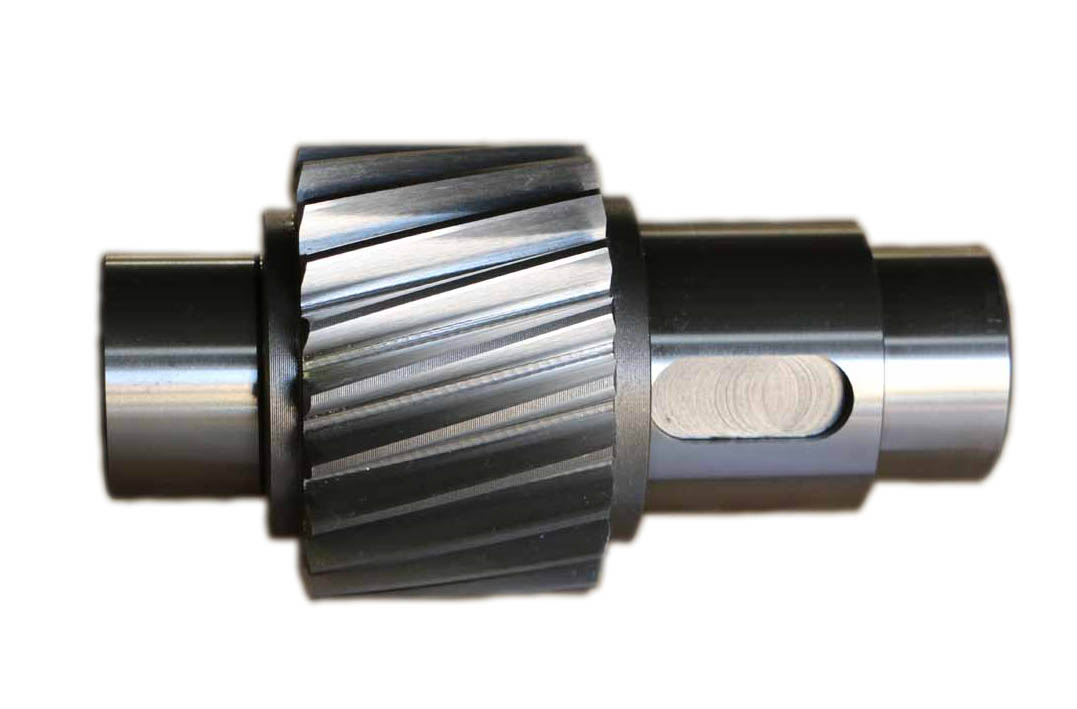
What are the advantages of using a gear shaft in various gear arrangements?
A gear shaft offers several advantages when used in various gear arrangements within mechanical systems. It plays a critical role in transmitting motion and power efficiently. Here are the advantages of using a gear shaft:
- Mechanical Power Transmission:
A gear shaft enables the transmission of mechanical power between gears in a gear arrangement. By connecting and meshing with multiple gears, the gear shaft efficiently transfers rotational motion and torque from the driving gear to the driven gear. This power transmission capability allows for the amplification, reduction, or redirection of power as required by the mechanical system, enabling the efficient operation of machinery and equipment.
- Speed and Torque Conversion:
With the use of different gear arrangements on a gear shaft, it becomes possible to convert speed and torque. By employing gears with different numbers of teeth or gear ratios, the rotational speed and torque output can be adjusted. Gear arrangements like spur gears, helical gears, bevel gears, and planetary gears on the gear shaft allow for precise speed and torque conversion, enabling the adaptation of mechanical systems to specific requirements.
- Mechanical Advantage:
A gear shaft offers the advantage of mechanical advantage. By incorporating gears with different sizes or gear ratios, the gear shaft can provide mechanical advantage in terms of torque amplification or speed reduction. This allows for the efficient utilization of available power and the optimization of mechanical system performance. Mechanical advantage is particularly beneficial in applications where high torque or precise speed control is required.
- Versatility and Flexibility:
The use of a gear shaft provides versatility and flexibility in gear arrangements. Different types of gears can be mounted on the gear shaft, allowing for the creation of complex gear systems. Gear arrangements can be customized based on the specific requirements of the mechanical system, such as space constraints, torque demands, and speed ranges. The gear shaft’s versatility enables the implementation of various gear combinations, making it adaptable to a wide range of applications.
- Smooth and Reliable Operation:
When properly designed and manufactured, a gear shaft ensures smooth and reliable operation of the gear arrangement. The gear teeth on the gears mesh with precision, guided by the gear shaft, resulting in minimal noise, vibration, and backlash. The gear shaft’s stable and accurate rotation facilitates the synchronized movement of gears, promoting efficient power transmission and reducing wear on the gear teeth. This contributes to the overall longevity and reliability of the mechanical system.
- Durability and Load Capacity:
A gear shaft, constructed from durable materials and designed to handle high loads, offers excellent durability and load-carrying capacity. The gear shaft’s robust construction allows it to withstand the forces and stresses encountered during power transmission. It ensures the gear arrangement can handle the required torque, resist deformation, and maintain its integrity under demanding operating conditions.
In summary, the advantages of using a gear shaft in various gear arrangements include mechanical power transmission, speed and torque conversion, mechanical advantage, versatility and flexibility, smooth and reliable operation, durability, and load-carrying capacity. Gear shafts are essential components that enhance the performance, efficiency, and reliability of mechanical systems.
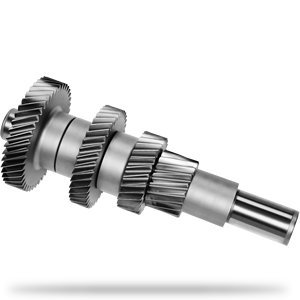
What is the purpose of using a gear shaft in machinery?
A gear shaft serves several essential purposes in machinery. It plays a crucial role in the efficient operation and transmission of power within mechanical systems. Here are the main purposes of using a gear shaft:
- Power Transmission:
A primary purpose of a gear shaft is to transmit power between different components in a machinery. When rotational force or torque is applied to the gear shaft, it transfers this power to connected gears or mechanisms. This power transmission allows for the controlled and synchronized movement of various parts, enabling the machinery to perform its intended function.
- Torque Conversion and Adjustment:
By utilizing different sizes and arrangements of gears on the shaft, the gear shaft enables torque conversion and adjustment. Gears with varying numbers of teeth can be connected to the gear shaft, allowing for torque multiplication or reduction. This capability is crucial for adapting the power output of the machinery to match specific requirements, such as increasing torque for heavy-duty operations or reducing torque for precision tasks.
- Speed Control:
Another purpose of a gear shaft is to control the speed of rotational motion in machinery. By using gears of different sizes or gear ratios on the shaft, the rotational speed can be adjusted. For instance, a smaller gear connected to the gear shaft will rotate faster, while a larger gear will rotate slower. This speed control allows for the optimization of machinery performance, ensuring that the rotational speed matches the desired application requirements.
- Directional Change:
A gear shaft also facilitates the change in rotational direction within machinery. By incorporating appropriately designed gears on the shaft, the rotational motion can be redirected by 90 degrees or any desired angle. This directional change ability is vital in machinery that requires motion to be transmitted in different directions or orientations, allowing for complex operations and versatile applications.
- Load Distribution:
Many machinery applications involve the distribution of load or force between multiple components. A gear shaft helps evenly distribute the load among connected gears and mechanisms. As torque is transmitted through the gear shaft, it ensures that the force is distributed across the teeth of the gears, minimizing stress concentration and promoting smooth operation. This load distribution enhances the overall durability and longevity of the machinery.
- Mechanical Redundancy:
In certain machinery designs, gear shafts can provide mechanical redundancy. By incorporating multiple gear shafts that operate in parallel, the machinery can maintain functionality even if one of the gear shafts fails. This redundancy ensures that the machinery continues to operate with minimal disruption, reducing downtime and improving overall reliability.
In summary, the purpose of using a gear shaft in machinery is to enable power transmission, torque conversion and adjustment, speed control, directional change, load distribution, and mechanical redundancy. Gear shafts are essential components that contribute to the efficient and effective operation of various mechanical systems.


editor by CX 2024-04-10