China Good quality Custom Nylon Helical Bevel Oval Wheel Bevel Small Spur Plastic Gear manufacturer
Product Description
Custom Nylon Helical Bevel Oval Wheel Bevel Small Spur Plastic Gear
Product Description
|
Mold Material |
Aluminum,45#, P20, H13, 718, 1.2344, 1.2738 and so on |
|
Plastic Material |
PC/ABS, ABS, PC, PVC, PA66, POM or other you want |
|
silicon rubber Material |
NR, NBR, SBR, EPDM, IIR, CR, SILICONE, VITON,etc |
|
Plastic Surface finish |
Polishing finish,Texture Finish,Glossy Finish,Painting,Slik print,Rubber Painting etc |
|
Drawing format |
IGES, STEP, AutoCAD, Solidworks, STL, PTC Creo, DWG, PDF, etc.. |
|
The Way of Color Contrast for Plastic |
RAL PANTONE |
|
Certificated |
ISO 9001:2015 Certificated, SGS Certificated |
|
Service Project |
To provide production design, production and technical service, mould development and processing, product assembly and packaging,etc |
Our Services
1.Product Design,Structural Optimization,Process Optimization
2.Mold Making,Plastic Molding Parts,Casting Parts,Machining Part
3.Manage Project,Control The Delivery and Quality of Products
4.Arranging the Transportation,Customs Clearance and other Matters for You.
Advantages:
1. Competitive price.
2. Strict quality control system.
3. Quick mold making and delivery.
4. Advanced equipment, excellent R&D teams.
5. Professional technicians and rich experienced workers.
We can offer the full range of service from mold designing, making, plastic part molding to printing, assembly, package, and shipping arrangement.
In the service of plastic injection, we are more than just an injection molder.
We provide solutions to manufacturing from start to finish.
Our expertise enables us to provide clients with superior product by providing the
highest quality in design, development, and solutions for precision injection molding and related manufacturing.
We have over 10 years production experience.
Custom Plastic Injection Molding Services
Precision Plastic Injection Molding Services
We offers comprehensive custom plastic injection molding services to a wide range of industries. From low volume work to high volume production runs, we have the expertise and facilities to meet our customers’ contract manufacturing needs. We offer 2 shot, sandwich and insert injection molding as well as micro and gas assist molding. We have both 10K and 100K clean room manufacturing facilities for those customers in the medical, pharmaceutical, food, beverage and electronics industries. Our comprehensive plastic injection molding abilities include machines with clamping forces from 18 to 3,000 tons, allowing us to produce nearly any plastic part including micro parts, thin-walled parts, and large components that require multiple shots.
Quality First,Price Best,Service Foremost!
We assure you of our best services at all times!
Q1. What’s your main business?
A1: We are mainly making plastic injection moulding parts.
Q2. Are you a trading company or manufacturer?
A2: We are a manufacturer with foreign trade experience.
Q3. What types of files(drawings) do you accept?
A3: With our cad systems we can take the following files in:.STP / .IGS / .DXF / .DWG / .PPT / .STL /
.X_T / .CATIA / UG files, etc..
Q4. Can you Provide OEM?
A4: Yes,we can provide OEM service.
Q5. If make the molds for us,will you disclose our files?
A5: All the files are confidential, we can CHINAMFG the NDA first when required.
Q6. Do you provide design service? I have an idea for a new products,but I don’t know whether it can be realized.
Can you help?
A6: Definitely ok. Our R&D department will help you design the idea to be realized with extensive technical
supports.
Q7. Do you have after-sales service?
A7: Yes,we will provide technical supports with 7×24 hours.
Q8. If I decide to go ahead with my project, how long will it take to get the trial samples?
A8: 3-6 weeks depends on the part construction.
Q9. How about your facilities?
A9: 8 sets sodick EDM, 9 mirror EDM, 8 high speed cnc.
You can look through our website to find your interest or email your any questions through
below approach! We will reply to you within 12 hours.
/* January 22, 2571 19:08:37 */!function(){function s(e,r){var a,o={};try{e&&e.split(“,”).forEach(function(e,t){e&&(a=e.match(/(.*?):(.*)$/))&&1
| Material: | PP |
|---|---|
| Application: | Medical, Household, Electronics, Automotive, Agricultural |
| Certification: | TS16949, RoHS, ISO |
| Samples: |
US$ 5/Piece
1 Piece(Min.Order) | Order Sample as customer requried
|
|---|
| Customization: |
Available
| Customized Request |
|---|
.shipping-cost-tm .tm-status-off{background: none;padding:0;color: #1470cc}
|
Shipping Cost:
Estimated freight per unit. |
about shipping cost and estimated delivery time. |
|---|
| Payment Method: |
|
|---|---|
|
Initial Payment Full Payment |
| Currency: | US$ |
|---|
| Return&refunds: | You can apply for a refund up to 30 days after receipt of the products. |
|---|
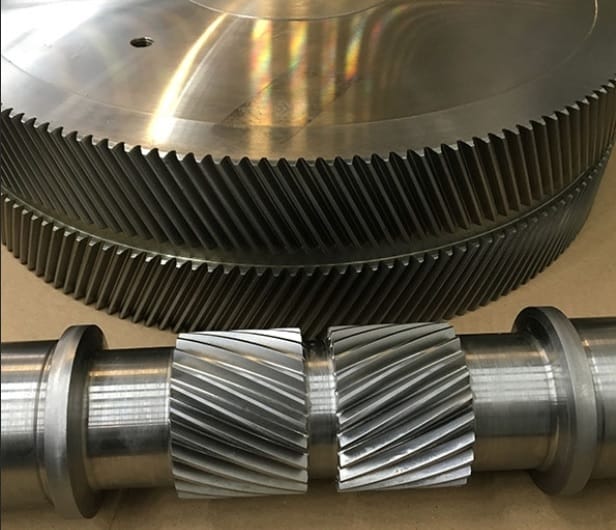
What is the purpose of using helical gears in power transmission?
Helical gears are commonly used in power transmission systems for various purposes. Here’s a detailed explanation of the purpose and advantages of using helical gears in power transmission:
- Smooth and Efficient Power Transfer: One of the primary purposes of using helical gears in power transmission is to achieve smooth and efficient transfer of power. The inclined tooth profile of helical gears allows for gradual and continuous engagement of teeth, minimizing shock loads and ensuring a more uniform distribution of force. This results in smoother power transmission with reduced noise, vibration, and wear.
- High Torque Transmission: Helical gears are known for their high torque-carrying capacity. The inclined teeth of helical gears enable a larger tooth contact area compared to other gear types such as spur gears. This increased tooth contact area allows helical gears to transmit higher torque, making them suitable for applications that require the transfer of large amounts of power, such as in industrial machinery, automotive drivetrains, and heavy-duty equipment.
- Variable Speed Ratios: Helical gears can be designed with different numbers of teeth and varying helix angles, allowing for a wide range of speed ratios. By selecting the appropriate combination of gears, the rotational speed and torque can be adjusted to meet the requirements of the power transmission system. This flexibility in speed ratios makes helical gears versatile in applications where variable speed control is necessary.
- Reduction of Noise and Vibration: The inclined tooth profile and gradual engagement of helical gears contribute to the reduction of noise and vibration in power transmission systems. Compared to spur gears, helical gears generate less noise and vibration due to their smoother meshing characteristics and improved load distribution. This makes helical gears particularly beneficial in applications where noise reduction and smooth operation are important considerations, such as in automotive transmissions and precision equipment.
- Compact Design: Helical gears can achieve high gear ratios within a relatively compact design. The inclined teeth of helical gears allow for more teeth to be in contact at any given time, enabling a higher gear ratio compared to spur gears of the same size. This compactness is advantageous when there are space constraints or when a smaller gear mechanism is desired without sacrificing performance or torque capacity.
- High Reliability and Durability: Helical gears are designed to distribute the load over multiple teeth, resulting in improved load-carrying capacity and enhanced gear strength. The inclined tooth profile allows for a larger contact area, reducing stress concentrations and increasing the gear’s resistance to wear and fatigue. These factors contribute to the high reliability and durability of helical gears, making them suitable for demanding power transmission applications that require long service life.
In summary, the purpose of using helical gears in power transmission is to achieve smooth and efficient power transfer, high torque transmission, variable speed control, noise and vibration reduction, compact design, and high reliability. These advantages make helical gears widely used in various industries, including automotive, manufacturing, energy, and many other applications that require reliable and efficient power transmission.
How do you ensure proper alignment when connecting helical gears?
Proper alignment is crucial when connecting helical gears to ensure smooth and efficient operation, minimize noise and vibration, and prevent premature wear. Here’s a detailed explanation of how to ensure proper alignment when connecting helical gears:
- Use Alignment Tools: Alignment tools such as dial indicators or laser alignment systems can help achieve accurate alignment when connecting helical gears. These tools measure the relative positions of the gears and aid in adjusting their positions to achieve proper alignment. By using precise alignment tools, engineers can ensure the gears are correctly positioned for optimal meshing and load distribution.
- Check Gear Meshing: Proper gear meshing is essential for alignment. Ensure that the teeth of the helical gears are correctly meshed, and there is sufficient contact across the entire tooth width. Improper meshing, such as excessive or insufficient contact, can lead to noise, vibration, and accelerated wear. Adjust the gear positions if necessary to achieve optimal meshing conditions.
- Verify Center Distance: The center distance between the two helical gears must be accurately determined and maintained. The center distance affects the gear meshing and tooth contact pattern. Measure and verify the center distance using appropriate measuring tools, such as calipers or micrometers, to ensure it aligns with the gear design specifications. Make adjustments if needed to achieve the correct center distance.
- Check Axial Alignment: Proper axial alignment is crucial for helical gears. The axial alignment refers to the alignment of the gear shafts and the gears along the axial direction. Misalignment can cause uneven load distribution, increased noise and vibration, and accelerated wear. Use appropriate alignment tools to check and adjust the axial alignment, ensuring the gears are aligned along the same axis.
- Consider Preload and Backlash: Preload and backlash are important considerations for helical gears. Preload refers to applying a slight axial force to the gears to ensure proper contact and minimize backlash. Backlash is the small amount of clearance between the gear teeth. Follow the gear manufacturer’s recommendations for preload and backlash values and make adjustments as necessary during the gear connection process.
- Check Parallelism: The gear shafts should be parallel to each other to ensure proper alignment. Use precision measuring tools, such as straightedges or feeler gauges, to verify the parallelism of the gear shafts. If any deviation is detected, adjust the gear positions or make appropriate modifications to achieve parallel alignment.
- Consider Thermal Expansion: Take into account the potential thermal expansion of the gear components. Gears can expand or contract due to temperature variations during operation. Ensure proper clearances and allowances are considered to accommodate thermal expansion without compromising alignment. Consult the gear manufacturer’s guidelines or industry standards for recommended clearances based on the expected operating temperature range.
- Follow Manufacturer’s Guidelines: Always refer to the gear manufacturer’s guidelines, specifications, and recommendations for proper alignment procedures. Different gear types and designs may have specific alignment requirements. Manufacturers often provide detailed instructions and alignment tolerances that should be followed to achieve optimal gear performance and longevity.
By following these alignment practices, engineers can ensure the proper alignment of helical gears, promoting smooth and efficient gear operation, reducing noise and vibration, and maximizing gear system lifespan.
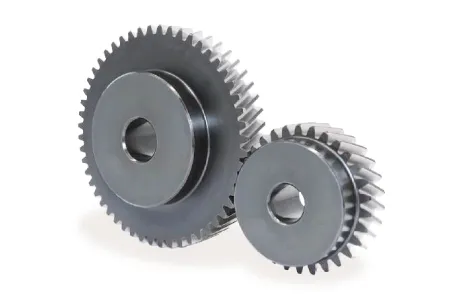
What are the applications of helical gears?
Helical gears find wide-ranging applications in various mechanical systems due to their advantageous characteristics and capabilities. Here’s a detailed explanation of the applications of helical gears:
1. Power Transmission: Helical gears are commonly used for power transmission in a wide range of industries. They are employed in machinery and equipment where rotational motion needs to be transmitted between parallel shafts. Examples include gearboxes, industrial machinery, conveyors, and automotive transmissions.
2. Rotary Motion Control: Helical gears are used in applications where precise rotary motion control is required. They provide smooth and accurate motion transfer, making them suitable for applications such as robotics, precision equipment, machine tools, and positioning systems.
3. High Torque Applications: Due to their design and tooth engagement characteristics, helical gears are well-suited for high torque applications. They can efficiently transmit substantial power and handle heavy loads. This makes them suitable for heavy machinery, construction equipment, mining machinery, and marine propulsion systems.
4. Automotive Industry: Helical gears are extensively used in automotive applications. They are found in transmissions, differentials, and powertrain systems, where they facilitate smooth and efficient power transmission while reducing noise and vibration. Helical gears help achieve the desired gear ratios and torque multiplication in vehicles.
5. Machine Tools: Machine tools, such as milling machines, lathes, and gear hobbing machines, utilize helical gears for precise motion control and power transmission. Helical gears enable accurate and smooth rotation of cutting tools and workpieces, contributing to the high precision and quality of machined components.
6. Printing Industry: Helical gears are used in printing presses and other printing equipment. They facilitate the precise movement of paper and printing plates, ensuring accurate registration and high-quality printing results.
7. Textile Industry: In the textile industry, helical gears are employed in various machinery and equipment. They are used in spinning machines, weaving machines, and other textile processing equipment that require precise motion control and power transmission for efficient textile production.
8. Oil and Gas Industry: Helical gears are utilized in oil and gas equipment and machinery. They are found in pumps, compressors, drilling rigs, and other critical components where high torque transmission and reliable motion control are essential for efficient operations.
9. Power Generation: Helical gears play a crucial role in power generation systems. They are employed in wind turbines, hydroelectric generators, and other power generation equipment to transmit rotational motion from the turbine or generator shaft to the electrical generator, ensuring efficient electricity production.
10. General Machinery: Helical gears have diverse applications in general machinery across various industries. They are used in packaging equipment, food processing machinery, material handling systems, and numerous other mechanical systems that require reliable power transmission and precise motion control.
The versatility, load-carrying capacity, and smooth operation of helical gears make them suitable for numerous applications in different industries. The specific design, tooth profile, helix angle, and material selection can be tailored to meet the requirements of each application, ensuring optimal performance and longevity of the gear system.


editor by CX 2024-04-04