China Good quality Customized Segment Rotary Kiln Cast Iron Large Diameter Girth Cement Mixer Ring Spur Gear straight bevel gear
Product Description
Product Description
High Quality Casting Girth Gear for Ball Mill
Rotary Kiln girth gear
AS Metal is the company of the right choice for rotary kiln girth gear.
Brief introduction
Rotary kiln girth gear is the key component to support the transmission system stability of rotary kiln. The rotary kiln girth gear is placed near to a rotary kiln tyre so that it is accurately aligned with the kiln axis, with minimal wobble. Rotary kiln girth gear is normal for the nearby tyre to be fixed in position with supporting rollers, so that as the kiln expands on warming up, the rolling gear position remains fairly constant, while the nose and tail of the kiln expand outward.
Manufacturing Process
1. Wooden pattern Production
2. Molding
3. Pouring
4. First cleaning
5. Heat treatment – grinding (inspection)
6. Rough machining (inspection)-finishing machining (inspection)
7. Packing-delivering
Quality Control
1. Nondestructive testing is performed to ensure zero defects
2. Machining of gear in multiple steps to ensure best finish and accuracy
3. Final quality inspection to ensure CPG quality
We also have these
Company Profile
Our Company
HangZhou Metal Co., Ltd. (ASMT) serves in metallurgical (especial steel & aluminum), mining, mineral, cement etc. industry, integrating manufacturing, engineering, supply chain management, construction of package in domestic and abroad, international trade etc..
Our Advantages
Our Advantages
1. Whole process quality control, from raw material to delivery
* Processes including: raw material, pattern, casting, heat treatment, machining, packing
2. Regular reporting for any update for process
*Reports contents including:
Chemical composition, Mechanical properties, Dimensional inspection, Ultrasonic t est (UT), Magnetic particle inspection (MT), Penetrant flaw detection (PT)
Why choose us?
Why Choose Us?
1. Pre-sales service:
To supply product application technological communication, drawing design, process
design, test plan and packing and unloading plan.
2. In-sales service:
To supply production process report and inspection report.
To actively associate shipping with customers.
3. After-sales service:
To supply remote training instruction on in-site operation.
To supply solution to unexpected problem arising at user’s site.
To follow up product’s service life.
Packaging & Shipping
Packing&Shipping
We will choose the best mode of transportation for you.Fast, high safety, simple operation.
Exquisite and strong packing, ensure you receive the most perfect goods.
FAQ
FAQ
1. Q: How about delivery time?
A: After receiving the payment, we will put the goods into production as soon as possible to ensure that you can receive the goods quickly. Due to the different delivery time of different products, if you need a specific delivery time, you can contact our online customer service, 24 hours online.
2. Q: What is the loading port?
A: We will arrange the best loading port according to your requirement.
3. Q: Can you do OEM?
A: Yes, we welcome OEM for our customers. We have professional technical personnel to provide technical support.
/* January 22, 2571 19:08:37 */!function(){function s(e,r){var a,o={};try{e&&e.split(“,”).forEach(function(e,t){e&&(a=e.match(/(.*?):(.*)$/))&&1
| Type: | Clay Dry Sand |
|---|---|
| Casting Method: | pressure Crystallization |
| Sand Core Type: | Sodium Silicate Sand Core |
| Application: | Furniture Parts |
| Machining: | Boring Machine |
| Material: | Copper and Copper Alloy |
| Customization: |
Available
| Customized Request |
|---|
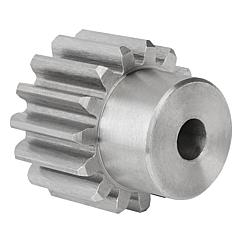
What are the environmental considerations when using spur gears?
When using spur gears, there are several environmental considerations to keep in mind. Here’s a detailed explanation:
1. Lubrication:
Proper lubrication is essential for the efficient and reliable operation of spur gears. However, the choice of lubricant can have environmental implications. It is important to select lubricants that are environmentally friendly, such as biodegradable or non-toxic lubricants. These lubricants minimize the risk of contaminating soil, water, or air during gear operation or maintenance.
2. Material Selection:
The choice of gear materials can also have environmental implications. Opting for materials that are recyclable or made from recycled content can reduce the environmental impact associated with gear production and end-of-life disposal. Additionally, selecting materials with low toxicity and minimal environmental harm during their lifecycle is important for sustainable gear manufacturing.
3. Energy Efficiency:
Efficient gear design and operation contribute to energy conservation and decreased environmental impact. By optimizing gear design, tooth profiles, and lubrication, it is possible to minimize power losses and increase overall gear system efficiency. This, in turn, reduces energy consumption and the associated environmental footprint.
4. Noise and Vibration:
Spur gears can generate noise and vibration during operation, which can have environmental implications, especially in noise-sensitive or residential areas. Implementing noise reduction measures such as gear tooth profiling, proper lubrication, and noise dampening techniques can help minimize the environmental impact of gear-induced noise and vibration.
5. Maintenance and End-of-Life Disposal:
Proper maintenance practices play a crucial role in minimizing the environmental impact of spur gears. Regular inspection, cleaning, and lubrication can prolong gear life, reduce the need for replacements, and minimize waste generation. Additionally, when spur gears reach the end of their life cycle, it is important to dispose of them responsibly, considering recycling options and proper waste management practices.
6. Environmental Regulations and Compliance:
When using spur gears, it is crucial to stay informed about relevant environmental regulations and standards. Different regions or industries may have specific requirements regarding lubricants, materials, noise emissions, or waste disposal. Adhering to these regulations ensures compliance and minimizes the environmental impact of gear usage.
7. Life Cycle Assessment (LCA):
Conducting a life cycle assessment of spur gears helps evaluate their overall environmental impact. LCA considers the environmental implications of gear production, use, maintenance, and disposal. It provides insights into potential environmental hotspots, allowing for targeted improvements in gear design, material selection, and operational practices.
By considering these environmental considerations and adopting sustainable practices throughout the life cycle of spur gears, it is possible to minimize their environmental impact and promote more environmentally friendly gear systems.
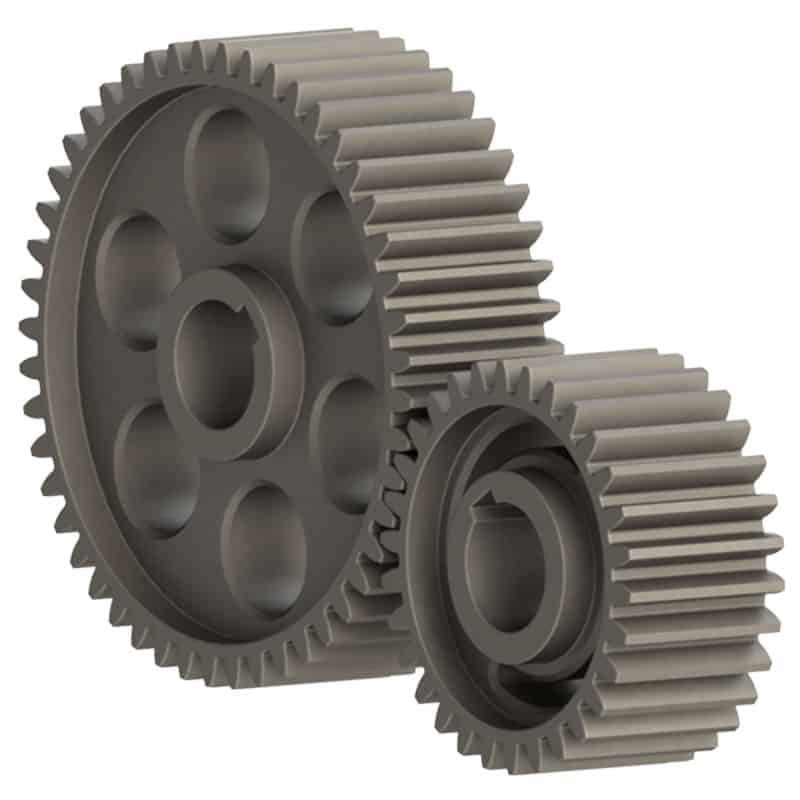
How do you install a spur gear system?
Installing a spur gear system involves several steps to ensure proper alignment, engagement, and operation. Here’s a detailed explanation of how to install a spur gear system:
- Preparation: Before installation, gather all the necessary components, including the spur gears, shafts, bearings, and any additional mounting hardware. Ensure that the gear system components are clean and free from debris or damage.
- Shaft Alignment: Proper shaft alignment is crucial for the smooth operation of a spur gear system. Ensure that the shafts on which the gears will be mounted are aligned accurately and parallel to each other. This can be achieved using alignment tools such as dial indicators or laser alignment systems. Adjust the shaft positions as needed to achieve the desired alignment.
- Positioning the Gears: Place the spur gears on the respective shafts in the desired configuration. Ensure that the gears are positioned securely and centered on the shafts. For shafts with keyways, align the gears with the key and ensure a proper fit. Use any necessary mounting hardware, such as set screws or retaining rings, to secure the gears in place.
- Checking Gear Engagement: Verify that the teeth of the gears mesh properly with each other. The gear teeth should align accurately and smoothly without any excessive gaps or interference. Rotate the gears by hand to ensure smooth and consistent meshing throughout their rotation. If any misalignment or interference is observed, adjust the gear positions or shaft alignment accordingly.
- Bearing Installation: If the spur gear system requires bearings to support the shafts, install the bearings onto the shafts. Ensure that the bearings are the correct size and type for the application. Press or slide the bearings onto the shafts until they are seated securely against any shoulder or bearing housing. Use appropriate methods and tools to prevent damage to the bearings during installation.
- Lubrication: Apply a suitable lubricant to the gear teeth and bearings to ensure smooth operation and reduce friction. Refer to the gear manufacturer’s recommendations for the appropriate lubrication type and amount. Proper lubrication helps minimize wear, noise, and heat generation in the gear system.
- Final Inspection: Once the gears, shafts, and bearings are installed, perform a final inspection of the entire spur gear system. Check for any unusual noises, misalignment, or binding during manual rotation. Verify that the gears are securely mounted, shafts are properly aligned, and all fasteners are tightened to the specified torque values.
It’s important to follow the specific installation instructions provided by the gear manufacturer to ensure proper installation and operation. Additionally, consult any applicable industry standards and guidelines for gear system installation.
By carefully following these installation steps, you can ensure a well-aligned and properly functioning spur gear system in your machinery or equipment.
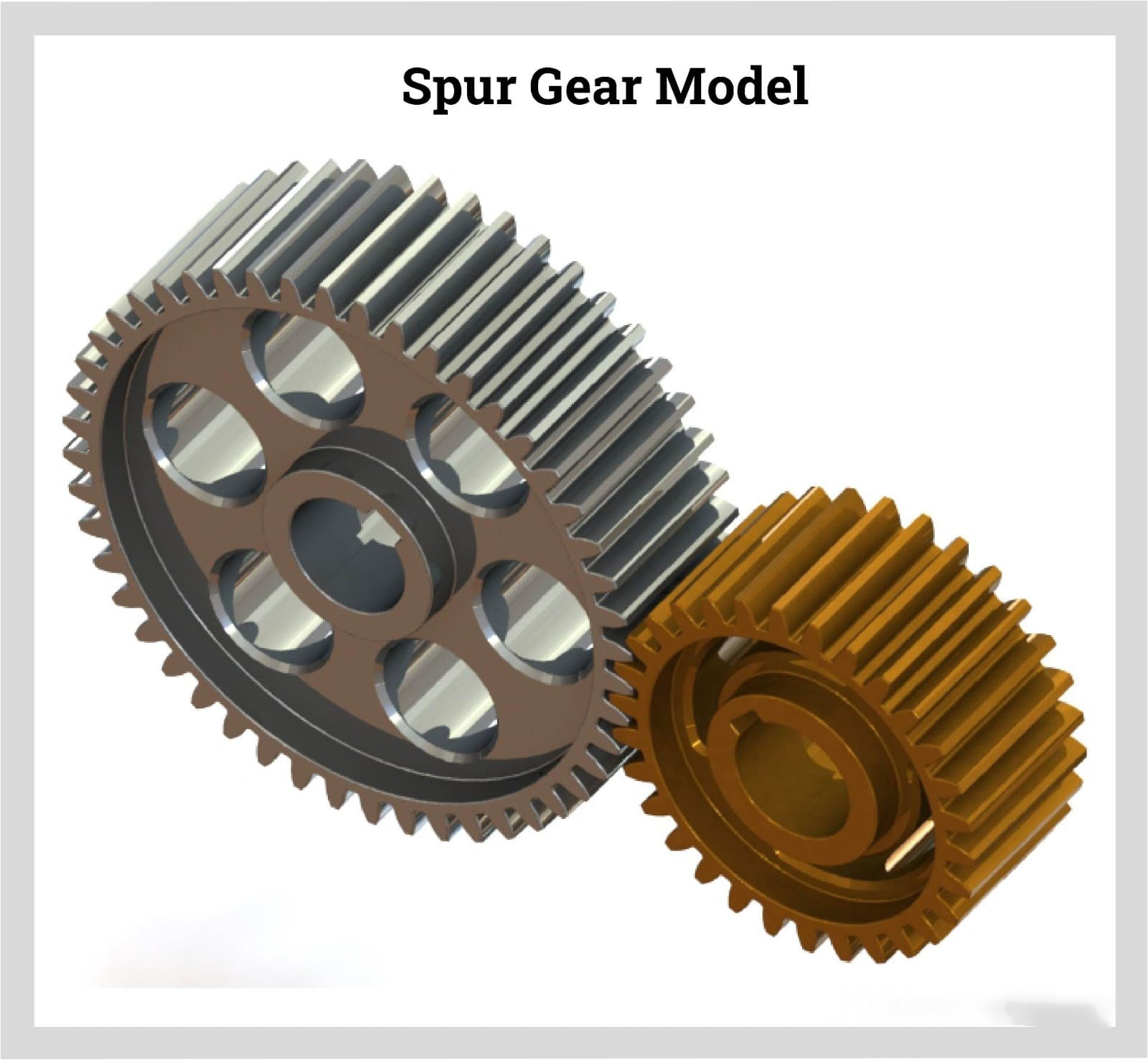
How do spur gears differ from other types of gears?
Spur gears, as a specific type of gear, possess distinct characteristics and features that set them apart from other types of gears. Here’s a detailed explanation of how spur gears differ from other types of gears:
- Tooth Geometry: One of the primary differences lies in the tooth geometry. Spur gears have straight teeth that are cut parallel to the gear axis. This differs from other gear types, such as helical gears or bevel gears, which have angled or curved teeth.
- Gear Meshing: Spur gears mesh by direct contact between their teeth, creating a line or point contact. This meshing arrangement is different from other gear types, such as worm gears or planetary gears, where the teeth mesh in a different manner, such as through sliding contact or multiple points of contact.
- Direction of Force: Spur gears transmit rotational motion and torque in a specific direction. The force is transmitted along the axis of the gears, making them suitable for parallel shaft arrangements. In contrast, other types of gears, such as bevel gears or hypoid gears, can transmit motion between non-parallel or intersecting shafts.
- Noise and Vibration: Spur gears tend to produce more noise and vibration compared to certain other gear types. The direct contact between the teeth and the sudden engagement/disengagement of the teeth can generate impact forces, leading to noise and vibration. In contrast, gear types like helical gears or double-enveloping worm gears provide smoother meshing and reduced noise levels.
- Efficiency and Load Distribution: Spur gears generally offer high efficiency in power transmission due to their direct tooth engagement. However, they may experience higher stress concentrations and load concentrations compared to other gear types. Gear designs like helical gears or planetary gears can distribute the load more evenly across the teeth, reducing stress concentrations.
- Applications: Spur gears find widespread applications in various industries and equipment. Their simplicity, ease of manufacture, and cost-effectiveness make them suitable for a wide range of systems. Other gear types have specific applications where their unique characteristics, such as high torque transmission, precise motion control, or compact size, are advantageous.
In summary, spur gears differ from other types of gears in terms of tooth geometry, gear meshing, direction of force transmission, noise and vibration characteristics, load distribution, and specific applications. Understanding these differences is crucial when selecting the appropriate gear type for a particular mechanical system, considering factors such as load requirements, motion control, efficiency, and design constraints.


editor by CX 2024-03-27