China Good quality Industrial Sprocket Transmission Precision Parts Automotive Gears for Transmission Planetary/Transmission/Starter Gear/Spur Gear Z12 with Hot selling
Product Description
Products description
|
Product Type |
M0.5~M12, Z8~80. standard gear, or according customer drawing to make. |
|
Material: |
Carbon Steel, Brass, Aluminium, Stainless steel, Plastic, POM, Delrin, Titanium Alloy etc. |
|
Process method |
CNC Turning, milling ,drilling, grinding etc. |
|
Surface finish: |
Chrome plating, Anodization, Powder coating, blackening, Sand blasting, Brushing & ploshing,Electrophoresis etc. |
|
OEM & ODM Service |
Available |
|
Design Software |
PRO/E, Auto CAD, Solid Works |
|
Trade Terms: |
FOB,,CIF,EXW |
|
Payment Terms: |
T/T, L/C, |
|
Packing: |
Foam, Carton, Standard Wooden boxes |
|
Capacity |
8,000~1,5000 pcs per month |
|
Delivery |
20-30 days after receiving PO |
|
Applications |
Automotive Parts,hydraulics, compressors,Industrial equipments, transmission parts, etc. |
|
Our services: |
CNC Machining, Milling, Stamping, Sheet metal fabricating, and Die-Casting |
Our Company
Gear inspection
FAQ
Q1. What is your terms of packing?
A: Generally, we pack our goods in single color box. If you have special request about packing, pls negotiate with us in advance, we can pack the goods as your request.
Q2. What is your terms of payment?
A: T/T 30% as deposit, and 70% before delivery. We’ll show you the photos of the products and packages
before you pay the balance. Other payments terms, pls negotiate with us in advance, we can discuss.
Q3. What is your terms of delivery?
A: EXW, FOB, CFR, CIF.
Q4. How about your delivery time?
A: Generally, it will take 25 to 30 days after receiving your advance payment. The specific delivery time depends
on the items and the quantity of your order.
Q5. Can you produce according to the samples?
A: Yes, we can produce by your samples or technical drawings. We can build the molds and fixtures.
Q6. What is your sample policy?
A: We can supply the sample if we have ready parts in stock, but the customers have to pay the sample cost and
the courier cost.We welcome sample order.
Q7. Do you test all your goods before delivery?
A: Yes, we have 100% test before delivery
Q8: How do you make our business long-term and good relationship?
1. We keep good quality and competitive price to ensure our customers benefit ;
2. We respect every customer as our friend and we sincerely do business and make friends with them,
no matter where they come from.
/* March 10, 2571 17:59:20 */!function(){function s(e,r){var a,o={};try{e&&e.split(“,”).forEach(function(e,t){e&&(a=e.match(/(.*?):(.*)$/))&&1
| Application: | Motor, Electric Cars, Motorcycle, Machinery, Marine, Toy, Agricultural Machinery, Car |
|---|---|
| Hardness: | Hardened Tooth Surface |
| Gear Position: | External Gear |
| Manufacturing Method: | Rolling Gear |
| Toothed Portion Shape: | Spur Gear |
| Material: | Cast Steel |
| Samples: |
US$ 2/Piece
1 Piece(Min.Order) | |
|---|
| Customization: |
Available
| Customized Request |
|---|
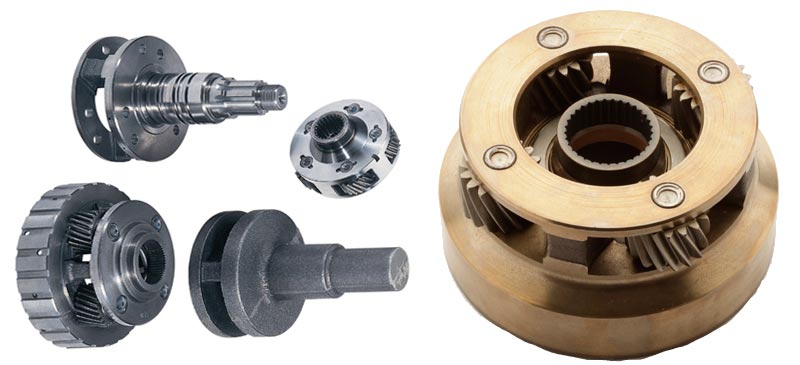
How do you calculate the gear ratio involving sun, planet, and ring gears?
The gear ratio in a planetary gear system can be calculated by considering the number of teeth on the sun gear, planet gears, and ring gear. The gear ratio determines the relationship between the input speed and the output speed of the system. Here’s how you can calculate the gear ratio:
- Step 1: Count the Teeth:
Count the number of teeth on the sun gear (S), the planet gears (P), and the ring gear (R). These numbers represent the respective gear’s tooth count.
- Step 2: Determine the Gear Arrangement:
Identify the gear arrangement. In a simple planetary gear system, the sun gear is at the center, surrounded by planet gears, and enclosed by the ring gear.
- Step 3: Calculate the Gear Ratio:
The gear ratio (GR) can be determined using the formula:
GR = (R + P) / S
Where:
- R represents the number of teeth on the ring gear
- P represents the number of teeth on the planet gears (assuming they have the same number of teeth)
- S represents the number of teeth on the sun gear
The resulting gear ratio represents the speed relationship between the input and output of the planetary gear system. A gear ratio greater than 1 indicates a speed reduction, while a gear ratio less than 1 indicates a speed increase.
It’s important to note that in more complex planetary gear systems, where there are multiple sets of planet gears or additional gears, the calculation of the gear ratio may involve considering multiple gear stages and their respective tooth counts.
In summary, to calculate the gear ratio involving sun, planet, and ring gears, you need to count the teeth on each gear and use the formula (R + P) / S, where R is the number of teeth on the ring gear, P is the number of teeth on the planet gears, and S is the number of teeth on the sun gear. This calculation provides the gear ratio that defines the speed relationship between the input and output of the planetary gear system.
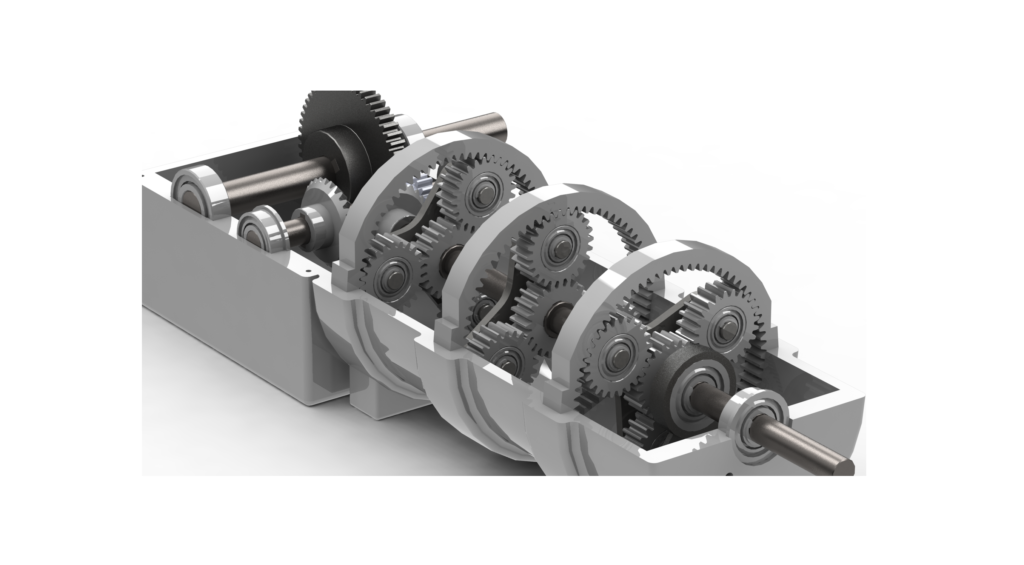
Can you explain the process of gear shifting in planetary gear systems?
Gear shifting in planetary gear systems involves changing the gear ratio by engaging or disengaging specific components of the gear set. Let’s explore the process of gear shifting in more detail:
- Clutching and Braking:
The gear shifting process in planetary gear systems primarily relies on clutching and braking mechanisms. These mechanisms selectively connect or disconnect various gears within the system to achieve the desired gear ratio. Here are the key steps involved:
- Clutch Engagement:
To shift to a higher gear ratio, the clutch associated with the gear component that needs to be engaged is activated. The clutch connects the rotating member, such as the sun gear, planet carrier, or ring gear, to the stationary member, allowing torque transmission. This engagement results in a change in the gear ratio, leading to higher speed or torque output depending on the specific gear set configuration.
- Brake Application:
On the other hand, to shift to a lower gear ratio, a brake associated with the gear component that needs to be disengaged is applied. The brake immobilizes or slows down the rotation of the selected gear element, preventing it from transmitting torque. By selectively braking certain components, the gear ratio is altered, resulting in a lower speed or higher torque output.
- Sequential Shifting:
In some planetary gear systems, gear shifting is performed sequentially. This means that one gear component is engaged or disengaged at a time, gradually transitioning from one gear ratio to another. Sequential shifting allows for smooth and controlled gear changes, minimizing the stress on the transmission components and ensuring seamless power transmission.
- Electronic Control:
In modern applications, gear shifting in planetary gear systems is often electronically controlled. Electronic control systems utilize sensors, actuators, and a control unit to monitor various parameters such as vehicle speed, engine load, and driver input. Based on these inputs, the control unit determines the optimal gear shift points and actuates the clutches and brakes accordingly. Electronic control enhances the efficiency, precision, and automation of the gear shifting process.
In summary, gear shifting in planetary gear systems involves the engagement and disengagement of clutches and brakes to alter the gear ratio. By selectively connecting or disconnecting specific gear components, the speed and torque output can be adjusted. Sequential shifting and electronic control systems further enhance the gear shifting process, providing smooth and efficient operation in various applications, including automotive transmissions and industrial machinery.
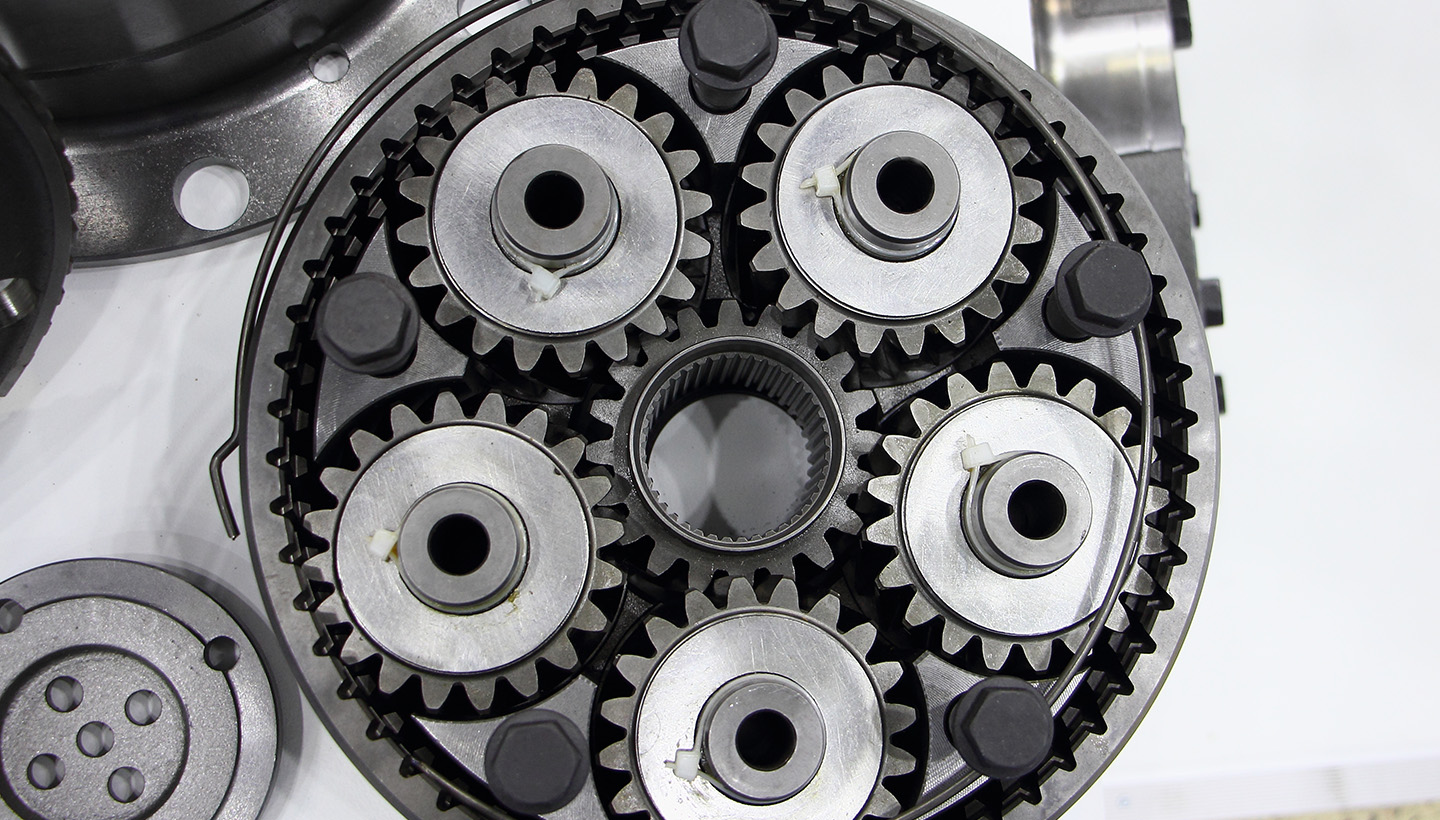
Can you explain the unique design and structure of planetary gears?
Planetary gears possess a unique design and structure that sets them apart from other gear systems. Let’s explore the distinctive features of the design and structure of planetary gears:
- Components:
A planetary gear system consists of three main components: the sun gear, planet gears, and a ring gear. The sun gear is located at the center and is typically driven by an input source such as a motor or engine. The planet gears are gears that surround the sun gear and are connected to a carrier or arm. The ring gear is the outermost gear and meshes with the planet gears.
- Internal Gear Meshing:
One of the distinguishing features of planetary gears is their internal gear meshing. Unlike other gear systems where the gears mesh externally, the teeth of the sun gear, planet gears, and ring gear are located on the inside surfaces. This arrangement allows for a compact and space-efficient design.
- Orbiting Motion:
In planetary gears, the planet gears exhibit both rotational and orbital motion. While they rotate on their own axes, they also orbit around the sun gear. This combination of rotational and orbital movement enables the gear system to achieve different gear ratios and torque transmission.
- Central Sun Gear:
The presence of a central sun gear is another characteristic of planetary gears. The sun gear is positioned at the center of the gear arrangement and serves as the primary driver for the overall gear operation. It receives the input power and transmits it to the planet gears.
- Versatile Gear Ratios:
Planetary gears are capable of achieving a wide range of gear ratios. The gear ratio is determined by the relative sizes of the gears and the number of teeth on each gear. By varying the number of teeth on the sun gear, planet gears, and ring gear, different gear ratios can be obtained, providing versatility in speed reduction or amplification.
- Load Distribution:
The arrangement of multiple planet gears in a planetary gear system helps distribute the load among the gears. This load distribution results in efficient torque transmission and enhanced durability. It also contributes to shock absorption and noise reduction during gear operation.
- Compact Size:
Planetary gears are known for their compact size. The internal gear meshing and the integration of multiple gear sets within a single system contribute to their space-saving design. The compactness of planetary gears is advantageous in applications where size and weight restrictions are critical.
- Wide Range of Applications:
Due to their unique design and structural characteristics, planetary gears find applications in various industries and mechanical systems. They are commonly used in automotive transmissions, robotics, aerospace systems, industrial machinery, and more. The ability to achieve different gear ratios, transmit torque efficiently, and operate in compact spaces makes planetary gears versatile in transmitting power.
In summary, the unique design and structure of planetary gears include components such as the sun gear, planet gears, and ring gear, internal gear meshing, orbiting motion of the planet gears, a central sun gear, versatile gear ratios, load distribution, compact size, and wide-ranging applications. These features contribute to the efficiency, versatility, and space-saving nature of planetary gears, making them suitable for various mechanical systems.


editor by CX 2024-01-03