China Good quality Worm Gears for Reducer From Copper, Ss or Plastic with Great quality
Product Description
Brief Description
As the title”Worm Gears For Reducer By Rough And Finish Machining” described, this pair of parts is made by the processing craft of rough and finish Machining machining. ByTune machining engineering staffs are experienced and skilled with their rich expert. The worm wheels as the product pictures show they are made by 2 metal material which are 42CrMo and bronze. And the worm shafts’ material also is different from the gear is the SS303. We finally determined machining this pair of parts with different metal material after our engineers discussed with our customer for several affirmations. So we have strong engineering team for offering professional suggestions and realizing your all requirements.
Material Options For Worm Gears
Engineering Plastic Material: Polyethylene, POM, PTFE, Polyurethane, Polyether ether ketone, Polypropylene, Polyacetal,etc.
Steel Material: Ordinary carbon structural Steel,Quality carbon structural steel, Cast steel,Iron,etc.(Q195,Q215,Q235,Q255,10#,20#,35#,45#,718H,S136,SKD11 )
Stainless Steel Material: 303,304,316 ( 1.4305,1.4301 ),etc.
Worm Wheel
Worm gear/worm wheel commonly used cast tin bronze (ZCuSnl0Pl,ZCuSn6Zn6Pb3) and aluminum iron bronze (ZCuAl10Fe3), low – speed and non – important drives can utilize the cast iron (HTl50,HT200). The cast iron bronze has these properties of good friction, good adhesion resistance and slightly lower strength. The cast aluminum-iron bronze character with less friction-reducing, less glue-resistant, high strength and relative effective price. Cast iron: gray, Nodularcastiron, timely treatment for preventing the deformation. The worm wheel can be classified into 3 types: 1.Spur gears, cylindrical gears whose teeth line is parallel to the axis. 2. Helical gear, The teeth on the helical gear are cut at an angle to the surface of the gear, it also can be made into spiral gear.
Worm Shaft
Worm shaft has only 1 spiral line called single-head worm, otherwise if the worm shaft has 2 spiral line called double-headed worm. Single-head worm is easier to process than double-head one. However, the wear resistance is worse than double-headed worm.
|
Company advantages: 2 factories 20 years experience 200 employees 2000 square CHINAMFG office ERP system control each flow |
Service advantages: Within 24 hours quotation 3 days for samples preparation 2 weeks for batch regular order Strict and reliable packaging Reliable after-sale service |
Advanced High Technology Equipments
More than 200 CNC turning & milling machines, most of them are imported from America, Japan and German.
|
Part Size |
Bar capacity up to 2 ¾” diameter |
|
Equipment |
Doosan S280N 5 axis Okuma Captain L370 4 axis Hitachi-Seiki HVP20J 3 axis Hardinge Super-Precision 2 axis Okuma LB15 2 axis |
|
Part Size ( CNC Milling and CNC Turning ) |
CNC Milling Parts (Max): Length 1030mm,Width 800mm, Height 750mm. |
|
Typical Products |
Connectors, Cylinders, Ends, |
CONTACT US
Needing Worm Gears For Reducer By Rough And Finish Machining or other CNC machining service, just be comfortable to consult us [email protected] with your draws and requirements. Our expert staffs will response you in 24 hours. We are fairly welcom you to come our factories for prompting our friendly cooperation relationship. Waiting for your inquiring!
/* January 22, 2571 19:08:37 */!function(){function s(e,r){var a,o={};try{e&&e.split(“,”).forEach(function(e,t){e&&(a=e.match(/(.*?):(.*)$/))&&1
| Condition: | New |
|---|---|
| Certification: | CE, RoHS, ISO9001, FCC |
| Standard: | DIN, ASTM, GB, ANSI, BS |
| Samples: |
US$ 18/Piece
1 Piece(Min.Order) | Order Sample |
|---|
| Customization: |
Available
| Customized Request |
|---|
.shipping-cost-tm .tm-status-off{background: none;padding:0;color: #1470cc}
|
Shipping Cost:
Estimated freight per unit. |
about shipping cost and estimated delivery time. |
|---|
| Payment Method: |
|
|---|---|
|
Initial Payment Full Payment |
| Currency: | US$ |
|---|
| Return&refunds: | You can apply for a refund up to 30 days after receipt of the products. |
|---|
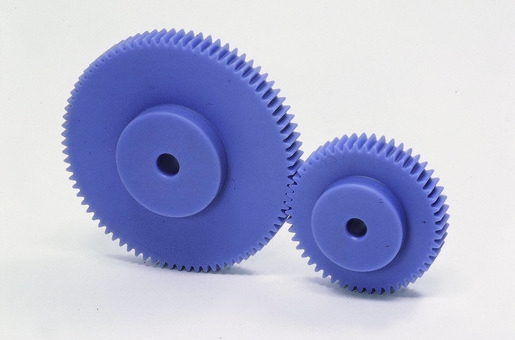
Can plastic gears withstand high torque and load conditions?
Plastic gears have certain limitations when it comes to withstanding high torque and load conditions. Here’s a detailed explanation of their capabilities:
Plastic gears can be designed and manufactured to handle a range of torque and load conditions, but their performance is generally inferior to that of metal gears in high-stress applications. The specific capabilities of plastic gears depend on various factors, including the chosen plastic material, gear design, tooth profile, and operating conditions.
While plastic gears may not be suitable for extremely high torque or heavy-load applications, they can still provide reliable performance in many moderate-load scenarios. Plastic gears are commonly used in applications with light to moderate loads, where their unique properties and advantages outweigh their limitations.
Some plastic materials, such as acetal (POM) and polyamide (nylon), offer good strength and wear resistance, allowing them to handle moderate torque and load conditions. These materials can be reinforced with additives or fillers to enhance their mechanical properties and increase their load-bearing capacity.
It’s important to note that when designing with plastic gears, engineers must carefully consider factors such as gear size, tooth geometry, material selection, and operating conditions. Reinforcement techniques, such as using metal inserts or reinforcing fibers, may be employed to improve the strength and load-bearing capabilities of plastic gears in certain applications.
In high torque or heavy-load applications, metal gears, particularly those made from steel or other high-strength alloys, are generally preferred due to their superior strength and durability. Metal gears offer higher load capacities, better resistance to deformation, and increased resistance to wear under extreme conditions.
Ultimately, the suitability of plastic gears for high torque and load conditions depends on the specific requirements of the application and the trade-off between the benefits of plastic gears, such as weight reduction and noise reduction, and the higher load-bearing capabilities of metal gears.
It’s recommended to consult with gear manufacturers or mechanical engineers to determine the most appropriate gear material and design for a particular application, especially when high torque and load conditions are expected.
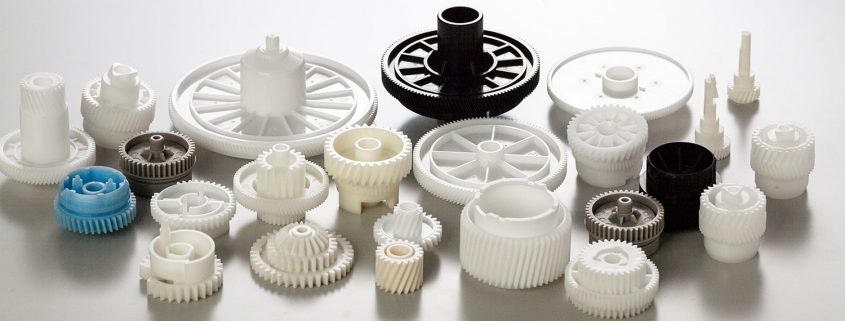
How do plastic gears handle lubrication and wear?
Plastic gears handle lubrication and wear differently compared to metal gears. Here’s a detailed explanation of their behavior:
1. Lubrication in Plastic Gears: Lubrication plays a crucial role in the performance and longevity of plastic gears. While metal gears often require continuous lubrication, plastic gears have different lubrication requirements due to their inherent properties. Here are some key considerations:
- Self-Lubrication: Some plastic materials, such as certain formulations of polyoxymethylene (POM), have inherent self-lubricating properties. These materials have a low coefficient of friction and can operate with minimal lubrication or even dry. Self-lubricating plastic gears can be advantageous in applications where the use of external lubricants is impractical or undesirable.
- Lubricant Compatibility: When external lubrication is necessary, it’s important to choose lubricants that are compatible with the specific plastic material used in the gears. Certain lubricants may degrade or adversely affect the mechanical properties of certain plastics. Consultation with lubricant manufacturers or experts can help identify suitable lubricants that won’t cause degradation or wear issues.
- Reduced Lubricant Requirements: Plastic gears generally have lower friction coefficients compared to metal gears. This reduced friction results in lower heat generation and less wear, which in turn reduces the demand for lubrication. Plastic gears may require less frequent lubricant replenishment or lower lubricant volumes, reducing maintenance requirements.
- Appropriate Lubricant Application: When applying lubricant to plastic gears, care should be taken to avoid excessive amounts that could lead to contamination or leakage. Lubricants should be applied in a controlled manner, ensuring they reach the critical contact points without excessive buildup or excess spreading beyond the gear surfaces.
2. Wear in Plastic Gears: Plastic gears exhibit different wear characteristics compared to metal gears. While metal gears typically experience gradual wear due to surface interactions, plastic gears may undergo different types of wear mechanisms, including:
- Adhesive Wear: Adhesive wear can occur in plastic gears when high loads or speeds cause localized melting or deformation at the gear teeth contact points. This can result in material transfer between gear surfaces and increased wear. Proper material selection, gear design optimization, and lubrication can help minimize adhesive wear in plastic gears.
- Abrasive Wear: Abrasive wear in plastic gears can be caused by the presence of abrasive particles or contaminants in the operating environment. These particles can act as abrasive agents, gradually wearing down the gear surfaces. Implementing effective filtration or sealing mechanisms, along with proper maintenance practices, can help reduce abrasive wear in plastic gears.
- Fatigue Wear: Plastic materials can exhibit fatigue wear under cyclic loading conditions. Repeated stress and deformation cycles can lead to crack initiation and propagation, ultimately resulting in gear failure. Proper gear design, material selection, and avoiding excessive loads or stress concentrations can help mitigate fatigue wear in plastic gears.
3. Gear Material Selection: The choice of plastic material for gears can significantly impact their lubrication and wear characteristics. Different plastic materials have varying coefficients of friction, wear resistance, and compatibility with lubricants. It’s important to select materials that offer suitable lubrication and wear properties for the specific application requirements.
4. Operational Considerations: Proper operating conditions and practices can also contribute to the effective handling of lubrication and wear in plastic gears. Avoiding excessive loads, controlling operating temperatures within the material’s limits, implementing effective maintenance procedures, and monitoring gear performance are essential for ensuring optimal gear operation and minimizing wear.
In summary, plastic gears can handle lubrication and wear differently compared to metal gears. They may exhibit self-lubricating properties, reduced lubricant requirements, and require careful consideration of lubricant compatibility. Plastic gears can experience different types of wear, including adhesive wear, abrasive wear, and fatigue wear. Proper material selection, gear design, lubrication practices, and operational considerations are crucial for ensuring efficient lubrication and minimizing wear in plastic gears.
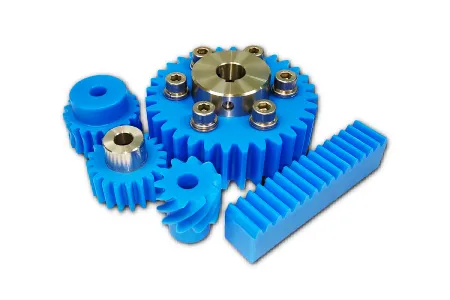
Can plastic gears replace metal gears in certain applications?
Yes, plastic gears can replace metal gears in certain applications. Here’s a detailed explanation:
Plastic gears offer a range of advantages that make them suitable alternatives to metal gears in specific scenarios. Some of the factors that determine whether plastic gears can replace metal gears include the application requirements, operating conditions, load capacity, and desired performance characteristics.
Advantages of Plastic Gears:
- Lightweight: Plastic gears are significantly lighter than metal gears, making them suitable for applications where weight reduction is important. This can lead to energy efficiency, reduced inertia, and lower wear on supporting components.
- Low Noise and Vibration: Plastic gears have inherent damping properties that help reduce noise and vibration levels during operation. This makes them suitable for applications where noise reduction is desired, such as in consumer electronics or office equipment.
- Corrosion Resistance: Certain plastic materials used in gear manufacturing exhibit excellent resistance to corrosion and chemicals. Plastic gears can be a suitable choice for applications in corrosive environments where metal gears may suffer from degradation.
- Self-Lubrication: Some plastic materials used for gear manufacturing have self-lubricating properties. This reduces friction and wear between gear teeth, eliminating the need for external lubrication and simplifying maintenance requirements.
- Cost-Effective: Plastic gears can be more cost-effective compared to metal gears, especially in large-scale production. Plastic materials are often less expensive than metals, and the manufacturing processes for plastic gears can be more efficient.
- Design Flexibility: Plastic gears offer greater design flexibility compared to metal gears. They can be molded into complex shapes, allowing for custom gear profiles and tooth geometries, resulting in optimized performance and efficiency for specific applications.
Limitations of Plastic Gears:
- High Torque and Load Capacity: Plastic gears may not have the same torque and load capacity as metal gears. In applications requiring high torque or heavy loads, metal gears may be more suitable due to their higher strength and durability.
- High Temperatures: Plastic gears have temperature limitations depending on the chosen material. In applications with high operating temperatures, metal gears that can withstand the heat may be necessary.
- Precision and Positioning: Plastic gears may not offer the same level of precision and positioning accuracy as metal gears. Applications that require tight tolerances and precise gear meshing may still require metal gears.
In summary, plastic gears can replace metal gears in certain applications where their advantages align with the specific requirements and operating conditions. It’s crucial to carefully evaluate the application needs, load capacity, temperature range, and other factors to determine if plastic gears are suitable replacements for metal gears.


editor by CX 2024-03-26