China high quality Customized High Quality Stainless Spur Gear for New Energy Automobile Industry Motor, Electric Cars supplier
Product Description
Product Parameters
| product name | Customized High Quality Stainless Spur Gear for New Energy Automobile Industry Motor, Electric Cars |
| stainless steel , iron , aluminum ,bronze ,carbon steel ,brass , nylon etc . | |
| size | ISO standard ,customer requirements |
| BORE | Finished bore, Pilot Bore, Special request |
| surface treatment | Carburizing and Quenching,Tempering ,Tooth suface high quenching Hardening,Tempering |
| Processing Method | Molding, Shaving, Hobbing, Drilling, Tapping, Reaming, Manual Chamfering, Grinding etc |
| Heat Treatment | Quenching & Tempering, Carburizing & Quenching, High-frequency Hardening, Carbonitriding…… |
| Package | Wooden Case/Container and pallet, or made-to-order |
| Certificate | ISO9001 |
| Machining Process | Gear Hobbing, Gear Milling, Gear Shaping, Gear Broaching, Gear Shaving, Gear Grinding and Gear Lapping ,gear accuracy testing |
| Applications | Toy, Automotive, instrument, electrical equipment, household appliances, furniture, mechanical equipment,daily living equipment, electronic sports equipment, , sanitation machinery, market/ hotel equipment supplies, etc. |
| Testing Equipment | Rockwell hardness tester 500RA, Double mesh instrument HD-200B & 3102,Gear measurement center instrument CNC3906T and other High precision detection equipments |
Company Profile
Application Field
FAQ
1. why should you buy products from us not from other suppliers?
We are a 32 year-experience manufacturer on making the gear, specializing in manufacturing varieties of gears, such as helical gear ,bevel gear ,spur gear and grinding gear, gear shaft, timing pulley, rack, , timing pulley and other transmission parts .
2. what services can we provide?
Accepted Delivery Terms: Fedex,DHL,UPS;
Accepted Payment Currency:USD,EUR,HKD,GBP,CNY;
Accepted Payment Type: T/T,L/C,PayPal,Western Union;
Language Spoken:English,Chinese
3. how can we guarantee quality?
1 .Always a pre-production sample before mass production;
2 .Always final Inspection before shipment;
3 .We have high-precision CNC gear grinding machine, high-speed CNC gear hobbing machine, CNC gear shaping machine, CNC lathe, CNC machining center, various grinding machines, universal gear measuring instrument, heat treatment and other advanced processing equipment.
4 . We have a group of experienced technical workers, more than 90% of the workers have more than 10 years of work experience in this factory, can accurately control the manufacturing of products and customer needs. We regularly train our employees to ensure that we can produce high-precision and high-quality products that are more in line with our customers’ needs.
/* January 22, 2571 19:08:37 */!function(){function s(e,r){var a,o={};try{e&&e.split(“,”).forEach(function(e,t){e&&(a=e.match(/(.*?):(.*)$/))&&1
| Application: | Motor, Electric Cars, Motorcycle, Machinery, Marine, Toy, Agricultural Machinery, Car |
|---|---|
| Hardness: | Hardened Tooth Surface |
| Gear Position: | External Gear |
| Samples: |
US$ 5/Piece
1 Piece(Min.Order) | Order Sample |
|---|
| Customization: |
Available
| Customized Request |
|---|
.shipping-cost-tm .tm-status-off{background: none;padding:0;color: #1470cc}
|
Shipping Cost:
Estimated freight per unit. |
about shipping cost and estimated delivery time. |
|---|
| Payment Method: |
|
|---|---|
|
Initial Payment Full Payment |
| Currency: | US$ |
|---|
| Return&refunds: | You can apply for a refund up to 30 days after receipt of the products. |
|---|
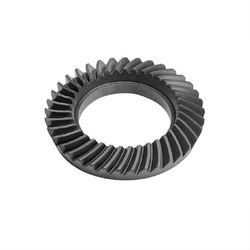
What is the role of the transmission control module (TCM) in a car?
The transmission control module (TCM) plays a crucial role in the operation of the transmission system in a car. Here’s a detailed explanation:
1. Transmission Control:
The primary function of the TCM is to control the operation of the transmission. It receives input from various sensors throughout the vehicle, such as speed sensors, throttle position sensors, engine load sensors, and more. Based on this input, the TCM makes decisions regarding gear selection, shifting points, and torque converter lock-up to ensure optimal performance and efficiency.
2. Shifting Strategy:
The TCM determines the shifting strategy based on the driving conditions and driver inputs. It uses complex algorithms and programming to calculate the ideal timing and characteristics of gear shifts. The shifting strategy can vary depending on factors such as vehicle speed, engine load, throttle position, and driver demand. The TCM’s goal is to provide smooth, seamless, and efficient gear shifts.
3. Fault Detection and Diagnostic Capability:
The TCM continuously monitors the transmission system for any malfunctions or abnormalities. It has built-in diagnostic capabilities to detect faults such as sensor failures, solenoid issues, or hydraulic problems. When a fault is detected, the TCM can often store relevant fault codes, which can be retrieved using specialized diagnostic tools to aid in troubleshooting and repair.
4. Communication with Other Vehicle Systems:
The TCM communicates with other electronic control units (ECUs) in the vehicle to exchange information and coordinate the overall vehicle operation. For example, it may communicate with the engine control module (ECM) to ensure smooth power delivery during gear shifts. It may also communicate with the anti-lock braking system (ABS) to optimize gear selection based on braking conditions.
5. Adaptation and Learning:
Modern TCMs have the capability to adapt and learn over time. They can adjust the shifting strategy based on the driver’s behavior and driving patterns. The TCM may learn the driver’s preferences and adapt the shift points and characteristics accordingly. This adaptive feature helps to tailor the transmission’s behavior to the individual driver’s style and improve overall driving experience.
6. Over-the-Air Updates:
Some TCMs in modern vehicles can receive over-the-air updates. Manufacturers can send software updates to the TCM to refine the shifting algorithms, address known issues, or introduce new features. This capability allows for continuous improvement and optimization of the transmission system even after the vehicle has been sold.
In summary, the transmission control module (TCM) is responsible for controlling and optimizing the operation of the transmission system in a car. It ensures smooth gear shifts, monitors the system for faults, communicates with other vehicle systems, adapts to the driver’s behavior, and can receive software updates for ongoing refinement and improvement.
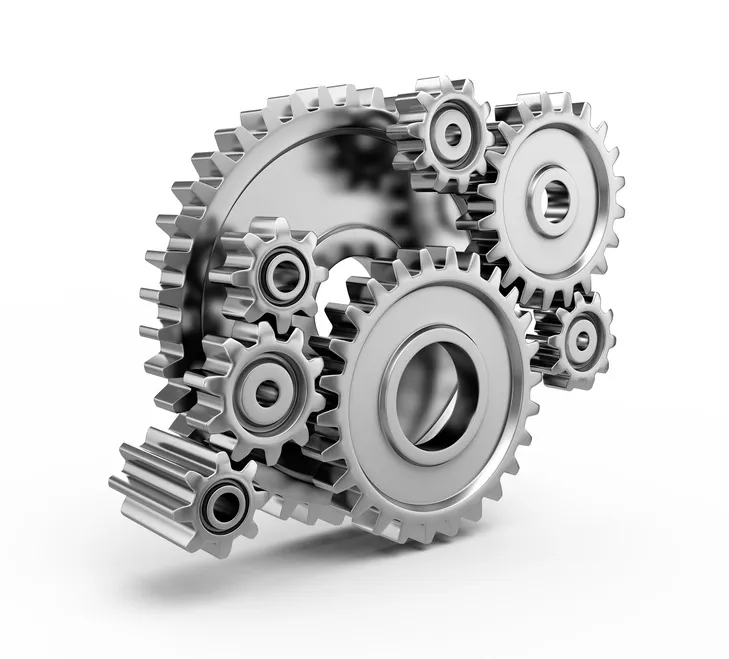
How does a dual-clutch transmission (DCT) enhance the driving experience?
A dual-clutch transmission (DCT) enhances the driving experience in several ways. Here’s a detailed explanation:
1. Quick and Smooth Gear Shifts:
A DCT utilizes two separate clutches, one for odd-numbered gears and another for even-numbered gears. This dual-clutch setup allows for quick and seamless gear shifts without interrupting power delivery. While one clutch is engaged with the current gear, the other clutch pre-selects the next gear, resulting in near-instantaneous shifts. This quick and smooth shifting enhances acceleration and provides a more engaging driving experience.
2. Continuous Power Delivery:
Since a DCT can shift gears without the need for a torque converter (as in automatic transmissions), there is minimal power loss during gear changes. The power transfer from the engine to the wheels remains uninterrupted, resulting in improved performance and responsiveness. This continuous power delivery contributes to a more dynamic driving experience.
3. Enhanced Fuel Efficiency:
DCTs are designed to optimize fuel efficiency by reducing power losses and maximizing engine performance. The precise and efficient gear changes of a DCT help keep the engine operating in its optimal power band, resulting in improved fuel economy compared to traditional automatic transmissions.
4. Manual Control and Sporty Driving:
Many DCT-equipped vehicles offer manual control modes, such as paddle shifters or a manual shift gate. These modes allow the driver to manually select gears, providing a more involved and sporty driving experience. The ability to control gear changes enhances driver engagement and allows for greater control over the vehicle’s performance.
5. Versatility and Adaptability:
DCTs can adapt to different driving conditions and driver preferences. They often feature multiple driving modes, such as “Normal,” “Sport,” or “Eco,” which adjust shift points, throttle response, and other parameters to suit various driving styles. This versatility allows drivers to tailor the transmission’s behavior to their preferences, whether they prioritize performance, fuel efficiency, or comfort.
6. Suitable for Performance Vehicles:
DCTs are commonly used in high-performance and sporty vehicles due to their ability to provide lightning-fast gear changes and precise control. The rapid and seamless shifts of a DCT contribute to improved acceleration, faster lap times, and enhanced overall performance.
In summary, a dual-clutch transmission (DCT) enhances the driving experience through quick and smooth gear shifts, continuous power delivery, improved fuel efficiency, manual control options, adaptability to different driving conditions, and suitability for performance-oriented vehicles. These features contribute to a more engaging, responsive, and enjoyable driving experience for enthusiasts and drivers seeking a balance between performance and everyday usability.
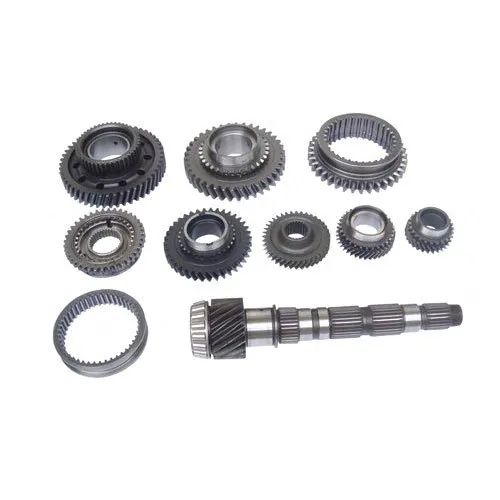
Can you explain the role of gear ratios in an automobile transmission?
Gear ratios play a crucial role in an automobile transmission. Here’s a detailed explanation:
In an automobile transmission, the gear ratio refers to the ratio of the rotational speed of the engine’s input shaft to the rotational speed of the transmission output shaft, which is connected to the wheels. Different gear ratios are achieved by using gears of varying sizes.
1. Speed and Torque Conversion: The primary function of gear ratios is to convert the engine’s high rotational speed and low torque into lower rotational speed and higher torque at the wheels. Lower gear ratios (such as first or second gear) provide high torque multiplication, which is useful for starting the vehicle or climbing steep hills. Higher gear ratios (such as fifth or sixth gear) allow the engine to operate at lower speeds while maintaining higher vehicle speeds, providing better fuel efficiency and reduced engine wear.
2. Acceleration and Power: By selecting the appropriate gear ratio, the transmission enables the driver to control the vehicle’s acceleration and power delivery. Lower gear ratios provide quick acceleration by multiplying the engine’s torque output. During rapid acceleration, the transmission may stay in lower gears to keep the engine operating within its optimal power band. Higher gear ratios are used for cruising at higher speeds, where less torque is needed to maintain the vehicle’s momentum.
3. Engine Performance: Gear ratios are crucial for optimizing engine performance. Engines have a specific range of speeds called the power band, where they deliver the most power efficiently. By selecting the right gear ratio, the transmission keeps the engine operating within its power band, ensuring optimal performance and responsiveness. This improves the overall driving experience and allows the engine to operate at its most efficient point, resulting in better fuel economy.
4. Load and Terrain Adaptation: Different gear ratios allow the vehicle to adapt to varying loads and terrains. When encountering uphill gradients or carrying heavy loads, lower gear ratios are used to provide the necessary torque for overcoming resistance. Conversely, on flat roads or when the vehicle is lightly loaded, higher gear ratios are utilized to maintain speed while reducing engine RPM and improving fuel efficiency.
5. Gear Shifting: The availability of different gear ratios facilitates gear shifting in manual transmissions. As the vehicle accelerates, the driver can shift to higher gears to reach higher speeds while maintaining optimal engine performance. Similarly, when decelerating or coming to a stop, downshifting to lower gears allows for engine braking and better control of the vehicle.
6. Mechanical Advantage: Gear ratios provide a mechanical advantage by multiplying the engine’s torque output. Lower gear ratios offer higher torque multiplication, enabling the vehicle to overcome resistance and handle demanding tasks. This mechanical advantage is particularly useful during towing, off-road driving, or situations requiring increased traction.
Overall, gear ratios in automobile transmissions enable the engine’s power and torque to be transmitted to the wheels efficiently. They allow for speed and torque conversion, adaptation to different driving conditions, optimization of engine performance, and control over the vehicle’s acceleration and power delivery.


editor by Dream 2024-04-19