China high quality Drive Spur Pinion Planetary Transmission Pinion Gear with Good quality
Product Description
Product Description
Product Parameters
| Item | Spur Gear Axle Shaft |
| Material | 4140,4340,40Cr,42Crmo,42Crmo4,20Cr,20CrMnti, 20Crmo,35Crmo |
| OEM NO | Customize |
| Certification | ISO/TS16949 |
| Test Requirement | Magnetic Powder Test, Hardness Test, Dimension Test |
| Color | Paint , Natural Finish ,Machining All Around |
| Material | Aluminum: 5000series(5052…)/6000series(6061…)/7000series(7075…) |
| Steel: Carbon Steel,Middle Steel,Steel Alloy,etc. | |
| Stainess Steel: 303/304/316,etc. | |
| Copper/Brass/Bronze/Red Copper,etc. | |
| Plastic:ABS,PP,PC,Nylon,Delrin(POM),Bakelite,etc. | |
| Size | According to Customer’s drawing or samples |
| Process | CNC machining,Turning,Milling,Stamping,Grinding,Welding,Wire Injection,Cutting,etc. |
| Tolerance | ≥+/-0.03mm |
| Surface Treatment | (Sandblast)&(Hard)&(Color)Anodizing,(Chrome,Nickel,Zinc…)Plating,Painting,Powder Coating,Polishing,Blackened,Hardened,Lasering,Engraving,etc. |
| File Formats | ProE,SolidWorks,UG,CAD,PDF(IGS,X-T,STP,STL) |
| Sample | Available |
| Packing | Spline protect cover ,Wood box ,Waterproof membrane; Or per customers’ requirements. |
Our Advantages
Why Choose US ???
1. Equipment :
Our company boasts all necessary production equipment,
including Hydraulic press machines, Japanese CNC lathe (TAKISAWA), Korean gear hobbing machine (I SNT), gear shaping machine, machining center, CNC grinder, heat treatment line etc.
2. Processing precision:
We are a professional gear & gear shafts manufacturer. Our gears are around 6-7 grade in mass production.
3. Company:
We have 90 employees, including 10 technical staffs. Covering an area of 20000 square meters.
4. Certification :
Oue company has passed ISO 14001 and TS16949
5.Sample service :
We provide free sample for confirmation and customer bears the freight charges
6.OEM service :
Having our own factory and professional technicians,we welcome OEM orders as well.We can design and produce the specific product you need according to your detail information
Cooperation Partner
Company Profile
Our Featured Products
/* January 22, 2571 19:08:37 */!function(){function s(e,r){var a,o={};try{e&&e.split(“,”).forEach(function(e,t){e&&(a=e.match(/(.*?):(.*)$/))&&1
| Application: | Motor, Electric Cars, Motorcycle, Machinery, Marine, Agricultural Machinery, Car |
|---|---|
| Manufacturing Method: | Cast Gear |
| Toothed Portion Shape: | Spur Gear |
| Material: | Stainless Steel |
| Type: | Circular Gear |
| Yield: | 5, 000PCS / Month |
| Samples: |
US$ 0/Piece
1 Piece(Min.Order) | |
|---|
| Customization: |
Available
| Customized Request |
|---|
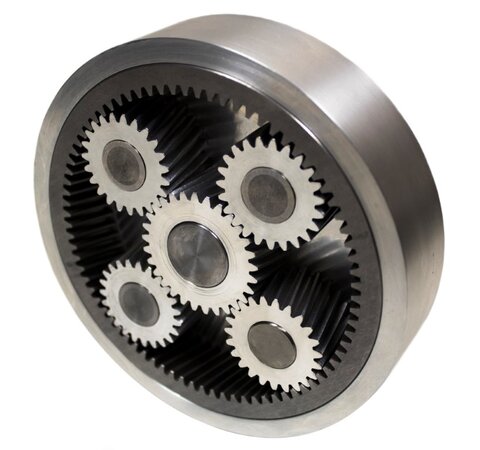
What is the significance of the gear ratio in planetary gear arrangements?
The gear ratio plays a significant role in planetary gear arrangements, offering several key advantages and applications. Let’s explore the significance of the gear ratio:
- Speed Control:
The gear ratio in planetary gear arrangements allows for precise speed control. By adjusting the sizes and numbers of teeth on the sun gear, planet gears, and ring gear, different gear ratios can be achieved. The gear ratio determines the relationship between the input speed and the output speed. By changing the gear ratio, the speed of the output shaft can be increased or decreased relative to the input speed. This speed control capability is crucial in various applications, such as automotive transmissions, industrial machinery, and robotics, where specific speed requirements are necessary for optimal performance.
- Torque Amplification:
The gear ratio also enables torque amplification in planetary gear arrangements. By fixing the ring gear and inputting power to the sun gear, the planet gears rotate and contribute to multiplying the torque. The gear ratio determines the extent of torque amplification. This torque amplification feature is beneficial in applications that require higher torque output while maintaining a smaller physical size. It allows for increased torque transmission without the need for larger and heavier gear systems.
- Multiple Speeds:
Another significance of the gear ratio is the ability to achieve multiple speeds within a single gear system. Planetary gears offer the advantage of having multiple gear sets within a compact arrangement. By combining different gear ratios using various combinations of sun gears, planet gears, and ring gears, it is possible to obtain multiple output speeds. This versatility is useful in applications that require variable speed control or the ability to switch between different operational modes.
- Power Distribution:
The gear ratio also influences power distribution in planetary gear arrangements. As torque is transmitted through the gears, the gear ratio determines how the power is distributed among the different components. By adjusting the gear ratio, it is possible to distribute power more evenly or concentrate it on specific gear elements. This power distribution capability allows for optimized performance and load-sharing in the gear system.
- Efficiency and Mechanical Advantage:
The gear ratio affects the efficiency and mechanical advantage of planetary gear arrangements. The gear ratio determines the trade-off between speed and torque. Increasing the gear ratio results in higher torque output but lower speed, while decreasing the gear ratio yields higher speed but lower torque. By selecting the appropriate gear ratio, it is possible to achieve the desired balance between speed and torque while maximizing the overall efficiency of the system.
In summary, the gear ratio in planetary gear arrangements is significant for speed control, torque amplification, achieving multiple speeds, power distribution, efficiency, and mechanical advantage. Understanding and selecting the appropriate gear ratio is crucial for optimizing performance and meeting the specific requirements of different mechanical setups.
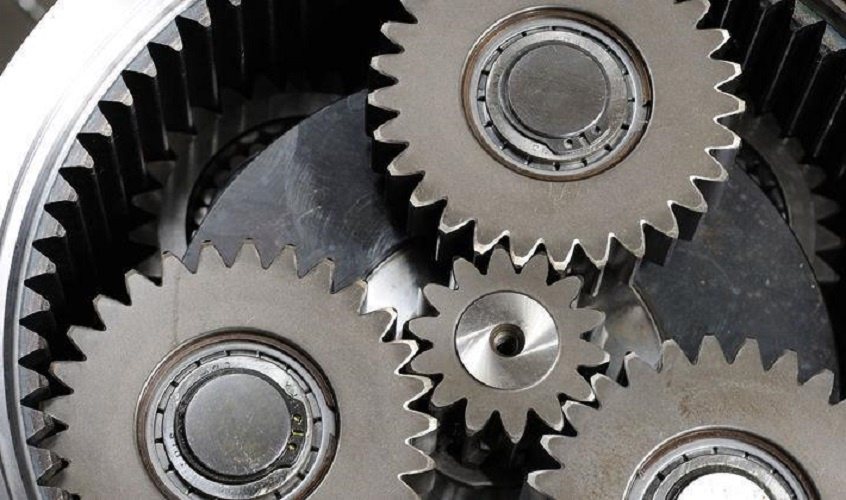
Can planetary gears be used in robotics and automation?
Planetary gears are commonly used in robotics and automation due to their numerous advantages and suitability for various applications. Let’s explore how planetary gears are utilized in robotics and automation:
- Compact Size and High Power Density:
Planetary gears offer a high power density, meaning they can transmit significant torque in a compact size. This characteristic is particularly valuable in robotics and automation systems, where space is often limited. The compactness of planetary gears allows for efficient integration into robotic joints, gearboxes, and other motion control components.
- Precision and Repeatability:
Planetary gears provide high precision and repeatability, making them suitable for precise positioning and motion control tasks in robotics and automation. The gear design and arrangement contribute to minimal backlash and accurate torque transmission, ensuring precise and predictable movements. This precision is essential in applications such as robotic arms, CNC machines, and pick-and-place systems.
- Speed Reduction and Torque Amplification:
Planetary gears offer the capability of speed reduction and torque amplification, allowing robots to handle varying loads and achieve different levels of speed and force. By utilizing the gear ratios and multiple gear stages, planetary gears enable robots to perform tasks that require both high torque and precise movements, such as lifting heavy objects or performing delicate assembly operations.
- Efficiency and Energy Savings:
Planetary gears are known for their high efficiency in power transmission. The gear design minimizes friction and ensures efficient torque transfer, resulting in reduced energy consumption. In robotics and automation, where energy efficiency is often a concern, the use of planetary gears can contribute to overall energy savings and longer battery life in battery-powered systems.
- Reliability and Durability:
Planetary gears are designed to be robust and durable, capable of withstanding demanding operating conditions. They can handle high loads, provide long service life, and resist wear and fatigue. These characteristics are crucial in robotics and automation, where the gears are subjected to repetitive and continuous motion. The reliability and durability of planetary gears contribute to the overall performance and longevity of robotic systems.
- Versatility and Customization:
Planetary gears offer versatility and customization options to meet specific requirements in robotics and automation. They can be combined with other mechanical components such as motors, encoders, and sensors to create tailored motion control systems. The ability to select different gear ratios, sizes, and configurations allows for the optimization of robotic designs for specific applications and performance criteria.
In summary, planetary gears are widely used in robotics and automation due to their compact size, high power density, precision, repeatability, speed reduction, torque amplification, efficiency, reliability, durability, versatility, and customization options. These qualities make planetary gears an excellent choice for various robotic applications, including industrial automation, collaborative robots, robotic prosthetics, unmanned vehicles, and many others.
Can you describe the role of sun gears, planet gears, and ring gears in planetary systems?
In a planetary gear system, each component—the sun gear, planet gears, and ring gear—plays a crucial role in the overall operation and functionality. Let’s explore the roles of these gears:
- Sun Gear:
The sun gear is a central component in a planetary gear system. It is typically located at the center and is driven by an input source such as a motor or engine. The sun gear receives the input power and transmits it to the other gears in the system. As the sun gear rotates, it drives the rotation of the planet gears, which, in turn, contribute to the overall gear operation. The size and number of teeth on the sun gear determine the gear ratio and torque characteristics of the system.
- Planet Gears:
The planet gears are gears that surround the sun gear in a planetary gear system. They are typically smaller in size compared to the sun gear and are connected to a carrier or arm. The planet gears mesh with both the sun gear and the ring gear. As the sun gear rotates, it drives the rotation of the planet gears. The planet gears exhibit both rotational and orbital motion. While they rotate on their own axes, they also orbit around the sun gear. This combination of rotational and orbital movement allows the planet gears to transmit torque and contribute to the overall gear reduction or amplification. The arrangement and number of planet gears can vary depending on the specific design and requirements of the system.
- Ring Gear:
The ring gear is the outermost gear in a planetary gear system. It has internal teeth that mesh with the planet gears. The ring gear remains fixed or stationary while the sun gear and planet gears rotate. The interaction between the planet gears and the ring gear enables the gear system to achieve gear reduction or amplification. The size and number of teeth on the ring gear also influence the gear ratio and torque characteristics of the system.
In summary, the sun gear serves as the primary driver, receiving the input power and transmitting it to the other gears. The planet gears rotate and orbit around the sun gear, contributing to torque transmission and gear functionality. The ring gear remains fixed and meshes with the planet gears, allowing for gear reduction or amplification. Together, these gears work in harmony to achieve the desired gear ratios, torque transmission, and overall operation of planetary gear systems.


editor by Dream 2024-04-19