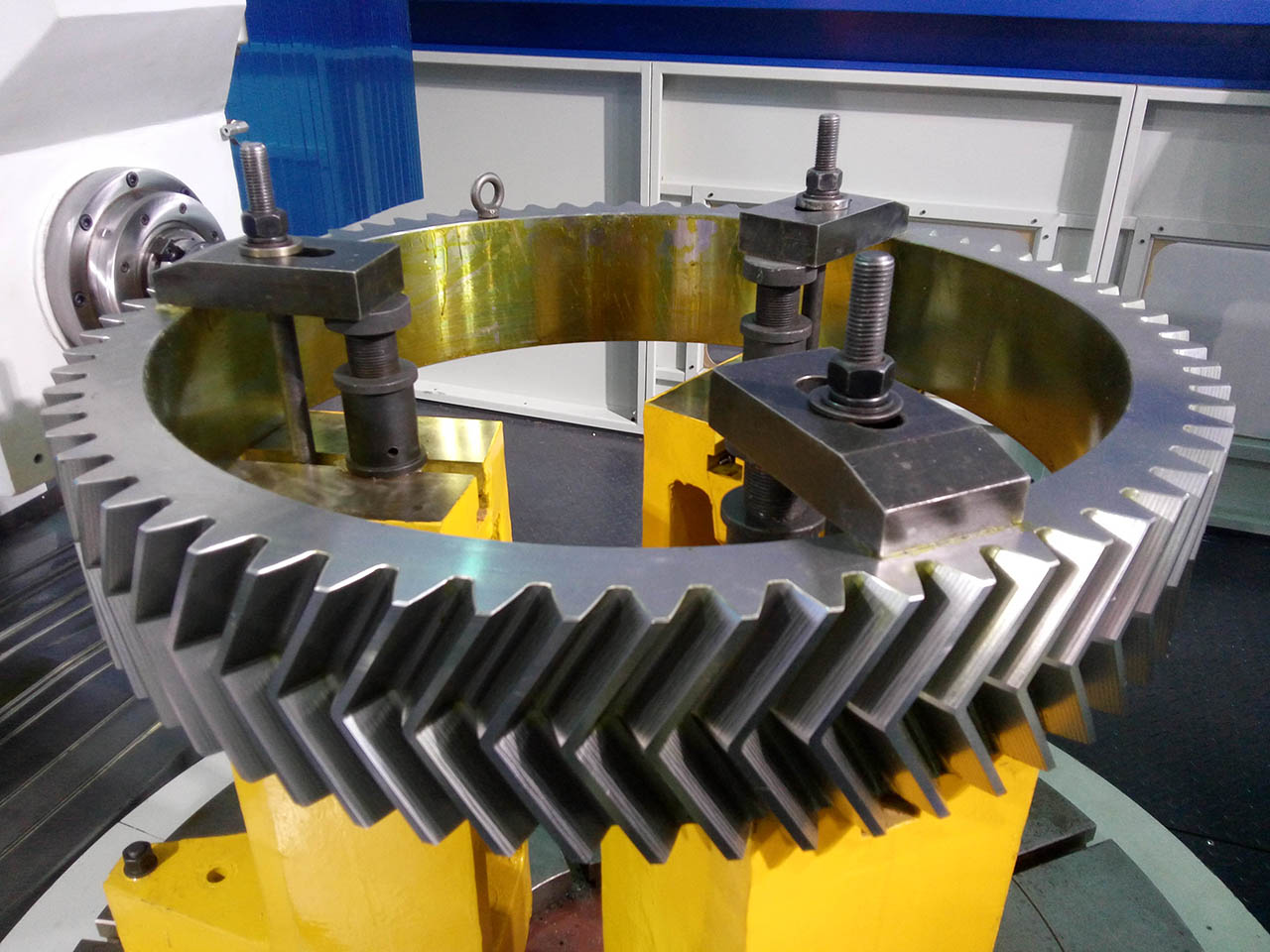
China high quality Large Size Large Module Forging Steel Double Helical Herringbone Spur Bull Gear Ring raw gear
Product Description
Key attributes
Other attributes
Applicable Industries
Manufacturing Plant, Construction works , Energy & Mining
Weight (KG)
3000
Showroom Location
None
Video outgoing-inspection
Provided
Machinery Test Report
Provided
Marketing Type
Ordinary Product
Warranty of core components
Not Available
Core Components
Gear, Ring Gear
Place of CHINAMFG
ZheJiang , China
Condition
New
Warranty
1year
Shape
Ring Gear
Standard or Nonstandard
Nonstandard
Tooth Profile
Helical Gear,spur gear
Material
Steel
Processing
Forging
Pressure Angle
custom
Brand Name
TS
Product Name
Large Ring Gear
Module No.
5-180
Process
Milling,hobbing
Surface treatment
as request
Heat treatment
Q&T
Application
Industry machinery,transmission equipment
Standard
DIN ANSI ISO
Certificate
ISO
OEM Service
YES
Delivery time
15-60days
Packaging and delivery
Packaging Details
Package adapting to CHINAMFG transport
Port
ZheJiang ,HangZhou
Supply Ability
Supply Ability
5 Piece/Pieces per Month
OUR WORKSHOPS
OUR EQUIPMENTS
Technology Process
|
Material |
Carbon steel,Alloy steel |
||
|
Structure |
Forging,casting |
||
|
Type of gear |
spur gear,helical gear,Planetary Gear |
||
|
Heat treatment |
Quenching and tempering |
||
|
Process |
forging, rough machining, QT, finish machining |
||
|
Main equipments |
hobbing,CNC machine |
||
|
Module |
up to 200 |
||
|
Precision of gear |
Grinding ISO Grade 5-7 & Hobbing ISO Grade 8-9 |
||
|
Inspection |
Raw material inspection, UT,physical property test,dimension inspect |
||
|
Application |
Mining machinery, mill, kiln and other equipment |
||
OUR CERTIFICATE
OUR CUSTOMER FEEDBACK
CONTACT
/* March 10, 2571 17:59:20 */!function(){function s(e,r){var a,o={};try{e&&e.split(“,”).forEach(function(e,t){e&&(a=e.match(/(.*?):(.*)$/))&&1
| Application: | Industry |
|---|---|
| Hardness: | Hb190-Hb300 |
| Gear Position: | External Gear |
| Samples: |
US$ 100/Piece
1 Piece(Min.Order) | Order Sample |
|---|
| Customization: |
Available
| Customized Request |
|---|
.shipping-cost-tm .tm-status-off{background: none;padding:0;color: #1470cc}
| Shipping Cost:
Estimated freight per unit. |
about shipping cost and estimated delivery time. |
|---|
| Payment Method: |
|
|---|---|
|
Initial Payment Full Payment |
| Currency: | US$ |
|---|
| Return&refunds: | You can apply for a refund up to 30 days after receipt of the products. |
|---|
What are the benefits of using a herringbone gear mechanism?
Using a herringbone gear mechanism offers several benefits due to its unique design and characteristics. Here’s a detailed explanation of the advantages of using a herringbone gear mechanism:
- High Load Capacity: Herringbone gears are capable of handling high torque loads due to their double helical tooth design. The opposing helix angles of the two sides of the gear create a balanced load distribution, allowing for increased load-carrying capacity compared to other gear types. This makes herringbone gears suitable for applications that involve heavy loads and high power transmission requirements.
- Bidirectional Power Transmission: Herringbone gears are capable of transmitting power in both directions. The double helical tooth profile cancels out axial thrust forces that would occur in single helical gears, allowing for bidirectional power transfer without the need for additional thrust bearings or special mechanisms. This feature is particularly advantageous in applications where reversible power transmission is required.
- Smooth and Quiet Operation: The double helical tooth design of herringbone gears helps to cancel out axial and radial forces, resulting in smooth and quiet operation. The opposing helix angles of the two sides of the gear minimize gear vibrations and reduce noise levels during engagement. This makes herringbone gears suitable for applications where low noise and vibration are desired, such as precision machinery, printing presses, and automotive transmissions.
- Improved Gear Tooth Strength: The double helical tooth design of herringbone gears provides enhanced tooth strength compared to single helical gears. The opposing helix angles create a self-centering effect that reduces tooth deflection and improves load distribution along the tooth surfaces. This results in increased tooth strength, reduced wear, and improved overall gear durability, making herringbone gears suitable for high-load and high-speed applications.
- Efficient Torque Transfer: Herringbone gears offer efficient torque transfer due to their large contact area and overlapping tooth engagement. The double helical tooth profile provides a larger contact ratio compared to spur gears, resulting in improved power transmission efficiency and reduced stress concentrations on the gear teeth. This efficient torque transfer contributes to the overall performance and energy efficiency of the gear system.
- Axial Thrust Elimination: The double helical tooth profile of herringbone gears allows for the cancellation of axial thrust forces. The opposing helix angles create equal and opposite axial forces, effectively eliminating the net axial thrust on the gear shaft. This eliminates the need for additional thrust bearings or special provisions to counteract axial loads, simplifying the gear system design and reducing complexity and cost.
These are some of the key benefits of using a herringbone gear mechanism. Their high load capacity, bidirectional power transmission capability, smooth and quiet operation, improved tooth strength, efficient torque transfer, and axial thrust elimination make them advantageous in a wide range of applications across various industries.
How does a herringbone gear impact the overall efficiency of a system?
Herringbone gears can have a significant impact on the overall efficiency of a mechanical system. Their unique design and characteristics contribute to improved efficiency in several ways. Here’s a detailed explanation of how herringbone gears can influence the efficiency of a system:
- Reduced Friction: Herringbone gears are designed to minimize friction between the gear teeth during operation. The double helical arrangement of the teeth allows for opposing helix angles, which helps to cancel out the axial thrust generated by the gear meshing. This results in reduced sliding friction and less energy loss due to frictional forces, thereby improving overall efficiency.
- Smooth Operation: The herringbone gear design enables smooth and precise gear engagement. The opposing helix angles of the teeth facilitate the gradual meshing and unmeshing of the gears, reducing impact and shock loads. The smooth operation minimizes vibrations and noise levels, eliminating energy losses associated with excessive vibrations and improving the overall efficiency of the system.
- Higher Torque Capacity: Herringbone gears have a larger surface area of contact between the gear teeth compared to conventional spur gears. This increased contact area allows for higher torque transmission capabilities. By efficiently transmitting higher torque loads, herringbone gears help reduce the need for additional gear stages or larger gear sizes, resulting in a more compact and efficient system.
- Better Load Distribution: The double helical arrangement of the teeth in herringbone gears helps distribute the load more evenly across the gear face. This improved load distribution minimizes localized stress concentrations and wear on the gear teeth, leading to enhanced durability and reduced energy losses due to gear wear and failure.
- Efficient Power Transmission: Herringbone gears facilitate efficient power transmission by ensuring a high degree of gear meshing contact and proper alignment. The precise gear engagement reduces backlash and ensures optimal power transfer between the gears, resulting in higher transmission efficiency and minimal power losses within the system.
- Reduced Heat Generation: Herringbone gears’ smooth operation and reduced friction contribute to lower heat generation during gear meshing. The reduced heat generation helps to minimize thermal losses within the system. Additionally, the improved load distribution and larger contact area of herringbone gears help dissipate heat more effectively, further enhancing the overall efficiency of the system.
It’s important to note that the overall efficiency of a system is influenced by various factors, including gear design, lubrication, alignment, and the specific application and operating conditions. While herringbone gears offer several advantages that contribute to improved efficiency, it’s crucial to consider the entire system design and optimize other components and parameters accordingly to achieve the highest overall efficiency.
What is a herringbone gear and how does it work?
A herringbone gear, also known as a double helical gear, is a specialized type of gear with a unique tooth design. Here’s a detailed explanation of what a herringbone gear is and how it works:
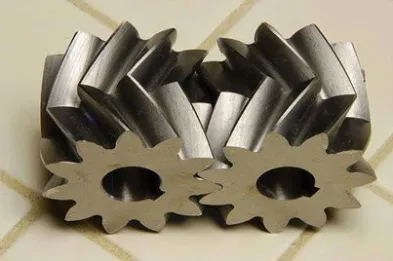
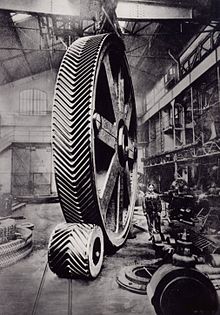
A herringbone gear consists of two helical gear sections that are mirror images of each other and are joined together to form a V-shaped or herringbone-shaped tooth profile. Unlike conventional helical gears, which have a single helix angle and a continuous spiral tooth profile, herringbone gears have two opposing helix angles, resulting in a “V” shape when viewed from the end.
The primary advantage of the herringbone gear design is its ability to eliminate axial thrust or end thrust forces that are generated in helical gears. In a conventional helical gear, the helix angle of the teeth causes an axial force along the gear’s axis during rotation. This axial force can create significant thrust loads that need to be counteracted using thrust bearings or other mechanisms.
By using the double helix design of herringbone gears, the opposing helix angles cancel out the axial forces generated by each helical section. This cancellation of axial forces eliminates the need for thrust bearings and allows herringbone gears to transmit torque smoothly without axial movement or thrust loads.
When a herringbone gear is in operation, the angled teeth of the two helical sections engage with each other, similar to how helical gears mesh. The contact between the teeth occurs gradually, starting from one end of the gear and progressing towards the other end. The overlapping or interlocking tooth profiles ensure a continuous and smooth transfer of power.
The herringbone gear design offers several advantages:
- Axial Load Balancing: The opposing helix angles in herringbone gears balance out the axial forces, eliminating the need for thrust bearings and reducing wear on the gear teeth.
- Increased Load Capacity: The V-shaped tooth profile of herringbone gears provides increased tooth contact area compared to a single helix gear. This leads to improved load distribution and higher load-carrying capacity.
- Reduced Vibration and Noise: The double helix design of herringbone gears helps cancel out vibrations and reduce noise during operation. The opposing helix angles minimize tooth deflection and ensure smoother engagement between the gear teeth.
- Bidirectional Power Transmission: Herringbone gears can transmit power in both directions due to their symmetrical tooth profiles. This makes them suitable for applications where reversing or bidirectional power transmission is required.
- High Efficiency: The continuous and gradual engagement of the herringbone gear teeth results in improved efficiency by reducing sliding friction and minimizing backlash.
Herringbone gears are commonly used in various industrial applications, including power transmission systems, heavy machinery, oil and gas equipment, marine propulsion systems, and high-speed gearboxes. Their unique design and benefits make them well-suited for applications that require high torque transmission, smooth operation, and minimal axial thrust.


editor by CX 2024-02-18