China high quality Nylon PA66 Injection Molded Plastic Spur Gear bevel gearbox
Product Description
| Product Description | ||
| Products | Name | Nylon PA66 Injection Molded Plastic Spur Gear |
| Products category | Injection plastic parts | |
| Material | PP, ABS, PC, ABS+PC, Nylon, delrin (POM), PMMA, AS, PS, PE, PET, PVC, PEEK, etc; GF added material (ABS+GF, PA66+GF, PA666+GF); Rubber like material (TPE, PU, NBR, silicone, NBR+TPE etc) | |
| Size | All size and thickness available. | |
| Shape | capable of all shapes as per drawing | |
| Color | Natural,black,clear (standard clear or high optical clear), semi-transparent, other colors (Pantone code or RAL code, or as per client’s sample). | |
| Surface finishing | Texture (VDI/MT standard, or made to client’s sample), polished (high polish, mirror polish), smooth, painting, powder coating, printing, electroplating etc. | |
| Drawing | 2D or 3D draiwng in any image/picture format is OK | |
| Free sample | Yes | |
| OEM/OEM | Yes | |
| Application | Household, electronics, vehicles, machinery, hospital, cosmetics, Military and Aerospace etc. | |
| Quality certification | ISO 90001:2008, TS16949, FDA, REACH, ROHS, SGS | |
| QC | Every order production will get more than 10 times regular check and 5 fives times random check by our professional QC. Or by Third party appointed by customer | |
| Mold | Molding Process | Injection molding, overmolding. |
| Mould type | Injection plastic mould | |
| Standard | HASCO, DME, MISUMI, JIS, LKM, etc. | |
| Tooling equipment | Lathe,Milling,Grinder,Drill,CNC,EDM,Wire cut machine,Punch machine | |
| Runner | Cold or hot | |
| Gate | Side Gate, Sub Gate, Direct Gate, Hook Gate, Pin Point Gate, etc. | |
| Cavity | Single or Multi cavities | |
| Mould Life | 300,000~1,00,000 times | |
HOW TO GET SOLUTION/QUOTATION FOR YOUR PLASTIC PARTS:
| Order Solution | |
| Order | OEM or ODM welcome. Free sample or slab/button of material for your quality evaluation, mold sample in accordance with drawing for approval of mass production, |
| Payment terms | L/C, T/T, WEST UNION, MONEYGRAM, PAYPAL, ESCROW |
| Lead time | 3~5 weeks for mold production, and 1~2 weeks for mass production |
| Package | As per customer’s favour. Shock-absorbing bags, Cartons, Wooden box, and wooden or plastic pallet, |
| Delivery term | FOB CHINA, CIF destination port, DDP customer’s warehouse/address of goods |
| Shipment | By air mail, by sea, by express like DHL, Fedex, UPS, TNT, EMS |
| Quality Control | Sample approval before order, and QC test report(maybe by third party) before balance. |
PRODUCTION AND EQUIPMENTS:
| EQUIPMENT LIST | ||||
| NAME | SPECIFICATION | BRAND | ORIGINAL PLACE | QUANTITY |
| CNC Machines | Graph 600 | KNUTH | GERMENY | 3 |
| 1370 | KAFO | ZheJiang | 25 | |
| EDM Machines | ZNC450 | BHangZhouNA | ZheJiang | 3 |
| ZNC430 | BHangZhouNA | ZheJiang | 4 | |
| Grinding Machines | ACC-350ST | BESFORD | CHINA | 6 |
| CNC Lathe Machining | L150G-II | OKUMA | CHINA | 3 |
| Wire Cutting Machines | DK7732 | NEW FAST | CHINA | 3 |
| Milling Machine | SHCM-97A | GENTIGER | ZheJiang | 8 |
| Injection Machine | 100T-450T | Haitian | CHINA | 12 |
| CMM Machine | CRT-PA574 | MITUTYO | JAPAN | 1 |
| Hardness Tester | TILO-T60 | MITUTYO | JAPAN | 2 |
/* January 22, 2571 19:08:37 */!function(){function s(e,r){var a,o={};try{e&&e.split(“,”).forEach(function(e,t){e&&(a=e.match(/(.*?):(.*)$/))&&1
| Material: | ABS, PVC |
|---|---|
| Application: | Medical, Household, Electronics, Automotive, Agricultural |
| Certification: | Ts16949, RoHS |
| Color: | Black |
| OEM/ODM: | Welcomed |
| File: | Format Auto CAD, Pdf, JPG |
| Customization: |
Available
| Customized Request |
|---|
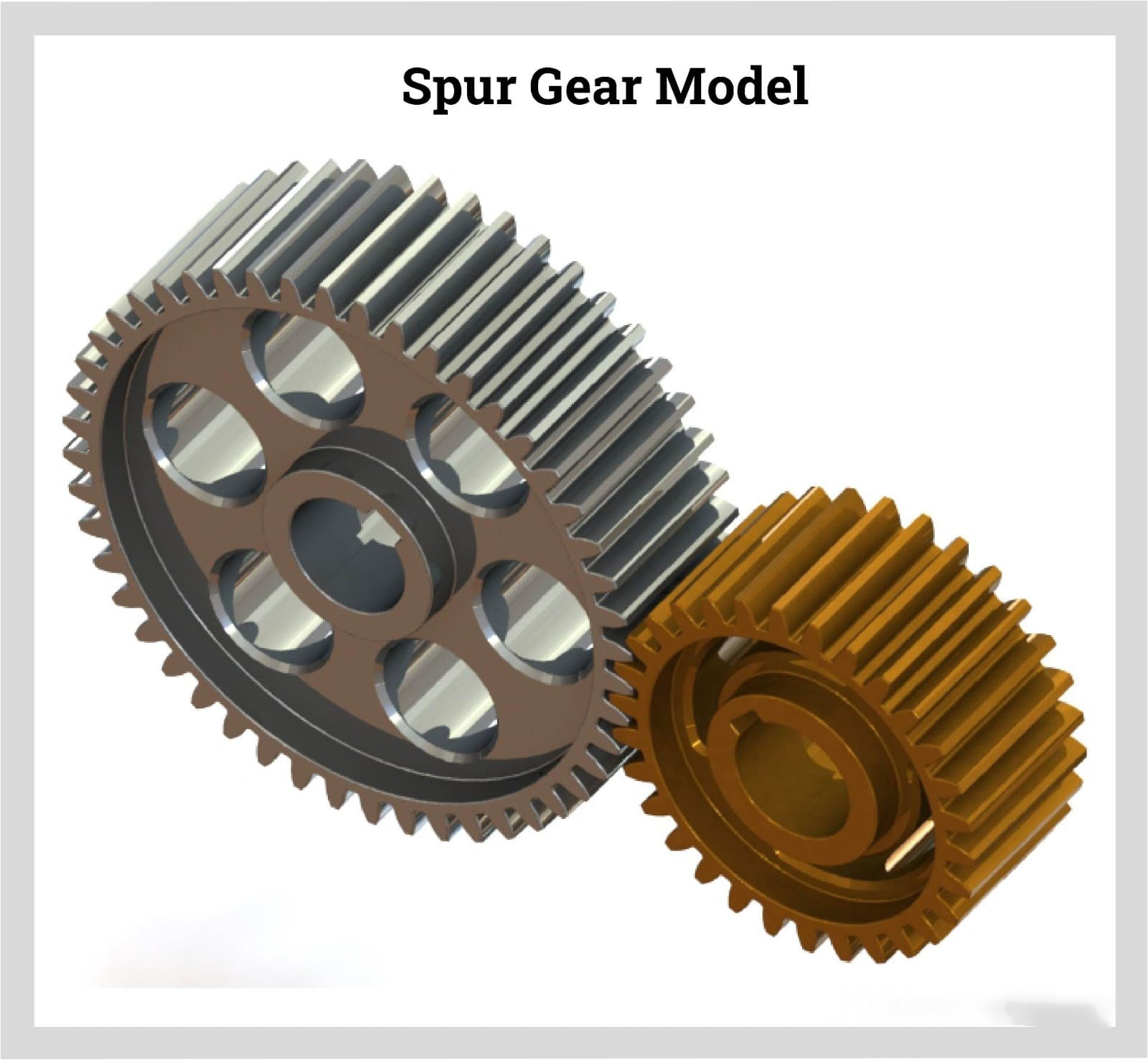
Can spur gears be used in both horizontal and vertical orientations?
Yes, spur gears can be used in both horizontal and vertical orientations. Here’s a detailed explanation:
Spur gears are one of the most common types of gears used in various applications. They have straight teeth that are parallel to the gear axis and are designed to transmit power and torque between parallel shafts. The versatility of spur gears allows them to be used in different orientations, including horizontal and vertical configurations.
Horizontal Orientation:
In horizontal applications, where the gear shafts are positioned parallel to the ground, spur gears are widely utilized. Horizontal orientations are commonly found in machinery such as conveyor systems, automobiles, industrial equipment, and many other applications. Spur gears in horizontal configurations can efficiently transmit power and torque between shafts, providing reliable operation and smooth gear engagement.
Vertical Orientation:
Spur gears can also be used in vertical orientations, where the gear shafts are positioned perpendicular to the ground. Vertical gear arrangements are often encountered in applications such as wind turbines, elevators, vertical conveyor systems, and various industrial machinery. In these cases, the weight of the gears and any additional loads acting on them must be considered to ensure proper load distribution and support. Adequate lubrication and proper gear design, including tooth profile and material selection, are important factors to ensure reliable and efficient operation in vertical orientations.
When using spur gears in vertical orientations, some additional considerations may be necessary due to the effects of gravity and potential oil leakage. In vertical applications, gravity can affect the distribution of lubricant, potentially leading to inadequate lubrication of gear teeth. Proper lubrication techniques and lubricant selection should be employed to ensure sufficient film thickness and minimize wear. Additionally, seals or other measures may be required to prevent oil leakage, especially in applications where high-speed rotation or high loads are involved.
It’s important to note that while spur gears can be used in both horizontal and vertical orientations, the specific design and configuration of the gear system should be evaluated to ensure optimal performance and longevity. Factors such as load distribution, gear alignment, lubrication, and material selection should be carefully considered based on the intended orientation and operating conditions of the gear system.
Consulting with gear manufacturers, engineers, or industry experts can provide further guidance on the suitability and design considerations when using spur gears in horizontal or vertical orientations.
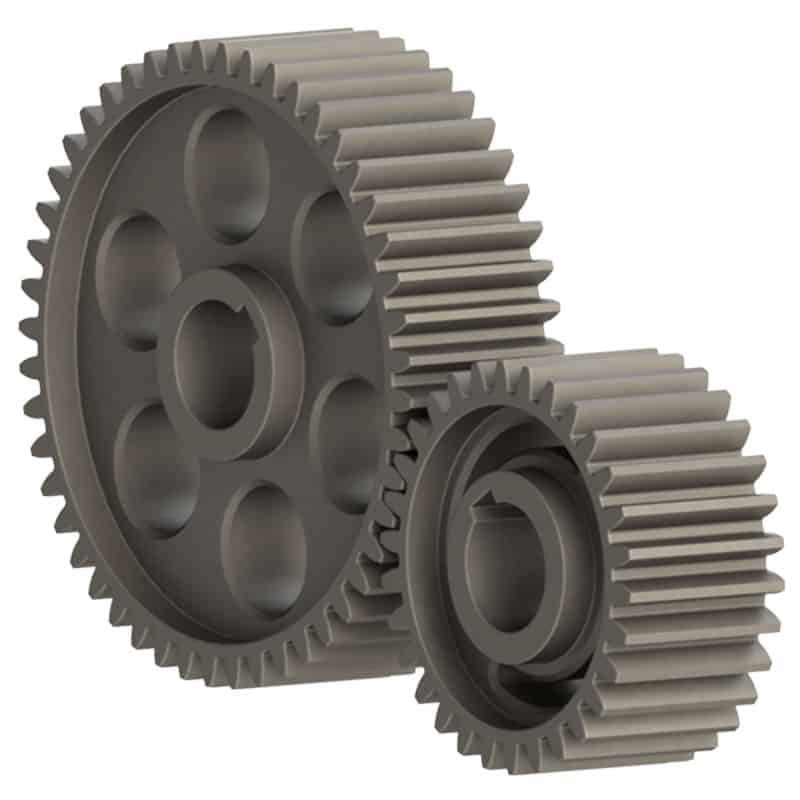
How do you install a spur gear system?
Installing a spur gear system involves several steps to ensure proper alignment, engagement, and operation. Here’s a detailed explanation of how to install a spur gear system:
- Preparation: Before installation, gather all the necessary components, including the spur gears, shafts, bearings, and any additional mounting hardware. Ensure that the gear system components are clean and free from debris or damage.
- Shaft Alignment: Proper shaft alignment is crucial for the smooth operation of a spur gear system. Ensure that the shafts on which the gears will be mounted are aligned accurately and parallel to each other. This can be achieved using alignment tools such as dial indicators or laser alignment systems. Adjust the shaft positions as needed to achieve the desired alignment.
- Positioning the Gears: Place the spur gears on the respective shafts in the desired configuration. Ensure that the gears are positioned securely and centered on the shafts. For shafts with keyways, align the gears with the key and ensure a proper fit. Use any necessary mounting hardware, such as set screws or retaining rings, to secure the gears in place.
- Checking Gear Engagement: Verify that the teeth of the gears mesh properly with each other. The gear teeth should align accurately and smoothly without any excessive gaps or interference. Rotate the gears by hand to ensure smooth and consistent meshing throughout their rotation. If any misalignment or interference is observed, adjust the gear positions or shaft alignment accordingly.
- Bearing Installation: If the spur gear system requires bearings to support the shafts, install the bearings onto the shafts. Ensure that the bearings are the correct size and type for the application. Press or slide the bearings onto the shafts until they are seated securely against any shoulder or bearing housing. Use appropriate methods and tools to prevent damage to the bearings during installation.
- Lubrication: Apply a suitable lubricant to the gear teeth and bearings to ensure smooth operation and reduce friction. Refer to the gear manufacturer’s recommendations for the appropriate lubrication type and amount. Proper lubrication helps minimize wear, noise, and heat generation in the gear system.
- Final Inspection: Once the gears, shafts, and bearings are installed, perform a final inspection of the entire spur gear system. Check for any unusual noises, misalignment, or binding during manual rotation. Verify that the gears are securely mounted, shafts are properly aligned, and all fasteners are tightened to the specified torque values.
It’s important to follow the specific installation instructions provided by the gear manufacturer to ensure proper installation and operation. Additionally, consult any applicable industry standards and guidelines for gear system installation.
By carefully following these installation steps, you can ensure a well-aligned and properly functioning spur gear system in your machinery or equipment.
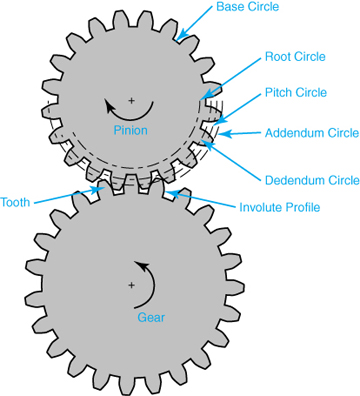
How do spur gears contribute to power transmission?
Spur gears play a crucial role in power transmission due to their specific design and tooth engagement. Here’s a detailed explanation of how spur gears contribute to power transmission:
- Direct Tooth Engagement: Spur gears have straight teeth that mesh directly with each other. This direct tooth engagement ensures efficient transfer of power from one gear to another. As the driving gear rotates, its teeth come into contact with the teeth of the driven gear, enabling the transfer of rotational motion and torque.
- Uniform Load Distribution: The teeth of spur gears distribute the transmitted load evenly across the gear surfaces. The straight, parallel teeth provide a larger contact area compared to other gear types, resulting in improved load-carrying capacity and reduced stress concentration. This uniform load distribution helps prevent premature wear and failure of the gears, ensuring reliable power transmission.
- Efficiency: Spur gears are known for their high efficiency in power transmission. The direct tooth engagement and parallel shaft arrangement minimize energy losses during rotation. The teeth mesh smoothly, resulting in minimal friction and reduced power dissipation. This efficiency is beneficial in applications where maximizing power transfer and minimizing energy waste are crucial.
- Speed and Torque Conversion: Spur gears allow for speed and torque conversion between the driving and driven shafts. By using gears with different numbers of teeth, the rotational speed and torque can be adjusted to match the requirements of the application. For example, a small gear driving a larger gear will result in a higher torque output at a lower speed, while a larger gear driving a smaller gear will result in a higher speed output at a lower torque.
- Directional Control: The arrangement of spur gears can be used to control the rotational direction of the driven shaft relative to the driving shaft. By meshing gears with opposite orientations (e.g., one gear with clockwise teeth and another gear with counterclockwise teeth), the direction of rotation can be reversed. This directional control is essential in applications where the desired motion needs to be reversed or changed.
- Multiple Gear Configurations: Spur gears can be combined in various configurations to form gear trains, allowing for complex power transmission systems. Gear trains consist of multiple gears meshing together, with each gear contributing to the overall power transmission. Gear trains can alter speed, torque, and direction, providing flexibility in adapting power transmission to specific requirements.
- Compatibility with Other Components: Spur gears are compatible with a wide range of other mechanical components, such as shafts, bearings, and housings. This compatibility allows for easy integration into different systems and machinery. Spur gears can be mounted on shafts using keyways, set screws, or other mounting methods, ensuring secure and reliable power transmission.
Overall, spur gears are essential in power transmission systems due to their direct tooth engagement, uniform load distribution, high efficiency, speed and torque conversion capabilities, directional control, compatibility with other components, and the ability to form complex gear trains. These characteristics make spur gears a versatile and widely used choice for transmitting power in various applications across industries.


editor by CX 2024-04-11