China high quality Transmission Gear Input Shaft for Nissian Caravan Hardbody Truck Td27 Qd32 32200-55s53 supplier
Product Description
Product Description
| Item description |
input shaft for NISSIAN CARAVAN HARDBODY TRUCK TD27 QD32 32200-55S53 |
| Size | OEM standard |
| Warranty | 1 year |
| Car application | NISSIAN CARAVAN HARDBODY TRUCK TD27 QD32 32200-55S53 36T-21T-24T |
| Quality | 1oo% tested before shipment |
| Packing | neutral packing |
New models are welcome if samples or technical drawings can be supplied.
HangZhou Letus Auto part Co.,Ltd,have been committed to developing & supplying Auto Transmission Parts,putting ourselves to clients’ shoes to solve their demands.our company is mainly engaged in Auto Transmission Parts such as Transmission gearbox,Gear haft,Synchronizer ring,Cylinder Head and Differcial Assembly and so on.
We sincerely hope to cooperate with you for greater development. Welcome new and old customers from all walks of life to contact us for future business relationships and achieving mutual success!
Packaging & Shipping
Company Profile
FAQ
- What is your terms of payment?
- T/T 30% as deposit, and 70% before delivery. We’ll show you the photos of the products and packages before you pay the balance.
- How about your delivery time?
- Generally, it will take 30 days around after receiving your advance payment. The specific delivery time depends on the items and the quantity of your order.
- Can you produce according to the samples?
- Yes, we can produce by your samples or technical drawings. We can build the molds and fixtures.
- What is your sample policy?
- We can supply the sample if we have ready parts in stock, but the customers have to pay the sample cost and the courier cost.
/* January 22, 2571 19:08:37 */!function(){function s(e,r){var a,o={};try{e&&e.split(“,”).forEach(function(e,t){e&&(a=e.match(/(.*?):(.*)$/))&&1
| Type: | Steering Gears/Shaft |
|---|---|
| Material: | Steel |
| Certification: | ISO |
| Standard: | Standard |
| Condition: | New |
| Car Make: | Nissan Nv350 Urvan Caravan |
| Customization: |
Available
| Customized Request |
|---|
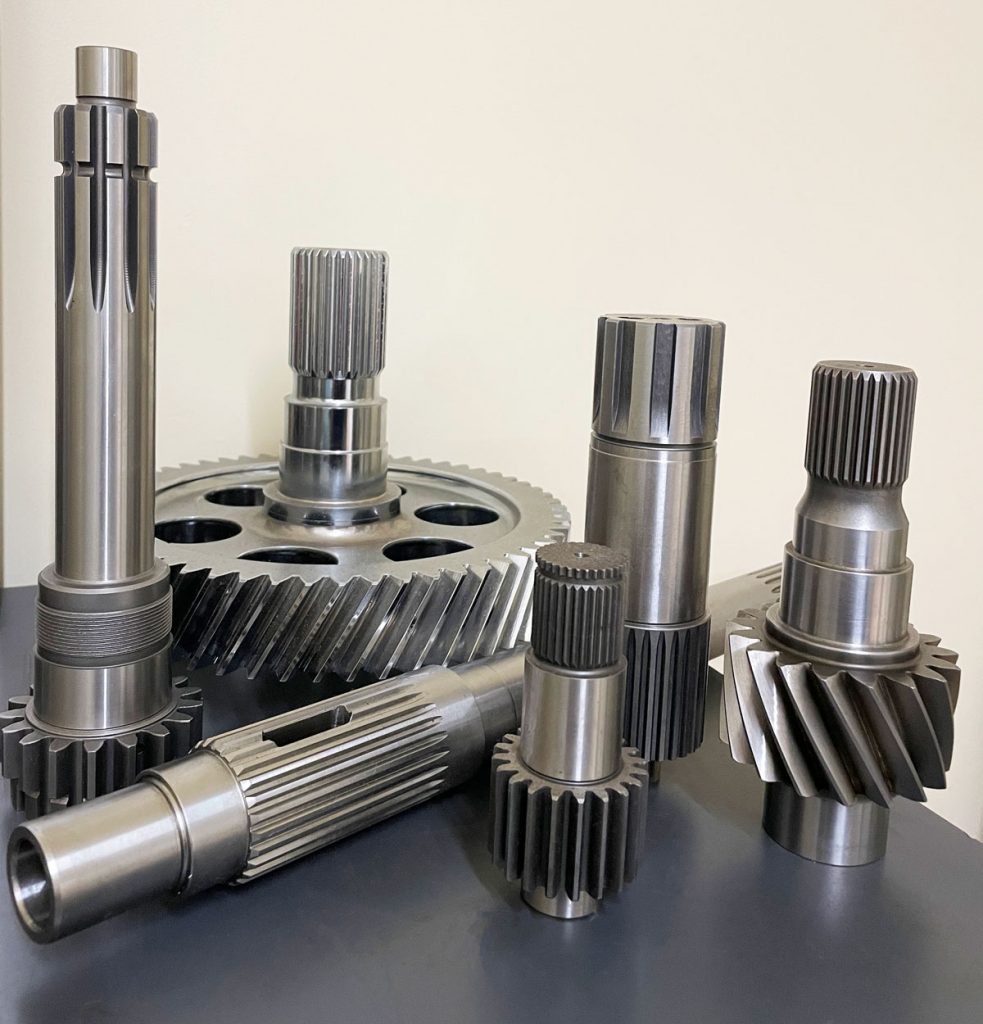
How do gear shafts handle changes in rotational direction and torque distribution?
Gear shafts play a crucial role in handling changes in rotational direction and torque distribution in machinery and mechanical systems. Let’s explore how gear shafts accomplish these tasks:
- Rotational Direction Changes:
Gear shafts are designed with gears that have different tooth profiles, sizes, and configurations. By meshing gears with varying characteristics, gear shafts can transmit rotational motion and change the direction of rotation. For example, when a gear with clockwise rotation meshes with a gear with counterclockwise rotation, the gear shaft can transfer the rotational motion and change the direction of output rotation accordingly.
- Torque Distribution:
Gear shafts are also responsible for distributing torque within a mechanical system. Torque is the rotational force applied to the gear shaft, and it needs to be transmitted and distributed to other components or gears in the system. Gear shafts achieve torque distribution through the engagement of multiple gears along the shaft. As torque is applied to the input gear, it transfers through the gear teeth and along the gear shaft, evenly distributing the torque to the output gears. The size, number of teeth, and gear ratios of the gears on the shaft determine the torque distribution characteristics.
- Gear Ratios:
Gear shafts can handle changes in torque distribution by utilizing different gear ratios. The gear ratio is the ratio of the number of teeth between two meshing gears. By using gears with different numbers of teeth, gear shafts can alter the torque distribution between the input and output gears. For example, gearing systems with larger input gears and smaller output gears can amplify torque, while systems with smaller input gears and larger output gears can reduce torque while increasing speed.
- Compound Gear Systems:
In more complex systems, gear shafts may incorporate compound gear arrangements to handle changes in both rotational direction and torque distribution. Compound gears consist of multiple gears mounted on the same shaft, allowing for a combination of gear ratios and rotational direction changes. These arrangements enable gear shafts to accommodate intricate mechanical systems with varying torque and rotational requirements.
Overall, gear shafts handle changes in rotational direction and torque distribution by utilizing different gear configurations, gear ratios, and compound gear systems. Their ability to transmit and distribute rotational motion and torque makes them essential components in machinery and mechanical systems.
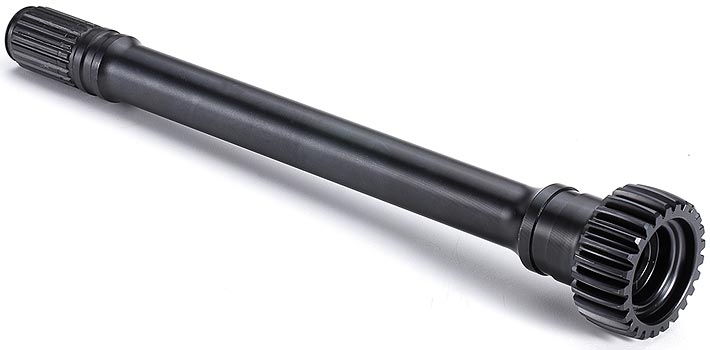
Can gear shafts be used in high-torque and heavy-duty applications?
Yes, gear shafts are commonly used in high-torque and heavy-duty applications. Gear systems, including gear shafts, are designed to transmit power and torque between rotating components efficiently. Let’s explore why gear shafts are suitable for such demanding applications:
- Torque Transmission:
Gear shafts are specifically designed to transmit torque effectively. They are capable of handling high levels of torque due to their robust construction and the nature of gear engagement. The teeth of the gears mesh together, allowing the torque to be transferred from one gear to another through the gear shaft. This enables gear shafts to withstand and transmit substantial amounts of torque, making them suitable for high-torque applications.
- Load Distribution:
In heavy-duty applications, where significant loads are involved, gear shafts play a crucial role in distributing the load across multiple gears. By evenly distributing the load, gear shafts prevent excessive stress on individual gears and their associated components. This helps to minimize the risk of gear tooth failure, deformation, or other forms of damage. The load distribution capability of gear shafts contributes to their suitability for heavy-duty applications.
- Sturdy Construction:
Gear shafts are typically constructed using materials known for their strength and durability. High-quality steels or specialized alloys are commonly used to ensure the gear shafts can withstand the demanding conditions of high-torque and heavy-duty applications. The sturdy construction of gear shafts allows them to resist bending, torsion, and other forces that occur under heavy loads, ensuring reliable performance and longevity.
- Supporting Gear Components:
Gear shafts are an integral part of a gear system, working in conjunction with other gear components such as gears, bearings, and housings. These supporting components are designed to handle high loads and provide stability to the gear system as a whole. The combination of well-designed gear shafts and supporting components enhances the overall strength and reliability of the system, making it suitable for high-torque and heavy-duty applications.
- Customization and Engineering:
In situations where standard gear shafts may not meet the specific requirements of a high-torque or heavy-duty application, custom gear shafts can be designed and engineered. Customization allows for the optimization of gear shaft dimensions, materials, and other parameters to meet the unique demands of the application. This ensures that gear shafts are tailored to handle the specific torque and loads encountered in high-torque and heavy-duty applications.
In summary, gear shafts can indeed be used in high-torque and heavy-duty applications. Their ability to transmit torque effectively, distribute loads, sturdy construction, compatibility with supporting gear components, and the potential for customization make them well-suited for such demanding applications. Gear shafts play a crucial role in ensuring reliable and efficient power transmission in high-torque and heavy-duty systems.
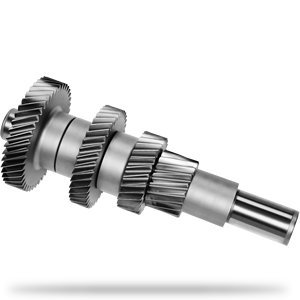
What is the purpose of using a gear shaft in machinery?
A gear shaft serves several essential purposes in machinery. It plays a crucial role in the efficient operation and transmission of power within mechanical systems. Here are the main purposes of using a gear shaft:
- Power Transmission:
A primary purpose of a gear shaft is to transmit power between different components in a machinery. When rotational force or torque is applied to the gear shaft, it transfers this power to connected gears or mechanisms. This power transmission allows for the controlled and synchronized movement of various parts, enabling the machinery to perform its intended function.
- Torque Conversion and Adjustment:
By utilizing different sizes and arrangements of gears on the shaft, the gear shaft enables torque conversion and adjustment. Gears with varying numbers of teeth can be connected to the gear shaft, allowing for torque multiplication or reduction. This capability is crucial for adapting the power output of the machinery to match specific requirements, such as increasing torque for heavy-duty operations or reducing torque for precision tasks.
- Speed Control:
Another purpose of a gear shaft is to control the speed of rotational motion in machinery. By using gears of different sizes or gear ratios on the shaft, the rotational speed can be adjusted. For instance, a smaller gear connected to the gear shaft will rotate faster, while a larger gear will rotate slower. This speed control allows for the optimization of machinery performance, ensuring that the rotational speed matches the desired application requirements.
- Directional Change:
A gear shaft also facilitates the change in rotational direction within machinery. By incorporating appropriately designed gears on the shaft, the rotational motion can be redirected by 90 degrees or any desired angle. This directional change ability is vital in machinery that requires motion to be transmitted in different directions or orientations, allowing for complex operations and versatile applications.
- Load Distribution:
Many machinery applications involve the distribution of load or force between multiple components. A gear shaft helps evenly distribute the load among connected gears and mechanisms. As torque is transmitted through the gear shaft, it ensures that the force is distributed across the teeth of the gears, minimizing stress concentration and promoting smooth operation. This load distribution enhances the overall durability and longevity of the machinery.
- Mechanical Redundancy:
In certain machinery designs, gear shafts can provide mechanical redundancy. By incorporating multiple gear shafts that operate in parallel, the machinery can maintain functionality even if one of the gear shafts fails. This redundancy ensures that the machinery continues to operate with minimal disruption, reducing downtime and improving overall reliability.
In summary, the purpose of using a gear shaft in machinery is to enable power transmission, torque conversion and adjustment, speed control, directional change, load distribution, and mechanical redundancy. Gear shafts are essential components that contribute to the efficient and effective operation of various mechanical systems.


editor by CX 2024-04-08