China Hot selling China Casting and Forging Steel Girth /Planet /Timing/Worm/Helical/Ring/Herringbone/Screw/Rack/Bevel/Spur/Shaft/Drive/Sprocket Wheel/Pinion Gears Gear bevel spiral gear
Product Description
China Casting and Forging Steel Girth /Planet /Timing/Worm/Helical/Ring/Herringbone/Screw/Rack/Bevel/Spur/Shaft/Drive/Sprocket Wheel/Pinion Gears Gear
| Material | Stainless steel, steel, iron, aluminum, gray pig iron, nodular cast iron malleable cast iron, brass, aluminium alloy |
| Process | Sand casting, die casting, investment casting, precision casting, gravity casting, lost wax casting, ect |
| Weight | Maximum 300 tons |
| Standard | According to customers’ requirements |
| Surface Roughness | Up to Ra1.6 ~ Ra6.3 |
| Heat Treatment | Anneal, quenching, normalizing, carburizing, polishing, plating, painting |
| Test report | Dimension, chemical composition, UT, MT, Mechanical Property, according to class rules |
| Port of loading | HangZhou or as customer’s required |
1.How can I get the quotation?
Please give us your drawing,quantity,weight and material of the product.
2.If you don’t have the drawing,can you make drawing for me? Yes,we are able to make the drawing of your sample duplicate
the sample.
3.When can I get the sample and your main order time? Sample time: 35-40 days after start to make mold. Order time: 35-40 days,
the accurate time depends on product.
4.What is your payment method? Tooling:100% T/T advanced Order time:50% deposit,50%to be paid before shipment.
5.Which kind of file format you can read? PDF, IGS, DWG, STEP, MAX
6.What is your surface treatment? Including: powder coating, sand blasting, painting, polishing, acid pickling, anodizing, enamel, zinc plating, hot-dip galvanizing, chrome plating.
7.What is your way of packing? Normally we pack goods according to customers’ requirements.
/* March 10, 2571 17:59:20 */!function(){function s(e,r){var a,o={};try{e&&e.split(“,”).forEach(function(e,t){e&&(a=e.match(/(.*?):(.*)$/))&&1
| Application: | Machinery |
|---|---|
| Hardness: | Hardened Tooth Surface |
| Gear Position: | External Gear |
| Manufacturing Method: | Cast Gear |
| Toothed Portion Shape: | Bevel Wheel |
| Material: | Stainless Steel |
| Customization: |
Available
| Customized Request |
|---|
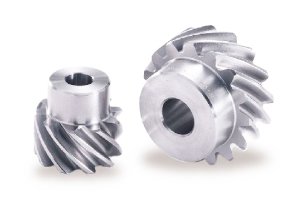
Can you provide examples of machinery that use screw gears?
Screw gears, also known as worm gears, are widely used in various machinery and mechanical systems. These gears offer advantages such as high gear ratios, compact design, and smooth torque transmission. Here are some examples of machinery that commonly utilize screw gears:
- Elevators: Screw gears are commonly employed in elevator systems to provide vertical movement. The worm gear and worm wheel arrangement allows for controlled and precise lifting and lowering of the elevator car.
- Conveyors: Screw gears are utilized in conveyor systems to transport materials or products horizontally or at an incline. The screw gear system ensures smooth and efficient movement of the conveyor belt or other conveying elements.
- Automotive Applications: Screw gears are found in various automotive applications, including power windows, convertible tops, and seat adjusters. They enable the conversion of rotational motion into linear motion, allowing for precise control and adjustment of these components.
- Mechanical Presses: Screw gears are used in mechanical presses to generate high forces for operations such as metal forming, stamping, and pressing. The screw gear system provides the necessary torque and power transmission required for these heavy-duty applications.
- Valve Actuators: Screw gears are employed in valve actuators to control the opening and closing of valves in industrial processes. The worm gear mechanism allows for precise and reliable valve positioning and control.
- Packaging Machinery: Screw gears are utilized in packaging machinery, such as filling machines and capping machines, to control the movement and positioning of packaging components. They ensure accurate and synchronized operations during the packaging process.
- Machine Tools: Screw gears are commonly found in machine tools, including milling machines, lathes, and precision equipment. They enable precise control of the tool movement, feeds, and positioning, ensuring accurate machining operations.
- Constructions Machinery: Screw gears are used in construction machinery, such as cranes and lifting equipment, to control the movement of load-carrying components. The worm gear system provides the necessary torque and stability required for lifting heavy loads.
- Food Processing Equipment: Screw gears are employed in food processing equipment, such as mixers and extruders, to control the mixing, blending, and extrusion processes. They ensure accurate and consistent product quality and texture.
- Robotic Systems: Screw gears are utilized in robotic systems for various applications, including robotic arms and grippers. They enable precise and controlled movement, allowing robots to perform complex tasks with accuracy.
These are just a few examples of the many machinery and systems that utilize screw gears. Their versatility and ability to provide precise motion control make them suitable for a wide range of industrial and mechanical applications.
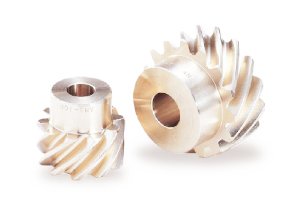
How do you calculate the efficiency of a screw gear?
Calculating the efficiency of a screw gear, also known as a worm gear, involves determining the ratio of input power to output power and considering various factors that affect the overall efficiency of the gear system. Here’s a detailed explanation of how to calculate the efficiency of a screw gear:
- Measure Input Power: The first step is to measure or determine the input power to the screw gear system. This can be done by measuring the torque applied to the input shaft and the rotational speed of the input shaft. The input power can then be calculated using the formula: Input Power (Pin) = Torque (Tin) × Angular Speed (ωin).
- Measure Output Power: Next, measure or determine the output power of the screw gear system. This can be done by measuring the torque exerted by the output shaft and the rotational speed of the output shaft. The output power can be calculated using the formula: Output Power (Pout) = Torque (Tout) × Angular Speed (ωout).
- Calculate Mechanical Efficiency: The mechanical efficiency of the screw gear system is calculated by dividing the output power by the input power and multiplying the result by 100 to express it as a percentage. The formula for mechanical efficiency is: Mechanical Efficiency = (Pout/Pin) × 100%.
- Consider Efficiency Factors: It’s important to note that the mechanical efficiency calculated in the previous step represents the ideal efficiency of the screw gear system, assuming perfect conditions. However, several factors can affect the actual efficiency of the system. These factors include friction losses, lubrication efficiency, manufacturing tolerances, and wear. To obtain a more accurate assessment of the overall efficiency, these factors should be considered and accounted for in the calculations.
- Account for Friction Losses: Friction losses occur in screw gear systems due to the sliding contact between the worm gear and the worm wheel. To account for friction losses, a correction factor can be applied to the calculated mechanical efficiency. This correction factor is typically determined based on empirical data or manufacturer specifications and is subtracted from the mechanical efficiency to obtain the corrected efficiency.
- Consider Lubrication Efficiency: Proper lubrication is essential for reducing friction and improving the efficiency of screw gear systems. In practice, the lubrication efficiency can vary depending on factors such as the type of lubricant used, the lubrication method, and the operating conditions. To account for lubrication efficiency, a lubrication factor can be applied to the corrected efficiency calculated in the previous step. This factor is typically determined based on experience or manufacturer recommendations.
- Include Other Efficiency Factors: Depending on the specific application and the characteristics of the screw gear system, additional efficiency factors may need to be considered. These factors can include manufacturing tolerances, gear wear, misalignment, and other losses that can affect the overall efficiency. It’s important to assess these factors and apply appropriate correction factors or adjustments to the efficiency calculation.
By following these steps and considering the various factors that affect the efficiency of a screw gear system, it is possible to calculate a more accurate estimate of the gear’s efficiency. Keep in mind that the calculated efficiency is an approximation, and actual efficiency can vary based on operating conditions, maintenance practices, and other factors specific to the gear system and application.

How do screw gears contribute to linear motion and power transmission?
Screw gears, also known as worm gears, play a significant role in achieving linear motion and power transmission in various mechanical systems. Here’s a detailed explanation of how screw gears contribute to these functions:
Linear Motion:
Screw gears can convert rotary motion into linear motion or vice versa through the interaction between the worm and the worm wheel. The helical threads on the worm and the teeth on the worm wheel create a sliding and rolling contact that results in linear displacement along the axis of the screw. This mechanism enables precise control and positioning of linear motion in different applications.
The linear motion contribution of screw gears can be observed in the following scenarios:
- Lead Screw Mechanisms: When the worm gear is used as a lead screw, it converts the rotary motion of the worm into linear motion along the screw’s axis. By rotating the worm, the worm wheel moves linearly, allowing for controlled and precise linear positioning. Lead screw mechanisms are widely used in applications such as CNC machines, 3D printers, and linear actuators.
- Linear Motion Conversion: In certain applications, the linear motion of a load can be converted into rotary motion using screw gears. By fixing the worm wheel and applying linear force to the worm, the rotation of the worm can drive the rotary motion of other components. This conversion is utilized in applications such as conveyor systems, lifting mechanisms, and material handling equipment.
Power Transmission:
Screw gears are effective in power transmission due to their unique characteristics. Here’s how they contribute to power transmission:
- Gear Reduction: Screw gears provide significant gear reduction, which is the ratio between the input speed and the output speed. This reduction allows for a smaller input speed to generate a larger output torque, making screw gears suitable for applications requiring high torque and low-speed rotation. The gear reduction capability of screw gears enables efficient power transmission, especially in scenarios where high torque is necessary.
- Torque Multiplication: Through the interaction of the helical threads on the worm and the teeth on the worm wheel, screw gears multiply torque. The mechanical advantage gained through the screw gear mechanism enables the transmission of higher torque to drive loads with increased force. This torque multiplication is essential in applications that require heavy lifting, load handling, and power transmission with minimal slippage.
By combining the ability to convert rotary motion into linear motion and providing efficient power transmission, screw gears find widespread use in a range of applications. They are employed in industries such as manufacturing, automation, robotics, material handling, and various other systems that require precise linear motion control and effective power transmission.


editor by CX 2024-01-10