China Hot selling Differential Custom Internal Nylon Plastic Double Spur Gear bevel spiral gear
Product Description
Product Description
|
Item |
China Manufacturers High Precision Nylon Steel Stainless Plastic Casting Double Spur Gear |
|
Material |
ABS, PC/ABS, PP, PC, POM(Delrin), Nylon 6, Nylon 6/6, PA 12, HDPE, LDPE, PS(HIPS), SAN/AS, ASA, PVC, UPVC, TPE, TPR, PU, TPU, PET, PEI(Ultem), PSU, PPSU, PPE/PS, PTFE, GPPS, PPO, PES, CA, etc |
|
Certificate |
IATF 16949:2016 / ISO 9001:2015 / ISO 45001:2018 / ISO 14001:2015 /REACH/ROHS/MSDS/LFGB/F D A |
|
Drawing Format |
.stp / .step / .igs /.CHINAMFG /.dwg / .pdf |
|
Color |
Almost all PMS colors available. |
|
Parameters |
Inch, centimeter, millimeter, etc. |
|
Function |
Industrial parts /daily supply / Medical grade supply, etc. |
|
Surface Treatment |
Matte, Common polishing, Mirror polishing, Texture, Plating, Power Coating (Painting), Laser Engraving, Brushing, Marbling, Printing etc. |
|
Mold Material |
S136H, 718H, NAK80, P20, H13, etc. |
|
Mold Precision |
If no special request, apply to SJ/T10628-1995 standards, class 3. |
|
Mold Life-cycle |
100,000-500,000 shots. |
|
Packing |
Pack in bulk / poly bag / bubble bag / color box. |
|
Sample |
Available. One cavity sample mold or 3D printing. |
|
Price Tip |
The price shown above is just for reference, final actual price depends on your design, material request, surface treatment, order qty, package request, etc. |
Differential Custom Internal Nylon Plastic Double Spur Gear
1. Rapid Prototyping & On-demand production services;
2. Professional DFM Report before Mould Making;
3.Capability for Plastic Injection Molding is up to 1500mm
DFM Report (Design for Manufacturability) for Reference.
Some Custom CHINAMFG & Moulds for Your Reference.
Neway Highly Welcome Your Own Custom Designs !!!
Neway Support Custom Design Moulds & Moulds Export.
Neway Can Also Provide Mould Spare Parts Export, eg: Slider, Inserts, Ejector Pins, etc.
NEWAY has complete production chain from R&D, Rapid Prototypes, mould design, mould making, components production, assembling, packing to export. Having 1 supplier like CHINAMFG for the complete assembly will allow for better design, quality, and fit of all the individual parts.
The most common used surface treatment are: Matte, Texture (fine texture, rough texture…), Common Polishing, Mirror Polishing, Laser Engraving, Printing, Plating, Brushing, Marbling), etc. You can view below surface pictures for reference
Company Profile
Our Advantages
Good reviews of customer
Certifications
Below are some inspection equipment for reference:
And attach the injection molding CHINAMFG inspection report for reference:
Packaging & Shipping
FAQ
Q1. How soon can I get a precise quotation for custom plastic injection part?
A1: Please send us your inquiry by email or Alibaba TM message. Once we confirm the design (Feature details with parameters), material, color, qty, we can provide quotation within 24 HOURS.
Q2: Can I get a free sample, how long will it take?
A2: a. For standard products we have in stock, YES for free sample, but the express fee will be charged in advance.
Mostly, it takes 3-10 days.
b. For custom products, sample fee is determined by the detailed sample requirements. Normally, it takes 7-15 days.
Q3: Can you make custom parts based on my sample?
A3: Yes, you can send the sample to us by express and we will evaluate the sample, scan the features and draft 3D drawing for production.
Q4: What does your OEM service include?
A4: We follow up your request from the design idea to the mass production.
a. You can provide 3D drawing to us, then our engineers and production teams evaluate the design and quote you the precise cost.
b. If you don’t have 3D drawing, you can provide 2D drawing or draft with features details with full dimensions, we can draft 3D drawing for you with fair charge.
c. You can also customize Logo on the product surface, package, color box or carton.
d. We also provide assembly service for the OEM parts.
Q5. What is your payment term?
A5: We accept T/T, Paypal, Western Union, L/C, Alibaba Trade Assurance.
Work with Neway, your business is in safe and your money is in safe!
If you can dream it, we can build it!
/* January 22, 2571 19:08:37 */!function(){function s(e,r){var a,o={};try{e&&e.split(“,”).forEach(function(e,t){e&&(a=e.match(/(.*?):(.*)$/))&&1
| Application: | Motor, Electric Cars, Motorcycle, Machinery, Car, Others |
|---|---|
| Hardness: | Hardened Tooth Surface |
| Gear Position: | Internal Gear |
| Manufacturing Method: | Plastic Injection |
| Toothed Portion Shape: | Bevel Wheel |
| Material: | Plastic |
| Samples: |
US$ 10/Piece
1 Piece(Min.Order) | |
|---|
| Customization: |
Available
| Customized Request |
|---|
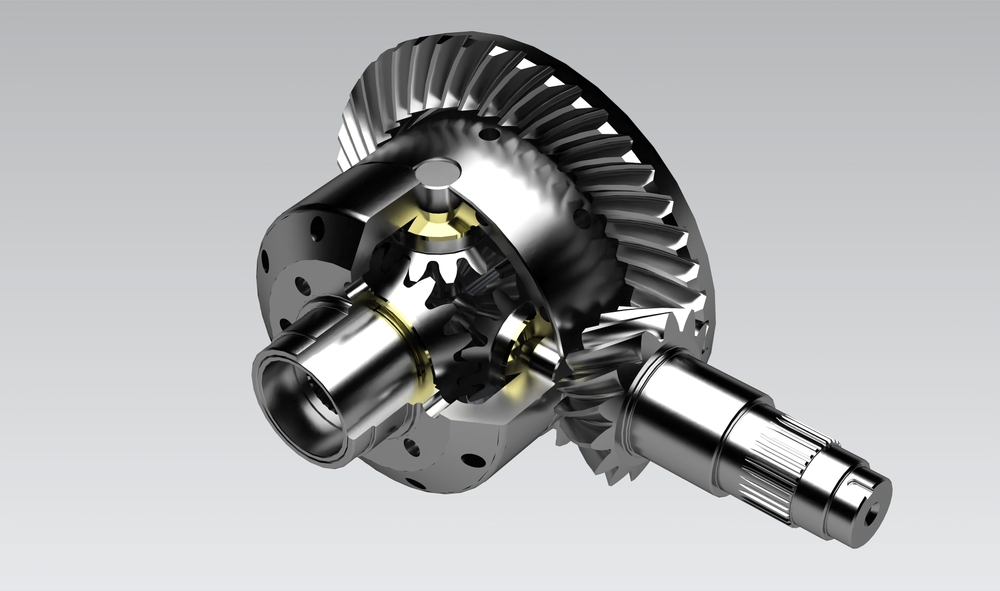
How do differential gears handle varying speeds in a vehicle’s wheels?
A differential gear system is designed to handle varying speeds in a vehicle’s wheels, allowing them to rotate at different rates while maintaining torque distribution. Here’s a detailed explanation of how differential gears achieve this:
1. Differential Assembly:
The differential assembly consists of several gears, including the ring and pinion gears, side gears, and spider gears. These components work together to accommodate varying speeds between the wheels.
2. Power Input:
The power is delivered to the differential gears through the driveshaft or transmission. The ring gear receives this power from the driveshaft, while the pinion gear is connected to the ring gear and transfers the rotational force to the differential assembly.
3. Speed Differences:
When a vehicle is moving in a straight line, the wheels ideally rotate at the same speed. However, during turns or when encountering different traction conditions, the wheels need to rotate at varying speeds. This is because the wheel on the outside of a turn covers a greater distance than the inside wheel, resulting in a speed differential.
4. Spider Gears:
The differential gears utilize spider gears, which are small gears located between the side gears. Spider gears allow the side gears to rotate independently of each other, accommodating the speed differences between the wheels.
5. Torque Distribution:
As the spider gears allow the side gears to rotate independently, torque is distributed between the wheels based on their speed differences. The wheel with less resistance or greater traction receives more torque, while the wheel with more resistance or lower traction receives less torque.
6. Smooth Cornering:
During turns, the inside wheel needs to rotate at a slower speed than the outside wheel. The differential gears allow this speed differentiation, enabling smooth cornering without wheel hop or tire scrubbing. By distributing torque appropriately, the differential gears ensure that both wheels receive sufficient power for optimal traction and control.
7. Limited-Slip and Locking Differentials:
In certain differential systems, such as limited-slip differentials or locking differentials, additional mechanisms are employed to further regulate speed differences and torque distribution. Limited-slip differentials use clutch packs or friction plates to provide a predetermined amount of resistance, allowing some differentiation between the wheels while still transferring power. Locking differentials lock the side gears together, ensuring equal torque distribution to both wheels, regardless of traction conditions.
8. Differential Types:
There are different types of differentials, including open differentials, limited-slip differentials, electronic differentials, torque vectoring differentials, and more. Each type utilizes specific technologies and mechanisms to handle varying speeds and torque distribution based on the vehicle’s requirements and driving conditions.
In summary, differential gears handle varying speeds in a vehicle’s wheels by utilizing a system of gears, including spider gears, side gears, ring and pinion gears. The speed differences between the wheels are accommodated by allowing independent rotation of the side gears through the spider gears. Torque distribution is adjusted to ensure optimal traction and control during turns and varying traction conditions. Additional mechanisms, such as limited-slip or locking differentials, can further regulate speed differences and torque distribution for enhanced performance and stability.
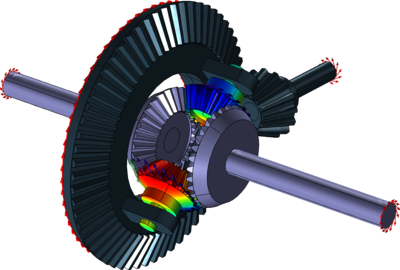
What is the role of a center differential in all-wheel-drive systems?
In an all-wheel-drive (AWD) system, the center differential plays a crucial role in distributing power between the front and rear wheels. It is responsible for managing torque transfer and ensuring optimal traction and stability in various driving conditions. Here’s a detailed explanation of the role of a center differential in all-wheel-drive systems:
- Torque Distribution: The center differential’s primary function is to distribute torque between the front and rear axles in an AWD system. It receives power from the engine and transmits it to both the front and rear wheels. The distribution of torque can vary depending on the design and capabilities of the center differential.
- Power Split: The center differential splits the engine’s power between the front and rear axles in a manner that optimizes traction and stability. Under normal driving conditions, it typically distributes torque evenly, providing balanced power to all wheels. This balanced power distribution helps enhance vehicle control and stability.
- Variable Torque Split: In some AWD systems, the center differential can vary the torque split based on driving conditions. It can adjust the distribution of power between the front and rear axles to optimize traction and handling. For example, if the system detects slippage in the front wheels, it can transfer more torque to the rear wheels to improve traction and maintain vehicle stability.
- Traction Enhancement: The center differential helps improve traction by allowing the front and rear wheels to rotate at different speeds. This capability is particularly beneficial in situations where the left and right wheels on the same axle encounter varying levels of grip, such as when driving on slippery or uneven surfaces. By allowing the wheels to rotate at different speeds, the center differential enables the wheels with better traction to receive more power, enhancing overall grip and traction.
- Adaptability to Different Conditions: A well-designed center differential enables an AWD system to adapt to different driving conditions. Whether it’s driving on dry pavement, wet roads, icy surfaces, or off-road terrain, the center differential helps optimize power distribution to maintain traction and stability. It allows the AWD system to provide enhanced grip and control, regardless of the prevailing driving conditions.
- Integration with Other Systems: The center differential often works in conjunction with other vehicle systems to further enhance performance and safety. For example, some AWD systems incorporate electronic controls that can interact with the vehicle’s stability control system, traction control system, or other safety features. This integration helps optimize power delivery, traction management, and overall vehicle dynamics.
In summary, the center differential plays a critical role in all-wheel-drive systems. It distributes torque between the front and rear axles, enhances traction and stability, adapts to different driving conditions, and integrates with other vehicle systems. By effectively managing torque transfer, the center differential helps maximize grip, improve handling, and enhance overall performance in AWD vehicles.
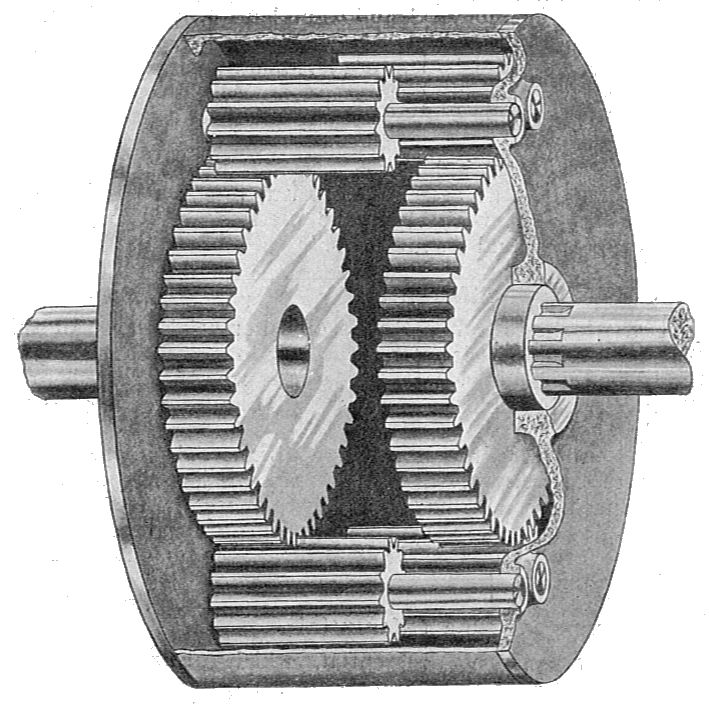
What is a differential gear and how does it work?
A differential gear is a component found in vehicles that allows the wheels to rotate at different speeds while receiving power from the engine. Here’s a detailed explanation:
A differential is commonly used in cars, trucks, and other vehicles with driven wheels. Its primary function is to distribute torque (rotational force) from the engine to the wheels while compensating for differences in wheel speeds, especially during turns or when driving on uneven surfaces.
Basic Structure:
A typical differential gear consists of several key components:
- Differential Case: It is the outer housing that encloses the differential assembly.
- Ring Gear: The ring-shaped gear located on the inside of the differential case.
- Pinion Gear: The small gear connected to the driveshaft, which meshes with the ring gear.
- Side Gears: Two gears connected to the axle shafts, which mesh with the pinion gear.
- Spider Gears (Planetary Gears): These gears are positioned between the side gears and allow the wheels to rotate at different speeds.
Function and Operation:
When power is transmitted from the engine to the differential, the pinion gear receives the rotational force from the driveshaft and meshes with the ring gear. As the pinion gear rotates, it rotates the ring gear and, in turn, the differential case.
During straight-line driving, when both wheels have equal traction and are rotating at the same speed, the spider gears rotate freely on their respective shafts. This allows the side gears to rotate at the same speed as the differential case, transmitting equal torque to both wheels.
However, when the vehicle turns or one wheel encounters a different traction condition (such as being on a slippery surface), the wheels need to rotate at different speeds. In this situation, the spider gears are forced to rotate along with the side gears due to the difference in rotational speeds between the two wheels.
As the spider gears rotate, they allow the side gears to rotate at different speeds, compensating for the variation in wheel speeds. This enables the wheels to rotate independently while still receiving power from the differential. The differential allows the outer wheel (on the outside of the turn) to rotate at a higher speed while the inner wheel (on the inside of the turn) rotates at a slower speed.
The differential gear system ensures smooth power delivery to the wheels, improves vehicle stability during turns, and reduces tire wear and stress on the drivetrain components.
It’s important to note that there are different types of differentials, such as open differentials, limited-slip differentials, and locking differentials. Each type has its own characteristics and is suited for different driving conditions and vehicle types.
In summary, a differential gear is a crucial component in vehicles that allows the wheels to rotate at different speeds while distributing power from the engine. By utilizing a combination of gears, it enables smooth and efficient power transmission to the wheels, particularly during turns or when encountering varying traction conditions.


editor by CX 2024-04-11