China Hot selling Stainless Steel Electric Appratus Communication Components CNC Machining Service Rotor Gear Shaft bevel spiral gear
Product Description
Company Profile
HangZhou HangZhou, which is a manufacturer specializing in the machining parts with rich manufacturing and design experience for 20 years.
Our products include: gringing parts, machining parts, turning parts, lathe parts, milling parts, CNC milling parts, CNC machining parts, CNC turning parts, CNC lathe parts, CNC metal parts, casting and forging parts, assembly service, laser cutting parts, flange and fitting, die casting parts, metal stamping parts, gear and transmission, aluminum profile, automation group, shaft parts, embedded nut and all kinds of custom/customize parts.
Welcome to send us your drawing for CNC parts machining service, we can customize as your request.
Product Parameters
| 1.Material | Brass, Red Copper, Bronze, Carbon Steel, Stainless Steel, Aluminium |
| 2.Tolerance | +/-0.005mm |
| 3.Finishing | anodizing,polishing,plating ,blacken ect |
| 4.Surfaces | free of scratches |
| 5. Various materials and finishing ways are available | |
| 6. Material and finishing comply with RoHS Directive | |
| 7. Small orders are welcome | |
Equipment List
| Name | Origin | Precision |
| CNC machining center | Japan | 0.005mm |
| Tsugami & Star CNC | Japan | 0.005mm |
| Grinding machine | ZheJiang | 0.002mm |
| Milling machine | Japan | 0.01mm |
| Turn-mill combination machine | Japan | 0.005mm |
| Wire drawing machine | ZheJiang | 0.02mm |
Inspection Equipment
Profilometer, Pneumatic micrometer, Roughness tester
Product Application
Electronical accessories, Automotive accesories, Telecommunication accesories, Engineering parts, Medical equipment, 3C electronical accessories.
Material Capability
Brass, Red Copper, Bronze, Stannum
Stainless steel: SUS303, 304, 316L, 17-4, 420F, 430F
Carbon Steel: S45C, 12L14, 12L15, 11SMnPb30
Aluminum: 7075, 6061
FAQ
1.How long and how can I get quotation from your company?
We will reply you in 2 hours if getting detailed information during working days.
In order to quote you as soon as possible, please provide us the following information together with your inquiry.
1). Detailed drawings (CAD/PDF/DWG/IGS/STEP/JPG)
2). Materials required
3). Surface treatment
4). Quantity (per order/per month/annual)
5). Any special demands or requirements, such as packing, labels,delivery,etc.
2.Can I get samples for testing?
We can offer free samples for small parts, but for big and high-value products, samples will be charged.
3.How about the payment terms?
For new customers, we prefer to use T/T in advance. We can accept L/C, D/P for old customers.
4.If I need urgent delivery, can you help?
Of course! Customer first is our company philosophy. You need to tell us the delivery time when placing the order, and we will do our best to adjust the production schedule.
5.How about the transportation?
You can choose any mode of transportation you need, sea delivery, air delivery or express delivery.
6.How about the quality guarantee?
We will make 100% inspection before packing and delivery and make sure the products 100% meet your requirements . If there is any problems during using, please tell us anytime, we will reply you in time
7.Can we CHINAMFG NDA?
Sure. We never divulge any customer’s information to anyone else.
/* January 22, 2571 19:08:37 */!function(){function s(e,r){var a,o={};try{e&&e.split(“,”).forEach(function(e,t){e&&(a=e.match(/(.*?):(.*)$/))&&1
| Application: | Fastener, Auto and Motorcycle Accessory, Hardware Tool, Machinery Accessory, Medical/Communication/Vehicle |
|---|---|
| Standard: | GB, EN, API650, China GB Code, JIS Code, TEMA, ASME |
| Surface Treatment: | Anodizing |
| Samples: |
US$ 0.5/Piece
1 Piece(Min.Order) | Order Sample |
|---|
| Customization: |
Available
| Customized Request |
|---|
.shipping-cost-tm .tm-status-off{background: none;padding:0;color: #1470cc}
|
Shipping Cost:
Estimated freight per unit. |
about shipping cost and estimated delivery time. |
|---|
| Payment Method: |
|
|---|---|
|
Initial Payment Full Payment |
| Currency: | US$ |
|---|
| Return&refunds: | You can apply for a refund up to 30 days after receipt of the products. |
|---|
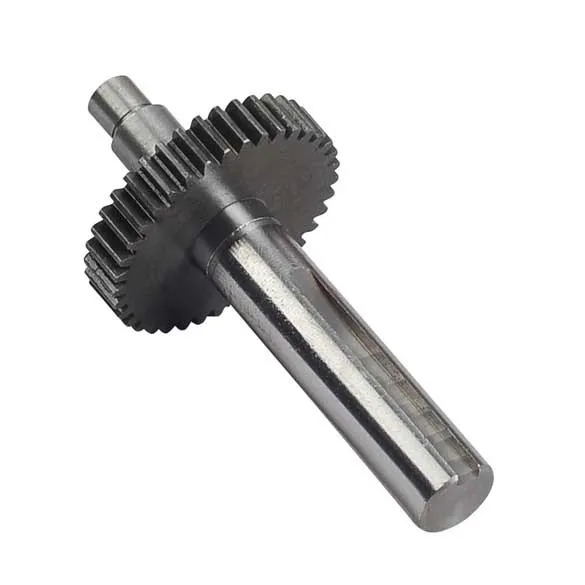
Can gear shafts be used in precision machinery and equipment?
Yes, gear shafts are commonly used in precision machinery and equipment. Precision machinery requires high accuracy, reliability, and smooth operation, and gear shafts play a critical role in achieving these requirements. Let’s explore the reasons why gear shafts are suitable for precision machinery:
- Power Transmission:
Gear shafts are essential components for transmitting power between various components in precision machinery. They enable the transfer of rotational motion and torque from the input source to the desired output, allowing the machinery to perform its intended function precisely and efficiently.
- Precise Positioning and Control:
Gear shafts, along with gears and other related components, enable precise positioning and control in precision machinery. By utilizing carefully designed gear ratios and configurations, gear shafts can accurately control the speed, direction, and timing of movements within the machinery. This precision is crucial in applications such as robotics, CNC machines, and other automated systems.
- Load Distribution:
In precision machinery, gear shafts help distribute loads evenly across various components. By utilizing multiple gears and shafts, the transmitted load can be distributed over a larger surface area, reducing stress concentrations and minimizing the risk of premature wear or failure. This load distribution capability is vital in maintaining the integrity and longevity of precision machinery.
- Backlash Control:
Backlash refers to the slight clearance or play between meshing gears. In precision machinery, it is crucial to minimize or control backlash to ensure accurate and repeatable movements. Gear shafts, when properly designed and manufactured, can contribute to minimizing backlash by maintaining precise gear meshing and reducing any unwanted movement or play between the gears.
- High Torque Transmission:
Precision machinery often requires the transmission of high torque while maintaining accuracy and reliability. Gear shafts are capable of handling high torque loads and transmitting power efficiently. They are designed to withstand the forces and stresses associated with high torque applications, ensuring reliable operation and minimizing power losses.
- Customization and Adaptability:
Gear shafts can be customized and adapted to meet the specific requirements of precision machinery. They can be manufactured with various materials, such as steel or specialized alloys, to achieve the desired strength, durability, and dimensional accuracy. The gear profiles, shaft dimensions, and other parameters can be tailored to suit the particular application, allowing for optimal performance and compatibility within precision machinery.
- Reliability and Longevity:
Gear shafts are known for their reliability and long service life when properly designed, manufactured, and maintained. They are subjected to rigorous quality control measures to ensure dimensional accuracy, surface finish, and appropriate hardness. This focus on quality and precision results in gear shafts that can withstand demanding operating conditions and provide consistent performance over an extended period.
In summary, gear shafts are indeed suitable for use in precision machinery and equipment. Their ability to transmit power, enable precise positioning and control, distribute loads, control backlash, handle high torque transmission, offer customization options, and provide reliability and longevity make them essential components in achieving the accuracy and performance required by precision machinery.
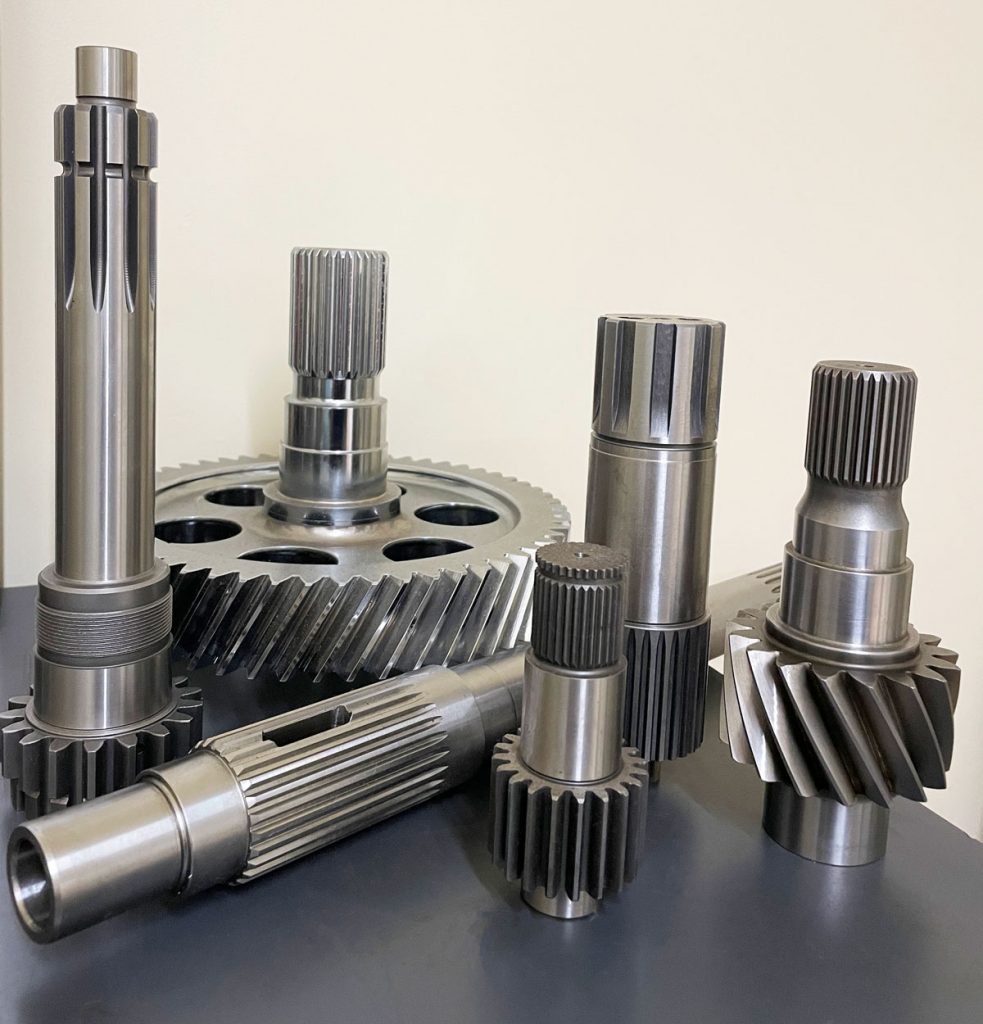
How do gear shafts affect the overall operation and efficiency of gear systems?
Gear shafts play a crucial role in determining the overall operation and efficiency of gear systems within mechanical applications. They impact various aspects of gear system performance. Let’s explore how gear shafts affect the overall operation and efficiency:
- Power Transmission:
Gear shafts are responsible for transmitting power between gears in a gear system. The design and construction of the gear shaft directly influence the efficiency of power transmission. Proper alignment, accurate dimensions, and precise machining of the gear shaft ensure smooth rotation and optimal meshing of gear teeth. This reduces power losses due to friction, misalignment, or inefficient engagement, resulting in improved power transmission efficiency.
- Load Carrying Capacity:
Gear shafts bear the load and torque generated within a gear system. Their structural integrity and material properties determine the load carrying capacity of the gear system. A well-designed and robust gear shaft can withstand high loads without deformation or failure. By effectively distributing the load across the gear arrangement, gear shafts enhance the overall efficiency of the system and prevent premature wear or damage to the gears.
- Alignment and Gear Meshing:
Gear shafts ensure proper alignment and gear meshing within the gear system. Accurate machining and precise tolerances of the gear shaft facilitate the correct positioning of gears, ensuring optimal contact and engagement between gear teeth. Improper alignment or misalignment due to a faulty gear shaft can result in increased friction, noise, vibration, and reduced efficiency. Conversely, a well-designed gear shaft promotes smooth gear meshing, minimizes energy losses, and enhances the overall efficiency of the gear system.
- Reduction of Backlash:
Backlash refers to the slight play or gap between the meshing gear teeth. Gear shafts, when properly designed and manufactured, help reduce backlash within the gear system. By ensuring accurate alignment and precise tooth engagement, gear shafts minimize the amount of backlash, which can cause vibration, noise, and energy losses. Reduced backlash improves the efficiency of the gear system by enhancing the transfer of rotational motion and minimizing power dissipation.
- Smooth Operation and Reduced Wear:
A well-designed gear shaft enables smooth operation and reduces wear within the gear system. The accurate meshing of gear teeth facilitated by the gear shaft results in reduced friction and wear on the gears. Proper lubrication and the use of high-quality materials further contribute to minimizing wear and extending the lifespan of the gear system components. Smooth operation and reduced wear translate to improved efficiency, as energy losses due to friction and component degradation are minimized.
- Efficiency in Speed and Torque Conversion:
Gear shafts allow for efficient speed and torque conversion within gear systems. By incorporating different gear arrangements on a single gear shaft, it becomes possible to achieve specific speed and torque requirements. The gear ratios and sizes chosen for the gear arrangement on the gear shaft determine the conversion efficiency. Well-designed gear shafts enable precise speed and torque transmission, resulting in efficient power utilization and optimized performance of the gear system.
In summary, gear shafts significantly impact the overall operation and efficiency of gear systems. They influence power transmission efficiency, load carrying capacity, gear alignment and meshing, reduction of backlash, smooth operation and reduced wear, as well as speed and torque conversion efficiency. Proper design, construction, and maintenance of gear shafts are essential for maximizing the overall performance and efficiency of gear systems in mechanical applications.
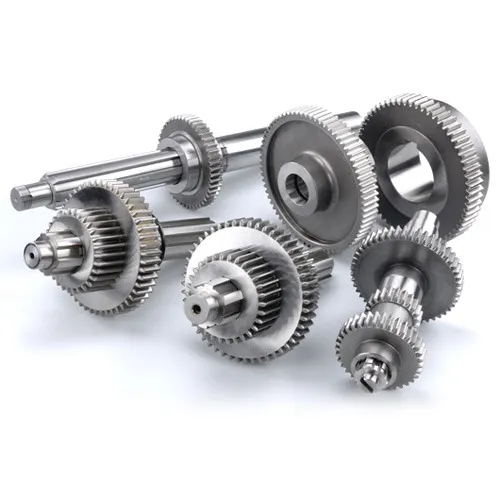
How does a gear shaft contribute to torque transmission and rotation?
A gear shaft plays a significant role in torque transmission and rotational motion within mechanical systems. It serves as the intermediary component that enables the transfer of torque between gears, allowing for the generation of rotational force and motion. Here’s a detailed explanation of how a gear shaft contributes to torque transmission and rotation:
- Torque Transmission:
A gear shaft facilitates torque transmission by connecting and engaging gears within a mechanical system. Torque is the rotational force that causes an object to rotate. When torque is applied to the gear shaft, it transfers this rotational force to the connected gears. The gears mesh with each other, and the teeth on the gears transmit the torque from the driving gear to the driven gear through the gear shaft. This torque transmission allows the rotational force to be transferred and amplified or reduced as required, enabling the machinery to generate the necessary force to perform tasks.
- Rotational Motion Transfer:
In addition to torque transmission, a gear shaft contributes to the transfer of rotational motion between gears. When one gear rotates, it meshes with another gear connected to the gear shaft. The teeth on the gears engage with each other, creating a mechanical linkage. As the driving gear rotates, it imparts its rotational motion to the gear shaft, which, in turn, transfers this motion to the driven gear. The rotational motion is transmitted through the gear shaft, allowing for the synchronized movement of various components within the mechanical system.
- Mechanical Advantage:
One of the key contributions of a gear shaft to torque transmission is the ability to provide mechanical advantage. Mechanical advantage refers to the amplification or reduction of force and torque through the use of different gear sizes or gear ratios. By connecting gears with varying numbers of teeth on the gear shaft, the gear ratio can be adjusted. Gears with more teeth provide a higher gear ratio, resulting in increased torque output but reduced rotational speed. Conversely, gears with fewer teeth offer a lower gear ratio, resulting in reduced torque output but increased rotational speed. The gear shaft enables the selection of the appropriate gear ratio to match the desired torque and speed requirements of the mechanical system.
- Torque Distribution:
A gear shaft also contributes to the distribution of torque within a mechanical system. As torque is transmitted through the gear shaft, it ensures that the force is evenly distributed across the teeth of the connected gears. This torque distribution minimizes stress concentration on individual gear teeth, promoting smooth operation and preventing premature wear or failure. The gear shaft acts as a conduit, allowing torque to flow efficiently and uniformly, ensuring reliable torque transmission and rotation.
In summary, a gear shaft plays a crucial role in torque transmission and rotation within mechanical systems. It enables the transfer of torque between gears, facilitates the transfer of rotational motion, provides mechanical advantage for torque amplification or reduction, and ensures uniform torque distribution. Gear shafts are essential components that contribute to the efficient and effective operation of machinery and mechanical systems.


editor by CX 2024-03-26