China manufacturer Ball Mill Casting Rotary Helical Big Girth Gear Custom Rotary Dryer CZPT High Quality Large Ring Gear bevel spiral gear
Product Description
Cement industrial Rotary kiln tyre girth gear casting iron gear ring large big ball mill spur gear wheel
Product Description
Process:
Forging/Casting
Normalizing&Tempering-Proof Machinnig
Quenching&Tempering
Finish Machining(Teeth Grinding)
We can offer you in various process conditions Solutions for Many End Markets and Applications
–Mining
–Metallurgy
–Power Generation
–Cement Plant
–Port Machinery
–Oil and natural
–Paper making
–OEM gear case
–General Industrial
| Specification | Machining Scope |
| Size | OD Max 16m |
| One Piece of Gear: OD Max 13m | |
| Assemble Gear: According to drawings | |
| Hobbing Modulus | 10-60 |
| Milling Modulus | Up to 120 |
| Spiral Modulus | 1-15 |
| Accuracy Grade | Milling: 6 grade |
| Hobbing: 8 grade | |
| Material | Alloy steel: 42CrMo4, 34CrNiMo6 etc. |
| Carbon steel: C45E, 1030 | |
| Carburizing steel | |
| Quenched and tempered steel | |
| Heat treatment | Quenching & Tempering, Surface Quenching |
| Teeth Profile | Spur, Helical, Herringbone, Crown, Spiral, Worm and shaft |
Inspection and Test Outline of Girth Gear:
| No. | Item | Inspection Area | Acceptance Criteria | Inspection Stage | Certificates |
| 1 | Chemical Composition | Sample | Material Requirement | When Smelting After Heat Treatment |
Chemical Composition Report |
| 2 | Mechanical Properties | Sample(Test Bar on the Gear Body) | Technical Requirement | After Heat Treatment | Mechanical Properties Report |
| 3 | Heat Treatment | Whole Body | Manufacturing Standard | During Heat Treatment | Heat Treatment Report Curves of Heat Treatment |
| 4 | Hardness Test | Tooth Surface, 3 Points Per 90° | Technical Requirement | After Heat Treatment | Hardness Teat Report |
| After Semi Finish Machining | |||||
| 5 | Dimension Inspection | Whole Body | Drawing | After Semi Finish Machining | Dimension Inspection Report |
| Finish Machining | |||||
| 6 | Magnetic Power Test (MT) | Tooth Surface | Agreed Standard | After Finish Gear Hobbing | MT Report |
| 7 | UT | Spokes Parts | Agreed Standard | After Rough Machining | UT Report |
| After Welded | |||||
| After Semi Finish Machining | |||||
| 8 | PT | Defect Area | No Defect Indicated | After Digging After Welded |
PT Record |
| 9 | Mark Inspection | Whole Body | Manufacturing Standard | Final Inspection | Pictures |
| 10 | Appearance Inspection | Whole Body | CIC’s Requirement | Before Packing (Final Inspection) |
|
| 11 | Anti-rust Inspection | Whole Body | Agreed Anti-rust Agent | Before Packing | Pictures |
| 12 | Packing Inspection | Whole Body | Agreed Packing Form | During Packing | Pictures |
Testing Process:
· QA DOC: Chemical Composition Report, Mechanical Properties Report, UT Report, Heat Treatment Report, Dimensions Check Report
· UT test: 100% ultrasonic test according to EN15718-3, SA388, Sep 1921 C/c etc.
· Heat Treatment Report: provide original copy of heat treatment curve/time table.
FAQ
1. What is your minimum order quantity?
Our minimum order quantity typically ranges from 5 to 100 pieces, depending on the product and material.
2. Can you provide custom designs?
Yes, we specialize in providing custom designs based on your specific requirements.
3. What is your production capacity?
Our production capacity varies depending on the product and material, but we have the capability to produce millions of pieces per year.
4. What is your lead time for orders?
Our lead time for orders is typically 4-6 weeks for production and delivery.
5. Do you offer quality control and testing?
Yes, we have strict quality control measures in place and offer testing services, including non-destructive testing, to ensure the quality of our products.
/* March 10, 2571 17:59:20 */!function(){function s(e,r){var a,o={};try{e&&e.split(“,”).forEach(function(e,t){e&&(a=e.match(/(.*?):(.*)$/))&&1
| Application: | Machinery, Industry |
|---|---|
| Hardness: | According to Customers′ Requirements |
| Gear Position: | Internal Gear |
.shipping-cost-tm .tm-status-off{background: none;padding:0;color: #1470cc}
|
Shipping Cost:
Estimated freight per unit. |
about shipping cost and estimated delivery time. |
|---|
| Payment Method: |
|
|---|---|
|
Initial Payment Full Payment |
| Currency: | US$ |
|---|
| Return&refunds: | You can apply for a refund up to 30 days after receipt of the products. |
|---|
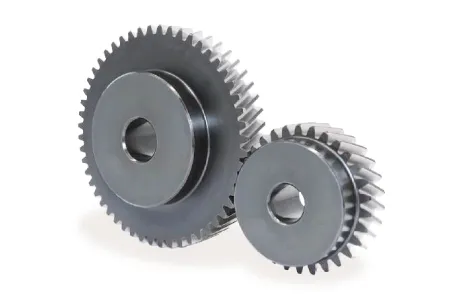
Can you provide examples of machinery that use helical gears?
Helical gears are widely used in various types of machinery and mechanical systems. Their unique tooth geometry and smooth operation make them suitable for applications that require high torque transmission, precision, and low noise levels. Here are some examples of machinery and equipment that commonly utilize helical gears:
- Industrial Gearboxes: Helical gears are extensively employed in industrial gearboxes used in various industries such as manufacturing, mining, oil and gas, and power generation. These gearboxes are responsible for transmitting power and adjusting rotational speed in large machinery and equipment, including conveyors, mixers, crushers, extruders, and heavy-duty pumps.
- Automotive Transmissions: Helical gears play a crucial role in automotive transmissions, both manual and automatic. They facilitate the smooth shifting of gears and the transfer of power from the engine to the wheels. Helical gears are commonly found in the main transmission system, differential gears, and gear sets used in the gearbox.
- Machine Tools: Many types of machine tools, such as milling machines, lathes, and grinding machines, rely on helical gears for precise motion control and power transmission. Helical gears are used in the spindle drives, feed mechanisms, and gearboxes of these machines, enabling accurate and efficient metal shaping, cutting, and finishing operations.
- Rotary Compressors: Helical gears are employed in rotary compressors, which are widely used in industries such as refrigeration, HVAC, and pneumatic systems. The helical gears in these compressors help to compress and transfer gases or fluids, generating the desired pressure and flow rates.
- Printing Presses: High-speed printing presses utilize helical gears in their drive systems. The gears enable the precise synchronization of various components, such as rollers, cylinders, and plate cylinders, ensuring accurate paper feeding, ink distribution, and image transfer during the printing process.
- Paper and Pulp Industry: Helical gears are utilized in machinery used in the paper and pulp industry, including paper mills and paperboard manufacturing plants. They are employed in equipment such as pulpers, refiners, stock pumps, and paper machine drives, facilitating the processing, refining, and transportation of pulp and paper materials.
- Construction Equipment: Helical gears are found in various construction machinery, such as cranes, excavators, loaders, and bulldozers. They are used in the drivetrains, swing mechanisms, and hydraulic systems of these machines, providing the necessary torque, speed control, and power transmission capabilities.
- Marine Propulsion Systems: Helical gears are utilized in marine propulsion systems, including marine engines, outboard motors, and ship propulsion systems. They enable efficient power transmission from the engine to the propeller, ensuring smooth and reliable operation of watercraft.
- Wind Turbines: In wind energy applications, helical gears are commonly used in wind turbine gearboxes. They help convert the low-speed rotation of the turbine blades into higher rotational speeds required by the electrical generators, enabling efficient energy generation from wind power.
- Food Processing Machinery: Helical gears find applications in the food processing industry, where they are used in equipment such as mixers, conveyors, extruders, and packaging machines. They facilitate the movement of ingredients, blending, and precise control of processing parameters.
These examples demonstrate the versatility and widespread use of helical gears across various industries and applications. The unique characteristics of helical gears make them suitable for a wide range of machinery that requires smooth, efficient, and reliable power transmission.
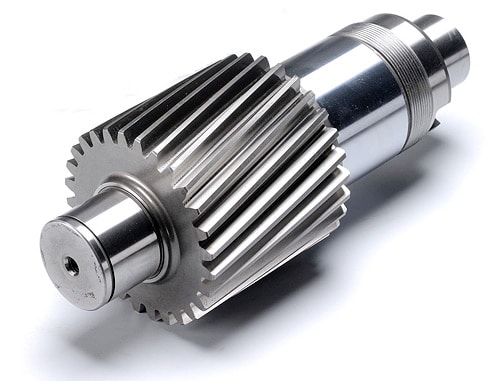
Can helical gears be used in both horizontal and vertical orientations?
Yes, helical gears can be used in both horizontal and vertical orientations. The design and characteristics of helical gears make them versatile and suitable for various orientations and applications. Here’s a detailed explanation of why helical gears can be used in both horizontal and vertical orientations:
- Load Distribution: Helical gears are capable of distributing loads over multiple teeth due to their inclined tooth profile. This design feature allows for efficient load sharing and helps minimize localized stresses on individual teeth. Regardless of whether the gears are in a horizontal or vertical orientation, the load distribution capability of helical gears remains effective, ensuring reliable and durable performance.
- Lubrication: Proper lubrication is crucial for the smooth operation of gears, regardless of their orientation. Helical gears can be adequately lubricated in both horizontal and vertical orientations to minimize friction, wear, and heat generation. The lubricant forms a film between the gear teeth, reducing contact stresses and facilitating efficient power transmission.
- Bearing Support: In both horizontal and vertical orientations, helical gears can be supported by suitable bearings to maintain proper alignment and reduce axial and radial loads. The bearing arrangement is designed to accommodate the specific orientation and loads encountered, ensuring stable and precise gear meshing.
- Alignment and Mounting: Proper alignment and mounting are essential for helical gears, regardless of their orientation. In horizontal orientations, gears can be mounted on shafts using suitable keyways, splines, or other fastening methods. In vertical orientations, additional considerations may be necessary to secure the gears and prevent axial movement. Ensuring accurate alignment during installation helps maintain optimal gear meshing and reduces noise, vibrations, and premature wear.
- Oil Splash Lubrication in Vertical Orientation: In vertical orientations, helical gears can benefit from oil splash lubrication. By strategically positioning oil reservoirs and splash guards, the gears can be effectively lubricated as the rotating gears agitate the lubricant, causing it to splash and reach all necessary surfaces. This method helps ensure adequate lubrication even in vertical orientations where gravity affects the flow of lubricant.
- Additional Considerations for Vertical Orientation: While helical gears can be used in vertical orientations, it’s important to consider additional factors that may come into play. In vertical applications, the weight of the gears and potential thrust forces need to be appropriately supported to prevent excessive axial loading or gear displacement. Proper housing design, bearing selection, and lubrication considerations should account for these factors to ensure reliable operation.
In summary, helical gears are versatile and can be used in both horizontal and vertical orientations. Their load distribution capabilities, ability to be properly lubricated, suitable bearing support, and the importance of alignment and mounting make them suitable for various applications and orientations. By considering specific factors related to the orientation, engineers can ensure the reliable and efficient performance of helical gears in both horizontal and vertical arrangements.
What are the applications of helical gears?
Helical gears find wide-ranging applications in various mechanical systems due to their advantageous characteristics and capabilities. Here’s a detailed explanation of the applications of helical gears:
1. Power Transmission: Helical gears are commonly used for power transmission in a wide range of industries. They are employed in machinery and equipment where rotational motion needs to be transmitted between parallel shafts. Examples include gearboxes, industrial machinery, conveyors, and automotive transmissions.
2. Rotary Motion Control: Helical gears are used in applications where precise rotary motion control is required. They provide smooth and accurate motion transfer, making them suitable for applications such as robotics, precision equipment, machine tools, and positioning systems.
3. High Torque Applications: Due to their design and tooth engagement characteristics, helical gears are well-suited for high torque applications. They can efficiently transmit substantial power and handle heavy loads. This makes them suitable for heavy machinery, construction equipment, mining machinery, and marine propulsion systems.
4. Automotive Industry: Helical gears are extensively used in automotive applications. They are found in transmissions, differentials, and powertrain systems, where they facilitate smooth and efficient power transmission while reducing noise and vibration. Helical gears help achieve the desired gear ratios and torque multiplication in vehicles.
5. Machine Tools: Machine tools, such as milling machines, lathes, and gear hobbing machines, utilize helical gears for precise motion control and power transmission. Helical gears enable accurate and smooth rotation of cutting tools and workpieces, contributing to the high precision and quality of machined components.
6. Printing Industry: Helical gears are used in printing presses and other printing equipment. They facilitate the precise movement of paper and printing plates, ensuring accurate registration and high-quality printing results.
7. Textile Industry: In the textile industry, helical gears are employed in various machinery and equipment. They are used in spinning machines, weaving machines, and other textile processing equipment that require precise motion control and power transmission for efficient textile production.
8. Oil and Gas Industry: Helical gears are utilized in oil and gas equipment and machinery. They are found in pumps, compressors, drilling rigs, and other critical components where high torque transmission and reliable motion control are essential for efficient operations.
9. Power Generation: Helical gears play a crucial role in power generation systems. They are employed in wind turbines, hydroelectric generators, and other power generation equipment to transmit rotational motion from the turbine or generator shaft to the electrical generator, ensuring efficient electricity production.
10. General Machinery: Helical gears have diverse applications in general machinery across various industries. They are used in packaging equipment, food processing machinery, material handling systems, and numerous other mechanical systems that require reliable power transmission and precise motion control.
The versatility, load-carrying capacity, and smooth operation of helical gears make them suitable for numerous applications in different industries. The specific design, tooth profile, helix angle, and material selection can be tailored to meet the requirements of each application, ensuring optimal performance and longevity of the gear system.


editor by CX 2024-02-08